admin
admin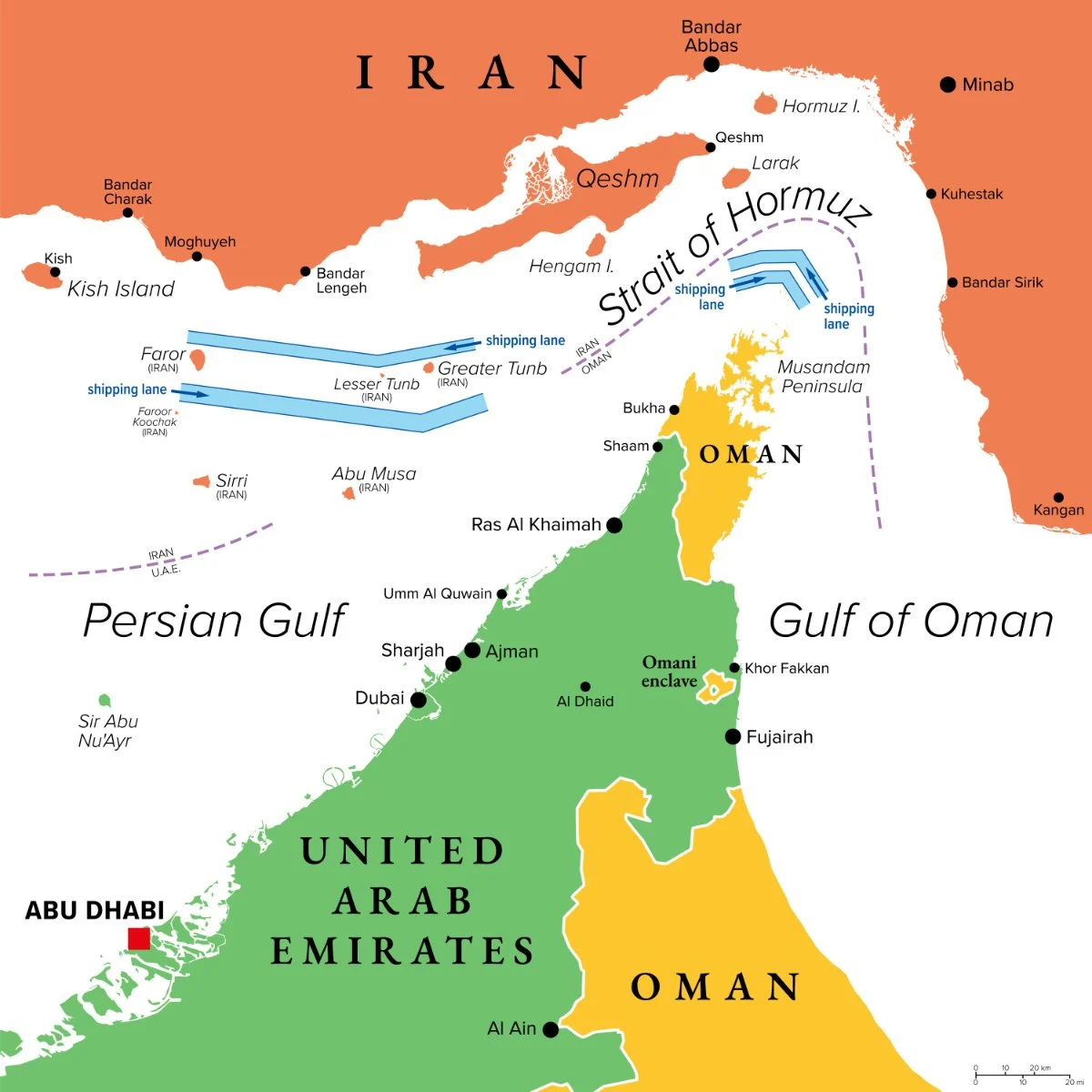
On Friday, U.S. Agriculture Secretary Brooke Rollins publicly acknowledged the gravity of the situation, assuring reporters that the administration is exploring "every potential avenue" to mitigate rising fertilizer prices. "We are very close to having an announcement on some solutions on what that looks like," she stated. Just last week, Secretary Rollins underscored the nation’s profound vulnerability, remarking, "We are getting almost all of our urea, almost all of our phosphate, almost all of our nitrogen from other countries around the world, and that has to stop."
While the imperative to reduce foreign dependency is clear, it is an objective that cannot be achieved in time for the current planting season. Unlike petroleum, there is no strategic reserve for nitrogen fertilizer. Domestic producers lack the capacity to rapidly replace the millions of tons of supply that could be disrupted. This is not a distant threat; unlike some commodity shocks that unfold over months, this crisis is already in motion, transmitted through a mechanism deeply embedded in contemporary food systems—a mechanism that the petrochemical industry appears intent on cementing for the foreseeable future.
The Geopolitical Crucible: Strait of Hormuz and Global Vulnerability
The Strait of Hormuz, a narrow waterway just 21 miles wide at its most constricted point, is more than a transit route for oil; it is a vital artery for global commerce, particularly for agricultural inputs. Roughly one-fifth of the world’s oil and a significant portion of its fertilizer trade pass through this strategic chokepoint. Nations like Qatar, Saudi Arabia, Oman, and Iran are major exporters of urea, the ubiquitous white granules essential for crop growth worldwide.
The fundamental chemistry linking fossil fuels to food production is stark: urea, a synthetic nitrogen fertilizer, is manufactured from ammonia, which in turn is produced by superheating natural gas. Astonishingly, approximately 99 percent of the world’s synthetic nitrogen fertilizer is derived from fossil fuels, illustrating the deep and pervasive entanglement of global agriculture with the petrochemical industry.

Analysis of annual fertilizer flows through the Strait of Hormuz reveals a relentless demand cycle. January offers the only relative respite. From February to March, Australia and East Africa are in their peak procurement windows. April through June sees India, Thailand, Pakistan, Bangladesh, Indonesia, and Brazil actively buying. Brazil, the world’s largest single fertilizer importer with an annual bill of $13.6 billion, hits its peak from July to September, alongside Argentina and Southern Africa. India’s second planting season, coupled with demands from Pakistan, Bangladesh, and Southern Africa, drives procurement from October to November. Even December captures Bangladesh’s late-season orders. This continuous demand means there is virtually no "quiet moment" when a disruption would be without severe consequences.
Echoes of 2022: A Precedent for Profiteering and Hunger
The world has already witnessed the devastating consequences of interrupted fertilizer supply. In February 2022, Russia’s invasion of Ukraine triggered a global fertilizer crisis that saw prices skyrocket, tripling from their 2020 baseline. The mechanism was twofold: Russia and Belarus collectively account for approximately 40 percent of global potash exports, with Russia also being a major urea exporter. Western sanctions imposed in response to the invasion severely disrupted this supply. Concurrently, Russia curtailed natural gas flows to Europe, leading to the shutdown of European fertilizer plants heavily reliant on cheap gas as a feedstock. This confluence of factors created a perfect storm, driving price spikes from two directions simultaneously, as highlighted in reports from the International Panel of Experts on Sustainable Food Systems (IPES-Food).
The ripple effects were immediate and far-reaching. Brazil’s fertilizer import bill nearly doubled. The FAO Food Price Index soared to an all-time high. Millions globally were pushed closer to hunger—not due to a fundamental shortage of food, but because the essential inputs required to grow it became prohibitively expensive.
While public discourse often framed this period as one of "shared sacrifice," the reality was a massive transfer of wealth. Farmers bore the brunt of a 300 percent increase in fertilizer costs, while consumers faced the highest food inflation in 40 years. Meanwhile, intermediaries—the "Big Four" meatpackers, global grain giants, and the fertilizer oligopoly—recorded unprecedented profits. A White House analysis from the Biden administration revealed that the net income of the four largest meat processors surged by 500 percent since the onset of the pandemic. The Institute for Agriculture and Trade Policy reported that the world’s nine largest fertilizer companies nearly doubled their profits to $49 billion in 2022. CF Industries, for example, saw its profits jump by 212 percent in 2022, even as manufacturing costs increased by a comparatively modest 28 percent. This phenomenon underscored how market power exploited conflict as a pretext for immense financial gain.
The pattern of elevated profits extended downstream. A 2024 Federal Trade Commission report found that food retail profit margins did not merely rise during the pandemic but remained elevated long after initial supply shocks subsided, with markups reaching 7 percent over total costs by 2023. This cast significant doubt on claims that retail prices were simply tracking retailers’ own rising expenses. Further research from the Economic Policy Institute, covered by Civil Eats, concluded that corporate profits accounted for a staggering 54 percent of food price increases between 2020 and 2021, a stark contrast to the mere 11 percent contribution in the four decades prior. This historical context provides a chilling preview of what could unfold in the current Persian Gulf crisis.

Oil, Soil, and the Straight We’re In: The Inescapable Link
When the Strait of Hormuz faces closure, the economic consequences are swift and severe. Energy prices spike immediately, followed closely by fertilizer prices. Reduced harvests inevitably occur a season later. However, the initial wave of food price inflation—felt at the gas station, the grocery store, and local eateries—is driven not primarily by fertilizer costs, but by the escalating price of oil.
The mechanism is direct: higher diesel costs translate to increased trucking expenses, which in turn drive up the price of every item on every shelf. Rising cooking fuel prices compel restaurants to pass these costs onto consumers; Bloomberg reported a 10 percent increase in the price of a thali meal platter in India this week alone. Processing and packaging, which together consume 42 percent of fossil fuel use in the food supply chain, become more expensive even before a single field is planted with less fertilizer.
While a working-class family in Iowa paying more at the pump and checkout differs in context from a smallholder farmer in Kenya facing a 50 percent spike in urea prices, their struggles are intrinsically linked. Both are more aligned in their vulnerability than with the immense agricultural conglomerates. Working families across the globe are poised to suffer, while a select few well-positioned corporations stand to reap extraordinary profits.
The Looming Future: Deeper Entrenchment in Fossil Fuels
The outlook for next year suggests an intensification of this troubling trend. The International Panel of Experts on Sustainable Food Systems (IPES-Food), in its comprehensive report "Fuel to Fork," meticulously details the full architecture of this dependency. Food systems globally consume at least 15 percent of total fossil fuel use—a figure exceeding even the steel industry. Approximately 40 percent of all petrochemicals produced worldwide are absorbed by food systems, primarily as synthetic fertilizers on farms and as plastic in food and beverage packaging.
As the global transition to clean energy gradually reduces fossil fuel demand in sectors like transport and power generation, the oil and gas industry is strategically pivoting towards petrochemicals—specifically fertilizers and food-grade plastics—as its primary growth frontier. Petrochemicals are projected to become the single largest driver of oil demand growth, potentially accounting for nearly half of all growth by 2050. This strategic shift indicates that the food system is where Big Oil plans to secure its future.

This trajectory will only exacerbate the existing feedback loop: when fossil fuel prices surge, fertilizer and food prices inevitably follow. The corporations that profit from this entrenched system—both fossil fuel companies and the agrochemical giants dependent on them—have every incentive to maintain it. The record-breaking profiteering observed in 2022 serves as a stark reminder of their capacity and willingness to do so.
The Illusion of "False Fixes"
Industry-promoted solutions, particularly those marketed as "greenwashed" alternatives, warrant rigorous skepticism. "Green" ammonia, for instance, is produced using hydrogen generated via electrolysis powered by renewable electricity, combined with nitrogen extracted from the air. In principle, this offers a zero-carbon process. "Blue" ammonia, conversely, utilizes conventional natural gas production but integrates carbon capture and storage technologies, aiming to reduce emissions without eliminating fossil fuel use. Both are real technologies, but their current scale is negligible; less than one percent of global ammonia is currently produced through either pathway. Furthermore, an overwhelming 95 percent of all ammonia projects currently planned in the United States remain based on conventional fossil fuels.
Converting global ammonia production to "green" methods would necessitate an astronomical 24 times more electricity than current production—equivalent to roughly five percent of global electricity—along with 30 times more land and 50 times more water. Even if production were entirely decarbonized, 60 percent of fertilizer-related greenhouse gas emissions occur after application to fields, primarily in the form of nitrous oxide, a greenhouse gas with a global warming potential 300 times greater than carbon dioxide. The "production fix" alone fails to address the critical "application problem."
Similarly, precision agriculture and AI-driven farming are often oversold as silver bullets. A USDA field study revealed that autosteered tractors can, counterintuitively, increase fuel use. Algorithms designed to calibrate fertilizer applications are typically optimized for yield per hectare, not for reducing overall fertilizer volumes. Moreover, the data centers required to power AI farm platforms are projected to double their energy demands by 2030, raising questions about the true environmental footprint of these "smart" solutions.
The Path to Resilience: Proven, Scalable Alternatives
The genuinely transformative alternatives are less glamorous, yet they are already proven, available, and scalable. Crucially, their implementation costs are dramatically lower than the staggering price of conflict itself. The ongoing war in the Persian Gulf, for example, is reportedly costing the U.S. military alone approximately $1 billion per day, with hundreds of millions more imposed daily on the rest of the world through elevated food and energy prices.

Agroecological farming offers a powerful pathway to reduce and ultimately eliminate the reliance on synthetic fertilizers. By harmonizing with natural processes, it leverages biological nitrogen fixation, composting, diverse crop rotation, intercropping, and the careful integration of livestock. This approach enhances soil health, biodiversity, and ecosystem services. Concrete examples abound: India’s Andhra Pradesh Community Managed Natural Farming program is actively transitioning six million farmers towards these sustainable practices. France has committed to a 50 percent reduction in pesticide use, demonstrating a policy-level shift. Cuba’s remarkable rebuilding of its entire food system around agroecology after losing access to Soviet petrochemical imports in the 1990s stands as a historical precedent, offering a compelling blueprint for nations facing similar disruptions today.
Rebuilding local food supply chains is another critical strategy. By shortening distances and decentralizing production, communities can significantly reduce their dependency on lengthy, vulnerable shipping routes that traverse geopolitical chokepoints. This not only enhances food security but also fosters local economies and reduces carbon footprints.
Furthermore, reducing ultra-processed food consumption offers a dual benefit. It tackles the most energy-intensive segment of the food chain, as ultra-processed foods typically require two to ten times more energy in production than whole, minimally processed foods. Simultaneously, it delivers substantial public health improvements, addressing diet-related diseases that strain healthcare systems worldwide.
The most potent lever for systemic change lies in redirecting subsidies. Globally, fossil fuel subsidies have surged past an astonishing $1 trillion annually. Concurrently, nearly 90 percent of the $540 billion in annual agricultural support continues to flow towards chemical-intensive commodity crop production. Redirecting even a fraction of these colossal sums towards agroecological transition, renewable energy infrastructure on farms, and robust local food systems would fundamentally reshape the agricultural landscape and build genuine resilience. It bears repeating: the most direct and effective way to alleviate hunger is to cease the conflicts that exacerbate it.
The human suffering in Iran and the Gulf is immediate and profound, with cascading effects felt globally. Each day the conflict persists means another day of choked petrochemical flows through the Strait of Hormuz, triggering spiraling food prices from São Paulo to Nairobi to Dhaka, and inflating grocery bills and gas prices from Des Moines to Detroit.

Ultimately, the American working class and the African smallholder farmer are not adversaries in this crisis. They are both downstream victims of a food system meticulously constructed around finite fossil fuels and now monopolized by a handful of powerful states and corporations. Yet, this architecture is not immutable. It can be transformed, not through speculative "green ammonia" projects or algorithms optimized solely for yield, but through the proven, scalable practices that millions of farmers are already deploying successfully. The pressing question is whether humanity will collectively scale these transformative solutions before the next critical chokepoint irrevocably closes.