admin
admin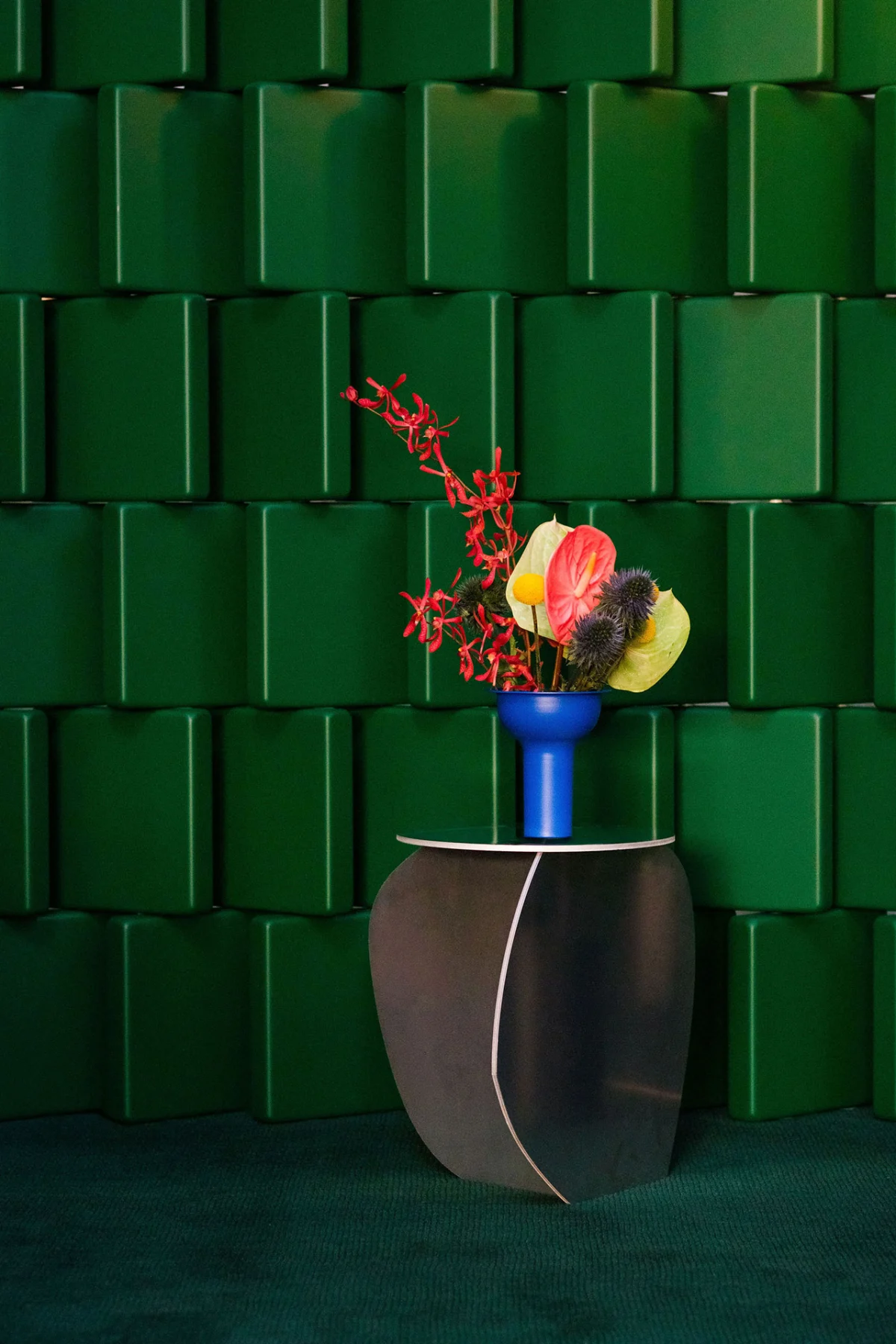
The lighting industry has long been defined by a traditional manufacturing model characterized by high overhead, lengthy lead times, and significant material waste. Gantri, a San Francisco-based lighting manufacturer that has spent the last decade challenging these conventions through 3D printing technology, has officially transitioned from a digitally native brand to a physical community pillar with the unveiling of its first flagship location. Situated in the heart of San Francisco’s Mission District, the new facility, titled "The Shop," represents a strategic fusion of retail showroom, community event space, and advanced research and development laboratory. By occupying a refurbished 1920s autobody shop on 10th Street, Gantri signals a commitment to local manufacturing and the revitalization of industrial spaces for the modern creative economy.
The opening of The Shop marks a significant milestone in Gantri’s ten-year history. Since its inception, the company has sought to democratize high-end lighting design by providing world-class designers with a platform to bring their visions to market without the barriers of traditional mass production. The new physical space serves as the physical embodiment of this mission, offering a three-dimensional look into a process that was previously confined to the digital realm and specialized workshops.
Architectural Integration and Spatial Design
The choice of a 1920s autobody shop as the site for the flagship is a deliberate nod to San Francisco’s industrial heritage. The renovation preserves the architectural integrity of the original structure while injecting a contemporary aesthetic defined by bold color and geometric precision. The interior is partitioned into three distinct sections, each serving a specific functional role in the Gantri ecosystem.
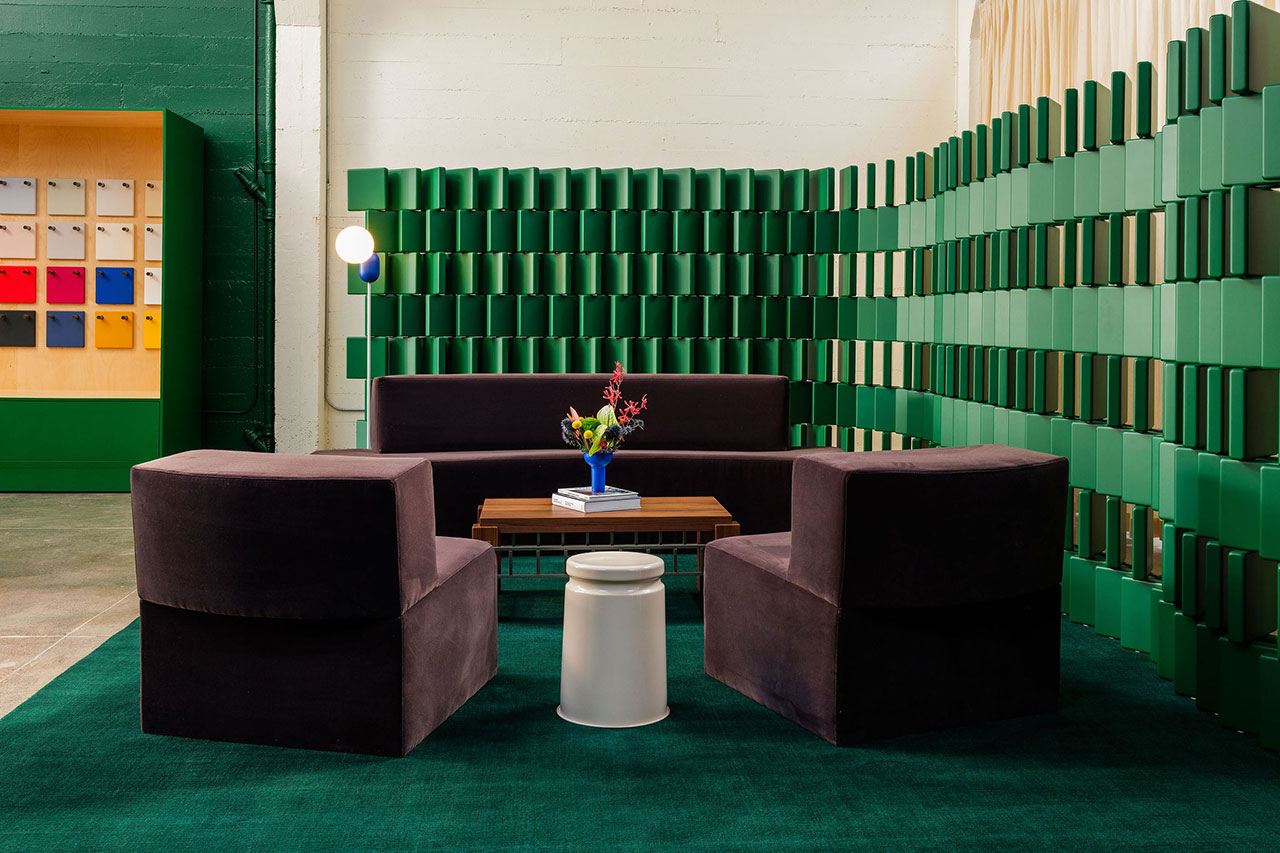
The first section functions as the primary showroom and community interface. In an era where online shopping often removes the tactile experience of design, this space allows consumers to interact with the materials and see the nuances of light filtration through Gantri’s proprietary polymers. A central design feature of this area is a unique room division system finished in the brand’s signature "Gantri Green." The partition is composed of tiles stacked perpendicularly, creating a scale-like, serpentine texture that interacts dynamically with the ambient light. This area also includes dedicated spaces for visitors to rest and engage with color cards, emphasizing the brand’s focus on the emotional impact of the chromatic spectrum.
The middle section of The Shop is designed for maximum flexibility. Conceived as a "hub," this area can be reconfigured to host industry events, designer lectures, community meetings, or internal breakout sessions. By maintaining a polished showroom aesthetic while allowing for modular utility, Gantri positions itself as more than a retailer; it becomes a facilitator of the regional design dialogue.

The final quadrant, often referred to as the "engine room," is perhaps the most critical to the company’s identity. This area houses the material research, prototyping, and refinement operations. By bringing the "magic" of the manufacturing process to the forefront, Gantri provides transparency into how 3D printing—once a niche tool for prototyping—has been scaled into a viable method for producing consumer-grade, high-end furniture and lighting.
A Decade of Disruption: The Gantri Chronology
To understand the significance of The Shop, one must examine the timeline of Gantri’s evolution within the design industry.
- 2014: Foundation and Concept: Gantri was founded with the goal of solving the "designer’s dilemma"—the gap between a great idea and the massive capital required for traditional manufacturing. The company began experimenting with 3D printing as a means of production rather than just prototyping.
- 2016–2018: Material Innovation: The company developed its proprietary Gantri Plant Polymer, a corn-based material that offered the durability of plastic with a more sustainable footprint and a premium matte finish.
- 2019–2021: Global Designer Collaborations: Gantri expanded its roster to include international luminaries such as Luca Nichetto and Viviana Degrandi. During this period, the company gained acclaim for its "rapid response" manufacturing, allowing for new designs to go from concept to consumer in a fraction of the time required by traditional brands.
- 2022–2023: Market Expansion: Despite the global shift toward e-commerce, Gantri identified a need for physical touchpoints where the community could experience the quality of 3D-printed diffusion firsthand.
- 2024: The Launch of The Shop: The opening of the 10th Street location solidifies Gantri’s status as a mature player in the design world, blending the efficiency of a tech startup with the permanence of a heritage design house.
Technological Advancement and Sustainable Manufacturing Data
Gantri’s model is built upon the "Gantri Factory System," a proprietary software and hardware stack that manages the complexities of 3D printing at scale. Unlike traditional injection molding, which requires expensive steel molds and results in significant "dead stock" (unsold inventory), Gantri’s on-demand model allows for a more sustainable approach.

Data from the manufacturing sector suggests that 3D printing can reduce material waste by up to 90% compared to traditional subtractive manufacturing methods. Furthermore, because Gantri utilizes a plant-based polymer, the carbon footprint associated with the raw materials is substantially lower than that of petroleum-based plastics. The consolidation of design, prototyping, and assembly under the roof of The Shop further reduces the logistical carbon footprint, as items do not need to be shipped between multiple facilities during the development phase.
The "rapid response" benefit cited by the company is not merely a marketing claim but a logistical reality. Traditional lighting development cycles can last 18 to 24 months. By utilizing 3D printing, Gantri can shorten this cycle to as little as 12 to 16 weeks, allowing the brand to respond to design trends and consumer feedback with unprecedented speed.
Collaborative Influence: Profiles in Design
The Shop serves as a physical gallery for some of the most influential voices in modern industrial design. The inclusion of works by Luca Nichetto, Louis Filosa, and Viviana Degrandi highlights the brand’s ability to attract top-tier talent.

Luca Nichetto, an Italian designer known for his work with brands like Hermès and Cassina, brought a sense of European heritage to the Gantri platform. His designs often explore the intersection of organic forms and industrial precision. Louis Filosa, based in New York, has focused on the "essentialism" of lighting, creating pieces that serve as functional sculptures. Viviana Degrandi, an Italian architect and designer, has contributed designs that emphasize the playful nature of light and shadow.
These designers have historically noted that the Gantri model allows for greater creative freedom. In traditional manufacturing, a designer might be forced to alter a curve or a joint to accommodate the limitations of a mold. With 3D printing, the constraints are shifted, allowing for more complex geometries and thinner profiles that would be impossible or prohibitively expensive to produce otherwise.
Broader Implications for San Francisco and the Design Industry
The establishment of The Shop on 10th Street carries implications that extend beyond the lighting market. For San Francisco, a city that has seen a significant shift in its retail and industrial landscape post-pandemic, the opening of a permanent, multi-use design hub is a vote of confidence in the Mission District’s future.

Industry analysts suggest that Gantri’s move reflects a broader trend in the "Direct-to-Consumer" (DTC) sector. As digital acquisition costs rise, brands are increasingly looking toward "experiential retail" to build long-term brand loyalty. By offering a space that is one-third community-focused, Gantri is betting that the future of retail lies in education and engagement rather than just transaction.
Furthermore, the presence of an "engine room" in a public-facing flagship demystifies the manufacturing process for the general public. As consumers become more conscious of how their goods are made, the transparency provided by Gantri’s open-lab approach sets a new standard for the industry. It challenges other manufacturers to justify their supply chains and environmental impacts.
In the long term, Gantri’s 10th Street location is poised to become a blueprint for "micro-factories" in urban centers. By proving that high-end manufacturing can exist harmoniously within a residential and commercial neighborhood, Gantri offers a vision of a more localized, sustainable, and design-led economy. The Shop is not merely a place to buy a lamp; it is a testament to the power of a decade of innovation and a signal of the bright, colorful future the company intends to build.