admin
admin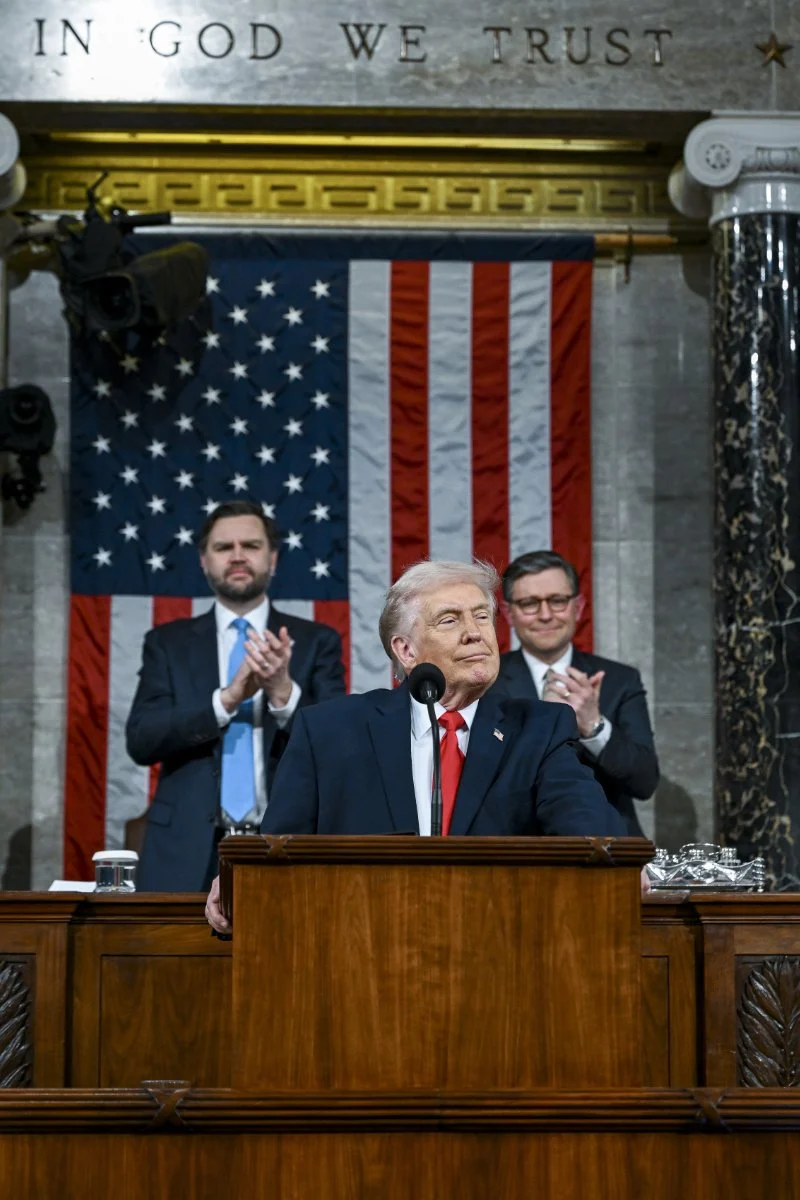
As the midterm election season intensifies, a sharp political divide has emerged over the persistent challenge of food affordability, with Democrats launching a comprehensive strategy to blame corporate consolidation and the Trump administration championing its trade policies and import initiatives as solutions to consumer costs. With the midterms less than a year away, both parties are vigorously attempting to shape the narrative around household expenses, particularly the cost of groceries, which remains a top concern for American families.
The political sparring reached a fever pitch in late February and early March 2026, when Senate Democrats, led by Minority Leader Chuck Schumer (D-New York), convened a high-profile roundtable discussion and subsequent press conference in Washington, D.C. These events were strategically designed to spotlight what Democrats argue is the root cause of elevated food prices: unchecked corporate power and consolidation across the agricultural and retail food supply chains. This offensive came in direct response to President Donald Trump and his administration’s efforts to portray their policies as successfully curbing inflation and lowering consumer costs.
Democrats Lay Blame on Corporate Consolidation
The core of the Democratic argument, articulated at the Capitol Hill roundtable on February 26, posits that the American food system is no longer governed by truly free markets. Instead, they contend, it is dominated by a handful of monopolistic or oligopolistic corporations at every major juncture, from seed production and processing to meatpacking and grocery retail. This lack of competition, they assert, enables these giants to exploit both consumers and farmers.
Senate Minority Leader Chuck Schumer minced no words, stating, “He’s simply lying to the American people when it comes to food costs. He calls the whole thing — affordability — a hoax. What an insult to a family that can’t afford to adequately feed their children.” This statement directly challenged President Trump’s claims regarding significant price drops.
Basel Musharbash, a managing attorney for the Antimonopoly Counsel, testified at the roundtable, declaring, “We no longer have truly free markets. In the food supply chain, either a single monopolist or a tight oligopoly controls each of the major industries involved. It’s become a systemic feature of our food system, and these self-appointed autocrats of trade are the primary drivers of today’s unaffordable food prices.” This sentiment was echoed by a diverse group of participants, including farmers, union leaders, legal experts, academics, and hunger advocates, all united in their condemnation of policies that they believe have allowed corporations to grow "too big."
Their argument highlights a dual impact: consumers are forced to pay higher prices at the checkout counter, while farmers receive diminishing returns for their produce, often operating at the mercy of powerful buyers. This creates a squeeze on both ends of the supply chain, with corporate profits flourishing in the middle.
The Trump Administration’s Counter-Narrative
Conversely, the Trump administration has been actively working to frame the economic situation, particularly concerning food prices, as a success story of their leadership. In multiple public addresses over the past month, President Trump and Secretary of Agriculture Brooke Rollins have asserted that food prices have demonstrably come down in the last year. During his State of the Union address in February 2026, President Trump notably claimed that the price of eggs had dropped by an astonishing 60 percent.
Secretary Rollins further elaborated on this stance in a January op-ed, writing, “Under Trump’s leadership, inflation has slowed, meaning prices are coming down. Key nutritional food items—from fresh chicken to potatoes, citrus to eggs—are down, in some cases up to 25 percent.” The administration attributes these perceived price reductions to their broader economic policies and specific interventions aimed at bolstering supply. Their strategy also heavily leans on the promise of increased farmer income through new trade deals and the promotion of American agricultural exports globally.
The Data Divide: Inflation Figures and Economic Reality
Despite the administration’s optimistic pronouncements, the broader economic data presents a more nuanced picture that Democrats are quick to highlight. While it is true that prices for some individual food items have experienced fluctuations and even drops, official statistics indicate that food prices across the board collectively rose by approximately 3 percent in 2025. This figure, derived from the U.S. Department of Agriculture’s (USDA) Economic Research Service (ERS) Food Price Outlook, serves as a central point of contention for Senate Democrats, who argue it directly refutes the President’s claims of widespread affordability.
Understanding food price inflation requires a look back at recent history. Under President Joe Biden, food prices indeed rose dramatically in 2022, a spike largely attributed by most experts to global supply chain disruptions stemming from the COVID-19 pandemic, geopolitical events, and adverse weather conditions such as droughts and outbreaks like bird flu. Inflation subsequently slowed in 2023 and cooled considerably throughout 2024. However, the rate of increase has continued at a similar pace in 2025 under the Trump administration, suggesting a persistent underlying economic pressure rather than a sharp reversal.
Economists and consumer advocates frequently point to concentrated market power as a significant contributor to sustained high prices. In markets dominated by a few large players, competition is stifled, allowing companies greater leeway to set prices. This environment can also facilitate anti-competitive practices such as price fixing, where companies collude to keep prices artificially high, or price gouging, where they exploit crises or periods of inflation to disproportionately raise prices beyond what can be justified by input costs. A case in point often cited is the egg industry, where major players like Cal-Maine recorded record profits during periods of severe price spikes attributed to bird flu, yet prices remained elevated even after the immediate disruptions subsided.
Legislative Battles: Democratic Proposals to Curb Consolidation
In response to what they view as a systemic problem, Democrats are pushing for robust legislative action. At the heart of their efforts is the "Family Grocery and Farmer Relief Act," introduced on March 5, 2026, by Senate Minority Leader Chuck Schumer and co-sponsored by 12 other Senate Democrats, including Senators Cory Booker (D-New Jersey), Peter Welch (D-Vermont), and Ruben Gallego (D-Arizona).
Schumer heralded the bill as a "pro-consumer, pro-competition, pro-worker, and pro-farmer bill." This unprecedented legislation targets the largest meatpacking corporations by mandating that they choose a single line of business – meaning a company could not simultaneously produce pork, beef, and poultry. The bill specifically focuses on the beef industry by enacting hard caps on concentration at both regional and national levels, requiring the Federal Trade Commission (FTC) to order divestitures when companies exceed these thresholds. This would force large corporations to break up their holdings, aiming to inject significant competition back into the market.
Other Democratic legislative proposals also aim to tackle specific facets of corporate power. Senator Cory Booker has previously introduced the "OFF Act" (Opportunity for Farmers and Ranchers Act) during past farm bill cycles. This legislation seeks to introduce guardrails for the agricultural checkoff system, which mandates that individual farmers contribute to marketing funds often controlled by organizations that, critics argue, lobby for corporate interests rather than the independent farmer. Booker’s bill aims to ensure these funds genuinely benefit farmers and prevent their misuse for corporate advocacy.
Furthermore, Senator Ben Ray Luján (D-New Mexico) has introduced a bill designed to make the practice of "dynamic pricing" illegal. This refers to new technologies that allow large grocers like Kroger and Walmart to change shelf prices in real-time, often based on complex algorithms and customer data. Rachel Lyons, legislative director for the United Food and Commercial Workers (UFCW) union, which represents grocery and meatpacking workers, warned at the roundtable that such systems, if widely adopted by major retailers, could lead to significant and potentially exploitative price increases due to the massive proportion of grocery sales these giants control.

The Enforcement Landscape: A Shifting Stance
The debate over corporate consolidation also highlights a stark contrast in antitrust enforcement philosophies between the current and previous administrations. Under President Joe Biden, there was a noticeable ramp-up in antitrust enforcement across various sectors, including agriculture, with executive orders aimed at curbing consolidation in the food system.
However, the Trump administration has largely reversed this trend. Early in his term, President Trump rescinded Biden’s executive order targeting food system consolidation and ended a state program designed to help states fight monopolies. While his administration later directed the Department of Justice to investigate anti-competitive practices in food and agriculture in December 2025, the efficacy of such an order remains uncertain, given a similar directive in 2020 failed to produce significant results.
A critical point of contention for farmers and advocates involves the "Packers and Stockyards Act," a landmark piece of legislation designed to protect livestock producers from unfair practices by meatpackers. Historically, farmers have faced a high bar, often needing to prove "harm to competition" across the entire industry to sue meatpackers for exploitation. Biden’s USDA had finalized a rule that would remove this contentious requirement, making it easier for individual farmers to seek recourse. However, meat industry groups are challenging this rule, and the Trump administration’s previous USDA had thrown out similar proposed rules. If Congress were to enshrine this protection into law, it would significantly strengthen farmers’ bargaining power and make it much harder for future administrations or court challenges to undo.
Technology, Privacy, and Consumer Data
Beyond traditional antitrust concerns, the rapid evolution of retail technology is introducing new dimensions to the pricing debate. The ability of large grocery chains to implement dynamic pricing, where shelf prices can fluctuate moment-to-moment based on various factors including inventory, demand, and even individual customer data, raises concerns about potential price discrimination and further exploitation of consumers. The UFCW’s legislative director, Rachel Lyons, emphasized that this technology, already being rolled out by industry giants, could significantly impact consumer affordability and underscores the need for proactive legislative intervention like Senator Luján’s proposed bill.
Trade as a Tool: Republican Strategy and Industry Reactions
The Trump administration’s approach to lowering food prices heavily emphasizes international trade and increased imports. A prime example is the executive order signed in early February 2026, titled "Ensuring Affordable Beef for the American Consumer," which aims to quadruple beef imports from Argentina. This strategy prioritizes immediate supply augmentation to directly influence consumer prices.
Secretary Rollins, in her op-ed, also articulated a vision of boosting farmer income through a series of new trade deals designed to promote the export of American farm products globally. She cited eight trade agreements signed in 2025, with more anticipated in 2026, including new deals with Malaysia and Cambodia that are expected to open markets for American beef, pork, poultry, and rice.
These trade initiatives have garnered praise from some large commodity groups, such as the National Milk Producers Federation and the National Cattlemen’s Beef Association, which often represent the interests of larger agricultural enterprises. These groups frequently laud new market access as beneficial for their members.
However, many independent farmers and ranchers, like Missouri farmer Joe Maxwell (President of Farm Action Fund) and Kansas rancher Mike Callicrate, express skepticism. They argue that these commodity groups often represent corporate interests more than individual farmers, and that Trump’s policies, while ostensibly pro-farmer, ultimately lean towards benefiting larger, consolidated industry players. Maxwell and Callicrate contend that while trade can be beneficial, if the underlying issue of domestic corporate consolidation is not addressed, farmers will continue to be squeezed, regardless of export opportunities. They maintain that tackling consolidation is the fundamental solution to ensuring fair prices for both producers and consumers.
Stakeholder Perspectives: Farmers, Unions, and Advocates
The Democratic roundtable brought together a powerful coalition of stakeholders. Joe Maxwell, in his testimony, specifically called for Congress to reform the agricultural checkoff system, advocating for greater transparency and accountability to ensure funds genuinely benefit farmers. He also urged lawmakers to strengthen protections for farmers and ranchers against exploitation by meatpackers, specifically by eliminating the "harm to competition" burden of proof under the Packers and Stockyards Act.
Mike Callicrate, a rancher and meat processor from Kansas, echoed calls for robust anti-trust enforcement and advocated for the federal government to increase direct procurement of food from smaller, local producers and processors. This would not only support independent farmers but also create more localized, resilient food systems less susceptible to the whims of corporate giants.
The United Food and Commercial Workers (UFCW) union, through Rachel Lyons, highlighted the impact of consolidation and new technologies on grocery and meatpacking workers, emphasizing that these trends often lead to reduced wages, tougher working conditions, and less job security, further contributing to the broader economic squeeze on working families.
The Road to Midterms: Political Stakes
The contrasting narratives and policy proposals from Democrats and the Trump administration underscore the high political stakes of food affordability in the upcoming midterm elections. Democrats are actively trying to "reinvent" themselves, as Senator Booker put it, by showing Americans they are "fighting for them" against powerful corporate interests. Their strategy is to connect the dots between corporate consolidation, high food prices, and the struggles of everyday families and independent farmers.
The Republican strategy, conversely, aims to convince voters that their economic policies, focused on deregulation, trade deals, and direct supply interventions, are the most effective path to lower costs and economic prosperity. They will likely dismiss Democratic proposals as government overreach that would harm businesses and ultimately hinder economic growth.
In less than a year, American voters will render their verdict. Whether the Democratic message, centered on antitrust and systemic reform, or the Trump administration’s narrative, emphasizing trade and specific price reductions, resonates more deeply with the electorate will be a defining factor in the political landscape of 2026 and beyond. The battle over the American dinner table is poised to be a pivotal contest in the broader political arena.