admin
admin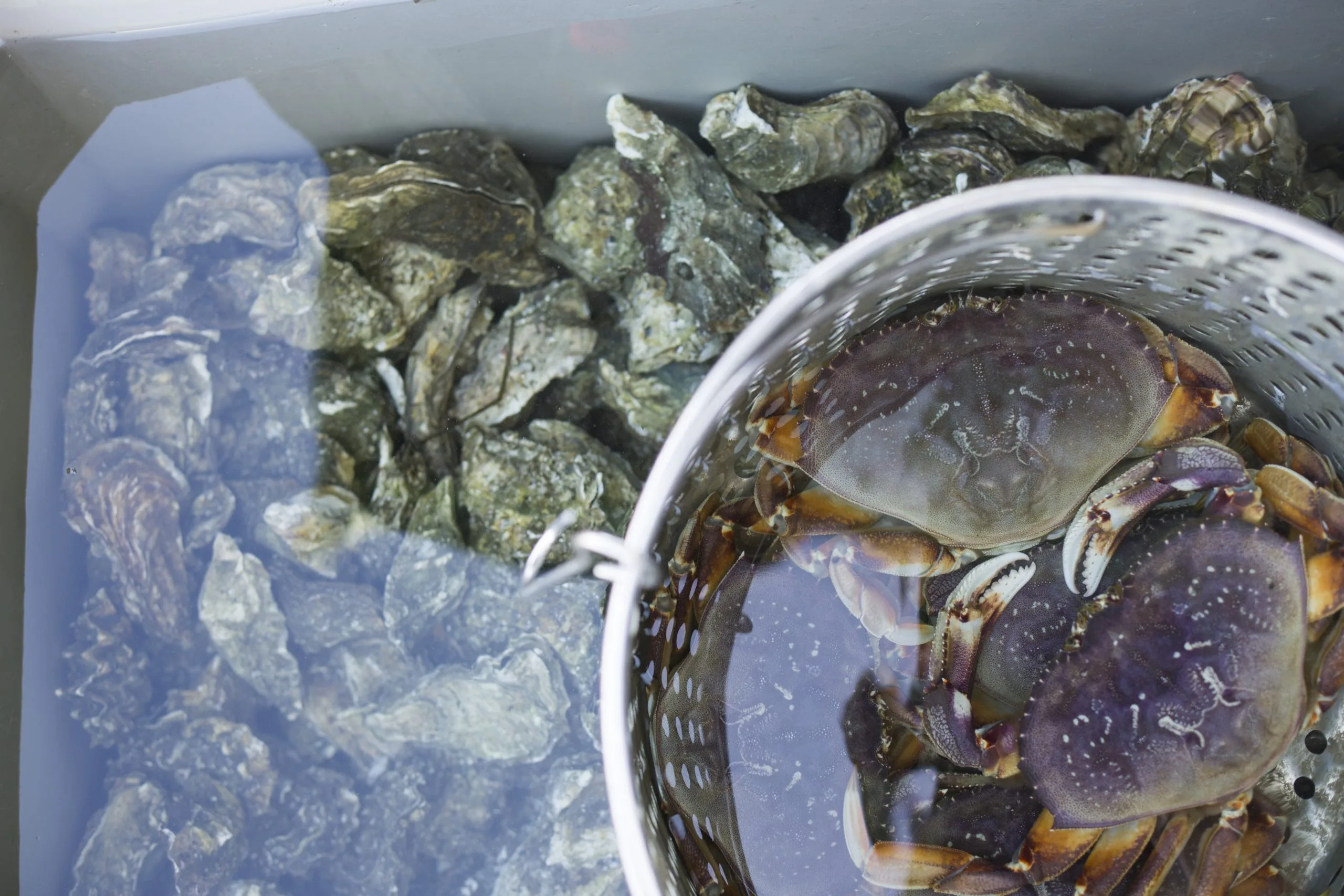
On a blustery Saturday in early February, a small but determined group gathered on a dock at the Port of Newport, a vital hub on Oregon’s central coast. Dressed in vibrant raincoats, they stood out against the tumultuous seascape, straining to hear Taunette Dixon over the high winds, the raucous barks of sea lions, and the constant din of dockside activity. Dixon, standing proudly before her family’s fishing vessel, the Tauny Ann, articulated the formidable challenges confronting today’s independent fishers, chief among them the escalating costs of fishing and crabbing permits. Her voice, though battling the elements, carried a clear message of urgency and resilience for the beleaguered local industry.
The Paradox of Plenty: Oregon’s Seafood Landscape
“The fishing industry has taken a lot of hits in the last few years, and most of them hit the small guys the hardest,” Dixon, a co-founder of Newport Fishermen’s Wives, emphasized. Her observation underscores a critical shift: the increasing difficulty for small commercial fishing families to sustain their operations, leading to a concerning consolidation of the industry by larger corporate entities. Dixon highlighted a profound irony for residents of the Pacific Northwest: despite living in a region renowned for its rich marine bounty, access to genuinely local seafood is increasingly imperiled. “If you are living in the Northwest, you’re very lucky to be able to have the resource of fresh seafood whenever you want—there is always a season of some type going—and supporting us means making sure you’re eating a product that was caught here.”
This dockside gathering in Newport, proudly proclaimed the "Dungeness Crab Capital of the World," was a pivotal stop on the Blue Line, a meticulously organized coastal field trip. Designed to offer the public an intimate glimpse into Newport’s burgeoning “blue economy” of sustainable, locally sourced seafood, the trip forms a crucial component of Winter Waters. This innovative, seafood-focused event series spans much of the Oregon coast from February 1 to March 1, aiming to bridge the growing chasm between consumers and the origins of their seafood.
The initiative directly confronts a stark reality: despite Oregon’s impressive 362 miles of coastline and abundant stocks of highly sought-after species like albacore tuna, salmon, pink shrimp, Dungeness crab, and bottom-dwelling fish such as flounder and lingcod, the vast majority of seafood consumed in the state is imported. A 2024 U.S. Department of Agriculture (USDA) report revealed that a staggering 80 percent of seafood consumed nationwide originates from foreign shores, primarily Canada, Chile, India, Indonesia, and Vietnam. Even more startling for Oregon, a 2022 study conducted for the Oregon Coast Visitors Association (OCVA) exposed that 90 percent of seafood sold and consumed on the Oregon coast itself was imported, often from across the country or around the world. Simultaneously, the wealth of the state’s coastal waters was being predominantly exported elsewhere.
Laura Anderson, who founded the employee-owned Local Ocean Seafoods restaurant in 2002—a establishment known for sourcing directly from boats docked at the Port of Newport—expressed the common public reaction to this data. “It’s a big shock to people to read that,” Anderson noted. “The assumption is, you come to the coast and you’re eating fish from the coast—and that’s just not true in many cases.”
The Genesis of a Movement: Winter Waters’ Collaborative Foundation

The Winter Waters initiative was conceived precisely to recalibrate this imbalance. Its core mission is to reconnect consumers with the diverse, sustainable seafood offered by the local ocean and, in doing so, bolster the regional economy. Kristen Penner, a seasoned seafood value chain strategist and one of Winter Waters’ co-founders, articulated the driving philosophy: “There’s a hunger for greater connectivity in our food systems. Sometimes the answer you need is just one person away, a matter of one degree of separation. Winter Waters is about connecting those dots.” Penner, alongside seaweed farmer Alanna Kieffer and sustainable seafood marketing specialist Rachelle Hacmac, launched the initiative in 2023.
The roots of Winter Waters trace back to a shared passion for seaweed. In 2022, Kieffer was actively farming Pacific dulse for Oregon Seaweed and simultaneously laying the groundwork for educational marine workshops through her own venture, Shifting Tides. Concurrently, Hacmac was instrumental in assisting Alaskan kelp farmers in introducing their products to the competitive Portland market. Penner, in her capacity as the regional value coordinator for the OCVA, was focused on forging direct connections between fishers and markets for their catch.
When these three visionary women converged for the first time in the fall of 2022, they quickly discovered a profound alignment in their passions and concerns. A significant catalyst for their collaboration was the discernible damage inflicted upon the local seafood industry by the COVID-19 pandemic. “Covid happened and our supply chains fell apart,” Penner recounted. “It was a wake-up call. [We were] thinking, ‘Why is it so hard to get this amazing, nutrient-dense protein that’s literally in our backyards?’” It swiftly became apparent that by combining their expertise and networks, they possessed the collective power to catalyze meaningful change.
The inaugural Winter Waters series in February 2023 featured ten events, notably including a prix-fixe menu thoughtfully curated around seaweed pairings. “That first year it was really highlighting seaweed as a culinary ingredient,” Kieffer explained. “Now it’s about so much more—about all of Oregon seafood and the people behind it and why it matters to keep Oregon seafood local.”
Connecting the Dots: Winter Waters’ Diverse Offerings
Now in its fourth year, the Winter Waters series has expanded significantly, offering approximately two dozen distinct experiences. These range from elaborate multicourse meals and immersive dock tours to educational tastings, hands-on workshops, insightful seminars, and engaging panel discussions. Each event is meticulously crafted to bridge the knowledge gap between consumers and the intricate world of sustainable seafood sourcing. The series has seen remarkable growth, with over 2,600 registrants in the previous year, predominantly local participants, but also drawing attendees from as far afield as the East Coast and Iceland, underscoring its growing national and international appeal.
The series now commences with the Blue Foods Forum, a two-day, solutions-oriented conference specifically designed for industry experts. However, the majority of Winter Waters events remain open to the public, attracting a surprisingly diverse audience that includes seasoned elderly fishermen, aspiring marine biology students, innovative seafood-centric chefs, nature-inspired artists, and a multitude of curious non-professionals eager to learn.
The self-guided Blue Line trip, exemplified by the Newport dock tour, is particularly effective in enabling participants to engage directly with producers and cultivate a deeper appreciation for their work. This year, 192 registered ticket holders embarked on a journey that included visits to the Oregon Coast Aquarium to converse with volunteers dedicated to reforesting kelp forests, the Hatfield Marine Science Center to explore an active oyster farm, and the Pacific Maritime Heritage Center, where they could directly question fishers about the current state and future of the seafood industry. Another highlight was a stop at the Central Coast Food Web (CCFW), offering participants the unique experience of holding wriggling sea urchins raised for uni. These direct interactions are fundamental to the Winter Waters mission of fostering transparency and connection.

Navigating the Challenges of Local Sourcing
Oregon’s fishing industry is characterized by its small-scale, independent nature. According to 2024 data from the Oregon Department of Employment, approximately 1,200 commercial fishers operate around 800 vessels annually. The highest concentration of this activity is found in Lincoln County, home to Newport, where a typical fishing boat is crewed by just one to four individuals.
Kieffer eloquently described the unique environmental factors that contribute to Oregon’s rich marine life: “People here never use the term ‘beach’—it’s always the ‘coast.’ Our water is cold and murky, and that’s because it is full of nutrients. It fuels all of this seafood: tuna, crab, shellfish, so much kelp.”
The benefits of consuming locally sourced seafood extend beyond mere freshness, offering optimal flavor, ideal texture, and maximum nutritional value. Penner also highlighted the significant climate and economic implications: “It just doesn’t make sense that we ship seafood overseas—that’s a pretty big carbon footprint. Buying local is one way to support the people in our communities that are doing the really amazing hard work of feeding us.”
However, increasing in-state demand for Oregon-caught seafood presents its own set of formidable challenges. Even in major markets like Portland, maintaining a consistent supply of highly coveted local seafood, such as Dungeness crab during peak season, can be difficult. “We’re remote,” Kieffer pointed out, “It’s tricky to get seafood from a boat to a restaurant over the mountains that get covered in snow in the wintertime.”
Laura Anderson of Local Ocean Seafoods further elaborated on the operational complexities for restaurants. “Local Ocean buys direct from the fleet across the street, and it’s hard,” she admitted. “I can’t imagine most seafood businesses maintaining relationships with dozens of different vessels, the timing, having to take their entire fish load.” She emphasized the lack of consistency in both product and price when dealing directly with fishers, factors that are crucial for restaurant management. “You can’t just say, ‘Bring me 10 pounds of petrale sole on Tuesday and another 10 pounds on Friday.’ Sometimes they don’t catch the fish that they thought they were going to catch.”
Despite these hurdles, Local Ocean has pioneered effective strategies for local sourcing. Amber Morris, known as the restaurant’s “Fish Goddess” since 2007, serves as the vital liaison between Local Ocean and approximately 70 local fishermen. Her role involves making regular trips to vessels like the Dixon family’s Tauny Ann to collect fresh salmon, tuna, shrimp, or crab. The restaurant’s menu, which proudly features the names of its supplying fishing boats, dynamically shifts with the seasons, offering simple classics alongside daily specials dictated by the day’s catch. Critically, Local Ocean also leverages its freezer capacity to maintain a year-round supply of local fish. “Local Ocean uses frozen fish so we can provide local year-round,” Anderson stated, advocating for other restaurants to adopt this model. “Getting past the ‘fresh is better than frozen’ myth is a huge win for everyone. Higher quality, less food waste, more control—and more local.”
Building Infrastructure and Market Demand

Beyond consumer education, Winter Waters actively seeks to strengthen the local seafood industry by fostering connections and supporting crucial infrastructure, particularly seafood hubs. These centrally located, shared facilities enable members to efficiently process, package, store, and distribute their catches, alleviating significant logistical burdens for small-scale operations.
The Central Coast Food Web (CCFW), a Newport-based nonprofit co-founded by Anderson and Penner in 2022, is a prime example. As one of five seafood hubs operating in Oregon, CCFW provides a shared-use processing facility for both seafood and farm businesses. An adjacent complex hosts OONEe Sea Ranch, a sea urchin ranch, and the Oregon Ocean Cluster’s emerging ‘OMX’ (Oregon Mariculture Accelerator) project, an R&D mariculture farm dedicated to trialing land-based seaweed farming and developing value-added products. “They have processing and packaging equipment for small producers who can rent things—and kitchen space,” Kieffer elaborated. “Not every fisherman needs to have a vacuum sealer, and cold storage is usually very limited.” These shared resources are invaluable for reducing overhead and increasing efficiency for independent producers.
During the Blue Line tour at CCFW, participants can walk through the hub, observe its operations, and taste products created on-site, such as canned tuna and glass jars of seafood broth. This immersive experience not only educates them about the seafood supply chain but also introduces them to new local goods.
The Winter Waters series also extends its reach to sustainable seafood markets along the coast, including Port Orford, the Astoria Fisherman’s Co-op, and Fishermen Direct in Gold Beach. The founders’ overarching hope is that visitors will develop a lasting bond with local fishers and return throughout the year, seeking guidance on seasonal seafood selections and continuing to support the local economy.
Championing Equity and Inclusion in the Blue Economy
A foundational tenet of the Winter Waters founders’ vision is to champion diversity within the seafood industry, encompassing not only the variety of species fished but also the demographic of those who fish. “There’s an assumption that it’s a male-dominated industry, but it really isn’t,” Hacmac asserted. This statement is supported by a 2024 report from the Food and Agriculture Organization of the United Nations, which indicates that women constitute 50 percent of the global seafood workforce. However, the report also highlights a significant disparity: the number of women in leadership roles within the industry remains as low as 4 percent, and crucially, current studies do not adequately collect data on individuals who identify beyond the gender binary.
Addressing this disparity, this year’s Winter Waters series featured a dedicated conference in Newport titled “Women of the Water.” Co-hosted by Julie Kuchepatov, founder of Seafood and Gender Equality (SAGE), an Oregon-based global nonprofit, and Becca Williams, SAGE’s director of gender strategies, the event provided a critical platform for discussion and advocacy. With only 22 spaces available, the conference quickly sold out and generated a substantial waitlist shortly after its online announcement, clearly demonstrating a profound demand for such a gathering.
“What is needed in the seafood sector right now is not too far off from what is needed generally—and that is an open heart toward questions like: How do we create policies and practices that really center wellbeing?” Williams remarked. “In the workplace, how do we lead with a sense of compassion and support folks coming into jobs on boats being fully who they are?” The conference delved into practical, yet often overlooked, issues such as where to find fishing gear designed to fit female bodies, and strategies to enhance safety during weeklong fishing expeditions when women may be the sole female crew members.

To further illuminate and celebrate women’s contributions to Oregon’s coastal seafood industry, Winter Waters actively purchases and promotes products from local women-run seafood companies, including Local Ocean and SueAnna Harrison’s Oregon’s Choice Tuna. The event series also intentionally hires local women chefs who are committed to sourcing sustainable seafood, such as Portland-based U’ilaniku’ulei Vele and Maylin Chávez, for various culinary events, including pop-up food stands and sit-down dinners like the Seafaring Speakeasy that follows the Blue Foods Forum.
The Ripple Effect: Broader Impact and Future Initiatives
The strategic timing of Winter Waters in February is no accident. “February is a slow time in the restaurant industry on the coast,” Hacmac explained, recognizing that this period offers chefs more flexibility and creative bandwidth to collaborate with the initiative. Kieffer added, “It’s also when businesses like restaurants and hotels really need our support.” The economic impact is tangible: in 2023, Winter Waters events generated $79,808 in income for participating food and beverage businesses along the Oregon coast. Additionally, the initiative donated $6,235 to vital nonprofit partners, including the Oregon Kelp Alliance and FishHer, further extending its positive influence.
Beyond this crucial influx of income during the off-season, the impact of Winter Waters ripples outward in myriad tangible ways, notably inspiring new products and ventures. Following a presentation by the 100% Fish Project—an Icelandic endeavor dedicated to minimizing waste—at the 2023 Blue Foods Forum, Laura Anderson was inspired to maximize the utilization of every part of the whole fish arriving at Local Ocean. This past year, the restaurant began experimenting with less commonly requested fish parts, incorporating them into seafood broths and creating innovative fish-skin dog treats, now available for purchase in the restaurant’s small market.
In an even more direct outcome, two other attendees were so galvanized by the 100% Fish Project that they went on to found Reclaim Cooperative, a fish tannery in Hoskins, Oregon. This pioneering venture now produces sustainable seafood leather goods from fish skins, transforming what was once waste into valuable products.
Looking to the future, Winter Waters founders, in partnership with the OCVA and Oregon Ocean Cluster, are developing an ambitious new program: the Oregon Coast Seafood Trail. This carefully coordinated route, set to launch later this year, will highlight businesses that exemplify commitment to local seafood partnerships. The concept draws inspiration from successful, like-minded initiatives across the country, such as the Local Catch Network, the Maine Oyster Trail, the Monterey Bay Aquarium Seafood Watch, and South Carolina’s Good Catch program. To earn a place on the Seafood Trail, businesses must commit to serving at least 50 percent local fish and shellfish. “This will become an easily accessible online list for visitors and locals alike to find places that truly have local seafood,” Hacmac affirmed.
This initiative aims to include a diverse array of establishments, from upscale dining to quality fish-and-chips spots like Squatchsami in Lincoln City. Kieffer recalled a conversation with Squatchsami co-owner Debbie Martin, who shared her audacious goal: “She told us her goal is to get Atlantic cod off every fish and chips menu in Oregon,” a testament to the growing movement’s ambition.
The founders of Winter Waters recognize that many working waterfronts and coastal communities face similar challenges in cultivating robust local seafood economies. “We’re really excited about what the future holds,” Penner concluded, “especially as we dive deeper into what else is possible, connecting with a larger community to learn and share resources to accelerate this movement—not just here, but everywhere.” The final events of this year’s Winter Waters series include a crab picking demonstration in Gold Beach, a comprehensive tour of Port Orford, a unique seaweed cyanotype class in Brookings, and several special seafood-centric meals. Further information and tickets can be found on the Winter Waters website, inviting all to partake in this vital movement for sustainable, local seafood.