admin
admin
The modern individual often finds themselves adrift in a paradox of connection: simultaneously hyper-connected through digital channels yet increasingly isolated in physical spaces. This phenomenon extends to how we consume music, where the once communal act of listening has largely retreated into the private sphere of headphones, driven by algorithmic curation. This shift has prompted a growing disillusionment with passive listening, fostering a yearning for shared musical experiences. In response, a global movement is emerging: the listening bar, a concept rooted in Japanese jazz cafes, is experiencing a vibrant resurgence, offering an "analog sanctuary" and a much-needed "antidote to loneliness."
The Erosion of Communal Listening and the Rise of Algorithmic Influence
For many, the simple act of listening to music has become fraught with ambiguity. Donning Bluetooth headphones and pressing play on streaming services like Spotify often blurs the line between personal choice and algorithmic suggestion. This raises a fundamental question: is the music genuinely chosen and enjoyed, or does it merely serve as an ambient "cocoon" to insulate oneself from the external world? The ubiquity of personal audio devices – from the Walkman and iPod to the ever-present iPhone – has transformed public spaces into a mosaic of individual sound bubbles. This privatized soundscape, while offering personal relief from urban noise and the obligation of social interaction, concurrently represents a profound loss of collective experience.
In earlier eras, music naturally fostered community. Crowds would spontaneously gather around street performers, buskers, or the communal joy emanating from a boombox. Even solitary radio listening carried a sense of unseen solidarity, a shared moment with thousands tuning in simultaneously. The absence of such organic interactions is keenly felt, manifesting in the missed opportunities for eye contact and quiet empathy among strangers, such as during a public display of raw emotion on a transit ride. This shift towards isolating individual listening underscores a broader cultural devaluation of music, transforming it from an active, shared experience into mere background ambiance.
The "Spotification" of music discovery, extensively documented by music journalist Liz Pelly in her forthcoming 2025 book, Mood Machine: The Rise of Spotify and the Costs of the Personal Playlist, highlights how streaming platforms have co-opted and commercialized the once-intimate act of mixtape exchange. Early Spotify marketing campaigns leveraged the concept of personalized discovery, yet this quickly evolved into an algorithmically driven system. In-house playlist curators’ selections were meticulously monitored for skips, saves, and demographic data, ultimately paving the way for the pervasive, passive listening experience that dominates today. Pelly argues that beyond the financial devaluation of music in the streaming era, there’s a more insidious cultural flattening. Music becomes "something passable, just filling the air to drown out the office worker’s inner thoughts as spreadsheets get finalized and emails get circled up on." This has even influenced record labels, who increasingly favor "lo-fi" genres that perform well as unobtrusive background noise. What was once a descriptor for recording equipment (e.g., "Radio Shack mic and a four-track in various states of disrepair" for bedroom musicians) now, according to Richmond-Virginia-based musician and music critic Dash Lewis, often evokes "AI slop" due to its pervasive, undifferentiated presence on streaming services.
A Historical Precedent: Japan’s Ongaku Kissa
The concept of dedicated listening spaces is not new; its origins can be traced back nearly a century to Japan. Known as ongaku kissa (music cafes) or jazz kissa, these establishments first emerged in the 1920s. However, they gained significant prominence and cultural importance in Tokyo’s post-World War II jazz scene. In the aftermath of the war, with limited access to live performances and expensive imported records, kissa became vital cultural hubs. They offered a unique opportunity for enthusiasts to gather, listen to rare vinyl records on high-fidelity sound systems, and engage in thoughtful discussions about music. The departure of the U.S. army in the 1950s left behind a treasure trove of record collections and discarded circuit boards, which resourceful Japanese DJs and proprietors repurposed into sophisticated audio systems, further fueling the kissa revival of the 1960s and ’70s.
A recent Smithsonian Magazine story, exploring the contemporary rise of listening bars, delves into the spiritual dimension of Japan’s kissa culture. Tokyo-based filmmaker Nick Dwyer, in his 2024 documentary A Century in Sound, highlights the Japanese belief that "records have a soul." In this cultural context, listening becomes a form of communion with the artists and the history embedded within the music. While many traditional Japanese listening cafes served coffee, tea, and sometimes light meals, their primary purpose was always the focused appreciation of music in the company of others, often in near silence, fostering an almost meditative atmosphere. This emphasis on intentional, shared listening forms the foundational philosophy for the modern listening bar movement.
The Modern Resurgence: A Global Phenomenon
In recent years, the listening bar concept has transcended its Japanese origins, experiencing a global renaissance across cities in the United States, Europe, and Australia. These establishments are being hailed as "analog sanctuaries," vital "third spaces," and potent "antidotes to loneliness." This widespread popularity reflects a deeper societal yearning for genuine human connection and a critique of increasingly wired, yet often antisocial, digital culture. The passive consumption of music, where ambiance has often supplanted true cultural engagement, is being challenged by these new communal hubs.
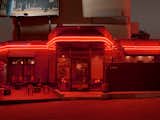
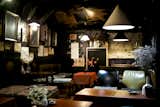
One prominent example is Café Tondo, which opened in July last year in Los Angeles’s Chinatown neighborhood. Housed in a squat, one-story building beneath elevated train tracks, its exterior, adorned with red neon piping, evokes an eerie, Hopper-esque quality reminiscent of the Twin Peaks aesthetic. Inside, the atmosphere shifts to moody lighting, minimalist Mexico City-inspired decor, and muted tones. Patrons gather at custom booths and small tables, their conversations accompanied by music flowing from a high-fidelity sound system. Café Tondo, designed by Aunt Studio and Mouthwash Studios, exemplifies the modern listening bar’s commitment to both sonic excellence and thoughtful design.
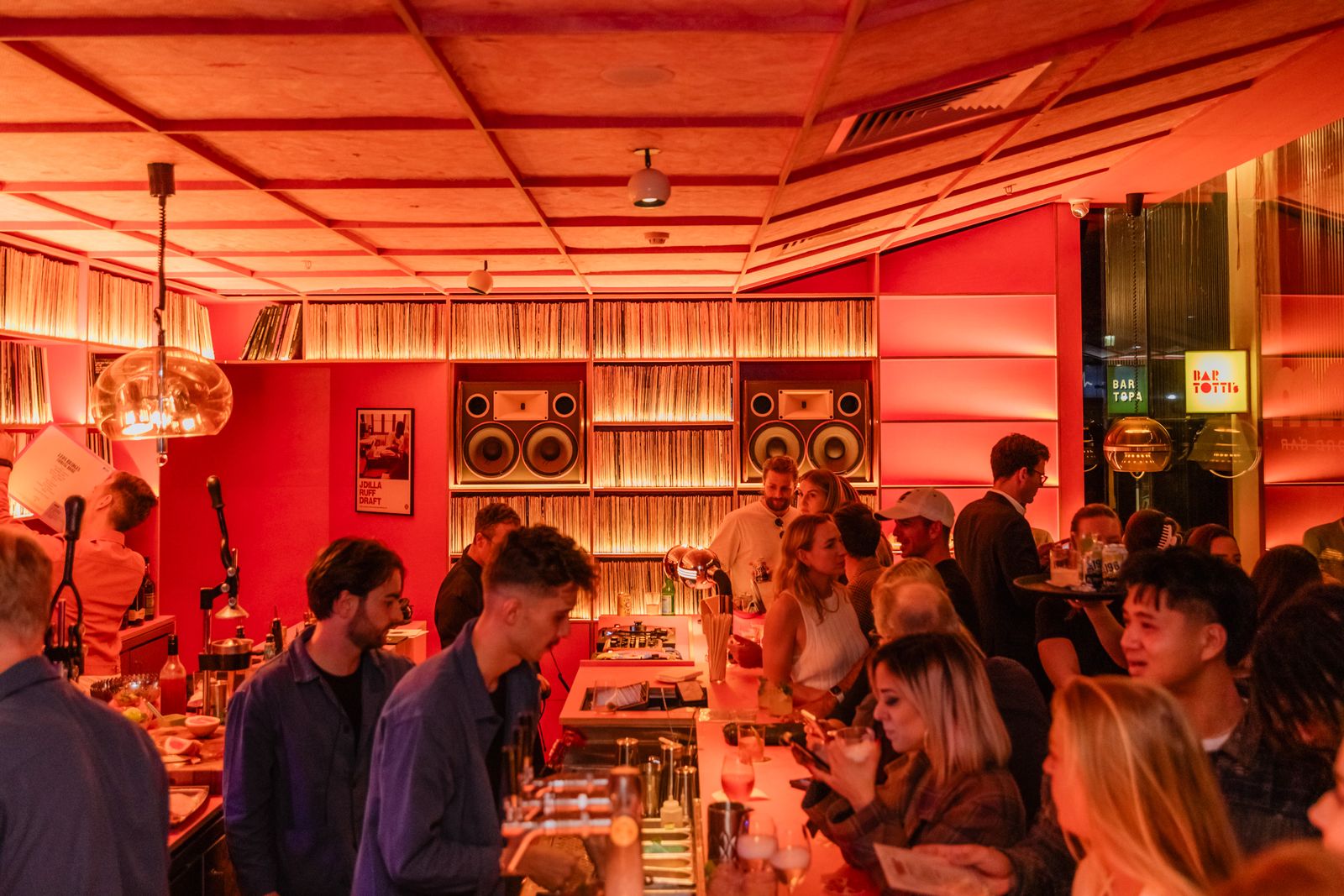
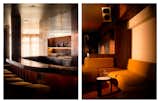
Across the United States, similar venues are thriving. Denver, Philadelphia, and New York City are witnessing a proliferation of listening bars, each bringing its unique flavor to the concept. Brooklyn’s Public Records, for instance, offers multiple spaces for musical enjoyment, including a restaurant and cocktail bar (The Atrium) and a dedicated lounge (Upstairs). Manhattan boasts establishments like All Blues, a new wave listening bar that opened in 2024, and Silence Please, with its minimalist listening room in the Bowery. In London, Space Talk, designed by EBBA and Studio Charlotte Taylor, has become a popular hi-fi destination, while Melbourne, Australia, hosts venues like LB’s Record Bar, which leans into the retro aesthetic often associated with vinyl culture. These bars collectively represent a conscious effort to reclaim music as a shared, engaging experience.
Cafe Tondo: A Case Study in Los Angeles
Café Tondo serves as an excellent illustration of how these modern listening bars operate and resonate with contemporary audiences. Functioning as a multi-faceted social space, it offers coffee and pastries during the day, transitioning to small plates and cocktails in the evening, much like the traditional Japanese kissa. However, its core mission, as envisioned by Mouthwash Studios, a visual communication design firm with a declared aim to "influence culture," is to foster genuine cultural participation.
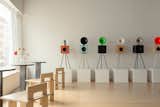
Abraham Campillo, co-founder of Tondo, emphasizes the studio’s realization that to truly influence culture, direct participation is essential – a stark contrast to the often-isolated nature of modern professional life. "We’re spending a lot of time on computers," Campillo notes, "even if we’re interacting with other people, it’s on Zoom or Google Meets." Tondo was conceived as an antidote, a social space designed to unite people through a shared love of music. The team transformed a former tire shop, collaborating with Aunt Studio for the interior design. Handcrafted furniture by OMBIA Studio provides diverse seating options, from formal tables ideal for their chess evenings to high-top bar seats and cozy alcoves with maneuverable stools. An industrial, high-end sound system by Pavilion Audio Systems ensures that the curated music fills both the interior and the outdoor patio, creating an immersive auditory experience.
Tondo’s programming further reinforces its community-building ethos. Themed nights, such as Bolero on Tuesdays, guest DJs on Saturdays, and jazz on Sundays, attract varied audiences drawn by a specific genre or a desire for musical exploration. Campillo observes the diverse demographics: "Tuesdays, you’ll see more of a Latino audience: people bring their parents, they’ll bring their mom for their birthday; or you’ll see a daughter with her dad." He describes these evenings as "really, really wholesome." Jazz nights draw a broader demographic, while Saturday DJ sets fill the cafe with younger patrons, spilling out onto the street. In these instances, music acts as a powerful conduit for connection, demonstrating how shared listening fulfills a deep-seated human need for communal engagement.
Addressing the Loneliness Epidemic and Third Space Decline
The popularity of listening bars is inextricably linked to broader societal concerns, particularly America’s burgeoning loneliness epidemic. Over the past decade, a growing body of research and public discourse has highlighted the increasing isolation experienced by individuals across demographics. The U.S. Surgeon General, for instance, issued an advisory in 2023, declaring loneliness a public health crisis, citing significant health risks comparable to smoking. This widespread isolation has been exacerbated by the decline of "third spaces"—informal public gathering places outside of home and work, such as community centers, religious institutions, athletic leagues, and local cafes. Sociologist Ray Oldenburg, who coined the term, argued for the vital role of these spaces in fostering civic life, casual social ties, and a sense of belonging. Their diminishing presence has made it increasingly difficult for individuals to forge "loose, casual, but repeated ties" that are crucial for social well-being.
Dash Lewis, the musician and critic, posits that the modern listening bar has evolved precisely in response to this contemporary isolation. These spaces offer a modern interpretation of communal gathering, allowing individuals to connect based on shared interests in music, which can spark conversations and new friendships. "It’s part of the bigger conversation that we’re having in general about disappearing third spaces and the fracturing of culture," Lewis asserts.

Music, historically, has been a powerful catalyst for such "loose ties." However, the financial barriers to attending live music events have become prohibitive for many. USA Today reported that the average concert ticket price reached nearly $136 in 2024, driven by inflation and substantial service fees from ticketing platforms. Listening bars, much like the kissa of the past, provide an accessible and affordable alternative to experience curated music in a social setting, sidestepping the exorbitant costs associated with traditional concerts.
Reclaiming Music Discovery from Algorithms
Beyond their social value, listening bars offer a vital alternative for music discovery in an era dominated by algorithmic feeds. Dash Lewis, reflecting on his visit to All Blues in Manhattan, noted that despite the loud, high-end sound system, conversations thrived, and visitors actively sought new sounds. He views music discovery today as a "fraught task." Traditional music journalism, once a primary source of critical insight and new artist exposure, is struggling, with most in-depth criticism now behind paywalls, rendering it less accessible. Consequently, for the majority of listeners, discovery is largely dictated by streaming service algorithms, particularly Spotify’s.
This algorithmic dominance, as Liz Pelly meticulously details, has shifted the paradigm from active, human-curated exploration to passive, data-driven suggestions. While platforms market "discovery" playlists, these are fundamentally designed to keep users engaged within their ecosystem, often leading to a homogenization of tastes and a preference for "background noise" genres. Listening bars directly counter this trend. By featuring curated vinyl selections, guest DJs, and themed nights, they reintroduce the element of human curation and serendipitous discovery. Patrons are exposed to genres and artists they might never encounter through their personalized algorithms, fostering a more adventurous and appreciative approach to music. This intentional curation elevates music from a mere commodity to a shared cultural artifact, inviting a deeper, more active engagement from listeners.
The "Hi-Fi" Experience: Beyond Sound Quality
The "hi-fi" experience promised by listening bars extends far beyond the technical quality of their sound systems. It encompasses the intentional cultural encounters that unfold when people gather to listen to music together. Walker Tovin, CEO of Symbol, a company specializing in furniture rooted in audio culture (like vinyl LP shelving and lounge seating), observes a significant resurgence in "intentional listening." This practice involves bringing friends together, selecting an album, and allowing the music to become the catalyst for conversation and connection.
Tovin notes that many of his customers are rediscovering this practice, often dusting off long-neglected record collections. "I would say half of our customers already had a collection and saw it come and go and are now saying, ‘This is great. I’m going to go dig my records out of the storage unit and put them back in my living room,’" he explains. Others are entirely new to the concept, having grown up immersed in streaming culture. This trend highlights a collective realization of what was lost: "We did lose something that’s really enjoyable about sitting down having a large-format piece of art in your hand and listening to a record in order," Tovin states. Listening rooms, he argues, are spaces where individuals can truly "engage with music in an intentional way, in a group of people."
Economic and Cultural Implications
The rise of listening bars carries significant economic and cultural implications. Economically, they represent a localized response to the challenges facing the broader music industry. By offering a premium, curated experience, they create a niche market for high-quality audio equipment, vinyl records, and skilled DJs. They also provide a stable revenue stream for local businesses, from coffee roasters to chefs, integrating into the local economy as multi-faceted establishments. Unlike the often-ephemeral nature of online streaming, listening bars create tangible, community-centric businesses that contribute to urban vibrancy.
Culturally, these spaces are fostering a return to appreciation for music as an art form deserving of focused attention. For younger generations, particularly millennials and Gen Z who may not have grown up with a parent’s vinyl collection and are deeply embedded in streaming culture, listening bars offer a novel way to socialize while deliberately slowing down. They provide an alternative to the isolated "deserted islands" created by earbuds, offering a communal haven for genuine connection. This re-emphasis on intentional listening could lead to a broader shift in how music is valued and consumed, potentially challenging the dominance of background-noise genres and encouraging a more diverse and critically engaged musical landscape. The trend suggests a powerful yearning for authenticity and human interaction in an increasingly digitized and fragmented world, positioning listening bars not just as entertainment venues, but as crucial new "third spaces" for contemporary society.