admin
admin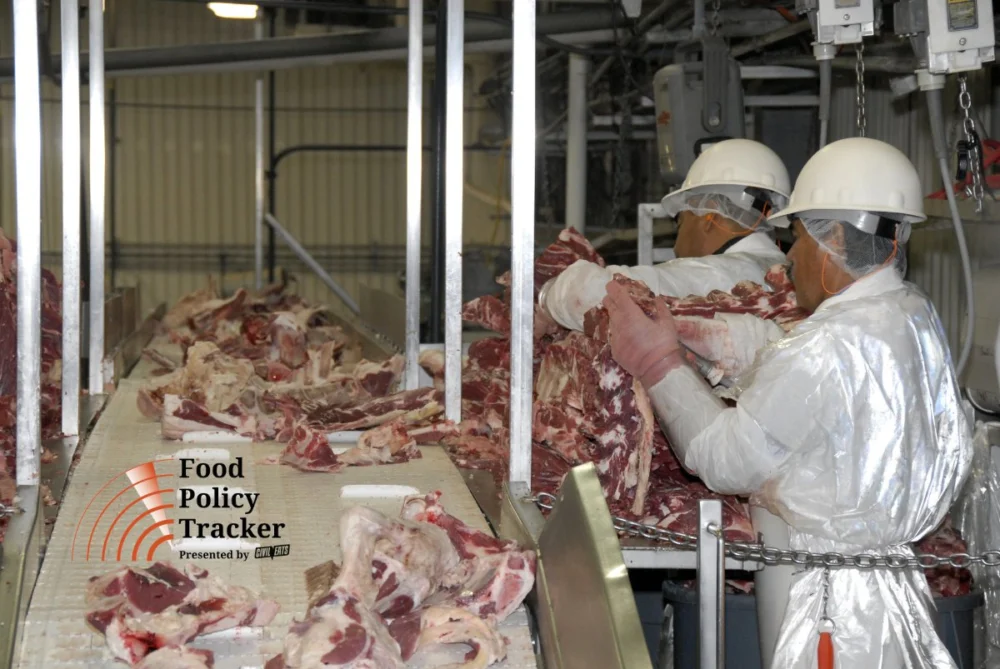
Washington D.C. – The U.S. Department of Agriculture (USDA) announced a controversial set of proposed rules on Tuesday, February 18, 2026, aimed at significantly increasing line speeds at poultry and pork production facilities nationwide. The proposed changes, which the administration contends will remove "outdated" bottlenecks and help lower food prices for consumers, have immediately drawn sharp criticism from a broad coalition of animal welfare, public health, and worker advocacy groups who warn of heightened risks of worker injuries and food contamination.
Under the new proposals, the maximum processing speed for chicken slaughter lines could surge from the current 140 birds per minute (bpm) to an unprecedented 175 bpm. Similarly, turkey processing lines would see an increase from 55 bpm to 60 bpm. Perhaps most dramatically, the USDA has proposed eliminating the maximum line speed limit entirely for pork processing facilities, effectively allowing plants to set their own pace. Compounding these changes, the agency also seeks to significantly reduce requirements for annual worker safety reports from these facilities, a move that critics argue would diminish transparency and accountability.
A Chronology of Deregulation and Acceleration
The recent proposals are not isolated but rather represent a culmination of efforts initiated during the first Trump administration to accelerate meat production. The push for faster processing speeds has been a recurring theme, often justified by arguments of efficiency and global competitiveness.
- 2014: The USDA introduced the New Poultry Inspection System (NPIS), allowing some poultry plants to operate at higher speeds (up to 140 bpm) if they adopted certain self-inspection protocols.
- 2019: The USDA finalized the New Swine Slaughter Inspection System (NSIS), which allowed pork plants to largely self-regulate their line speeds and shift some inspection duties to plant employees, effectively removing federal limits on processing speeds in participating plants. This system was initially implemented as a pilot program.
- Early 2020s: The first Trump administration began granting temporary waivers to a select number of pork and poultry producers, allowing them to exceed existing line speed limits, often mirroring the speeds now being proposed or the unlimited speeds seen in the NSIS program. These waivers were frequently granted under the guise of increasing production capacity, particularly in response to perceived supply chain disruptions or market demands.
- March 2025: The Trump administration officially extended these temporary waivers, signaling a clear intent to pursue permanent rulemaking to solidify these higher speeds across the industry. This extension further intensified concerns among watchdogs who viewed the waivers as a means to circumvent established safety protocols without robust public debate.
- February 18, 2026: The USDA officially unveiled the proposed rules, initiating a 60-day public comment period, during which stakeholders and the public can submit feedback before the rules are finalized. This period is critical as it represents the last formal opportunity for public input to influence the final regulatory framework.
The Administration’s Rationale: Efficiency and Consumer Savings
In its official press release announcing the proposed rules, the USDA reiterated the administration’s stance that these changes are vital for streamlining operations and reducing costs. A spokesperson for the USDA’s Food Safety and Inspection Service (FSIS) stated, "By removing outdated regulatory bottlenecks and allowing plants to leverage modern technology and best practices, we can foster greater efficiency in the meat and poultry sector. This, in turn, will translate to lower production costs, which we anticipate will be passed on to consumers in the form of more affordable food prices."

Industry groups have largely echoed this sentiment. The National Chicken Council and the National Pork Producers Council, influential trade organizations, have consistently advocated for increased line speeds, arguing that current regulations hinder innovation and competitiveness. They assert that advancements in processing technology, coupled with company-led safety protocols, can mitigate risks even at higher speeds. For instance, proponents often point to automated sorting and cutting technologies, as well as enhanced sanitation systems, as ways to maintain food safety standards. They also argue that faster lines mean more product can reach the market quicker, potentially stabilizing prices and ensuring a more robust domestic food supply, especially during periods of high demand or unforeseen disruptions.
Grave Concerns: Worker Safety and Public Health at Risk
Despite the administration’s assurances, a coalition of advocacy groups has swiftly condemned the proposed rules, painting a stark picture of potential repercussions for both human and animal well-being. Their opposition is rooted in years of research and documented evidence regarding the inherent dangers of high-speed meat processing.
Worker Safety: A Brutal Reality Exacerbated
The meatpacking industry consistently ranks among the most dangerous professions in the United States. Data from the Bureau of Labor Statistics (BLS) frequently shows injury rates in meat and poultry processing far exceeding the national average for all private industries. Workers face a daily barrage of hazards, including repetitive motion injuries, lacerations, amputations, falls on slippery floors, exposure to hazardous chemicals, and extreme temperatures.
"These proposals are an outright assault on the safety and dignity of meatpacking workers," declared a representative from the United Food and Commercial Workers International Union (UFCW), which represents a significant portion of the nation’s meatpacking workforce. "When line speeds increase, workers are forced to perform their tasks faster, with less time for proper technique and greater risk of error. This directly leads to an increase in preventable injuries, including debilitating musculoskeletal disorders, severe cuts, and even lost limbs."
Research from organizations like Oxfam America has consistently highlighted the disproportionate impact of these dangers on vulnerable populations, including immigrant workers and refugees, who often have limited access to healthcare and fewer resources to advocate for safer working conditions. A 2025 report by the National Women’s Law Center (NWLC) specifically noted the compounded risks for women in these roles, who may face additional challenges related to reproductive health and workplace harassment amidst high-pressure environments. The proposal to cut requirements for annual worker safety reports is particularly alarming to these groups, as it would remove a critical tool for tracking incidents, identifying systemic problems, and holding companies accountable. Critics argue that this reduction in transparency could lead to a significant underreporting of injuries, obscuring the true human cost of accelerated production.

Food Safety: A Recipe for Contamination
Public health advocates warn that faster line speeds inevitably compromise food safety, increasing the risk of pathogens entering the food supply. Organizations like Food & Water Watch and Consumer Reports have been vocal critics, citing that less time for inspection, both by federal agents and plant employees, increases the likelihood of contaminated product reaching consumers.
"Every second shaved off the processing line is a missed opportunity to identify and remove contaminated meat," stated a spokesperson for Food & Water Watch. "When animals move faster, there’s an increased chance of fecal matter, digestive contents, and other contaminants coming into contact with edible meat. This creates a fertile ground for the spread of dangerous bacteria like Salmonella, Campylobacter, and E. coli, leading to more foodborne illnesses and potentially deadly outbreaks."
The USDA’s FSIS inspectors are tasked with ensuring the safety of meat and poultry products. However, under systems like NSIS and NPIS, some inspection tasks are delegated to plant employees, whose primary allegiance is to the company’s production targets. Critics argue that this model creates an inherent conflict of interest, where the pressure to maintain speed can overshadow the imperative for thorough inspection. Recalls due to bacterial contamination or foreign materials have consistently plagued the industry, and advocacy groups fear these proposals will only exacerbate the problem, leading to higher rates of foodborne illness and erosion of public trust in the food supply.
Animal Welfare: Suffering at Speed
Animal welfare organizations have also voiced strong objections, arguing that increased line speeds inevitably lead to greater animal suffering. Faster throughput makes it more challenging for plant workers to handle animals humanely, ensure proper stunning, and prevent distress.
"When animals are rushed through the slaughter process, the risk of improper stunning, botched euthanasia, and conscious dismemberment rises dramatically," commented a representative from the Humane Society of the United States (HSUS). "This isn’t just an ethical concern; it can also impact meat quality and pose additional risks to workers. Animal welfare should not be sacrificed for corporate profits." Groups like the ASPCA have highlighted that the stress induced by high-speed environments can also lead to increased injuries to animals before slaughter, further complicating processing and potentially introducing contaminants.

The Public Comment Period: A Crucial Window
The 60-day public comment period, which commenced with the announcement, represents a critical juncture for stakeholders to influence the final shape of these regulations. During this time, individuals, advocacy groups, academic institutions, and industry representatives can submit formal comments, data, and arguments for or against the proposed changes. The USDA is legally obligated to review and consider all submitted comments before finalizing any rule.
Past regulatory efforts, such as the initial implementation of the NSIS program for pork, have seen overwhelming public opposition, with hundreds of thousands of comments submitted. While public sentiment doesn’t always dictate the final outcome, it can force agencies to modify proposals, provide more robust justifications, or even withdraw contentious elements. Advocacy groups are mobilizing rapidly to encourage widespread public participation, viewing this as the most effective avenue to push back against what they perceive as dangerous deregulation.
Broader Implications and the Future of Food Production
The USDA’s proposed rules underscore a persistent tension within the U.S. food system: the delicate balance between maximizing efficiency and ensuring safety, welfare, and public trust. Should these rules be finalized, they would set a significant precedent for the future of meat and poultry production, potentially locking in practices that prioritize volume over other critical considerations.
Economically, while the administration touts lower consumer prices, critics argue that the true costs—in terms of healthcare for injured workers, public health spending on foodborne illness, and potential reputational damage to the industry—are often externalized and borne by society at large. Furthermore, accelerating line speeds could further consolidate power within the largest meatpacking corporations, potentially squeezing out smaller, more regionally focused producers who may not have the capital to invest in the necessary infrastructure for ultra-high-speed processing.
The debate surrounding these proposed rules is not merely about production metrics; it is a profound discussion about the kind of food system the nation aspires to have. It forces a reckoning with the ethical responsibilities owed to workers, animals, and consumers, and the role of federal oversight in safeguarding these interests against the relentless drive for industrial efficiency. As the public comment period unfolds, the future trajectory of America’s meat and poultry industry hangs in the balance.