admin
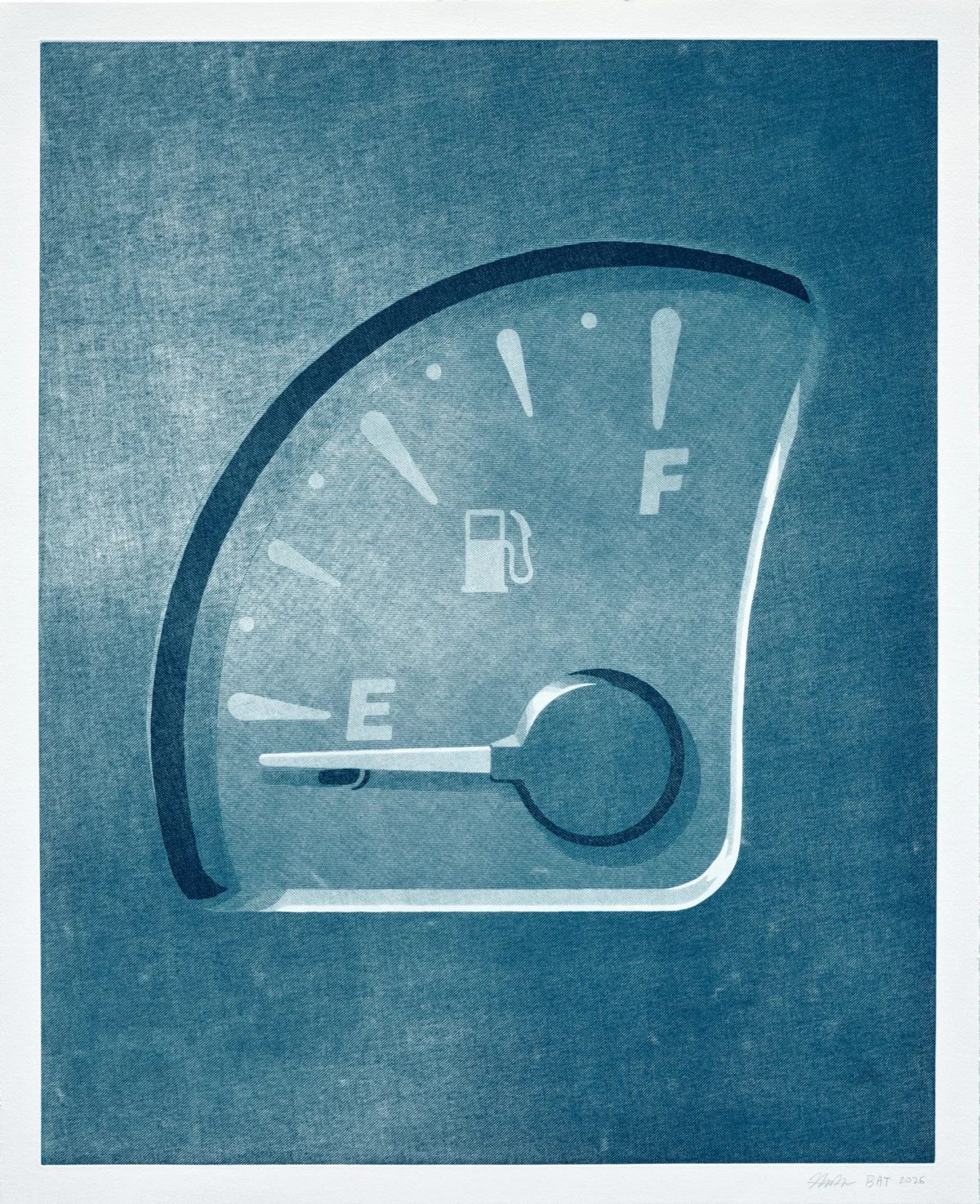
Interdisciplinary artist Nick Doyle has launched his latest exhibition, titled Lonely but Free I’ll Be Found, at the Pace Prints New York gallery, marking a significant evolution in his creative practice. Known for his intricate use of denim as a primary medium, the Los Angeles-born artist has transitioned into the realm of printmaking for this body of work, utilizing graphic interpretations of everyday objects to dissect the complexities of the American identity. The exhibition, which opened in the fall of 2026, serves as a precursor to a major presentation by Pace Prints at Art Basel Miami Beach in December 2026, where a curated selection of Doyle’s new works will be showcased to an international audience of collectors, critics, and curators.
Based in Brooklyn, Doyle’s academic background provides a rigorous foundation for his conceptual explorations. He earned a Bachelor of Fine Arts in interdisciplinary arts from the San Francisco Art Institute and a Master of Fine Arts in sculpture from Hunter College. His pedigree is further bolstered by his time at the Skowhegan School of Painting and Sculpture, an intensive residency program known for fostering critical dialogue among emerging artists. Despite his formal training in sculpture, Doyle’s career reached a pivotal turning point when he adopted denim as his signature material—a choice that was as much about serendipity as it was about historical resonance.
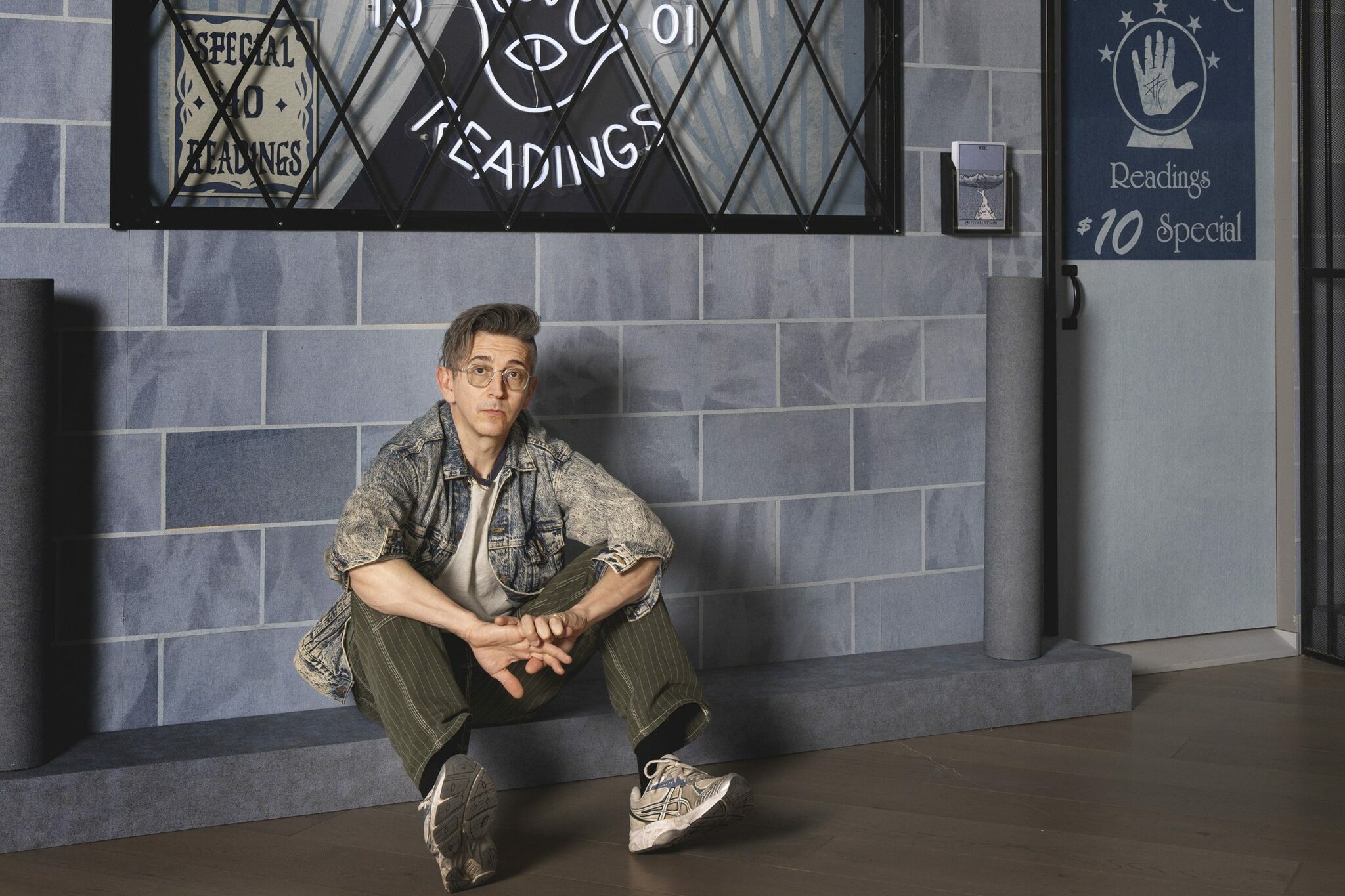
The artist’s transition to denim occurred when he discovered a discarded bolt of the fabric left behind by a fashion designer in a neighboring studio. At the time, Doyle was already deeply immersed in research regarding American history and the pervasive nature of nostalgia. The material immediately aligned with his thematic interests, serving as a visual shorthand for labor, the working class, and the rugged individualism often associated with the American frontier. Since that discovery, Doyle has utilized denim collage to create painting-like wall works and large-scale interactive installations that investigate the underlying structures of contemporary culture.
The Conceptual Framework of Lonely but Free I’ll Be Found
The title of the current exhibition, Lonely but Free I’ll Be Found, is derived from the lyrics of the 1930s song "Tumbling Tumbleweeds" by The Sons of the Pioneers. Originally a poem by Bob Nolan, the song depicts the archetype of the lonely cowboy drifting across the open range. For Doyle, this imagery is a entry point into a broader critique of the "self-made man" myth and the inherent isolation that accompanies radical self-reliance. The exhibition features bold, graphic representations of mundane items—a folded button-down shirt, a necktie, a lottery ticket, and a gas gauge hovering near empty.
By rendering these objects in a palette of indigo and denim-blue, Doyle connects the items to the history of American industry and the "America First" mentality. The works suggest that the pursuit of individual freedom often results in a detachment from collective responsibility, leading to a state of being that is "free" but profoundly "lonely." This tension is a recurring motif in Doyle’s work, reflecting his own upbringing within the Quaker community. Raised in an environment characterized by consensus-driven decision-making and a meditative pace, Doyle’s perspective is naturally at odds with the fast-paced, consumer-driven reality of urban American life.

The objects selected for the Pace Prints exhibition are not merely aesthetic choices; they are symbols of risk, reward, and escapism. A lottery ticket, for instance, represents the desperate hope of the disenfranchised, while a Coca-Cola vending machine serves as a monument to globalized consumerism. By stripping these objects of their functional context and presenting them as two-dimensional prints, Doyle invites viewers to consider the psychological weight of the "everyday."
Chronology of Recent Artistic Developments
The 2026 calendar has been a landmark year for Doyle, characterized by high-profile exhibitions and experimental ventures. In the spring of 2026, Doyle presented Collective Hallucinations at Perrotin New York. This exhibition featured his signature denim wall-mounted collages alongside an ambitious interactive installation titled "Mirror Mirror." The installation incorporated an artificial intelligence avatar named Ava, who interacted with visitors inside a denim-clad structure disguised as a psychic’s booth. This project marked Doyle’s first foray into AI, exploring how modern technology intersects with age-old desires for guidance and spiritual certainty.
Following the success of the Perrotin show, Doyle participated in the Basel Social Club in Switzerland in June 2026. He presented Human Resources, a corporate-themed "kink bar" constructed from repurposed office cubicles and furniture. The installation was a biting commentary on power dynamics, drawing parallels between the hierarchies found in corporate environments and those explored in subcultural fetish communities. By using the sterile aesthetics of the office to frame provocative social interactions, Doyle highlighted the performative nature of professional life.

The move to Pace Prints for the fall season represents a strategic expansion into the world of fine art editions. Pace Prints, a pillar of the New York art scene since 1968, has a long history of collaborating with contemporary masters to push the boundaries of traditional printmaking. Doyle’s collaboration with the gallery allowed him to translate his collage techniques into new formats, such as cyanotypes and stenciled prints, which maintain the tactile quality of denim while allowing for a more graphic, streamlined aesthetic.
Sociological Influences and the Suicide Belt
A significant portion of Doyle’s recent research focuses on the "Suicide Belt," a term coined by sociologist Matt Wray to describe the high-suicide-rate region of the American Mountain and Intermountain West. This geographical area, which includes states like Nevada, Montana, and Wyoming, is often populated by aging white men who are socially unattached and economically vulnerable. Doyle views the high rates of self-harm in these regions as a social symptom of the very myths he critiques—the idea that a man must be entirely self-sufficient and that seeking help is a sign of failure.
This sociological context informs the somber tone of many works in Lonely but Free I’ll Be Found. The "Empty" gas gauge and the "Lucky 7s" lottery ticket are not just icons of Americana; they are markers of a psychological landscape defined by scarcity and the gamble for survival. Doyle’s work suggests that the rugged individualism celebrated in Western films and country music has a dark corollary in the reality of social isolation.

In his own words, Doyle describes his work as a reflection of American culture rather than a purely individualist perspective. By focusing on the "minutiae of life," he seeks to uncover the grand narratives that govern human behavior. His inspirations are eclectic, ranging from Ken Burns’ documentaries on country music to the decaying neon signs of the Las Vegas Neon Museum. He views these signs—once vibrant beacons of commerce now rotting in the desert—as metaphors for the American dream: functional in their prime, but ultimately destined for a "graveyard" of obsolete ideas.
Market Impact and the Road to Art Basel Miami Beach
The inclusion of Nick Doyle’s work in the Pace Prints booth at Art Basel Miami Beach 2026 is a testament to his rising status in the contemporary art market. Art Basel Miami Beach is widely considered the premier art fair in the Americas, attracting over 80,000 visitors annually, including the world’s most influential private collectors and museum directors. For an artist like Doyle, whose work tackles heavy themes of masculinity and national identity, the fair provides a platform to engage with a global discourse on the future of American society.
Represented by Perrotin, a global powerhouse with galleries in Paris, New York, Tokyo, and Seoul, and Stems Gallery in Brussels, Doyle’s market presence has expanded significantly over the past three years. His work appeals to collectors who are interested in the intersection of traditional craft—specifically textile work—and contemporary social critique. The denim medium provides a level of accessibility and nostalgia that draws viewers in, while the underlying themes provide the intellectual depth required for institutional recognition.

As the art world prepares for the December fair, Doyle’s exploration of the "self-made man" takes on added relevance in a period of intense national self-reflection. The works in Lonely but Free I’ll Be Found challenge the audience to look beyond the surface of the "American way of life" and confront the costs of a culture built on greed, excess, and the glorification of the loner.
Broader Implications for Contemporary Art
Doyle’s practice sits at the crossroads of several major trends in contemporary art: the revival of textile and fiber arts, the critique of traditional masculinity, and the use of archival research to inform visual narratives. By repurposing denim—a material synonymous with durability and the working class—he elevates the mundane to the level of high art, forcing a re-evaluation of what constitutes "American" material.
The transition to printmaking with Pace Prints further democratizes his work, allowing for a broader dissemination of his ideas through editions. This move is consistent with the history of political printmaking, where artists have used the medium to spread social messages and engage with the public outside of the traditional museum setting.

As Nick Doyle continues to investigate the contradictions of American life, his work serves as a vital mirror for a society grappling with its own identity. Whether through a sassy AI avatar or a meticulously crafted denim necktie, Doyle remains committed to uncovering the structures that define the modern experience. His upcoming presentation at Art Basel Miami Beach will undoubtedly solidify his position as one of the most compelling voices in contemporary interdisciplinary art, offering a poignant and often uncomfortable look at what it means to be "found" in the landscape of the American dream.