admin
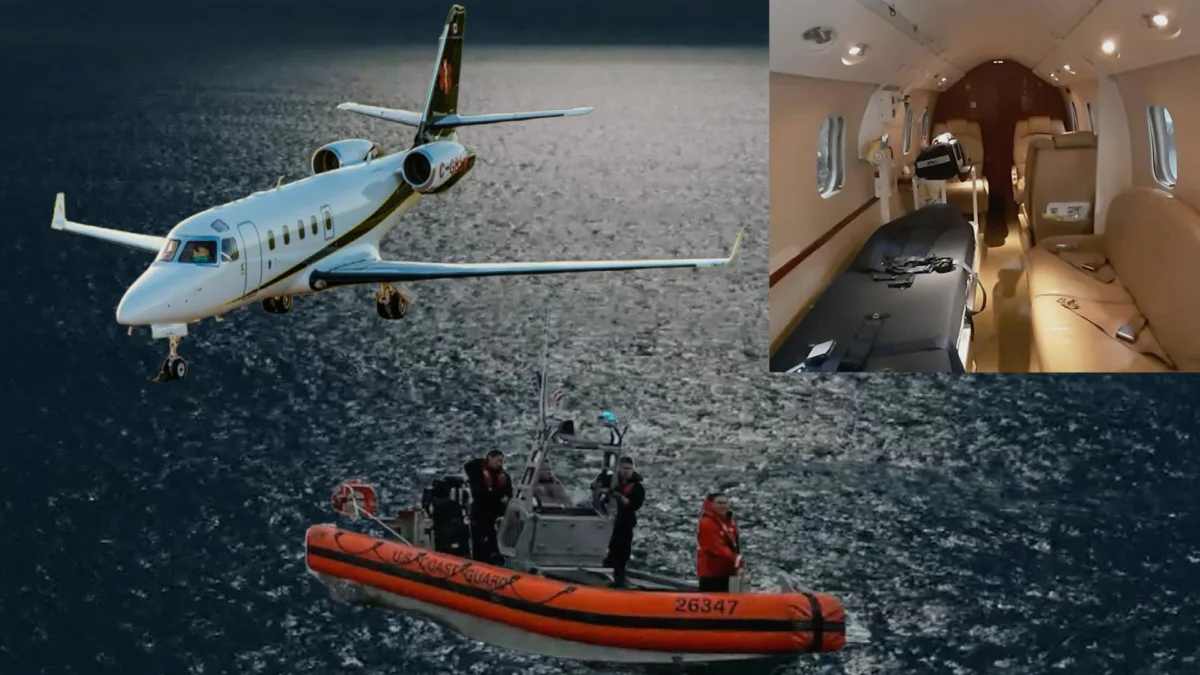
The Royal Canadian Mounted Police (RCMP) in Nova Scotia have confirmed their Underwater Recovery Team played a pivotal role in the complex and sensitive operation to retrieve vital evidence from the wreckage of the Latitude Air Ambulance jet that tragically disappeared off the coast of Massachusetts last month. This crucial involvement, announced on November 25, 2026, highlights the extensive inter-agency collaboration in the ongoing investigation into the fate of the Gulfstream G100 aircraft and the six individuals aboard. The recovery efforts, a testament to specialized skills and persistent dedication, have successfully located the cockpit voice recorder (CVR) and a significant section of the aircraft’s cockpit, which are now undergoing rigorous analysis.
Unearthing Critical Evidence: The Cockpit Voice Recorder
The discovery of the cockpit voice recorder is a monumental step forward in unraveling the mystery surrounding the air ambulance’s sudden disappearance. The Mounties’ specialized team worked in close coordination with the Canadian Coast Guard and the Transportation Safety Board of Canada (TSB) to pinpoint and extract these crucial components from the challenging marine environment. The TSB had initially announced on November 2, 2026, that it had located both the CVR and the upper third of the aircraft’s cockpit. These pieces of evidence were subsequently transferred to the TSB’s engineering laboratory in Ottawa, where experts are now meticulously working to extract and analyze any recorded data that could shed light on the final moments of the flight.
Cockpit voice recorders are designed to capture audio communications within the cockpit, including conversations between the flight crew, radio transmissions, and ambient sounds, such as engine noise or warnings. This audio data, often spanning the last two hours of a flight, provides investigators with invaluable insights into crew actions, potential alarms, and the sequence of events leading up to an incident. Given the catastrophic nature of the disappearance and the absence of distress signals, the CVR is expected to be a cornerstone of the TSB’s investigation, potentially offering the most direct account of what transpired in the cockpit before contact was lost.

A Challenging Underwater Recovery Operation
The recovery operation itself presented significant logistical and technical challenges. The crash site, located approximately 32 kilometers off the coast of Nantucket, Massachusetts, lies in an area known for its complex underwater topography and strong currents. Recovering debris, let alone sophisticated electronic equipment like a CVR, from such depths requires highly specialized equipment and expertise. The RCMP’s Underwater Recovery Team, renowned for its capabilities in difficult aquatic environments, demonstrated its proficiency in this critical phase. Their involvement underscores the depth of resources Canada committed to assisting in the investigation of an incident involving its citizens and a Canadian-registered aircraft.
The Canadian Coast Guard’s role involved providing essential surface support, including vessels and personnel, to facilitate the dive operations and ensure the safety of the recovery teams. Their expertise in maritime operations, navigation, and coordination proved indispensable in managing the complex logistics of an underwater recovery far offshore. This collaborative effort between law enforcement, maritime search and rescue, and aviation safety agencies highlights the comprehensive approach required for such high-stakes investigations.
Chronology of a Disappearance and Search
The incident began in early October 2026 when the Hamilton-based Latitude Air Ambulance Gulfstream G100 jet vanished from radar screens. The aircraft, carrying six individuals, including four Canadian crew members and two patients from Bermuda, was en route from Bermuda to Boston. Air traffic control lost contact with the jet without any distress call, triggering an immediate and extensive search and rescue operation.

- Early October 2026: The Latitude Air Ambulance Gulfstream G100 loses contact with air traffic control while en route to Boston.
- Initial Hours: The United States Coast Guard (USCG) launches a comprehensive search operation involving multiple air and sea assets, covering thousands of square kilometers of the Atlantic Ocean.
- October 4, 2026 (approximate): Debris confirmed to be from the missing aircraft is recovered approximately 32 kilometers (20 miles) off Nantucket, Massachusetts.
- October 7, 2026: After 66 hours of continuous searching, the United States Coast Guard formally suspends its active search and rescue efforts, citing the unlikelihood of finding survivors.
- Mid-October 2026: Focus shifts from search and rescue to recovery and investigation, with Canadian and U.S. agencies collaborating to locate the main wreckage and flight recorders.
- November 2, 2026: The Transportation Safety Board of Canada announces the successful location of the cockpit voice recorder and the upper section of the aircraft’s cockpit.
- November 25, 2026: The RCMP publicly acknowledges the critical involvement of its Nova Scotia Underwater Recovery Team in the successful recovery of the evidence.
The patients on board were identified as a 66-year-old woman and her 41-year-old son, both from Bermuda, who were being medically transported. The identities of the four Canadian crew members, including the pilots and medical personnel, have been a source of profound grief for their families and the broader aviation community. The loss of life in such circumstances resonates deeply, underscoring the inherent risks associated with critical air ambulance operations, which often involve urgent medical flights in challenging conditions.
The Investigation: A Meticulous Search for Answers
With the CVR now in the hands of the TSB, the investigation enters a critical, highly technical phase. TSB investigators are among the world’s leading experts in aviation accident analysis. Their process involves not only extracting the audio data from the recorder but also cross-referencing it with other available information, such as radar data, weather reports, maintenance records, and any structural evidence recovered.
The TSB’s engineering laboratory in Ottawa is equipped with advanced tools to handle damaged flight recorders. Once the data is successfully downloaded, specialized analysts will painstakingly review the recordings, often enhancing audio to discern crucial details amidst background noise. This process can be lengthy and complex, especially if the recorder sustained significant damage during the impact.
The primary objective of the TSB investigation is not to assign blame but to determine the cause and contributing factors of the accident and to make recommendations that prevent similar occurrences in the future. This fact-based approach is fundamental to enhancing aviation safety standards globally.

The Aircraft and Operator: Latitude Air Ambulance
The aircraft involved, a Gulfstream G100 (also known as an Astra SPX), is a mid-size corporate jet often utilized for executive transport and, increasingly, for air ambulance services due to its speed, range, and ability to be configured for medical operations. Manufactured by Gulfstream Aerospace, these jets are generally known for their robust design and reliable performance. Latitude Air Ambulance, based in Hamilton, Ontario, is a well-established medical evacuation company with a fleet of aircraft dedicated to providing critical care transport services across North America and internationally.
Air ambulance services play a vital role in healthcare, transporting critically ill or injured patients who require rapid transit or specialized medical care not available at their immediate location. These flights often operate under demanding conditions, requiring highly trained pilots, medical professionals, and specialized equipment. The safety record of air ambulance operations is generally very high, but the inherent complexities of operating aircraft, especially during medical emergencies, mean that incidents, though rare, can have devastating consequences. The accident has prompted questions within the industry about flight safety protocols for such long-range medical evacuations, particularly over open water.
Broader Impact and Implications
The tragic loss of the Latitude Air Ambulance jet has sent ripples through the Canadian and international aviation communities. For the families of the six victims, the recovery of the CVR offers a glimmer of hope for answers, though it cannot alleviate their profound grief. The prolonged period between the disappearance and the recovery of key evidence only compounds the emotional toll on those awaiting closure.

Beyond the immediate human tragedy, the investigation’s findings could have significant implications for air ambulance operations and aviation safety regulations. Depending on the cause of the accident, there could be recommendations for changes in aircraft maintenance, flight crew training, operational procedures, or air traffic control protocols, particularly for flights over vast oceanic stretches. Such incidents invariably lead to a thorough re-evaluation of existing safety measures to identify any potential vulnerabilities.
The cross-border nature of the incident and the subsequent investigation underscore the critical importance of international cooperation in aviation safety. The seamless collaboration between the RCMP, Canadian Coast Guard, TSB, and their counterparts in the United States, including the United States Coast Guard and potentially the National Transportation Safety Board (NTSB) in an advisory capacity, is essential for a comprehensive and credible inquiry. Such joint efforts ensure that all available resources and expertise are brought to bear on complex cases that transcend national boundaries.
As the TSB continues its detailed analysis in Ottawa, the aviation world awaits the findings with keen interest. While the full report may take many months, or even over a year, to complete, every piece of recovered evidence, particularly the cockpit voice recorder, moves the investigation closer to understanding what led to the tragic loss of Latitude Air Ambulance flight and its six occupants. The dedication of specialized teams like the RCMP’s Underwater Recovery Team ensures that no stone is left unturned in the pursuit of answers and, ultimately, safer skies for all.