admin
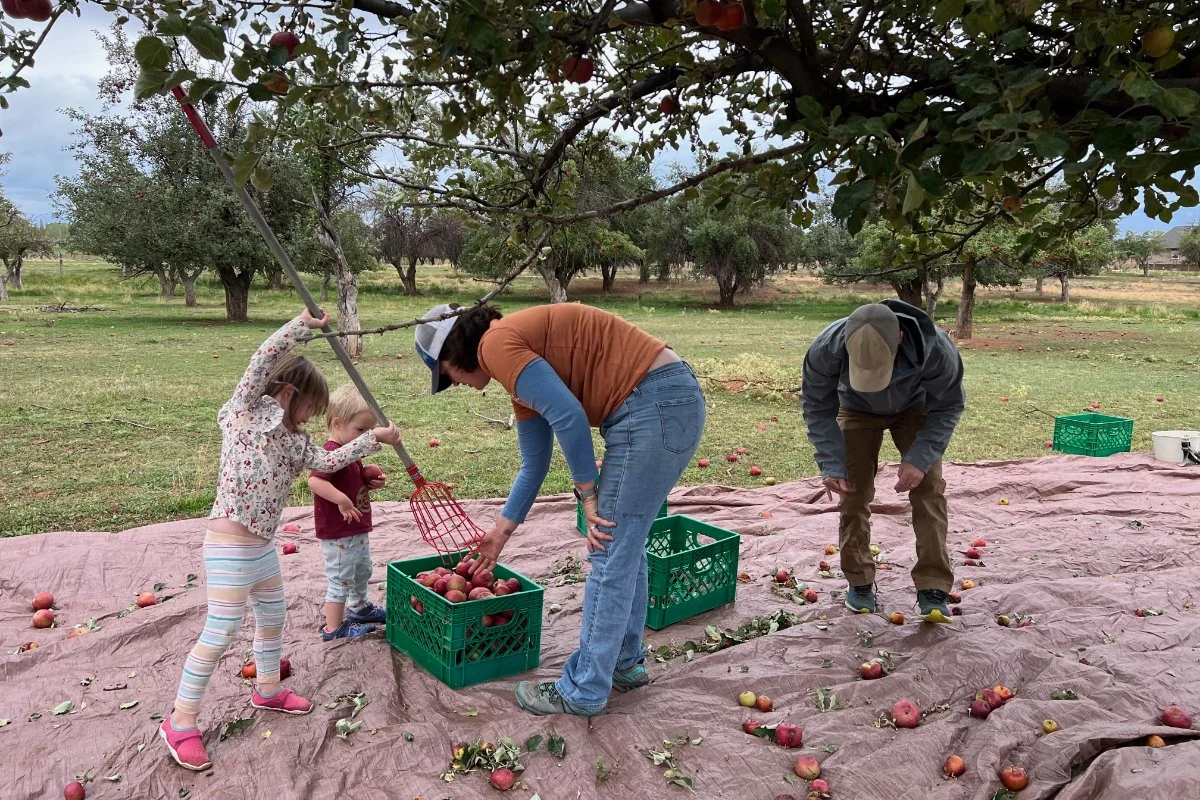
In the rugged, picturesque landscape of rural Southwestern Colorado, a quiet revolution is underway, spearheaded by the Montezuma Orchard Restoration Project (MORP). This innovative organization is not only preserving a vital piece of agricultural history by protecting thousands of heirloom apple trees, some dating back over a century, but is also simultaneously revitalizing the local economy by providing farmers with a crucial new revenue stream through value-added processing. The project, founded in 2008 by Jude and Addie Schuenemeyer, represents a compelling model for sustainable rural development, marrying historical preservation with contemporary economic needs in a region historically rich in fruit-growing but challenged by modern agricultural shifts.
The Genesis of a Movement: Unearthing a Hidden Heritage
The journey of MORP began, fittingly, in a plant nursery in Cortez, Colorado, where Jude and Addie Schuenemeyer frequently encountered older customers reminiscing about unusual apple varieties from their childhoods. These anecdotes sparked a curiosity that led the Schuenemeyers on a quest, uncovering a startling truth: Montezuma County was home to one of the nation’s largest and most diverse collections of heritage apple trees. Many of these venerable orchards, some boasting trees aged between 70 and 140 years, held cultivars cherished across generations, while others had simply been forgotten, their unique genetic legacies slowly fading into obscurity.
The discovery was profound. Thousands of ancient apple trees, remnants of a bygone agricultural era, were found scattered across the mountainous terrain. Among them were endangered cultivars like the Ben Davis, once a national favorite known for its crisp white flesh and excellent keeping qualities; the rare Grimes Golden, prized for its spicy, sweet flavor; and the Colorado Orange, a resilient winter apple once believed to be extinct. The sheer biodiversity and historical significance of these findings captivated the Schuenemeyers, leading them to establish MORP. Their initial and enduring goal was to meticulously record, protect, and propagate these invaluable heirloom varieties, safeguarding their heritage for future generations. Beyond preservation, MORP soon recognized its potential to play a pivotal role in strengthening the local food system and resurrecting Colorado’s once-thriving fruit economy.
A Century of Orchards: Colorado’s Apple Boom and Decline
Colorado’s robust apple industry first blossomed in the late 1800s and early 1900s. This agricultural expansion, however, unfolded within a complex and often tragic historical context, coinciding with the rapid European colonization of Southwestern Colorado and the forced displacement and genocide of Indigenous peoples. The Nʉʉ-agha-tʉvʉ-pʉ̱ (Ute) and Diné (Navajo) communities, original stewards of these lands, had their traditional ways of life profoundly disrupted as settlers moved in.
These new European-American arrivals quickly recognized that the high elevation and cool nighttime temperatures of Southwest Colorado created ideal conditions for growing apples and other fruit crops. This realization spurred a rapid and extensive planting effort, with over 50,000 fruit trees quickly taking root across the area. Unlike the mono-crop orchards prevalent today, these early orchards were characterized by incredible diversity. Jude Schuenemeyer notes that a typical 5- or 6-acre orchard from that era might feature as many as 25 different apple varieties, each with distinct flavors, textures, and uses.

One such unique cultivar, the Chenango Strawberry, originating in the mid-1800s, exemplifies this diversity. Jared Scott, a master cider maker at EsoTerra Ciderworks, who actively grafts and plants these heirloom varieties, describes its remarkable transformation: "When they’re ready, they turn from kind of a pale green to a hot pink color and have an aroma that resembles strawberries." This sensory richness and variety were hallmarks of Colorado’s early fruit industry.
At its zenith, Colorado boasted thousands of acres of apple orchards, cultivating an estimated 400 unique varieties. Historical records from 1914 indicate a staggering output, with Colorado growers producing nearly 3.9 million bushels of apples, cementing the state’s position as a significant national producer.
However, the tide began to turn with the advent of industrial agriculture in the mid-20th century. The focus shifted towards varieties that were easy to ship, visually uniform, and had extended shelf lives, leading to the dominance of cultivars like the Red Delicious, often at the expense of flavor and genetic diversity. Colorado’s orchard industry, geographically isolated from major urban markets, struggled with logistical challenges, particularly after the decline of railroad networks. Compounded by the economic devastation of the Great Depression, the persistent threat of pests and diseases, and intense competition from the burgeoning, massive orchards in Washington state, Colorado’s apple empire gradually receded.
Despite this decline, many orchards persisted, cherished by families and farmers who continued to value their unique flavors and the deep connections they fostered. "Orchards cross generational lines," Jude Schuenemeyer observes, highlighting the enduring appeal: "You can eat apples off the same tree that your great-great-grandmother or great-great-grandfather ate apples from." This sentiment underscores the cultural importance of these trees, far beyond their commercial value. MORP’s work is not merely about horticulture; it is about preserving these stories, these intergenerational links, and the irreplaceable genetic material. The organization systematically maps and documents old orchards, recording not only their physical locations but also the family lore, historical anecdotes, and photographs that accompany them.
Crucially, MORP also collects apple scions – dormant cuttings – to graft new trees. These young trees are then sold or donated to families, school orchards, community spaces, and conservation projects, actively propagating rare cultivars. Schuenemeyer emphasizes the urgency of this process: "If people stop interacting with these [apples] or specifically stopped propagating, grafting, or budding [them], these cultivars are lost, and with that loss is the loss of opportunities for the future." This proactive approach ensures that the genetic legacy of Colorado’s heritage apples is not only preserved but also actively re-integrated into the agricultural landscape.
The Economic Engine: MORP’s Mobile Juicing Initiative
While documenting the region’s orchards, the Schuenemeyers made a striking estimate: approximately 50,000 bushels of apples went unharvested each season. Many orchards were abandoned, but a significant portion belonged to landowners who simply lacked the necessary tools, labor, or market access to efficiently harvest and sell large quantities of apples. This resulted in substantial food waste and lost economic potential.

Recognizing this critical gap, MORP sought to leverage its resources to transform this waste into opportunity. In 2020, the organization made a significant investment, purchasing a state-of-the-art mobile juicing machine at a cost of nearly $300,000. The juicer became fully operational in 2021, marking a pivotal moment in MORP’s evolution from purely preservationist to an active economic driver. Complementing this investment, MORP secured grants from the Livability, Opportunity, Responsibility (LOR) Foundation – a private foundation dedicated to supporting rural communities in the Western United States – to acquire essential harvest crates and a forklift.
These critical assets have fundamentally altered the landscape for small orchard owners, enabling them to efficiently harvest, transport, and process their apples. Since its inception, MORP’s mobile press has processed an impressive 8,674 bushels of fruit, yielding over 106,668 liters of juice. This infrastructure addresses a long-standing need; previous local juice operations in the area had been highly successful until their owners retired or sold their businesses. Farmers in the region often considered adding a juicer to their own operations but were deterred by the prohibitive upfront costs and the significant time commitment, not to mention the stringent inspection requirements from the State Department of Health and Human Services. "That’s a whole different level of responsibility," Schuenemeyer notes, highlighting the regulatory hurdles that often prevent smaller operations from scaling up.
Farmer Testimonials and Market Diversification
The impact of MORP’s mobile juicer is tangible and transformative for local growers. John Murray and his family, who operate Triple M Orchards in Olathe, Colorado, attest to its significance. They cultivate a large block of Golden Delicious apples, a heritage cultivar dating back to the late 19th century. Murray admits that without access to MORP’s press, they would likely have removed many of their Golden Delicious trees due to market challenges.
Instead, the juicer inspired them to expand their operations, taking over a neighboring third-generation pear and apple orchard when the family’s grandson relocated. While the fruit from this acquired orchard may not be aesthetically perfect for the fresh eating market, Murray confirms, "it’s great for the juice market." In the past three years, Murray estimates he has pressed approximately 800 bushels of apples and 200 bushels of pears through MORP, turning otherwise unmarketable fruit into a valuable product.
The mobile press and crates also play a crucial role in reducing local food waste, particularly from abandoned orchards. Unpicked apples often rot on the ground, releasing methane and attracting wildlife, including bears, which has become a growing concern for community safety. By processing these apples, MORP mitigates environmental impact and addresses community safety issues.
Jared Scott of EsoTerra Ciderworks actively leverages MORP’s services. He harvests apples from various orchards he identifies across the region, often at low cost or for free. MORP juices these apples, which Scott then transforms into family-friendly slushies or hot cider for sale at EsoTerra, diversifying his offerings beyond hard cider. He also wholesales the juice to local restaurants, where it finds its way into seasonal dishes like braised pork loin or craft cocktails, showcasing the versatility and value of local apple products.

The juicer’s benefits extend beyond heirloom varieties. Gerrie Goodall of Bountiful Ridge Farm in Dolores, Colorado, uses MORP’s press for her orchard, which grows modern apple varieties that are smaller and quicker to produce. Even with well-known varieties, marketing challenges persist, especially for fruit that is misshapen or blemished. "There’s almost no viable market for that type of fruit," Goodall explains. Juicing dramatically changes this equation. Last year, her orchard pressed approximately 493 bushels of apples, yielding nearly 5,600 liters of juice, demonstrating the economic lifeline MORP provides for a broader spectrum of local growers.
Schuenemeyer emphasizes that the true impact of MORP’s work transcends mere production numbers. "In many ways, that’s the most important thing we do—connecting with people, connecting people back with their orchards and with the trees, and having people realize the potential," he states. This highlights the project’s deeper social and cultural significance: fostering community, rekindling appreciation for local agriculture, and empowering individuals to engage with their land and heritage.
Challenges and the Future of Rural Agriculture
Despite the successes, today’s apple farmers in Montezuma County continue to confront formidable challenges, many of which echo those faced by orchards of the past. Geographical isolation remains a significant hurdle, with farmers often needing to travel over six hours across demanding mountain passes to reach the nearest major commercial hubs. While the reliance on railways has diminished, contemporary orchard owners grapple with escalating fuel prices, which directly impact transportation costs and profitability.
However, precisely because of their isolation, regions like Montezuma County are in urgent need of robust, resilient local food networks. Furthermore, as land prices continue to climb and an aging farming population considers retirement, the community faces the imperative of finding sustainable pathways to enable younger generations to enter and thrive in agriculture.
Jude Schuenemeyer sees this juncture as a potential opening for a significant revival of orchards in an agricultural landscape currently dominated by cattle and alfalfa operations. He advocates for the inherent accessibility of orchard farming: "You can have an orchard on a small piece of ground. It’s remarkably democratic from a farmer’s standpoint. Even small holders can do this. It’s a place where people with fewer resources can still get involved with agriculture and carry this on." This vision positions orchard farming as an equitable and sustainable option, capable of supporting small-scale producers and diversifying the region’s agricultural economy.
Broader Implications and a Model for Preservation
The Montezuma Orchard Restoration Project offers a compelling blueprint for other rural communities grappling with similar issues of agricultural heritage loss, economic stagnation, and food system vulnerabilities. Its multifaceted approach—combining historical research, genetic preservation, community engagement, and direct economic support through value-added processing—creates a synergistic model.

Beyond the immediate economic benefits for farmers, MORP’s work has significant ecological implications. By preserving a wide array of heirloom apple cultivars, the project safeguards crucial genetic diversity, which is vital for the long-term resilience of fruit crops against pests, diseases, and climate change. These heritage orchards also contribute to local biodiversity, providing habitats for pollinators and other wildlife, and promoting healthier soil ecosystems compared to industrial monocultures. The reduction of food waste also aligns with broader environmental goals, mitigating the greenhouse gas emissions associated with decaying organic matter.
Culturally, MORP reinforces a sense of place and identity, connecting residents to their agricultural past and fostering community pride. The annual Orchard Social, where MORP supporters celebrate the fall harvest and tour the juicing facility, serves as a powerful community-building event, cementing these connections. The project’s success is a testament to the power of grassroots initiatives in addressing complex challenges at the intersection of history, economy, and environment. As Montezuma County looks towards a future where sustainable agriculture and local food systems are paramount, MORP stands as a beacon, demonstrating that preserving the past can indeed cultivate a richer, more resilient future.