Jia Lissa
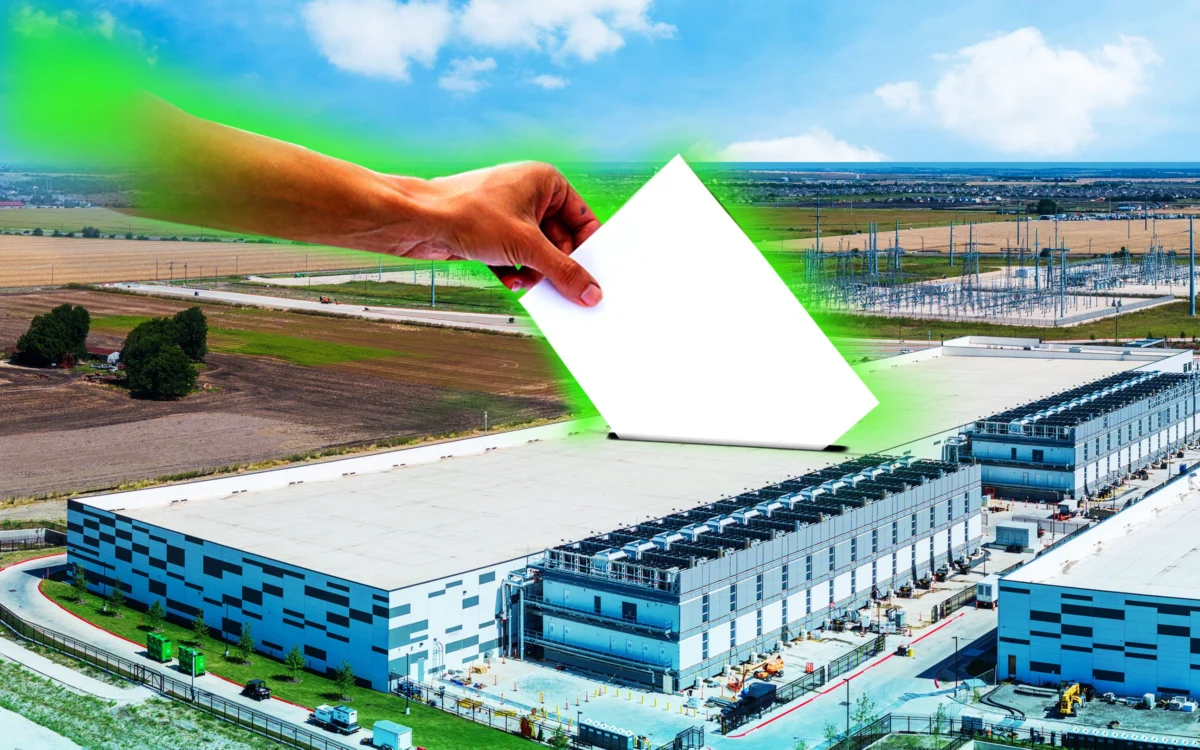
The 2026 midterm elections delivered a seismic shift in American politics, with a pronounced "blue tsunami" sweeping across the nation, largely fueled by a burgeoning public backlash against the rapid expansion of data centers. Voters, increasingly concerned about the environmental, economic, and social impacts of these digital behemoths, decisively backed candidates advocating for stricter regulations and moratoriums, sending a clear rebuke to an industry accustomed to unfettered growth. This electoral wave, which saw Democrats secure key victories at federal and state levels, signals a transformative period for technology policy and a potential recalibration of the relationship between Silicon Valley’s ambitions and local community concerns.
National Impact: A Wave of Anti-Data Center Victories
Election night was undeniably a challenging one for proponents of data center development. In Ohio, veteran Democrat Sherrod Brown, whose campaign ads consistently painted his opponent as "the face of data centers in Ohio," secured a crucial victory, flipping a Senate seat and underscoring the potency of the issue in battleground states. His win highlights a sophisticated campaign strategy that successfully linked the abstract concept of data centers to tangible local anxieties regarding resource consumption and corporate influence.
Further north, New Hampshire saw the election of Chris Pappas, who, upon taking office, will make history as the nation’s first openly gay male senator. Notably, Pappas explicitly voiced his opposition to data centers during his victory speech, a stance that, while drawing some boos from segments of his crowd—perhaps reflecting a nuanced local perspective despite the absence of major ongoing data center projects in the state—clearly resonated with a broader electorate. His success, regardless of minor audience dissent, reinforces the narrative that an anti-data center platform could be a winning formula.
The ripple effect extended to the House of Representatives, where two Republican incumbents, both named Derek and Derrick, found themselves on the losing end of races in Ohio and Wisconsin, respectively. Their Democratic challengers successfully branded them as "Data Center Derek" and "DC Derrick," effectively leveraging public sentiment against the industry. These losses, particularly in historically competitive districts, underscore the vulnerability of candidates perceived as aligned with unchecked data center expansion.
The Gubernatorial Shocks: Moratoriums on the Horizon
Perhaps the most startling upsets for the industry unfolded in the gubernatorial races, particularly in states that have become major hubs for data center development. In Georgia, former Atlanta Mayor Keisha Lance Bottoms staged a stunning comeback, while in Texas, Gina Hinojosa secured an unexpected victory. Both Democratic candidates ran on platforms not just promising increased regulations but, critically, advocating for outright moratoriums on new data center construction. The implications of these wins are profound; Texas and Georgia are currently among the leading states for data center investment and expansion, with hundreds of projects in various stages of planning. A pause in development in these critical markets could trigger a significant re-evaluation of industry strategies and investment flows across the country.
Kansas also emerged as a battleground for this issue, with Democrat Cindy Holscher poised on the brink of a potential gubernatorial win, having similarly championed a data center moratorium. Her strong showing, alongside the victories in Georgia and Texas, suggests a growing consensus among voters that the unchecked proliferation of these facilities needs immediate intervention, particularly at the executive level where policy can be swiftly implemented.
Why Data Centers Became a Wedge Issue: Voter Sentiment and Concerns
The widespread voter dissatisfaction with data centers did not emerge in a vacuum. It represents the culmination of months, and in some cases years, of growing public discourse and local activism surrounding the environmental footprint and community impact of these facilities. Exit polls conducted by NBC News revealed the striking depth of this concern: almost a quarter of all voters stated that data centers were "crucial" to their vote, while nearly two-thirds considered it either a major or minor factor. This data unequivocally positions data centers as a potent, if unexpected, electoral issue.
As Congressman Greg Casar, a Texas Democrat, observed in a post-election statement, "The revolt against data centers was one of the top issues of the 2026 election, and in a few years we will look back on it as just the early tremor of a much bigger AI earthquake upending American politics." This sentiment highlights a critical linkage in the public consciousness: data centers are not merely server farms; they are the physical infrastructure powering the burgeoning and often controversial field of artificial intelligence.
Alexander McCoy, a Democratic strategist focusing on AI, elaborated on this connection: "Data centers and AI as a technology are fundamentally linked in many voters’ minds. So you can address all of the different concerns with data centers with regards to their energy or their noise, or their pollution, and there would still be significant concerns about what these projects are enabling and the effect on opportunities, prices, jobs, society."
The public’s concerns are multifaceted and deeply rooted:
- Environmental Impact: Massive energy consumption, often drawing from fossil fuel grids, contributes to climate change. Significant water usage for cooling systems strains local resources, particularly in drought-prone regions.
- Local Nuisances: Noise pollution from cooling units and generators, increased traffic, and the sheer scale of these industrial buildings altering rural landscapes.
- Economic Disparity: While data centers promise high-tech jobs, many are automated or require specialized skills not readily available locally. Critics argue that generous tax breaks offered to attract these facilities often fail to deliver proportionate benefits to local communities, burdening taxpayers while the tech giants reap profits.
- Societal Implications of AI: Beyond the physical infrastructure, voters are increasingly wary of the broader societal implications of AI, including job displacement, ethical concerns, data privacy, and the concentration of power in a few large tech corporations.
This confluence of environmental, economic, and social anxieties transformed data centers from a niche technical topic into a powerful political rallying cry.
The Industry’s Financial Firepower Fails
The election results also delivered a harsh lesson to the data center and AI industries: financial might alone cannot overcome deeply rooted public opposition. Despite massive injections of cash from industry-backed super PACs, candidates aligned with increased data center development largely faltered.
In South Carolina, a newly formed industry super PAC, "Building the Future," spent an astonishing $1.5 million to support Republican Darline Graham. However, she lost to Democrat Annie Andrews, a staunch proponent of a data center moratorium. Andrews’ campaign effectively weaponized Graham’s industry ties, even registering the domain "DataCenterDarline.com" to highlight her opponent’s connections. This illustrates a savvy counter-strategy that successfully reframed industry support as a liability.
"Building the Future" similarly poured over $1.5 million into the Kansas gubernatorial race, backing Republican Ty Masterson against the anti-moratorium candidate Cindy Holscher. As results continue to solidify, it appears this substantial investment was also insufficient to sway voters.
Even the influence of tech titans proved limited. In Michigan, Democrat Will Lawrence, who centered his campaign on regulations for AI and data centers, declared victory over Republican Tom Barrett in one of the nation’s most expensive races. Barrett had received $340,000 from Elon Musk’s America PAC, yet this significant financial backing could not overcome the prevailing sentiment. These outcomes collectively suggest a critical misjudgment by the industry regarding the depth and breadth of voter concern.
Local Battlegrounds: Ballot Measures Reflect Community Outcry
The anti-data center sentiment was not confined to federal and state elections; it also manifested powerfully at the local level. Across nine states, voters faced numerous ballot measures directly related to data center development, and the results were overwhelmingly in favor of restrictions.
According to Ballotpedia, more than 40 questions concerning data centers appeared on local ballots in ten states, with Ohio alone accounting for 21. These measures ranged from outright moratoriums on new construction to specific rezoning questions and restrictions on the scale or type of development. The vast majority of these initiatives passed, reflecting a strong desire for local control and accountability. Brad Carson, president of Americans for Responsible Innovation, who tracked these developments, noted that only one county appeared to have approved more data center development through its ballot measures. This widespread local rejection sends a clear message that communities are unwilling to cede control over their land, resources, and future to large tech corporations without significant oversight.
A Bipartisan Concern, A Democratic Advantage
While the election results undeniably showed that anger about data centers significantly benefited Democrats, the issue itself has deeper bipartisan roots. Throughout the campaign cycle, data centers proved to be a topic of concern that transcended traditional party lines, causing fractures even within the Republican Party. Reports from earlier in the year highlighted how many of Donald Trump’s MAGA loyalists expressed disagreement with the former president’s stated support for AI companies and data centers, indicating a populist vein of opposition.
However, the Democratic Party proved more adept at leveraging this concern into electoral victories. The Democratic Congressional Campaign Committee (DCCC) actively ran ads in the weeks leading up to the elections, specifically targeting Republican candidates by highlighting their support for data centers or the financial backing they received from AI companies. This strategic framing connected data centers to broader themes of corporate influence and economic inequality, resonating with a wide swath of voters.
Sacha Haworth, executive director of the Tech Oversight Project, succinctly captured this dynamic: "Voters aren’t stupid. The data center story is a corruption story. It’s an affordability story. It’s a Big Tech CEOs influence story. That’s what voters understood when they cast their ballots, and that’s why Democrats routed Republicans so, so hard last night, because Republicans could not tell the same story."
This doesn’t mean an anti-data center stance was a guaranteed win for all. In Wisconsin, Republican Tom Tiffany, despite initially trying to label his opponent "Data Center David Crowley," ultimately lost his race. Crowley, however, became more aggressive on the issue as the campaign progressed, eventually indicating support for a pause in development. Similarly, incumbent Mike Lawler in New York’s 17th Congressional District lost despite airing ads criticizing his opponent’s past pro-data center remarks. These cases suggest that while anti-data center sentiment was powerful, it required a consistent and credible commitment to strong policy, which Democrats often articulated more effectively.
Amy Kremer, chair of Humans First, an advocacy group pushing for democratic oversight of AI, summarized the Republican misstep: "Despite poll after poll making it clear that the conservative, rural, working-class base was concerned about data centers and the impact of AI, too many politicians in Washington chose big AI’s money over their own base."
The Road Ahead: Policy Shifts and Industry Adaptations
The electoral reckoning is poised to usher in a new era of scrutiny and regulation for the data center industry. The implications are far-reaching and will likely touch upon multiple facets of policy and business operations:
- End to Favorable Tax Breaks: As Alexander McCoy predicted, the era of generous financial incentives, such as tax abatements and energy subsidies, designed to attract data center developers, is likely coming to an end. The perceived lack of commensurate local benefits has eroded public and political support for these breaks.
- Increased Regulatory Oversight: The new political landscape will likely see the appointment of regulators in administrative bodies who will pose more stringent scrutiny on data center projects. This could translate into lengthier approval processes, more rigorous environmental impact assessments, and greater community engagement requirements.
- Environmental Protection Enforcement: Expect a significant increase in the enforcement of environmental protection regulations specifically targeting data centers’ energy and water consumption, as well as noise pollution. This could lead to mandates for renewable energy sourcing, advanced cooling technologies, and water recycling systems.
- Moratoriums and Development Pauses: The successful campaigns for moratoriums, particularly in key states like Texas and Georgia, could significantly slow down or halt planned projects, forcing developers to reconsider their geographic strategies.
- Shift in Development Locations: Facing increased hostility and regulation in traditional hubs, the industry might explore new, less politically contentious regions, potentially even looking towards international markets or unconventional solutions.
In a telling sign that tech companies are "smelling blood in the water," The Hill reported on Election Day that environmental groups and Big Tech companies were already collaborating on a "Responsible Data Center Development Collaborative." This initiative aims to create a new framework for data center development, a move McCoy described as the "right next step." This collaboration suggests an industry recognizing the need to proactively address public concerns rather than resisting them, potentially leading to more sustainable and community-integrated development practices.
Looking Beyond Earth: Elon Musk’s Vision and the Future of Data Infrastructure
As election results solidified, signaling a challenging future for ground-based data centers, Elon Musk took to X (formerly Twitter) with a characteristic post: "Data centers in space looking pretty appealing right now." While perhaps a facetious remark, it encapsulates the potential desperation and radical rethinking that the industry might undertake in the face of mounting terrestrial opposition. The vision of orbital data centers, while currently science fiction, highlights the extreme lengths to which the demand for computing power, particularly for AI, might drive innovation if traditional avenues become too restrictive.
The 2026 midterm elections represent more than just a political realignment; they mark a fundamental re-evaluation of how technology integrates into society. The "data center reckoning" has elevated concerns about energy, water, land use, and the broader implications of AI from niche discussions to mainstream political battlegrounds. As the dust settles, one thing is clear: the future of data infrastructure in America will be shaped not just by technological innovation and corporate ambition, but increasingly by the voices and votes of local communities.