admin
Washington D.C. – A monumental scientific endeavor, initially dubbed the "1,000 Farms Initiative" but now encompassing some 2,000 agricultural operations, is systematically quantifying the transformative power of regenerative farming practices. Spearheaded by Dr. Jonathan Lundgren, an entomologist and agroecologist, this ambitious project is generating compelling data that positions regenerative agriculture as a leading, and potentially the most effective, climate solution available today. The first flagship study from this initiative, published in August, reveals that advanced regenerative farms are storing significantly more carbon in their soils than conventional counterparts, challenging long-held scientific assumptions and offering a tangible path forward for a warming planet.
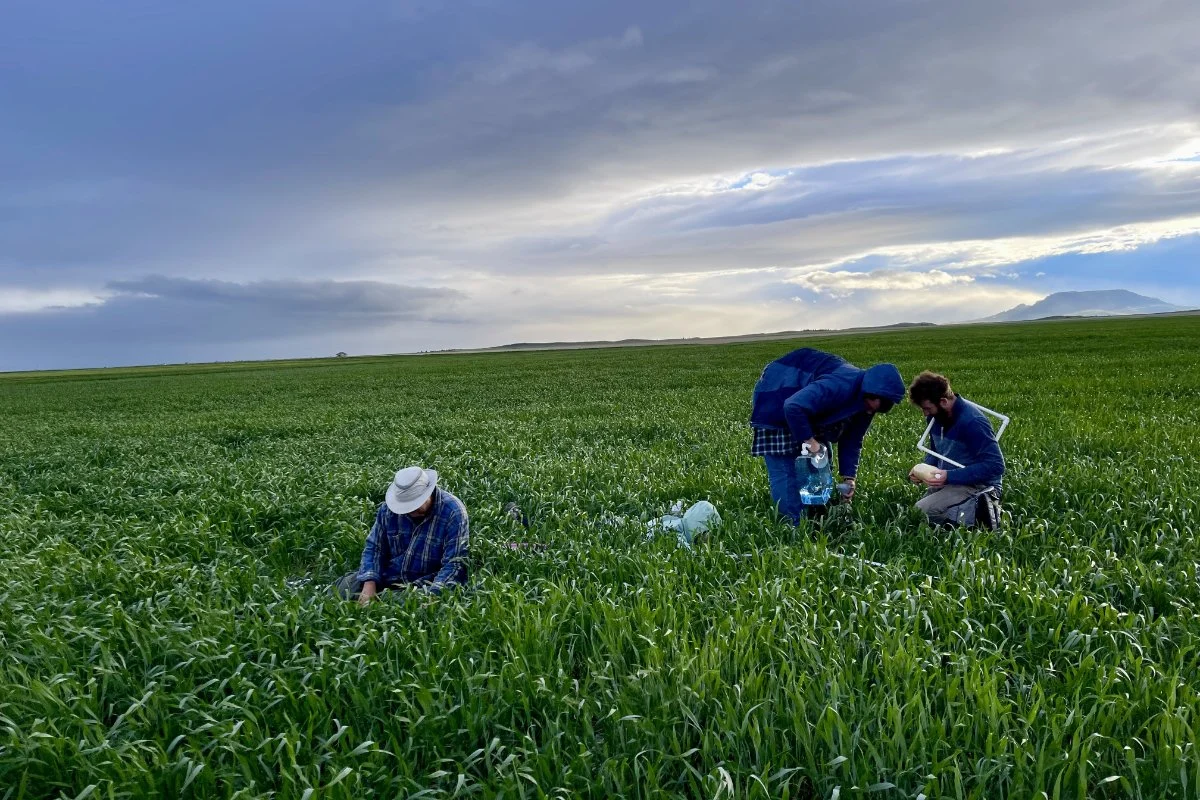
"This is weird," Lundgren remarked recently in an online interview, encapsulating the unconventional, grassroots nature of his endeavor. "This is grassroots science." The initiative’s core mission is to empirically validate the anecdotal successes reported by farmers who have transitioned to regenerative methods. By deploying specialized teams of scientists to collect a vast array of data from diverse farming systems, Lundgren and his Ecdysis Foundation are building an unprecedented evidence base for the holistic benefits of these practices.
The Genesis of a Grand Experiment
For years, proponents of regenerative agriculture—a system of farming principles and practices that increases biodiversity, enriches soils, improves watersheds, and enhances ecosystem services—have championed its potential. Farmers themselves have reported remarkable outcomes, from improved soil health and water retention to increased biodiversity and reduced input costs. However, comprehensive, large-scale scientific validation has often been lacking, hindering widespread adoption and policy support.
This gap motivated Lundgren to launch what he describes as a "huge experiment." His vision was to move beyond isolated case studies and quantify the systemic changes occurring on farms that embrace regenerative principles. "The farmers were saying that they were achieving these remarkable outcomes, but we had to know whether this was real, whether this was scalable, whether this was transferable," Lundgren explained. "The only way to do that is with a huge experiment. We had to study the entire system and all of the regenerative outcomes, from carbon capture and storage to biodiversity, water, nutrition, food quality, agrichemical use, pollution, farmer wellness, and economics."
The initiative began with an initial target of 1,000 farms, a number chosen to reflect the ambition and scale required for robust statistical analysis. This has since expanded to approximately 2,000 farms across various regions and agricultural systems, including row crops, grazing lands, and orchards. The sheer scale and scope of data collection—with groups of around eight scientists meticulously gathering 500 different data types at each operation—underscore the project’s scientific rigor and its potential to reshape our understanding of sustainable agriculture.
Methodology: A Democratization of Science
The process of selecting and engaging farms for such an expansive study is itself innovative. Initially, the Ecdysis Foundation reached out to farmers through email campaigns. As scientists entered specific agricultural regions, they built relationships with early adopters. This face-to-face interaction and the tangible presence of scientific teams on their land fostered a unique sense of collaboration among farmers. "By the time we would leave a particular area, farmers were usually lining up to join the study," Lundgren noted. "The farmers were really engaged in the actual sample process, they were meeting the scientists, and it was just kind of this cool, uplifting event."
This engagement has evolved into a self-organizing phenomenon. Farmer groups nationwide, experimenting with new regenerative techniques, are now proactively approaching Lundgren’s team. They seek scientific validation for their efforts, asking, "Hey, we’re trying this new thing with this group of farms. Would you mind coming out and helping us by putting some data behind it?" This organic expansion and farmer-driven participation exemplify what Lundgren refers to as the "democratization of science," a model where practitioners and researchers collaborate closely to advance knowledge.
The comprehensive data collection covers a spectrum of indicators critical to assessing the overall health and productivity of agricultural ecosystems. Beyond mere yield, scientists are measuring soil organic matter, microbial biomass, invertebrate populations, water infiltration rates, nutrient cycling, pesticide residues, and even the nutritional density of crops. Economic data, including input costs, labor, and market prices, are also being meticulously recorded to provide a complete picture of farm viability. Furthermore, qualitative data on farmer well-being, including stress levels and satisfaction, are being considered to capture the human element of agricultural transformation.
Focus on Row Crops: A Strategic Decision
While the 1,000 Farms Initiative encompasses a wide variety of agricultural systems, including diverse grazing operations and perennial orchards, the initial scientific focus for its first major publication was strategically placed on row crops such as corn, soybeans, and wheat. This decision was driven by the immense geographical footprint of these crops in the United States and globally.
"When we got 1,000 Farms started, the mentality was, ‘Let’s focus on row crops, because geographically, if we could turn row crops into fully regenerative systems, think of the geographic footprint and the implications that that could have’," Lundgren explained. Conventional row crop agriculture is often associated with intensive tillage, synthetic fertilizer use, and pesticide application, leading to significant soil degradation, greenhouse gas emissions, and water pollution. Transforming this sector could therefore yield the most substantial and far-reaching environmental benefits.
The flagship paper, published in August (specific year not provided, but inferred to be recent based on "2022 and 2023" data), analyzed data collected in 2022 and 2023 from 200 large-scale farms growing these key field crops. This initial publication serves as a powerful testament to the initiative’s potential and provides concrete evidence of regenerative agriculture’s efficacy in a crucial sector.
Groundbreaking Findings: Carbon Sequestration and Climate Impact
The study’s primary revelation is profoundly significant for climate action: the most advanced regenerative farms analyzed stored nearly 40 percent more carbon in their soils compared to conventional farm controls. This finding is not merely incremental; it suggests a paradigm shift in how agricultural lands can contribute to mitigating climate change.
Lundgren elaborated on the national implications of this discovery during his address at the Food Solutions Summit during Climate Week in New York City in September. He asserted that if all field crop farms in the U.S. were to convert to these advanced regenerative systems, cropland soils could sequester carbon equivalent to 1.5 years of the country’s entire annual greenhouse gas emissions. Considering that the U.S. typically emits around 6.3 gigatons of CO2 equivalent annually, this translates to a potential sequestration of approximately 9.45 gigatons over time, a figure that dwarfs the capacity of many other proposed climate solutions.

"Our study shows that if we were to implement regenerative row cropping systems on a national scale, that it represents the best climate solution currently available," Lundgren stated boldly. He further underscored this claim by comparing it to other technology-based solutions: "I mean, when you look at the numbers, it’s better than all of the other technology-based solutions to climate—carbon capture and storage combined, right? The other opportunities don’t even hold a candle to what our food system can do." Crucially, this transformational potential comes without compromising farmer profitability or productivity, a critical factor for widespread adoption.
Addressing Scientific Skepticism and Deep Carbon Storage
The assertion that agricultural soils can sequester such vast quantities of carbon often meets with skepticism from some soil scientists. A common argument is that soil has a finite capacity to hold carbon, suggesting that sequestration might max out after a certain period. Lundgren’s research directly challenges this notion with compelling evidence.
"No, in these fields that we measured, we went 60 centimeters deep. That’s pretty deep," Lundgren countered. "And we found that carbon levels were changing all the way down. So, my guess is this is an underestimate of what our food system can do in terms of carbon capture and storage." This deep carbon storage indicates that regenerative practices are not just increasing carbon in the topsoil but are driving it deeper into the soil profile, creating a more stable and long-term sink.
Furthermore, Lundgren highlighted another profound aspect of their findings: the regenerative farms appear to be actively building new soil. "The other thing is: It builds on top of itself, such that organic matter and more life on farms ends up generating soil. Pretty profound. That’s how the prairies were made for crying out loud." This phenomenon suggests a continuous process of carbon accumulation, as increased organic matter and biological activity create new layers of fertile soil.
The study also delved into the forms of carbon stored. Traditional soil science often posits that inorganic forms of carbon are primarily derived from parent material (bedrock, limestone) and are largely unaffected by land management. However, Lundgren’s team observed something different. "Our research shows very clearly that at depth, inorganic carbon was significantly greater in regenerative fields, and it was correlated with how much fungal biomass and invertebrate life was in the soil," he explained. This correlation suggests that this inorganic carbon was "soil that comes from life, versus soil that comes from parent material or bedrock," indicating a biological pathway for inorganic carbon formation and storage previously underestimated or unrecognized in managed ecosystems.
Beyond Practices: A Philosophy of Management
A critical insight from the 1,000 Farms Initiative is the importance of viewing regenerative agriculture not as a checklist of individual practices, but as a holistic management philosophy. Lundgren’s team uses a scoring system based on "eight yes or no questions," such as "Did you till?" or "Did you plant cover crops?" However, he cautions against reducing regenerative agriculture to these discrete actions.
"If we make regenerative ag about individual practices, we’re dead in the water before we even get started," Lundgren asserted. Instead, he views these practice-based questions as "indicators" or "proxies of a management philosophy." This philosophy emphasizes nurturing the soil ecosystem, minimizing disturbance, maximizing biodiversity, and integrating livestock where appropriate. It’s about understanding and working with natural processes rather than overriding them with external inputs. For example, reduced tillage, cover cropping, and diverse rotations are not isolated techniques but components of a system designed to foster a thriving soil microbiome, improve water infiltration, and cycle nutrients efficiently.
Broader Implications and Future Outlook
The findings of the 1,000 Farms Initiative carry immense implications across environmental, economic, and social spheres.
Environmental Impact: The verified capacity for significant carbon sequestration directly addresses the climate crisis. Beyond carbon, the study measures improvements in biodiversity, which translates to healthier ecosystems, more resilient farms, and a reduction in the need for synthetic pesticides and fertilizers. Improved water quality and retention are also critical, mitigating drought impacts and reducing agricultural runoff pollution. As Lundgren succinctly put it, "Life on farms is the answer to the climate crisis."
Economic Viability and Farmer Wellness: The study’s focus on economic outcomes, including the assertion that farmers "don’t lose money or productivity," is crucial for widespread adoption. If regenerative practices can enhance profitability by reducing input costs (e.g., for fertilizers and pesticides) while maintaining or improving yields, the economic incentive for transition becomes clear. Farmer wellness, often overlooked, is also a key component. Reduced exposure to harmful chemicals, greater autonomy in management, and a deeper connection to a thriving ecosystem can significantly improve quality of life for agricultural communities.
Food Security and Land Use: Lundgren’s statement, "We don’t need to clear more land to feed humanity. We just need to use the land that we’ve got to grow food," highlights regenerative agriculture’s role in sustainable food security. By enhancing the productivity and resilience of existing farmland, the pressure to convert natural habitats into agricultural land can be alleviated, protecting biodiversity and natural carbon sinks.
Policy and Industry Response (Inferred): These groundbreaking findings are expected to catalyze significant discussion among policymakers, agricultural industries, and environmental organizations.
- Policymakers are likely to face increasing pressure to develop new incentive programs, subsidies, and technical assistance frameworks that support and accelerate the transition to regenerative agriculture. This could include carbon credit markets for farmers, preferential loans, or research grants.
- Environmental advocacy groups will undoubtedly leverage these findings to push for more aggressive climate policies centered on agricultural transformation, emphasizing its dual benefits for climate and ecological restoration.
- Mainstream agricultural organizations and food companies, while potentially cautious, may begin to integrate regenerative practices more formally into their sustainability initiatives, responding to consumer demand and the compelling scientific evidence. Some may express a need for further research across different climates and farm sizes, and practical challenges of large-scale transition.
- The scientific community, including those who previously held reservations, will likely engage in robust debate and further investigation, potentially leading to a broader consensus on the efficacy and mechanisms of regenerative carbon sequestration.
The Path Forward:
With the initial flagship paper making a significant splash, Lundgren’s team plans to publish "many studies over the next several years," delving deeper into the various facets of regenerative outcomes across different farm types. The ongoing dialogue with Civil Eats and presentations at forums like the Food Solutions Summit are vital for disseminating these findings to a broader audience.
The "1,000 Farms Initiative" (now 2,000 Farms) stands as a testament to the power of collaborative, grassroots science in addressing global challenges. By providing rigorous, data-driven validation for regenerative agriculture, Dr. Jonathan Lundgren and his team are not just quantifying a better way to farm; they are illuminating a viable and impactful pathway toward a more sustainable and resilient future for both agriculture and the planet.