admin
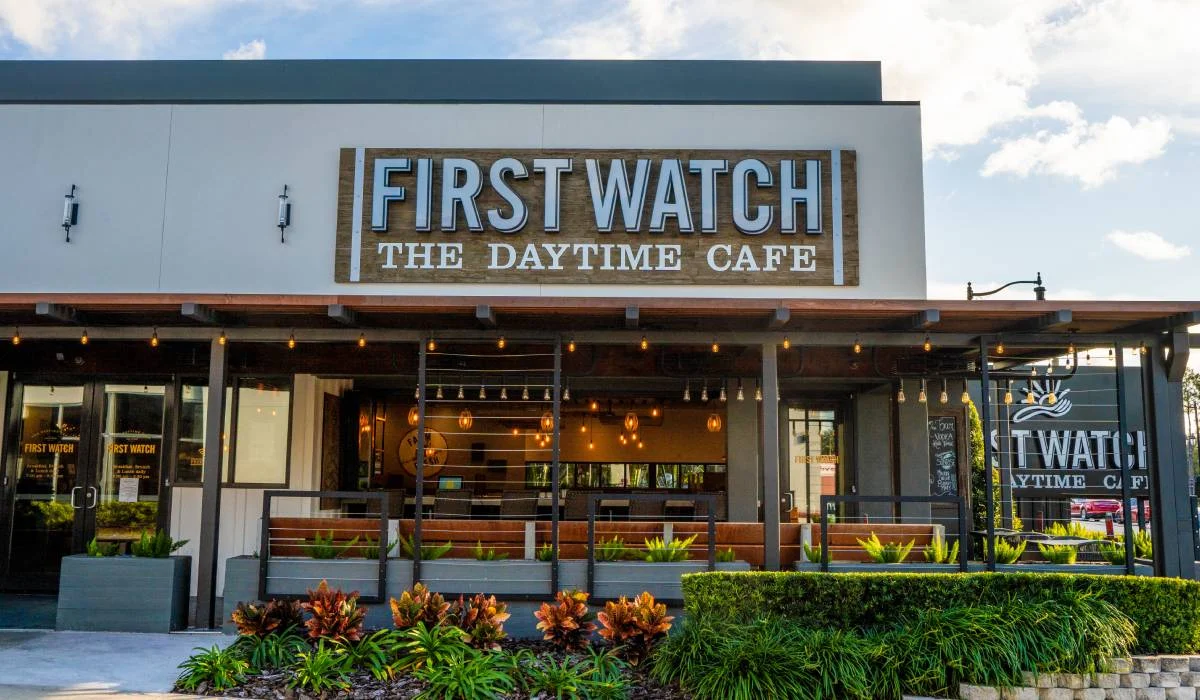
First Watch, the Florida-based restaurant chain that has become a dominant force in the morning restaurant sector, recently convened its inaugural investor day in Boston to outline a multi-year growth strategy aimed at solidifying its leadership in what it calls the "daytime dining" category. Addressing a room of analysts and shareholders for the first time in person since the company’s 2021 initial public offering (IPO), Chief Executive Officer Chris Tomasso challenged the long-standing industry narrative that the breakfast segment was in terminal decline. Instead, Tomasso argued that while traditional breakfast models may be failing, First Watch has successfully disrupted the space by focusing on freshness, operational efficiency, and a specific "one-shift" labor model that has allowed the brand to scale to 681 restaurants across 33 states.
Since Tomasso joined the company in 2006—the same year social media giant Twitter was founded—First Watch has transformed from a modest 66-unit regional player into a national powerhouse. During this period, the brand more than doubled its average-unit volumes (AUV) to $2.3 million and maintained a remarkable streak of 28 consecutive quarters of positive same-store sales leading up to its IPO. The company’s trajectory highlights a broader shift in consumer behavior, where the demand for high-quality, health-conscious morning and midday meals has outpaced the offerings of legacy family dining chains and 24-hour diners.
The Strategic Shift from Breakfast to Daytime Dining
A central theme of the Boston presentation was the distinction between the "breakfast" category and "daytime dining." According to Tomasso, the terminology used by the industry for decades has become obsolete. While legacy family dining chains have seen a compounded annual growth rate (CAGR) decline of 1.6 percent since 2021, the daytime dining segment has appreciated by 9 percent. First Watch currently commands a 75 percent share of this specific niche, positioning itself as the primary alternative to traditional "greasy spoon" establishments.
The company’s growth is anchored in a 7:30 a.m. to 2:30 p.m. operating window. This one-shift model is not merely a branding choice but a strategic labor advantage. By closing in the mid-afternoon, First Watch offers its employees a quality of life rarely found in the hospitality industry, which typically grapples with late nights and high turnover. This has resulted in an average general manager tenure of five years and a regional vice president tenure of 12 years. This stability has allowed the company to maintain a "tight span of control" as it scales, ensuring that the brand’s core hospitality values—such as greeting every guest with a fresh pot of coffee—remain intact across hundreds of locations.
Financial Performance and Long-Term Projections
First Watch shared ambitious long-term targets through 2028, signaling confidence in its ability to continue outperforming the broader full-service restaurant (FSR) sector. The company guided same-store sales growth of 2 to 4 percent alongside a total revenue lift of 10 to 13 percent. Furthermore, leadership expects adjusted EBITDA to scale at a rate of 15 percent or more, with the company projected to achieve positive free cash flow starting in 2027.
The financial health of the brand is further evidenced by its AUV expansion. In 2019, the average First Watch unit generated $1.8 million in annual sales. Today, that figure stands at $2.3 million, with a Year 3 target of $2.8 million. Perhaps most striking is the emergence of "mega-volume" stores; in 2022, the brand saw its first $4 million restaurant, and by 2025, it cracked the $5 million threshold in a single unit. This growth has occurred despite the cost of building a new restaurant rising from $1 million in 2021 to $1.8 million today. The company maintains that the increased capital expenditure is justified by the significantly higher volumes these new prototypes are generating.
Demographics and the High-Income Guest Base
A key driver of First Watch’s resilience is its demographic profile. Chief Brand Officer Matt Eisenacher revealed that the brand’s customer base is heavily skewed toward high-income earners, with 56 percent of guests residing in households with an annual income of $100,000 or more. This demographic is typically more insulated from macroeconomic volatility and inflationary pressures, allowing First Watch to maintain traffic even when other casual dining brands see pullbacks.
The generational split also favors the brand’s long-term prospects. While Boomers once defined the breakfast out-of-home occasion, the "vibrancy" of daytime dining has attracted younger cohorts. According to Datassential data cited during the presentation, Gen Z sourced meals away from home 36 percent of the time in the last month, compared to 18 percent for Boomers. First Watch’s current guest mix is 38 percent Millennial and 30 percent Gen X, with Gen Z representing a growing 7 percent share. The data suggests that for these younger diners, breakfast and brunch are not just meals but social occasions centered on culinary innovation and "better-for-you" ingredients.

Digital Innovation and the Sun on the Run Initiative
To capture additional market share, First Watch is investing heavily in technology and new sales channels. The brand recently relaunched its mobile app and implemented kitchen display systems (KDS) to improve throughput. These investments have already yielded a nearly 20 percent improvement in ticket times, allowing restaurants to serve more guests during peak weekend hours.
One of the most significant announcements at the investor day was the introduction of "Sun on the Run," a weekday-only, app-exclusive menu priced at $9.99. This initiative is designed to compete directly with quick-service restaurant (QSR) drive-thrus by offering high-quality sandwiches and burritos for customers on the go. The lineup includes items such as "The Spicy Cowboy" and "The Main Character," specifically engineered for portability and speed. By targeting the Monday-through-Friday "convenience" occasion, First Watch aims to drive incremental traffic during traditionally softer weekday hours without disrupting the core dine-in experience.
Furthermore, the brand is piloting a partnership with TikTok GO, making it one of the first restaurant chains to integrate location-specific offers and in-app transactions directly within the TikTok platform. This move is intended to convert the brand’s high social media engagement—totaling 62 million views year-to-date—into measurable sales.
Strategic Moderation and Market Saturation
As First Watch looks toward a long-term goal of 2,200 domestic locations, management is taking a disciplined approach to new openings. Chief Financial Officer Ashlee Weisser announced a slight moderation in the development pipeline, moving from 62 planned openings in 2026 to 55 in 2027. This decision is rooted in a desire to manage "sales transfer"—a phenomenon where new restaurant openings cannibalize traffic from existing nearby locations.
Estimated sales transfer impacted comparable traffic by 1.5 percent in 2026. By slightly slowing the pace of expansion, First Watch intends to refocus resources on training and labor for new openings while allowing existing markets to mature and stabilize. Chief Development Officer Eric Hartman characterized this as an intentional "market-build" strategy, designed to "take the oxygen out of the room" for competitors before shifting focus to maximizing the profitability of the established footprint.
Industry Implications and the Path Ahead
The success of First Watch serves as a case study for the broader evolution of the American restaurant industry. While legacy giants like IHOP and Denny’s have seen their unit counts retract in recent years—Denny’s alone has slimmed by 194 units over the last five years—First Watch has added 246 restaurants in the same period. This divergence highlights a clear consumer preference for specialized, daytime-only concepts over the traditional 24-hour multi-daypart model.
Analysts observing the Boston event noted that First Watch’s "coiling the spring" metaphor—investing in infrastructure now to release growth later—suggests a company that is preparing for a decade of dominance rather than short-term gains. By leveraging its "health halo," high-income guest base, and a technologically advanced operating platform, First Watch is not just participating in the breakfast category; it is actively redefining what daytime dining means for the modern consumer.
As the company moves toward 2028, the focus will remain on "relevancy." In the words of CEO Chris Tomasso, "While daytime dining is winning breakfast, we are winning daytime dining." With a clear strategy, a proven economic model, and a significant lead over its closest competitors, First Watch appears well-positioned to own the morning for the foreseeable future. The transition from a private enterprise to a public sales machine is nearly complete, and the results delivered thus far suggest that the brand’s evolution is only just beginning.