admin
A burgeoning movement across Puerto Rico is redefining food systems, as an increasing number of local food and farming operations collaborate to deliver nutritious produce directly to their communities. These innovative, relationship-driven networks offer a vital alternative on an island historically dependent on imports, providing resilience against climate disruptions, global economic shocks, and escalating food prices. Spearheaded by community-led initiatives like Súper Solidario, Tiendita Soberana, Nodo Alimentario, and Finca Güakia, this grassroots transformation is fostering food sovereignty and revitalizing local economies.
The Genesis of Vulnerability: A Colonized Food System
Puerto Rico’s journey toward its current food landscape is deeply rooted in historical economic and political shifts. Prior to the mid-20th century, agriculture was the backbone of the island’s economy, with vibrant local markets, known as plazas de mercado, serving as central hubs for community exchange and food distribution. However, this began to change dramatically with the implementation of "Operation Bootstrap" in the late 1940s. This U.S.-led initiative aimed to industrialize Puerto Rico’s economy through tax incentives and other market-oriented reforms, precipitating a mass exodus from rural areas to urban centers and a steady decline in agricultural land use.

The 1970s marked another pivotal shift with the introduction of the Food Stamp Program, later replaced by the Nutrition Assistance Program (PAN). While intended to alleviate hunger, this program inadvertently fostered a deeper reliance on imported and processed foods. As researcher Katia Avilés-Vázquez, director of the Institute for Agroecology Research and Action in Puerto Rico (IALA), explains, local food consumption became increasingly detached from local agricultural production. "The U.S. heavily promoted imported foods, aiming to make the Caribbean a ‘consumption appendage’ of the mainland," Avilés-Vázquez states, describing a deliberate process of cultural and dietary assimilation. She recounts instances where nutritionists discouraged the consumption of traditional staples like breadfruit in favor of imported potatoes, and school lunch programs featured non-native crops like apples. "There’s a huge process of unlearning that type of education we were force fed, literally and figuratively," she emphasizes, "Our taste buds, our palettes, were assimilated."
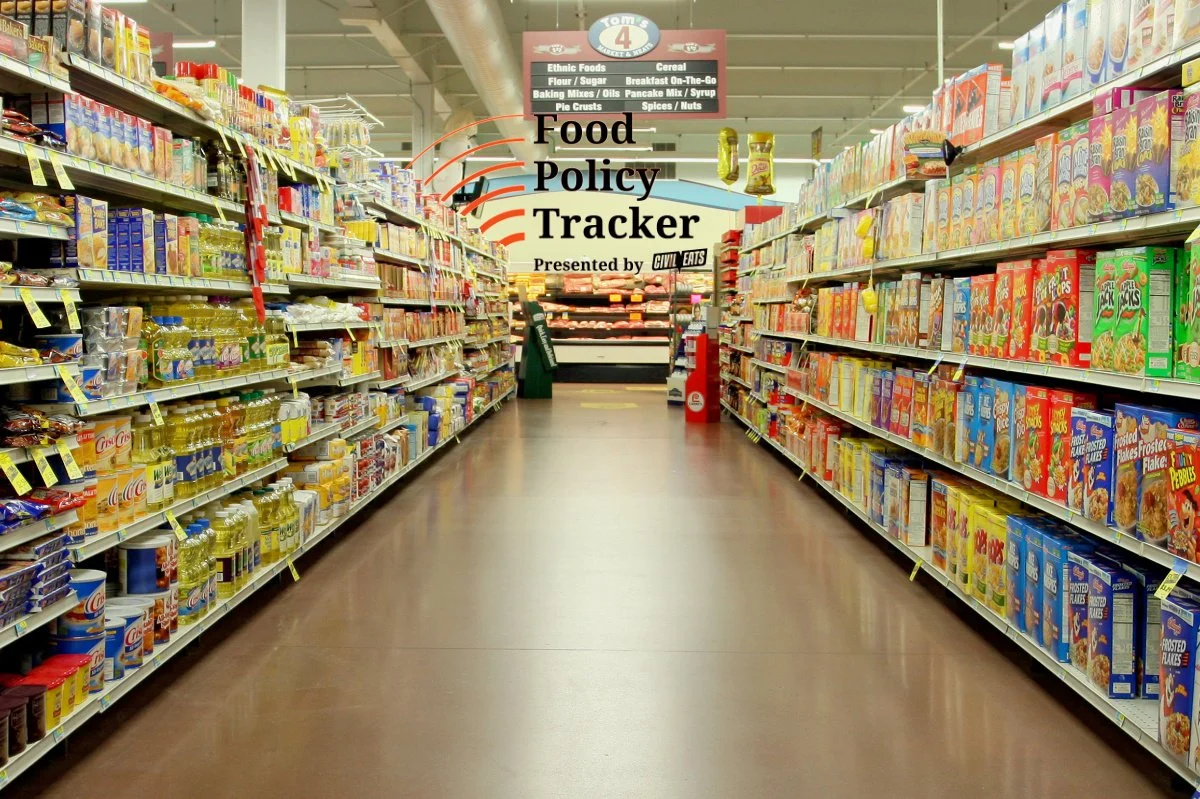
Today, this historical trajectory manifests as profound food insecurity. Over 80 percent of the food consumed in Puerto Rico is imported, making the island exceptionally vulnerable to external supply chain disruptions. More than 40 percent of Puerto Ricans live below the poverty line, with a similar percentage receiving PAN benefits. While these benefits are crucial for survival, critics argue they often only suffice for purchasing inexpensive, processed foods. Natalí Gaskins, a volunteer at the Camposofía alternative school, notes, "The amount of money you get monthly is only good for eating garbage. A lot of fresh food culture has been lost because it’s cheaper to buy canned tomatoes than to eat [fresh] tomatoes." This economic reality often compels rural residents to undertake long journeys to large retailers like Walmart for more affordable options, further eroding the viability of local markets. A 2025 survey by the feminist nonprofit Taller Salud confirmed these barriers, finding that only 20 percent of participants in community meal programs purchased food from fruit and vegetable stands, compared to 93 percent at supermarkets.
Catalyst for Change: Hurricane María and Beyond
The vulnerabilities inherent in this import-dependent system were starkly exposed in September 2017 when Hurricane María devastated Puerto Rico. The catastrophic storm wiped out an estimated 80 percent of the island’s crop value, shuttered many grocery stores, and crippled infrastructure, paralyzing shipping and leading to widespread food spoilage due to prolonged electricity outages. The archaic Jones Act, a maritime shipping law that mandates goods between U.S. ports be carried on U.S.-flagged vessels, exacerbated the crisis by slowing and increasing the cost of disaster relief, further highlighting the urgent need for local resilience.

In the aftermath of María, communities spontaneously organized mutual aid networks, demonstrating an inherent capacity for self-sufficiency. Omar García, whose family had farmed in Yabucoa, the southeastern valley where María made landfall, began planting crops immediately after the storm. "We organized as a community," García recalls, "We fed ourselves within our communities as a method of survival." This spirit of resilience became a powerful catalyst for the current wave of direct-to-consumer initiatives.
A Constellation of Community-Driven Solutions
From the bustling monthly market in Caguas to honor-system exchanges in the central mountains, these emergent models are diverse yet share a common goal: to bridge the gap between local producers and consumers, fostering equitable access to healthy food.
Súper Solidario: A Model of Cooperative Access (Launched late 2020)
In late 2020, Súper Solidario launched in Caguas, quickly becoming a beacon of community empowerment. One morning a month, Marisel Robles arrives at 6 a.m. to set up the market, and even two hours before opening, a line of eager customers typically stretches out the door. The market offers products from over 15 small-scale local farms at fair prices, alongside a "solidarity shelf" where visitors can select items at no cost. "The idea is for it to be a supermarket where anyone can access good quality food at a reasonable price," explains Robles, a founding member of the Súper Solidario team.

Customers can find a rich array of fresh produce, including guanabana, mango, pineapple, papaya, leafy greens, herbs, and Caribbean tubers like yautía, batata, and ñame. Locally made coffee, honey, and baked, canned, and dried goods are also popular. One dedicated customer reportedly buys 19 avocados every month, underscoring the demand for fresh, local fare. The Súper Solidario operates as a food co-op, with its 41 members exchanging labor for access to goods at cost. After market day, a "processing brigade" transforms any leftover produce into items like sofrito or juices, minimizing waste and adding value.
The impact of Súper Solidario is significant. Last year, over 2,000 people visited the market, nearly a quarter of whom were first-time customers. Crucially, more than two-thirds accessed goods from the solidarity shelf, highlighting the market’s role in combating food insecurity. Furthermore, Súper Solidario purchased 40 different crops outright from 22 farmers, providing them with a reliable sales channel without the burden of direct marketing or the risk of unsold goods. "For us, the most important solution to hunger is to have a direct network between producers and consumers," Robles affirms.
Nodo Alimentario: The Honor System in Utuado (Launched July 2025)
In the central mountains of Utuado, the Nodo Alimentario, an honor-system market, opened its doors in July 2025. This initiative blossomed from informal exchanges among families at the Camposofía alternative school, featuring produce from their farms, yards, and kitchens—from breadfruit and tubers to banana bread. With support from the Alliance for Agriculture and space provided by Camposofía, the Nodo established a physical presence with refrigeration, inviting wider community participation.
Natalí Gaskins, a mother and Nodo volunteer, praises its impact: "It’s an experience of nutrition and access to food at prices and quality you can’t find anywhere else." For local producers, the Nodo offers the convenience of dropping off goods while delivering their children to school, ensuring a reliable weekly income and saving time otherwise spent on lengthy market trips or negotiations with intermediaries. For consumers like Gaskins, the Nodo is a game-changer. Her closest supermarket is a 50-minute drive, and Costco, her preferred choice for organic and bulk options, is over an hour away. The Nodo, however, is just eight minutes from her home. "I’ll never go without eggs again, and they’re always eggs from happy hens," she exclaims. "The Nodo has changed our lives." Between September 2025 and March 2026, the Nodo sold 306 unique products supplied by 28 regular producers, along with contributions from dozens more occasional participants, showcasing its vibrant activity.

Tiendita Soberana: Empowering Farmers in San Lorenzo (Launched Jan 2026)
Following years of small-scale operations after Hurricane María, Omar García launched Finca Aurora in 2021, focusing on fruits, vegetables, and seed saving. Recognizing the need for a stable market, he and a group of producers developed Tiendita Soberana, an alternative market that officially launched in January 2026 in San Lorenzo. Located in a small storefront, the Tiendita serves as a collective space for its eight founding members and a wider network of 16 farms and 17 local makers to sell goods directly, bypassing intermediaries.
Many of Tiendita’s clients are older adults, but it also attracts younger generations influenced by the agroecology movement. A significant challenge for García is making local products competitive with supermarket prices. "In Puerto Rico, it’s very difficult to commercialize local products," he explains. "It’s very difficult to compete with market prices." For example, while a supermarket might sell batata (tropical sweet potato) for 65 cents a pound, his agroecologically grown batata costs $2. Despite this, customers recognize the superior nutritional value and freshness. García also highlights the systemic hurdle of accepting PAN benefits. While the Department of Agriculture launched "Mercados Familiares" in 2013 to promote local food access for PAN recipients, its vendor requirements and logistical issues often exclude small-scale producers. "We’re a colony, and our food system right now is conditioned by the North American model," García states, criticizing how federal funds often cycle back to the U.S. mainland through supermarket purchases. Yet, he continues to cultivate community, supplying not only the Tiendita but also Súper Solidario, restaurants, and traditional plazas de mercado.
Finca Güakia: Simplicity Through Farm Boxes (Launched April 2026)
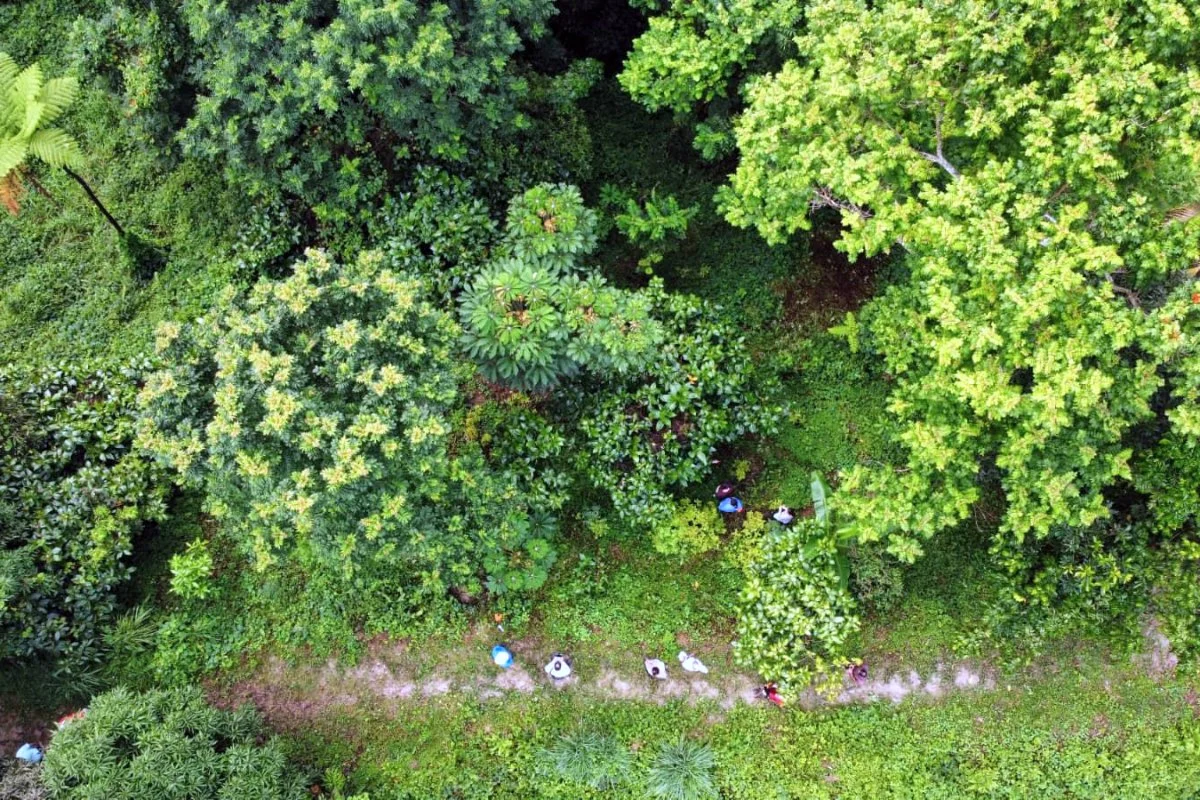
Nestled in the mountains of San Lorenzo, Finca Güakia, an agroecological farm, operates under the slogan: "Eating local can be simple." Co-founder Marissa Reyes explains, "The campaign seeks to show people that it doesn’t have to be so complicated. Though it may be difficult to find [local food] in the supermarket, if you communicate with farmers, it can be very simple." After relocating from Dorado in 2024, Finca Güakia launched its farm box program in April 2026. Each box contains fresh fruits, vegetables, and "value-added" products like turmeric salt, pesto, and baked goods, alongside items from neighboring producers. Distributing to 8-10 clients every two weeks with plans for expansion, Güakia exemplifies a growing trend.
While not entirely new (Departamento de la Comida ran a successful CSA from 2010-2012), the farm box model gained significant traction among agroecological farms during the Covid-19 pandemic, offering a safe and accessible way to reach consumers amidst global supply chain disruptions. Reyes notes that while supermarkets often have lower prices, local agroecological produce tends to offer more stable pricing during global upheavals and inflation. "For us as small farmers, it’s much more difficult to break in and meet market demand [compared to supermarkets]," she concedes, "But we can meet small-scale, regional demand because we’re spread out across the country." Finca Güakia collaborates closely with Súper Solidario and Tiendita Soberana, aiming to increase its participation in these spaces as production grows.

Rethinking the System: Broader Impact and Implications
These direct-to-consumer initiatives represent more than just alternative marketplaces; they are fundamental acts of resistance against a historically imposed food system and proactive steps towards food sovereignty. By fostering direct relationships, they empower both producers and consumers, cultivating a more resilient, equitable, and sustainable food future for Puerto Rico.
Economic Empowerment and Food Security: These models provide small-scale farmers with stable income channels, fair prices for their produce, and reduced logistical burdens, allowing them to focus on cultivation rather than marketing. For consumers, they offer access to fresh, healthy food at reasonable prices, often below what traditional supermarkets might charge for comparable quality, directly combating food insecurity exacerbated by rising costs of living. A 2026 consumer insights study indicated that the quality of fresh fruits and vegetables is an increasingly important factor in Puerto Ricans’ grocery shopping decisions, underscoring the appeal of these local offerings.
Climate Resilience and Agroecology: The emphasis on local production and agroecological practices inherently builds resilience against climate change and natural disasters. By reducing reliance on long supply chains, these communities are better positioned to weather future storms and disruptions. Agroecology, with its focus on sustainable farming methods, soil health, and biodiversity, also contributes to ecological healing, as Marissa Reyes passionately articulates: "Supporting local isn’t just about supporting farmers and eating healthy, but about healing, about cooling the planet. The reality is urgent."

Cultural Reconnection and Community Building: Beyond the tangible benefits of food access, these initiatives are actively rekindling a connection to Puerto Rico’s agricultural heritage and traditional foods. They facilitate "unlearning" the assimilated tastes of imported foods and re-embracing native crops. The markets serve as vibrant community hubs, fostering social cohesion and mutual aid, reminiscent of the historical plazas de mercado.
Policy Gaps and Future Outlook: While these grassroots efforts are demonstrably successful on a local scale, advocates contend that broader systemic changes are still necessary. Improving land access for small farmers, implementing widespread agroecological practices, and instituting policies that genuinely support small producers—including making it easier for them to accept PAN benefits—are crucial next steps. The current disconnect between federal programs designed to address food insecurity and the realities of local, small-scale producers represents a significant policy gap.
In conclusion, the growing constellation of direct producer-to-consumer networks in Puerto Rico is not merely an economic trend but a profound societal movement. By rethinking their relationships with land, food, and one another, these communities are actively building robust, sustainable food systems that offer a blueprint for self-sufficiency, resilience, and cultural restoration in the face of ongoing economic and environmental challenges. "Agroecology is here to stay," Reyes asserts, reflecting a collective determination to cultivate a healthier, more sovereign future for the island.