admin
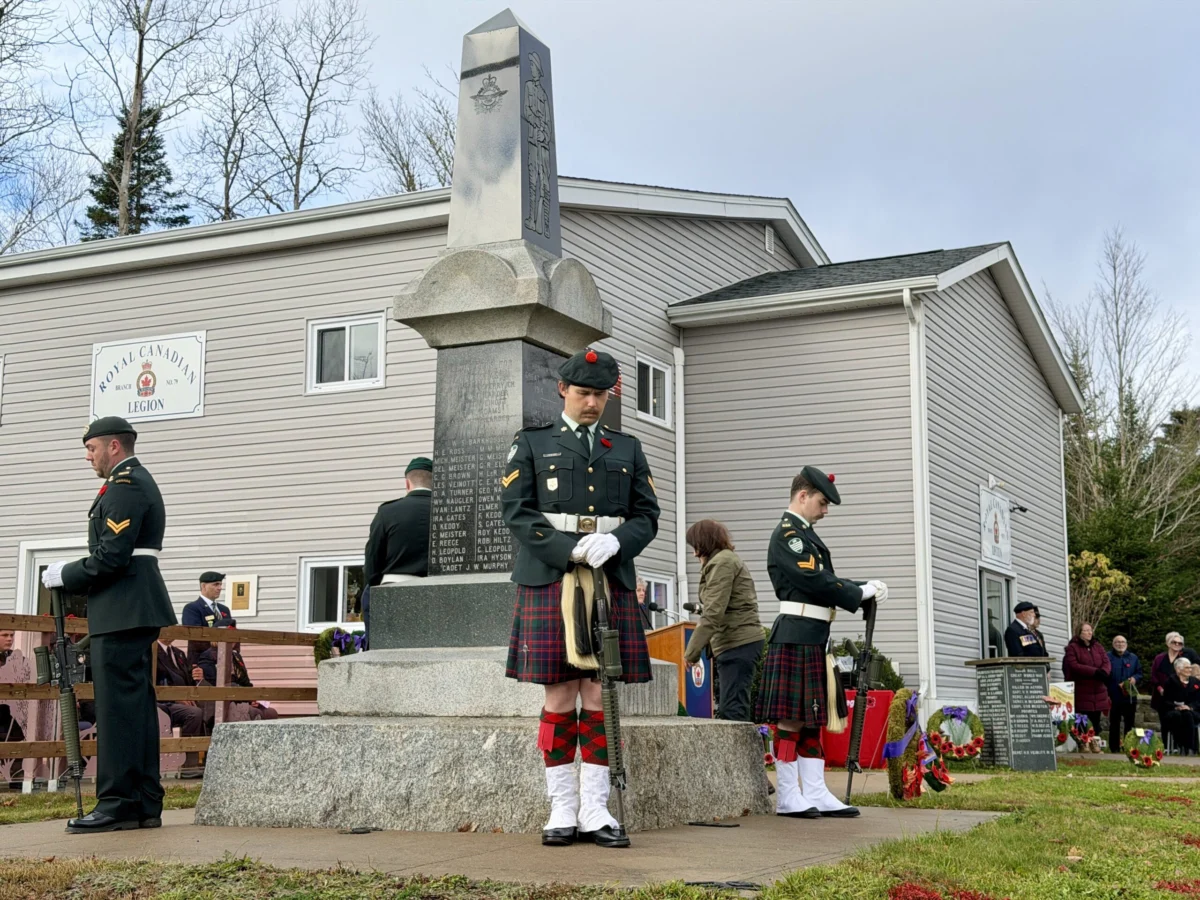
New Ross, Nova Scotia – On November 11, 2026, approximately 300 individuals gathered at the venerable foot of Nova Scotia’s oldest cenotaph, marking Remembrance Day with a profound ceremony that intertwined the solemn recognition of historical sacrifices with a poignant tribute to a recent national tragedy. This annual observance, a cornerstone of Canadian identity, took on an amplified emotional weight this year as attendees paused not only for those who fell in past conflicts but also for four Canadian soldiers tragically lost during a training exercise at CFB Wainwright just weeks prior. The Royal Canadian Legion Branch 79, known affectionately as "the best little legion in New Ross," orchestrated the event, underscoring the deep-rooted military heritage of the community and its unwavering commitment to the "Lest We Forget" ethos.
The Enduring Legacy of Nova Scotia’s Oldest Cenotaph
The cenotaph in New Ross stands as a tangible link to Canada’s military past, its origins tracing back to the tumultuous years of the First World War. The base stones for this significant monument were meticulously placed at the village crossroads in 1917, a testament to the community’s early and immediate recognition of the immense sacrifices being made overseas. At a time when the Great War raged and its human cost was becoming devastatingly clear, communities across Canada sought ways to honor their fallen, and the New Ross cenotaph emerged as one of the earliest and most enduring symbols of this national grief and gratitude. Initially dedicated to the soldiers who served and perished in the First World War, it was later expanded to include the names and memory of veterans from the Second World War, reflecting the continuous thread of service and sacrifice that has defined Canada’s military history.
New Ross itself possesses a rich military lineage, a fact proudly highlighted by Ron Langevin, the services officer for Royal Canadian Legion Branch 79. "New Ross was formed by the military, by Captain Ross," Langevin noted, emphasizing the town’s intrinsic connection to military service. This historical thread extends far beyond the World Wars, encompassing Canadian involvement from the Louis Riel uprising in the late 19th century to the Second Boer War, conflicts that shaped the nascent nation and instilled a profound sense of duty within its communities. This deep historical context imbues the New Ross Remembrance Day ceremony with an added layer of significance, making it not merely an annual event but a continuation of a century-old tradition of honor and memory.

The physical journey of the cenotaph itself mirrors the community’s evolving relationship with its past. Originally positioned at the bustling center of town within a roundabout, the monument faced the practical challenge of modern traffic, enduring several collisions with vehicles. This led to a municipal decision to relocate it, a proposal that met with fierce resistance from the Second World War veterans who held a profound attachment to its original placement and symbolic weight. In a testament to their unwavering dedication and perhaps a touch of wartime determination, a group of these veterans, in the dead of night, famously used a bulldozer to move the monument themselves, relocating it to the grounds of the Royal Canadian Legion. Since that fateful night, the Legion has proudly assumed the role of caretaker, ensuring the preservation and sanctity of this cherished landmark. While various components of the structure have been replaced over the decades to maintain its integrity, the core message etched into its stone—"Lest We Forget"—remains an unyielding beacon of remembrance, echoing across generations.
Royal Canadian Legion Branch 79: Custodians of Memory
The Royal Canadian Legion plays an indispensable role in upholding the tradition of remembrance across Canada, and Branch 79 in New Ross exemplifies this commitment. With approximately 1,350 branches nationwide and over 250,000 members, the Legion serves as the primary custodian of remembrance, advocating for veterans’ rights, providing support services, and organizing thousands of ceremonies each year. In New Ross, Branch 79’s dedication is particularly evident in its stewardship of the cenotaph and its meticulous planning of the annual Remembrance Day service. Their efforts ensure that the sacrifices of Canadian service members are never forgotten, fostering a sense of continuity and shared responsibility within the community.
Ron Langevin’s description of Branch 79 as "the best little legion in New Ross" speaks to the close-knit nature of the community and the deep personal investment members have in their mission. Beyond organizing the annual ceremony, legions typically engage in various activities throughout the year, from fundraising for veteran support initiatives to hosting social events that connect current and former service members and their families. This year, their role was amplified by the need to integrate the remembrance of a very recent loss into the traditional ceremony, requiring a delicate balance of solemnity and sensitivity. The Legion’s ability to adapt and incorporate contemporary events into the long-standing traditions of Remembrance Day highlights its vital and evolving role in Canadian society.
A Nation Mourns: The Tragic Loss at CFB Wainwright

The 2026 Remembrance Day ceremony in New Ross, like many across the country, was marked by a profound moment of shared national grief, extending beyond historical conflicts to a recent, devastating incident. On October 17, 2026, less than a month before the solemn observances of November 11th, the Canadian Armed Forces (CAF) suffered a tragic loss when four soldiers were killed during a training exercise at Canadian Forces Base Wainwright in Alberta. While specific details of the incident, including the precise nature of the "fire" mentioned, are typically subject to ongoing investigation by military authorities, the immediate impact was a wave of sorrow that rippled across the nation, serving as a stark reminder of the inherent dangers faced by service members even during peacetime training on Canadian soil.
CFB Wainwright, a sprawling 600-square-kilometer training area in eastern Alberta, is one of the Canadian Army’s most crucial training facilities. It hosts large-scale exercises for both regular and reserve forces, simulating combat conditions to prepare soldiers for deployments both domestically and internationally. The base’s expansive terrain and specialized facilities allow for complex maneuvers involving vehicles, live-fire drills, and other high-intensity training scenarios. Such exercises, while essential for maintaining operational readiness, carry inherent risks, and tragic accidents, though rare, underscore the constant vigilance and sacrifice demanded of military personnel.
News of the incident prompted an outpouring of condolences from across Canada. Senior government officials, including the Prime Minister, the Minister of National Defence, and the Chief of the Defence Staff, would have undoubtedly issued public statements expressing profound sorrow and offering support to the families of the fallen. Flags would have been lowered to half-mast on government buildings, and military bases across the country would have held their own internal ceremonies of remembrance and support. For communities like New Ross, with its strong military ties, the loss of these four soldiers resonated deeply, transforming the abstract concept of military sacrifice into a painfully real and contemporary tragedy. The decision to hold an "extra minute of silence" at the New Ross ceremony was a direct, heartfelt response to this recent national bereavement, a collective acknowledgment that the cost of service is not confined to the battlefields of history but continues to be paid in the present day.
Remembrance Day 2026: A Dual Tribute to Service and Sacrifice
The ceremony in New Ross on November 11, 2026, thus became a poignant tableau of dual remembrance. The crisp autumn air carried the traditional sounds of the Last Post, played with mournful precision, followed by the two minutes of silence observed across Canada at 11:00 a.m. This sacred pause, marking the precise moment the Armistice was signed in 1918, was amplified in New Ross by the additional minute dedicated to the CFB Wainwright victims. Master of Ceremonies Keith Carter articulated the gravity of this extended moment: "Recently our nation lost four soldiers who were training in Wainwright, Alberta. I would like an additional minute at this time to recognize the sacrifice that all of our Canadian forces members make, every day they go to work. Even here on Canadian soil, as they train to serve their duties overseas and around the world." His words underscored a crucial aspect of modern military service: the continuous commitment and inherent risks involved in maintaining peace and security, whether deployed abroad or training at home.

The laying of wreaths, a timeless tradition at cenotaphs and memorials, saw community members step forward, each placement a silent vow to honor those who served. These wreaths, adorned with poppies, symbolized the blood shed and lives lost, linking the red fields of Flanders to the present-day training grounds. The intergenerational attendance—from veterans with their medals proudly displayed to young children clutching poppies—highlighted the enduring importance of passing on the torch of remembrance. It served as a powerful visual representation of the community’s collective memory, a living testament to the sacrifices made and the lessons learned.
Ron Langevin’s reflection on his thoughts this Remembrance Day perfectly encapsulates the expansive nature of contemporary remembrance. His perspective was "all-encompassing," looking beyond historical figures to the active service members of today, the sacrifices of the fallen, and crucially, the profound and lasting impact on the families left behind. "I look at the families who lost their loved ones, the mothers, the fathers, the brothers, and the sisters. So I try to take it all in," he stated. This holistic view acknowledges that the impact of military service extends far beyond the individual soldier, touching entire families and communities, creating a ripple effect of pride, grief, and resilience that shapes the national fabric.
The Broader Tapestry of Canadian Remembrance
Remembrance Day in Canada, while rooted in the end of the First World War, has evolved to encompass all conflicts and peacekeeping missions in which Canadians have participated. From the trenches of Vimy Ridge and the beaches of Normandy to the battlefields of Korea, the peacekeeping missions in the Balkans, and the recent engagements in Afghanistan, Canadian service members have consistently answered the call to duty. The annual observances, from the national ceremony in Ottawa to countless local events like the one in New Ross, serve as vital anchors for national memory, ensuring that these contributions and sacrifices are never relegated to mere historical footnotes.
The poppy, adopted as the official symbol of remembrance, traces its origins to Lieutenant-Colonel John McCrae’s poem "In Flanders Fields." Its widespread adoption and distribution by the Royal Canadian Legion each year raise millions of dollars for veteran support programs, while simultaneously serving as a visible, unifying symbol of national remembrance. Wearing the poppy is a personal pledge to remember, a silent acknowledgment of the price of freedom and peace.

The CFB Wainwright incident, occurring so close to Remembrance Day, underscored the ongoing relevance of these observances. It served as a stark, immediate reminder that military service is not a relic of the past but a present reality, with real and tangible risks. It reinforced the idea that "Lest We Forget" is not just about historical battles but about the continuous commitment required to protect national interests and contribute to global stability. The solemn pause for the four fallen soldiers was a powerful affirmation that the spirit of remembrance must remain dynamic, adapting to honor those who make the ultimate sacrifice in all circumstances of their service.
Community Vigilance: Upholding the "Lest We Forget" Pledge
The gathering in New Ross highlights the critical role of local communities in upholding the traditions of Remembrance Day. While national ceremonies receive significant media attention, it is in countless small towns and villages across Canada that the intimate, personal connections to military service are most keenly felt. These local ceremonies often involve direct descendants of veterans, current service members residing in the area, and community leaders who grew up with the stories of local heroes. This proximity fosters a deep sense of ownership and responsibility for the act of remembrance.
The story of the New Ross cenotaph, moved by determined veterans, epitomizes this local vigilance. It speaks to a profound respect for their forebears and a fierce dedication to preserving the symbols of their sacrifice. This spirit continues through the efforts of Royal Canadian Legion Branch 79, which acts not just as an organizer but as a living repository of the community’s military history. Their commitment ensures that future generations will continue to learn about the courage, resilience, and sacrifices of those who served, thereby strengthening the social fabric and fostering a sense of shared national identity.
In an increasingly complex world, the values embodied by Remembrance Day – sacrifice, duty, honor, and community – remain profoundly relevant. The ceremony in New Ross, with its blend of historical homage and contemporary mourning, served as a powerful reminder that the commitment to "Lest We Forget" is an ongoing, evolving pledge. It underscores that while the nature of conflict and service may change, the fundamental human cost and the imperative to remember those who bear it remain constant, echoing through generations and across the diverse landscapes of Canada.