admin
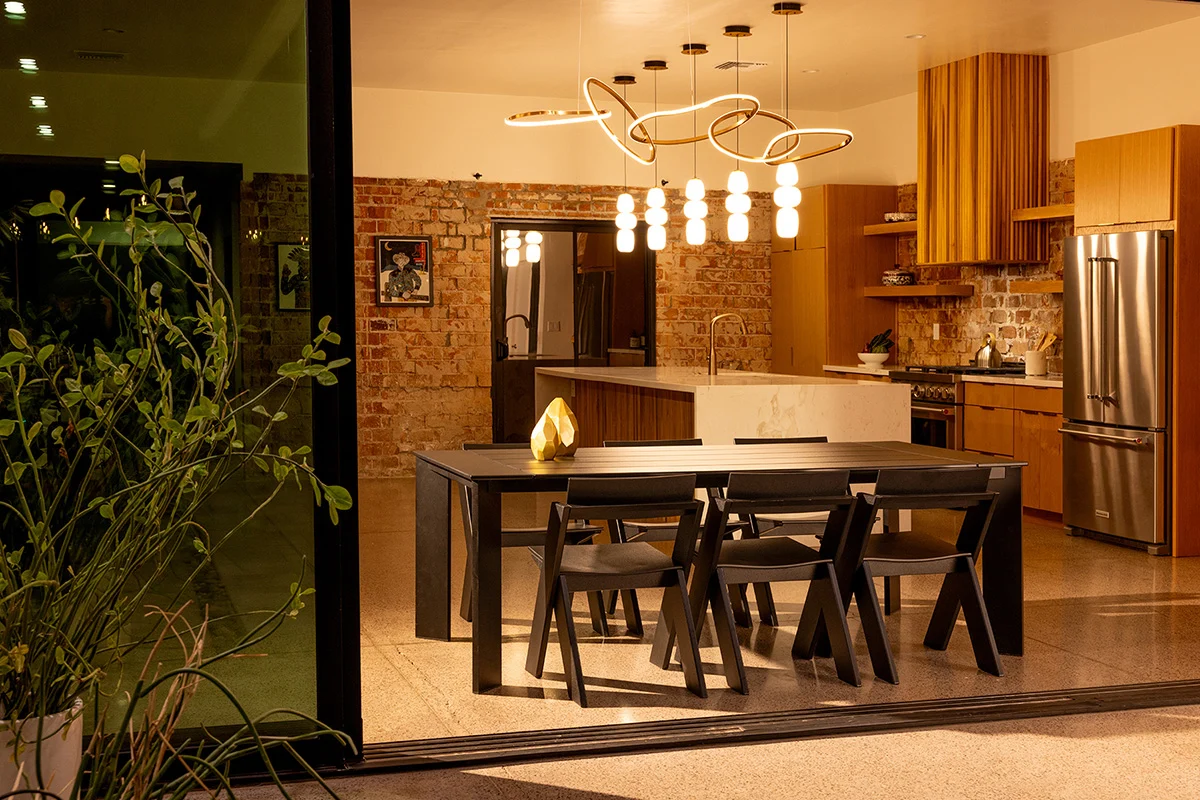
The intersection of ecological philosophy and industrial design has reached a new milestone with the release of the Here and There Collection, a collaborative suite of outdoor furniture from Duluth-based Loll Designs and Michigan-based industrial design studio Argenta Park. This new collection represents a sophisticated reinterpretation of the legendary wooden bench designed in the 1940s by Aldo Leopold, a seminal figure in the American conservation movement. By integrating modern manufacturing techniques with sustainable materials, the partnership aims to preserve the functional integrity of Leopold’s original vision while addressing the ergonomic and durability requirements of contemporary outdoor living.
The Foundation of an Ecological Icon
To understand the significance of the Here and There Collection, one must first examine the historical artifact that served as its blueprint. In the mid-1940s, Aldo Leopold, often cited as the father of wildlife ecology and the author of A Sand County Almanac, required a functional vantage point on his farm in Wisconsin. He sought a place from which he could observe the natural world and contemplate the "Land Ethic"—his philosophy regarding the responsible relationship between people and the environment.
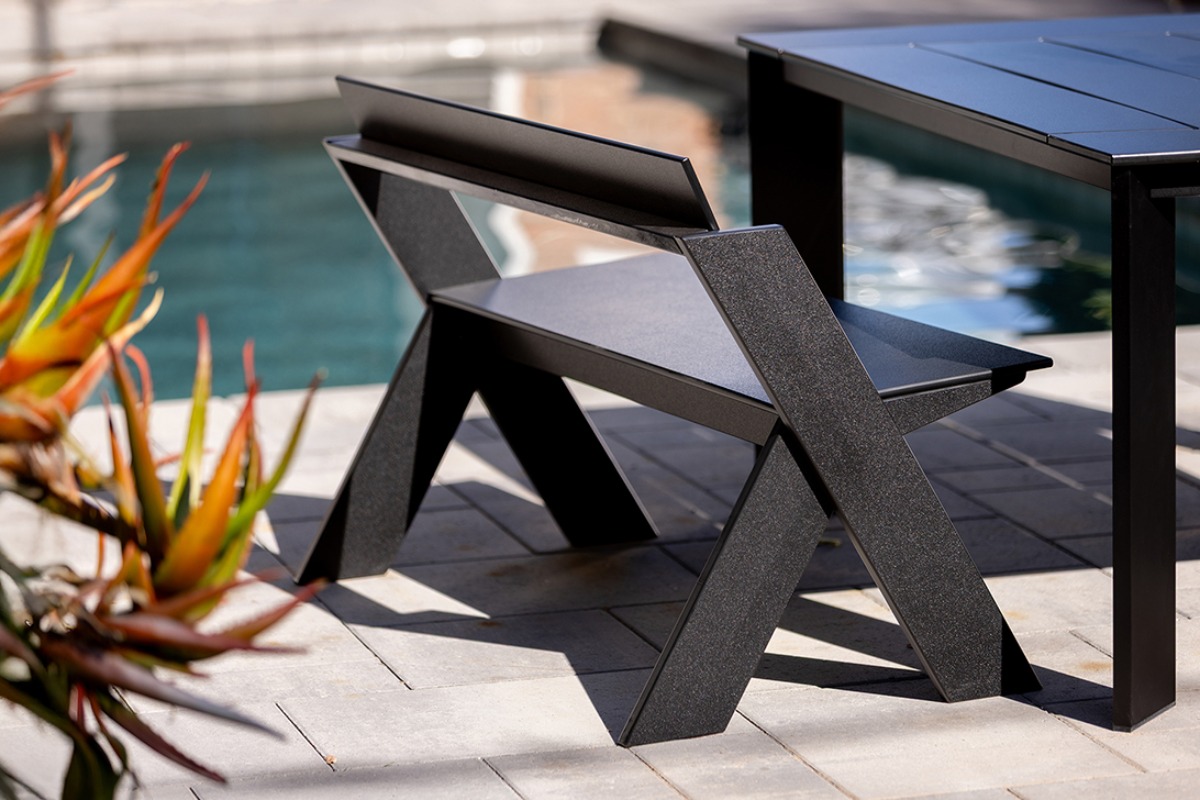
Leopold’s solution was a model of utilitarian efficiency. Constructed from standard dimensional lumber, the bench featured a distinctive back-slanted seat and an X-shaped, self-bracing geometry. This design was not merely a matter of aesthetics; it was a response to the practicalities of 20th-century rural life. The bench was easy to assemble with basic tools, utilized materials efficiently to minimize waste, and provided a sturdy, stable seat on uneven terrain. For decades, the "Aldo Bench" has been a staple of nature centers and conservation sites, revered for its "unpretentious, serendipitous genius," as described by contemporary designers.
The original design’s brilliance lay in its simplicity. It required no complex joinery, relying instead on the structural strength of its triangular bracing. However, as a product of its time, the original wooden construction faced inherent limitations, including susceptibility to rot, the need for regular staining or painting, and the rigid discomfort of flat-plank ergonomics.
A Twelve-Year Evolution: From Wedding DIY to Industrial Production
The journey of the Here and There Collection began not in a corporate boardroom, but at a bachelor party in 2014. Ricky Biddle, a designer at Argenta Park, was preparing for his outdoor wedding and found himself dissatisfied with the standard options for event seating. Seeking an alternative to the flimsy, generic furniture typically available for rent, Biddle turned to the Leopold design.
In a move reminiscent of Enzo Mari’s Autoprogettazione—the 1974 project that provided open-source designs for high-quality furniture that could be built by anyone—Biddle and his friends spent the days leading up to his wedding assembling rudimentary Aldo benches. These pieces proved to be more than temporary wedding fixtures; they became permanent elements of Biddle’s family life, enduring years of exposure to the elements.
This decade-long "field test" prompted Biddle to consider how the bench’s fundamental geometry could be elevated through professional manufacturing. The goal was to retain the "raw genius" of the original while correcting its flaws through advanced engineering. Biddle brought the concept to Churu Yun, founder of Argenta Park, and subsequently to the engineering team at Loll Designs.
Loll Designs, a company established in 2003, was an ideal partner for this endeavor. Based in Duluth, Minnesota, the manufacturer has built a global reputation for transforming classic outdoor archetypes into modern, sustainable products. Most notably, Loll redefined the Adirondack chair by utilizing recycled high-density polyethylene (HDPE), a move that prioritized longevity and environmental responsibility.
Technical Specifications and Material Innovation
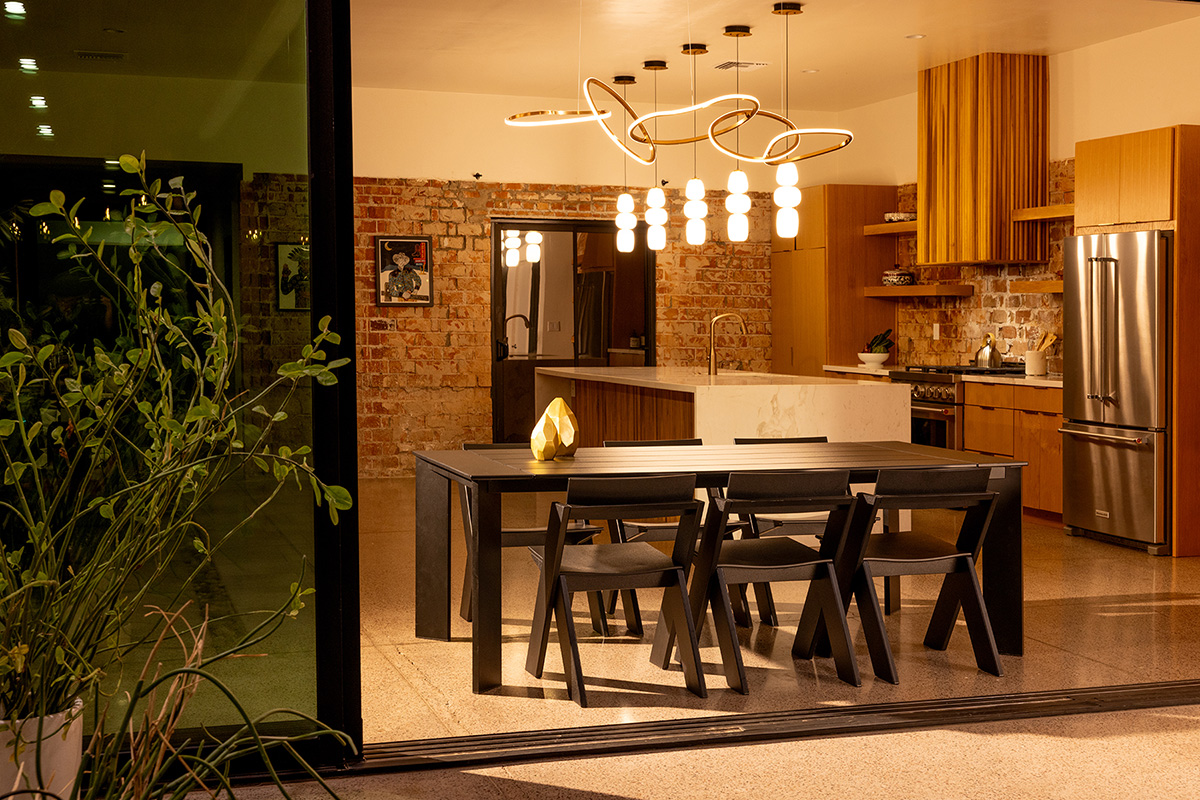
The Here and There Collection consists of three primary pieces: a dining chair, a dining table, and the foundational bench. While the silhouette pays homage to Leopold’s 1940s design, the technical execution is entirely modern.
The primary material used in the collection is 100% recyclable high-density polyethylene (HDPE), primarily sourced from post-consumer waste such as milk jugs. HDPE is uniquely suited for outdoor applications due to its high strength-to-density ratio and its resistance to the stressors of varied climates. Unlike traditional timber, HDPE does not absorb moisture, meaning it will not rot, crack, or warp when exposed to snow, rain, or intense UV radiation.
To improve upon the original’s comfort, the designers replaced the flat wooden planks with softly contoured surfaces. These curves are achieved through precision CNC (Computer Numerical Control) machining, allowing for an ergonomic fit that the original 2×6 and 2×10 lumber could not provide. Furthermore, the assembly process has been streamlined with high-grade stainless steel fasteners, ensuring that the furniture remains rigid and secure over decades of use.
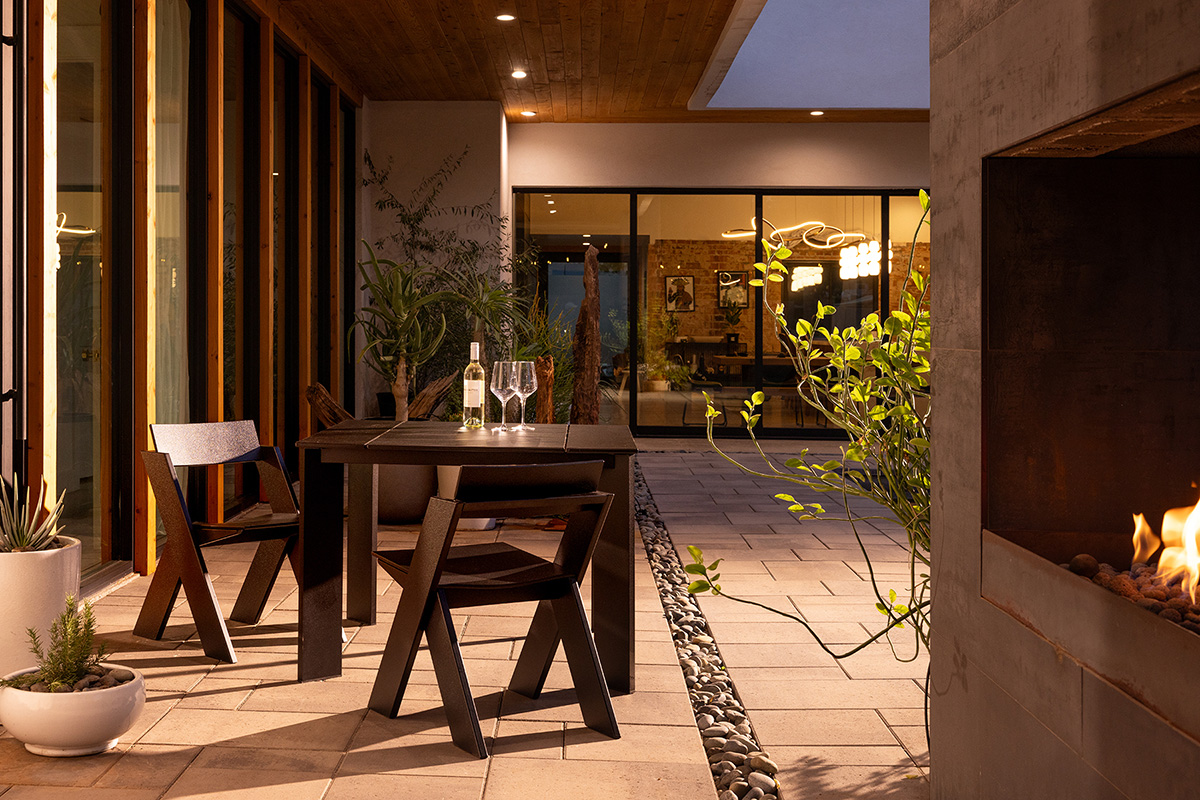
The collection is offered in a palette of muted, nature-inspired tones: Black, Charcoal Grey, Fog, and Sage. These colors are integrated throughout the material, ensuring that scratches or wear do not reveal a different color underneath, a common issue with painted or coated outdoor furniture.
Design Philosophy: Preservation Through Modernization
A critical aspect of the partnership between Loll Designs and Argenta Park was the decision not to create a mere replica. Brian King, Loll Designs’ Brand and Marketing Director, emphasizes that successful historical preservation in design requires a selective approach.
"Not all historical designs lend themselves to being evolved into a modern-day furniture piece," King noted. "It’s more about being hyper-selective in a design that has meaning, history, or a deep-rooted memory and identifying what’s most valuable."
The "value" identified in the Leopold bench was its "Here and There" philosophy. Named after Leopold’s belief that environmental appreciation must balance the immediate surroundings (the "here") with the broader ecological landscape (the "there"), the collection aims to facilitate this connection. By removing the burden of maintenance, the furniture allows the user to focus entirely on the experience of being outdoors.
Eric Swanson, President of Loll Designs, highlights that the "beauty" of the original was its accessibility—the fact that anyone with a saw and lumber could build it. However, he argues that modern consumers demand a different kind of accessibility: the ability to enjoy outdoor spaces without the labor of upkeep. "People want to enjoy their time outdoors sitting in their furniture more than working on it," Swanson stated. This shift from "working on" to "sitting in" is the core value proposition of the Here and There Collection.
Economic and Environmental Impact Analysis
The launch of the Here and There Collection arrives at a time of significant growth in the high-end outdoor furniture market. According to industry reports, the global outdoor furniture market is projected to reach over $25 billion by 2030, driven by an increasing consumer focus on "outdoor living rooms" and sustainable home products.
The use of HDPE in this collection aligns with broader circular economy trends. By diverting plastic waste from landfills and turning it into a product with a lifespan measured in decades rather than years, Loll Designs and Argenta Park are practicing the very conservation ethics Leopold championed. The "zero waste" configuration of the original design has been translated into a modern manufacturing context where material yields are maximized, and off-cuts are recycled back into the production stream.
Furthermore, the durability of the collection addresses a growing consumer fatigue with "fast furniture"—low-cost, low-quality items that require replacement every few seasons. The Here and There Collection is positioned as a generational investment, mirroring the longevity of the original Leopold benches that still sit on the Wisconsin landscape today.
Broader Implications for Sustainable Design
The collaboration serves as a case study for how heritage designs can be updated for the 21st century without losing their soul. By honoring Aldo Leopold’s contribution to ecology through a medium he personally utilized, Loll Designs and Argenta Park have created a bridge between the history of conservation and the future of sustainable manufacturing.
The collection also reflects a shift in industrial design toward "quiet observation." In an era of increasingly complex and "smart" furniture, the Here and There suite remains intentionally simple. It does not feature integrated technology or modular gimmicks; instead, it relies on the strength of its geometry and the integrity of its materials.
As urbanization continues and the demand for high-quality outdoor spaces grows, the ability to provide durable, comfortable, and aesthetically refined seating becomes a matter of public and private importance. The Here and There Collection ensures that the "primal force" of nature, which Leopold so cherished, remains accessible to a new generation of observers.
Conclusion
The Here and There Collection is more than a set of chairs and tables; it is a functional tribute to a man who changed how humanity views its place in the natural world. By combining the DIY spirit of the 1940s with the precision of 2024 manufacturing, Argenta Park and Loll Designs have ensured that the Aldo Leopold bench will remain a fixture of the American landscape for another century. Through the use of recycled materials, refined ergonomics, and a deep respect for historical context, this collaboration proves that the best designs are those that evolve to meet the needs of the present while staying rooted in the wisdom of the past.