admin
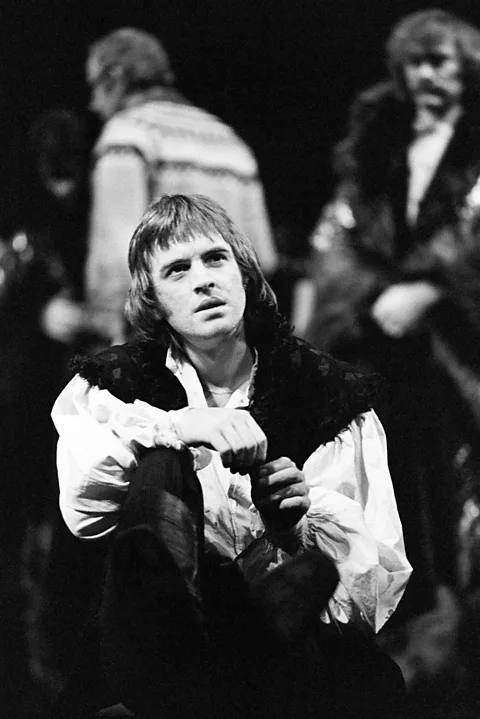
The intersection of life and art rarely reaches the harrowing intensity witnessed at London’s National Theatre in late 1989. As the biographical film Elsinore prepares for its international release, public attention has returned to the extraordinary final months of Ian Charleson, the Scottish actor who delivered what many critics consider the definitive Hamlet of the 20th century while in the terminal stages of AIDS. Starring Andrew Scott as Charleson and Olivia Colman as his physician, Dr. Margaret Johnson, the film has already generated significant awards momentum, positioning Scott as a frontrunner for the Academy Award for Best Actor. However, the true story behind the cinematic adaptation is one of unprecedented resilience, medical history, and a transformative moment in British cultural life.
Ian Charleson was a performer of immense range, though he remained most recognizable to global audiences for his portrayal of Eric Liddell in the 1981 Academy Award-winning film Chariots of Fire. His performance as the devout Christian sprinter who refused to compete on the Sabbath captured a specific blend of moral steel and physical grace. Following this success, Charleson appeared in another Oscar winner, Gandhi (1982), yet by the late 1980s, he felt a growing sense of professional stagnation. This dissatisfaction coincided with a devastating personal crisis: in 1986, Charleson was diagnosed with HIV, which by 1989 had progressed to AIDS. At a time when the illness carried a massive social stigma and was largely a death sentence, Charleson chose to channel his remaining energy into the most demanding role in the English theatrical canon.

The Catalyst of the Olivier Stage
The opportunity for Charleson to play Hamlet at the National Theatre arose under circumstances that have since become part of theatrical folklore. The production, directed by Richard Eyre, originally starred Daniel Day-Lewis. On the night of September 5, 1989, during Act 1, Scene 5—the moment Hamlet encounters the ghost of his father—Day-Lewis abruptly left the stage and refused to return. While rumors circulated for decades that the actor had seen the literal ghost of his own father, the poet Cecil Day-Lewis, Day-Lewis later clarified that the experience was a psychological collapse brought on by the exhaustion of the role.
With the production in jeopardy, Eyre turned to Charleson. The two had a long-standing professional relationship, most notably working together on the 1982 revival of Guys and Dolls. Although Charleson had played Hamlet twice before—once in a 1974 touring production and again in Tom Stoppard’s Rosencrantz and Guildenstern Are Dead—he felt he had never truly mastered the part. Despite his failing health and the warnings of those closest to him, including his friend and fellow director Sean Mathias, Charleson accepted the role. Mathias recalls the immense physical and mental toll the part requires, noting that a standard performance of Hamlet lasts approximately four hours and requires the lead actor to deliver nearly 1,500 lines—more than any other character in Shakespeare’s works.
A Chronology of Resilience: 1989-1990
The timeline of Charleson’s final months illustrates a frantic race against time and biology. After Day-Lewis’s departure in early September, Charleson entered a rigorous rehearsal period while undergoing treatment for systemic infections.

- September 1989: Charleson begins rehearsals. To explain his physical frailty and facial swelling, the National Theatre issues a press statement claiming the actor is recovering from a serious sinus operation.
- October 9, 1989: Charleson makes his debut as Hamlet on the Olivier stage. The performance is met with an immediate and overwhelming critical response.
- October–November 1989: Charleson performs the role 24 times. His physical condition fluctuates wildly, necessitating constant medical supervision.
- November 13, 1989: Charleson delivers his final performance. The evening concludes with a prolonged standing ovation from an audience largely unaware of the actor’s terminal condition.
- January 6, 1990: Ian Charleson dies at the age of 40.
- January 1990: In an unprecedented move for the era, Charleson’s agent, Michael Whitehall, announces that the actor died of AIDS-related complications, honoring Charleson’s wish to bring honesty to the epidemic.
Medical Context and the Role of Dr. Margaret Johnson
The film Elsinore highlights the pivotal role of Dr. Margaret Johnson, played by Olivia Colman. In 1989, Dr. Johnson was a young respiratory physician at the Royal Free Hospital in London, tasked with managing the burgeoning HIV/AIDS crisis. At the time, medical options were severely limited; the first antiretroviral drug, AZT, had only been approved in 1987 and was often administered in toxic doses.
While the film dramatizes a conflict between doctor and patient regarding the wisdom of performing, the real Professor Margaret Johnson OBE recalls a more collaborative relationship. She emphasizes that her philosophy was always to support the patient’s quality of life and personal goals. Charleson’s decision to perform was not merely a professional choice but a psychological necessity. "I would never say don’t get on with your life," Johnson noted in a recent interview. Her work with Charleson helped pave the way for a more patient-centered approach to HIV care, eventually leading to the establishment of the Ian Charleson Day Centre at the Royal Free Hospital in 1992, which remains a leading facility for HIV treatment.
The Performance: Critical and Peer Reactions
The impact of Charleson’s Hamlet was profound, partly because his personal proximity to death seemed to illuminate Shakespeare’s text in new ways. John Peter, the influential critic for the Sunday Times, wrote at the time that Charleson’s performance "oozes intelligence from every pore." He described a Hamlet that was not merely a "melancholy Dane" but a man of vital, forceful energy—an irony given Charleson’s actual physical state.

Colleagues who shared the stage with him describe a production fueled by collective protectiveness and awe. Paul Jesson, who played Horatio, recalls having to physically support Charleson during the play’s final scenes. By the end of the run, Charleson lacked the strength to lift a heavy prop sword, yet his vocal delivery remained commanding. The night after Charleson’s final performance, Ian McKellen, upon receiving the Evening Standard Award for Best Actor, famously stated that Charleson was the true "best actor" of the year, a sentiment that reflected the deep respect of the London theatrical community.
Broader Impact and Cultural Legacy
Ian Charleson’s death and his decision to be open about his diagnosis marked a turning point in the UK’s response to the AIDS epidemic. In 1990, the stigma surrounding the disease was so pervasive that most public figures kept their status secret. Charleson was the first high-profile British celebrity to have his cause of death openly attributed to AIDS. This transparency challenged the prevailing narrative of the "tombstone" public health advertisements of the late 80s, replacing fear with the face of a respected, talented artist.
The legacy of his final performance is codified in several ways:

- The Ian Charleson Awards: Established in 1990 by the Sunday Times and the National Theatre, these awards recognize the best classical stage performances by actors under the age of 30. The list of past winners—including Andrea Riseborough, Jack Lowden, and Paapa Essiedu—underscores the award’s role in fostering the next generation of classical talent.
- Medical Advancement: The Ian Charleson Day Centre became a blueprint for HIV clinics worldwide, focusing on integrated care that addresses both the physical and psychological needs of patients.
- The Cinematic Record: The release of Elsinore ensures that Charleson’s story reaches a new generation. The film’s focus on the intersection of mortality and creativity provides a fact-based analysis of how personal trauma can be transmuted into high art.
Analysis of Implications
The story of Ian Charleson at the National Theatre serves as a case study in the "heroic age" of British theater and the grim reality of the 20th century’s greatest public health crisis. From a journalistic perspective, Charleson’s Hamlet is significant not just for its artistic merit, but for its role as a catalyst for social change. By refusing to retreat from the public eye, Charleson forced the establishment to acknowledge the humanity of those living with HIV.
The upcoming release of Elsinore (scheduled for November 20 in the US and January 29, 2027, in the UK) reflects a broader trend of "pre-HAART" (Highly Active Antiretroviral Therapy) era storytelling, joining works like It’s a Sin and Angels in America in documenting a specific, tragic period of history. For Andrew Scott, the role represents a bridge between his own acclaimed Hamlet (performed at the Almeida in 2017) and the historical reality of a man who literally gave his life for the part.
As Charleson lies buried in Edinburgh’s Portobello Cemetery, the inscription on his headstone—"Good night sweet prince, And flights of angels sing thee to thy rest"—serves as a final bridge between the actor and the character. His 24 performances in 1989 remain a testament to the idea that even in the face of inevitable decline, the pursuit of excellence can provide a profound sense of purpose. Through the medium of film, that purpose is now being memorialized for a global audience, ensuring that the "sweet prince" of 1989 is not forgotten.