Jia Lissa
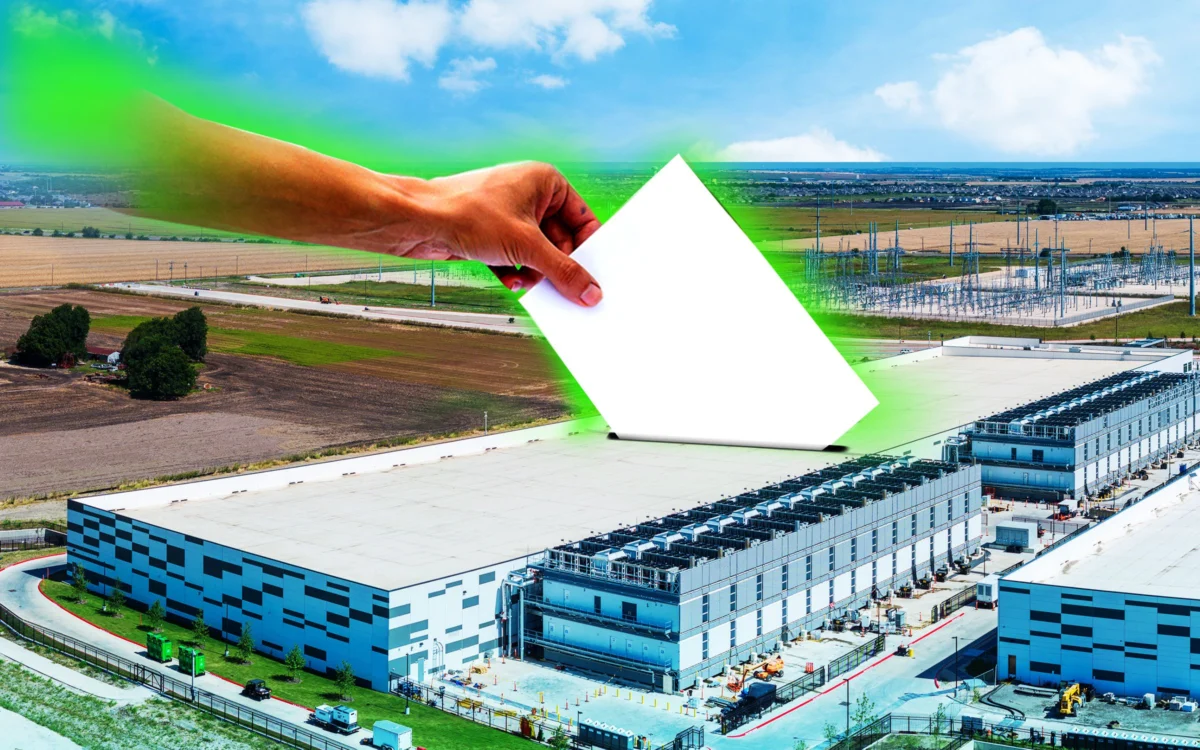
The 2026 midterm elections delivered a stunning rebuke to the burgeoning data center industry, as voters across the United States propelled candidates advocating for stricter regulations and moratoriums into office. What many analysts initially dismissed as a niche local concern transformed into a potent national issue, profoundly influencing outcomes in key Senate, House, and gubernatorial races, and signaling a significant shift in public sentiment towards the digital infrastructure backbone of the AI era. The results marked a decisive victory for Democrats, who largely succeeded in framing data center expansion as a narrative of corporate overreach, environmental strain, and a perceived threat to community resources.
A "Blue Tsunami" Fueled by Data Center Opposition
The election night saw a wave of Democratic victories, characterized by political strategists as a "blue tsunami," with the anti-data center platform playing a pivotal role. In Ohio, Democratic Senator Sherrod Brown, whose campaign consistently branded his opponent as "the face of data centers in Ohio" for months, secured a convincing victory, flipping a critical Senate seat. Brown’s sustained focus on the perceived negative impacts of data center proliferation resonated deeply with Ohioan voters, who have witnessed a rapid increase in such developments across the state.
Further north, in New Hampshire, Democrat Chris Pappas made history as the nation’s first openly gay male senator-elect, and notably, he explicitly cited his opposition to data centers in his victory speech. This stance, surprisingly, drew robust applause from his jubilant crowd, despite New Hampshire currently having no large-scale data centers under construction. This reaction underscored the pervasive national anxiety surrounding these facilities, transcending immediate local impact.
The Democratic ascendancy extended to the House of Representatives, where two Republican incumbents, both named Derek and Derrick, found themselves inextricably linked to the industry by their Democratic challengers. "Data Center Derek" in Ohio and "DC Derrick" in Wisconsin both suffered losses in their respective House races, indicating the effectiveness of this strategic branding by the Democratic Party. The narrative painted by their opponents focused on the environmental and economic costs associated with data center development, contrasting it with the perceived benefits for local communities.
The Evolving Political Landscape: Why Data Centers Became a Wedge Issue
The prominence of data centers as an election issue did not emerge overnight. Over the past several years, communities across the country have grappled with the rapid expansion of these facilities, driven largely by the insatiable demand for cloud computing and, more recently, the explosive growth of artificial intelligence. These vast complexes, housing thousands of servers, are notoriously energy-intensive, consuming prodigious amounts of electricity—often equivalent to that of small cities—and requiring significant water resources for cooling.
Local residents and environmental groups have increasingly voiced concerns over several key issues:
- Energy Consumption: Data centers strain local power grids, often necessitating new power plants or upgrades that communities resist due to environmental impact and increased energy costs. The average hyperscale data center can consume between 20 and 100 megawatts, a figure projected to rise dramatically with AI workloads.
- Water Usage: Many modern data centers rely on evaporative cooling systems, drawing millions of gallons of water daily, a critical concern in regions facing drought conditions or water scarcity. This directly impacts local ecosystems and agricultural sectors.
- Noise Pollution: The constant hum of cooling fans and generators can be a significant nuisance for nearby residential areas, affecting quality of life.
- Land Use and Aesthetics: Large data centers require vast tracts of land, often in rural or semi-rural areas, leading to concerns about agricultural land conversion, sprawl, and the industrialization of landscapes.
- Tax Breaks and Economic Benefit: State and local governments have historically offered generous tax incentives, including property tax abatements and sales tax exemptions, to attract data center developers. However, critics argue these incentives often outweigh the limited job creation (data centers are highly automated) and place an undue burden on local taxpayers without proportional community benefits. A 2023 study by the Lincoln Institute of Land Policy, for instance, found that while data centers represent significant capital investment, their direct employment impact is minimal compared to other industries, often less than 50 permanent jobs per facility.
- AI Linkage: As Democratic strategist Alexander McCoy noted, "Data centers and AI as a technology are fundamentally linked in many voters’ minds." This connection amplifies concerns beyond immediate environmental impacts, extending to broader societal anxieties about job displacement, ethical implications, and the concentration of power in large tech companies. Congressman Greg Casar of Texas further emphasized this, stating, "The revolt against data centers was one of the top issues of the 2026 election, and in a few years we will look back on it as just the early tremor of a much bigger AI earthquake upending American politics."
Voter Sentiment and Exit Poll Insights
The depth of public concern was vividly illustrated by exit poll data. According to NBC News, nearly a quarter of all voters — 25 percent — identified data centers as "crucial" to their vote, indicating it was a primary driver of their electoral choices. Furthermore, a substantial two-thirds of voters considered it either a major or minor factor. This data underscores that opposition to data centers was not a fringe issue but a widespread concern that permeated diverse demographics and geographic regions.
This sentiment transcended traditional political divides to some extent. While Democrats were more successful in leveraging the issue, there was underlying bipartisan concern. Earlier in the year, reports from WIRED highlighted fractures even within the Republican Party, with many MAGA loyalists expressing disagreement with then-President Donald Trump’s support for AI companies and data centers. Sacha Haworth, executive director of the Tech Oversight Project, articulated the core of this voter understanding: "Voters aren’t stupid. The data center story is a corruption story. It’s an affordability story. It’s a Big Tech CEOs influence story. That’s what voters understood when they cast their ballots."
The Cost of Development: Industry Spending vs. Voter Will
Despite the clear public sentiment, the data center and AI industries poured significant financial resources into the elections, attempting to safeguard their expansion plans. These efforts, however, largely failed to stem the tide of anti-data center victories.
One prominent example was the new industry Super PAC, Building the Future, which spent $1.5 million to support Darline Graham in South Carolina. Graham ultimately lost to Democrat Annie Andrews, who advocated for a data center moratorium. Andrews’ campaign ingeniously capitalized on her opponent’s industry ties by registering the domain DataCenterDarline.com, effectively linking Graham to the contentious issue. Similarly, Building the Future injected over $1.5 million into the Kansas gubernatorial race to bolster Republican Ty Masterson against Cindy Holscher, a proponent of data center moratoriums who is now on the cusp of a potential win.
In Michigan, Democrat Will Lawrence, whose campaign centered on regulating AI and data centers, declared victory over Republican Tom Barrett in one of the nation’s most expensive races. Barrett had received a substantial $340,000 from Elon Musk’s America PAC, demonstrating the high stakes and the industry’s willingness to invest heavily to protect its interests. These instances suggest that while industry money can influence campaigns, it struggled to overcome deeply held public concerns when candidates effectively articulated an opposing narrative.
Local Level Rejection: Ballot Measures and Community Action
The grassroots nature of the anti-data center movement was particularly evident in local ballot measures. Across nine states, voters were presented with propositions directly related to data center construction and regulation. The results were overwhelmingly in favor of restrictions: voters rejected future construction plans, approved moratoriums, and demanded greater consultation and accountability from developers to local communities.
Ballotpedia reported that over 40 questions concerning data centers appeared on local ballots in ten states, with Ohio alone accounting for 21 of these. These measures ranged from outright moratoriums on new construction to specific rezoning questions and stricter development restrictions. According to Brad Carson, president of Americans for Responsible Innovation, who tracked these developments throughout election night, only one county in the entire nation appears to have voted to allow for more data center development, highlighting the pervasive and unified public opposition at the local level. These local victories represent a powerful mandate from communities seeking to exert control over their land, resources, and environmental future.
Bipartisan Concern, Partisan Gains
While the issue of data centers clearly resonated across the political spectrum, with even conservative, rural, and working-class bases expressing concern, Democrats proved more adept at harnessing this sentiment for electoral success. Amy Kremer, chair of Humans First, an advocacy group advocating for democratic oversight of AI, criticized Republican politicians: "Despite poll after poll making it clear that the conservative, rural, working-class base was concerned about data centers and the impact of AI, too many politicians in Washington chose big AI’s money over their own base."
The Democratic Congressional Campaign Committee (DCCC) strategically ran ads in the weeks leading up to the election, specifically highlighting Republican candidates’ support for data centers or the financial backing they received from AI companies. This tactic effectively linked Republicans to corporate interests and the perceived negative consequences of unchecked development, contributing to the "blue tsunami" that swept across the country. Conversely, Republican efforts to use the issue against Democrats, such as Tom Tiffany’s attempt to brand David Crowley as "Data Center David Crowley" in Wisconsin, backfired. Crowley, initially targeted, intensified his stance against the industry as the campaign progressed, ultimately supporting a pause on data center development and winning his race.
Implications for the Industry and Future Policy
The election results carry profound implications for the data center industry and future policy. The era of unrestricted expansion, particularly fueled by generous tax incentives, appears to be drawing to a close. As Alexander McCoy predicted, "I think we will see the end to favorable tax breaks, and it’s clear that people like Greg Abbott were harmed by their history of giving those financial incentives to AI companies and data center developers." The victories of candidates like Keisha Lance Bottoms in Georgia and Gina Hinojosa in Texas, both advocating for data center moratoriums, are particularly significant. Texas and Georgia are two of the largest hubs for data center development in the country, and a pause in these states could severely disrupt hundreds of planned projects.
Furthermore, McCoy anticipates "the appointment of regulators in various administrative bureaucratic bodies that pose more scrutiny on these projects and an increase in the enforcement of environmental protection regulations." This signals a shift from a largely pro-growth regulatory environment to one prioritizing environmental stewardship and community impact.
The tech industry, sensing this shift, appears to be adapting. On election day, The Hill reported on the formation of a "Responsible Data Center Development Collaborative," bringing together Big Tech companies and environmental groups to create a framework for future development. McCoy deemed this collaboration the "right next step," suggesting a recognition from within the industry that a more sustainable and community-centric approach is necessary to regain public trust and ensure future viability.
Meanwhile, in a stark reflection of the election’s impact, Elon Musk took to X (formerly Twitter) as the results rolled in, posting, "Data centers in space looking pretty appealing right now." This seemingly whimsical remark underscores the newfound political hurdles and the potential for a radical rethinking of where and how these essential digital infrastructures are built in the future. The 2026 midterms have unequivocally demonstrated that the environmental and societal costs of data centers have moved from local grievances to a national political imperative, fundamentally reshaping the landscape for technological development in the coming years.