admin
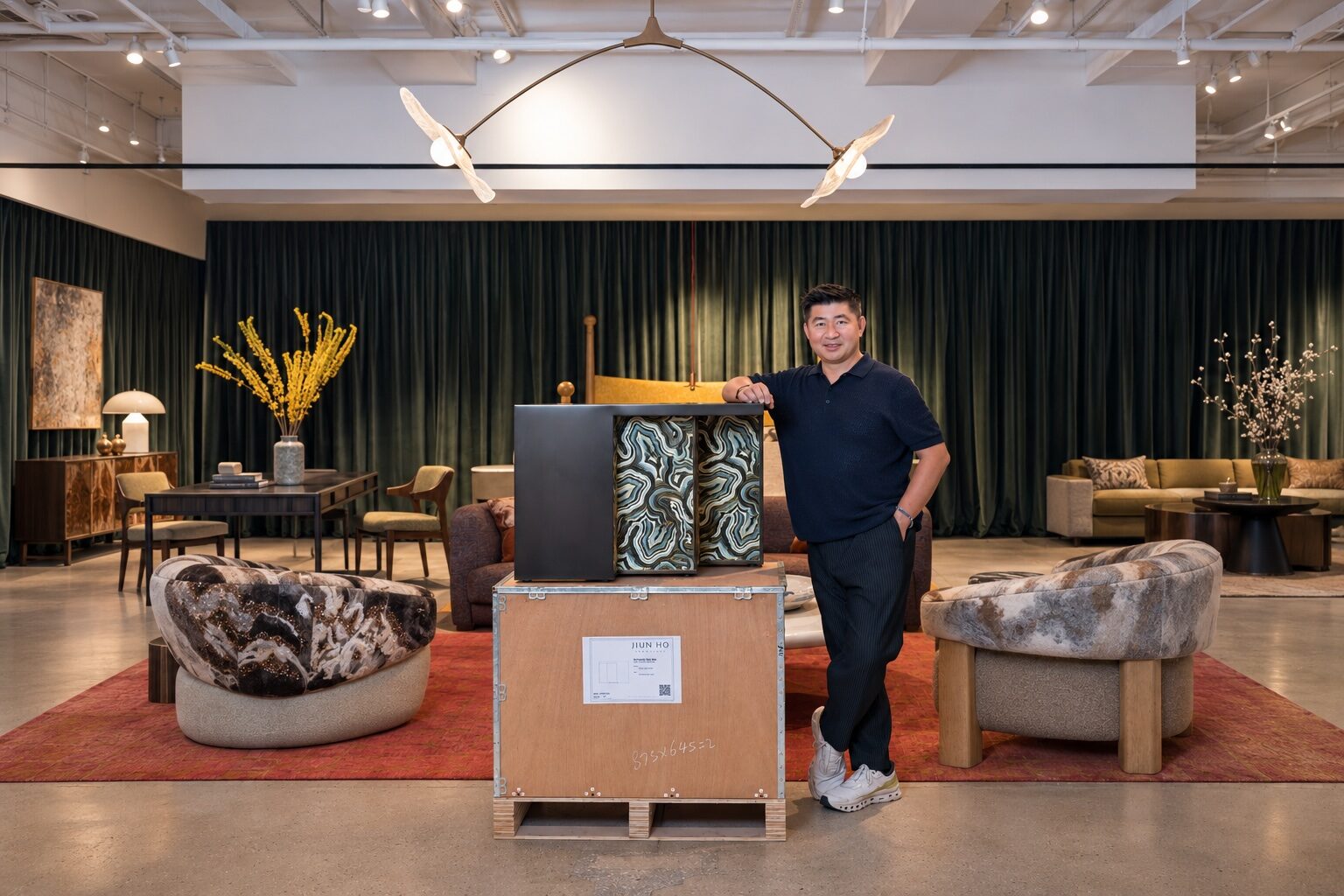
The global design landscape witnessed a significant intersection of heritage, travel, and high-level craftsmanship in September 2026 with the debut of "Unbound," a limited-edition capsule collection curated by San Francisco-based designer Jiun Ho. This ambitious project, a collaboration involving four other preeminent figures in the interior design world, serves as a culmination of Ho’s decades-long career—a career that began in the rural landscapes of 1970s Malaysia and ascended to the heights of international luxury. By challenging his peers to work within strict spatial constraints while utilizing traditional artisanal techniques, Ho has effectively bridged the gap between historical craft and contemporary aesthetic, reinforcing his philosophy that design is not merely a visual medium but a record of lived experience.
The Genesis of a Global Aesthetic: From Kuala Lumpur to San Francisco
Jiun Ho’s trajectory is defined by a fundamental shift in perspective that occurred during his formative years in a lower-middle-class household in rural Kuala Lumpur. Growing up in an environment with limited exposure to formal art or architectural theory, Ho’s world was initially defined by the practicalities of rural life. However, a pivotal moment occurred at the age of eight when his mother imparted a philosophy that would become the cornerstone of his creative identity: "You can be poor in life, but you should never be poor in experiences." This mandate became the catalyst for a life of exploration, eventually leading Ho to visit 135 countries, each journey informing the textures, colors, and forms of his work.
The awakening of his architectural consciousness took place a year later, at age nine, during his first international trip to Japan. The exposure to Japanese craftsmanship—the meticulous attention to detail, the reverence for history, and the deliberate nature of the built environment—left an indelible mark. It was here that Ho first understood the emotional weight of interior design, even before he recognized it as a viable profession. This early encounter with the "Shokunin" spirit of Japanese mastery established a lifelong standard for his own studio’s output.
Professional Milestones: The Petronas Towers and the Taipei Transition
Ho’s professional journey reached a significant milestone when he was commissioned to design the interiors for the Petronas Twin Towers in Kuala Lumpur. Working on the project, designed by the legendary architect César Pelli, represented a symbolic homecoming for Ho. At the time of their completion in the late 1990s, the towers were the tallest buildings in the world and a symbol of Malaysia’s rapid modernization and global ambition. For a local creative to contribute to the interior fabric of a national icon was a rare feat, cementing Ho’s reputation as a designer capable of handling projects of immense scale and cultural significance.
However, it was a residential project in Taipei 26 years ago that fundamentally altered the scope of his studio. Upon completing the interiors of a high-end apartment, Ho was challenged by his client to produce original furniture, lighting, and rugs. Despite having no formal background in industrial design at the time, Ho produced 35 watercolor sketches. The client’s decision to commission every single piece transformed Ho from an interior designer into a product designer. This transition birthed the Jiun Ho brand, which has since evolved into a comprehensive lifestyle firm producing furniture, lighting, and textiles for the global trade market, while maintaining a robust portfolio of hospitality and residential interior projects.
The Unbound Collection: A Collaborative Study in Constraint
The "Unbound" collection, released in the fall of 2026, represents a strategic pivot toward hyper-customization and collaborative excellence. Ho invited four designers—Francis Nicdao of Pembrooke & Ives, James Hunter of The Wiseman Group, Jamie Drake of Drake/Anderson, and Nicole Fuller—to participate in a unique creative exercise. The brief was deceptively simple but technically demanding: each designer was required to create a one-of-a-kind object that did not exceed the dimensions of 36 by 36 by 36 inches.
Central to the collection was the integration of specialized crafts provided by Lala Curio, a creative partner of Ho’s known for reviving traditional techniques. Designers were tasked with incorporating either hand-painted wallpaper or cloisonné—an ancient technique for decorating metalwork with colored glass paste. The project was designed to showcase the limits of customization and the potential of collective creativity. According to Ho, the objective was to demonstrate the heights that can be reached when the industry’s leading minds are encouraged to pursue their most ambitious ideas without the typical commercial constraints of "no."
Narrative Design: The Inspiration Behind the Three Featured Pieces
In a display of his own creative momentum, Ho contributed three distinct pieces to the collection, each rooted in a specific cultural or natural phenomenon encountered during his travels.
The YuanYang Side Table: A Tribute to Agricultural Artistry
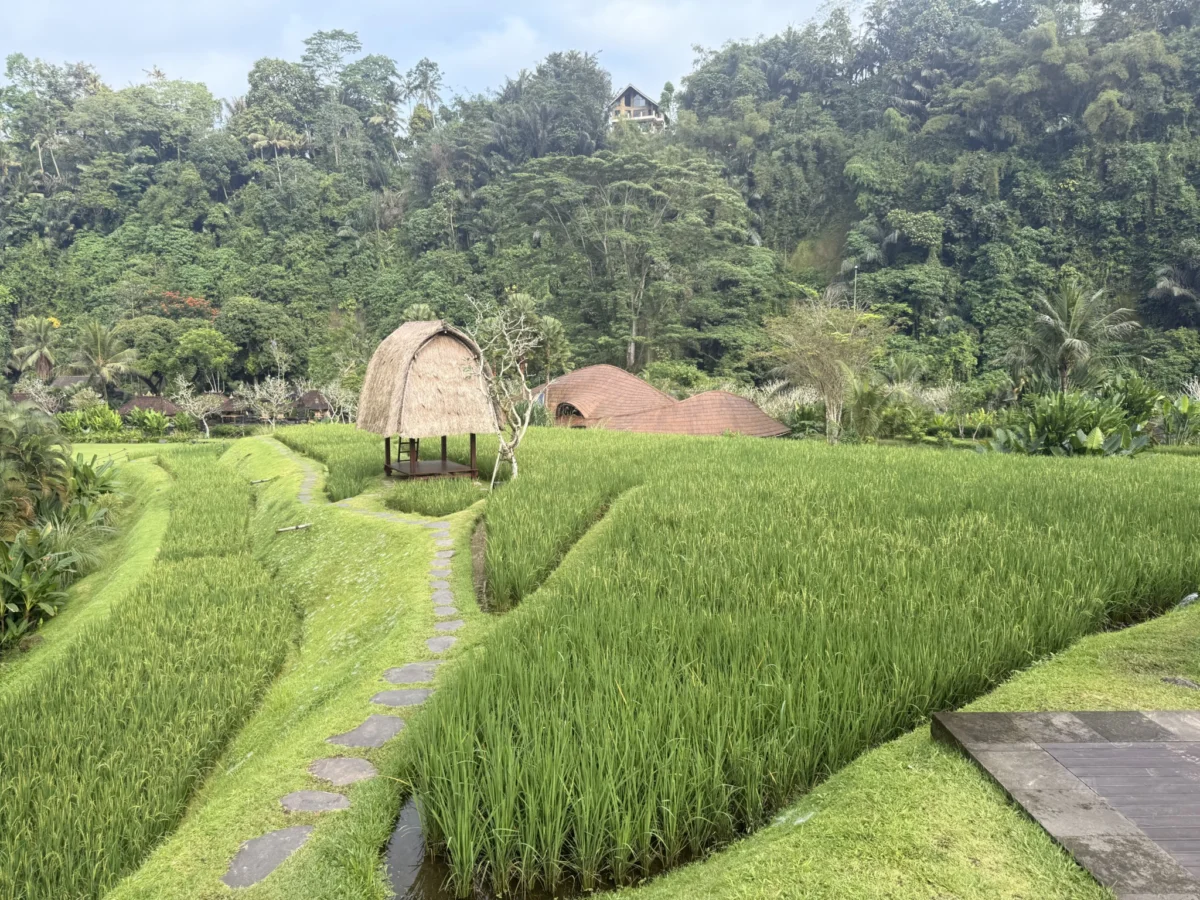
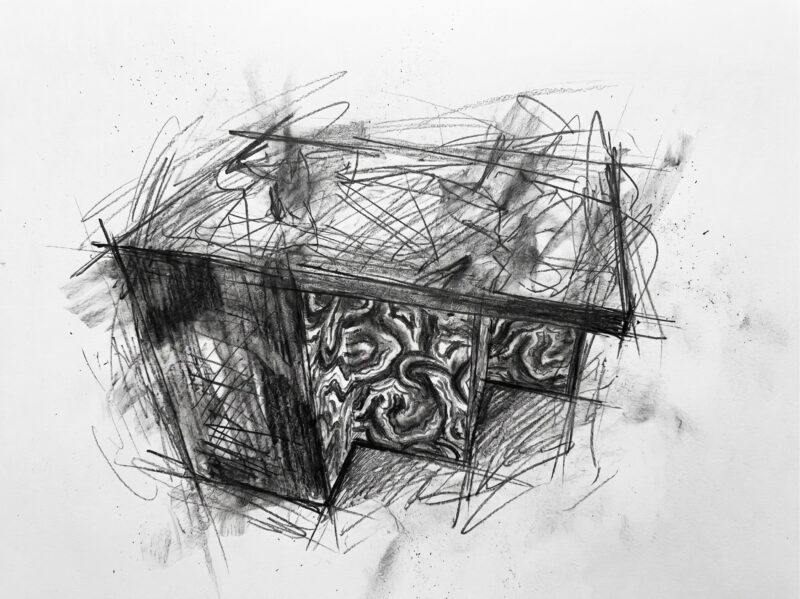
The YuanYang side table finds its inspiration in the Yuanyang Hani Rice Terraces of China’s Yunnan province. These terraces, carved into the mountainsides over 1,300 years, represent a harmonious relationship between human labor and the natural landscape. Ho’s design mimics this topography through a metal structure with a cinnamon bronze finish. The descending steps of the table are inlaid with intricate cloisonné, capturing the way sunlight reflects off the water-filled paddies. This piece serves as a functional sculpture, translating a massive geological and agricultural feat into a domestic object.

The Whisper Pendant: Resilience and the Kintsugi Philosophy
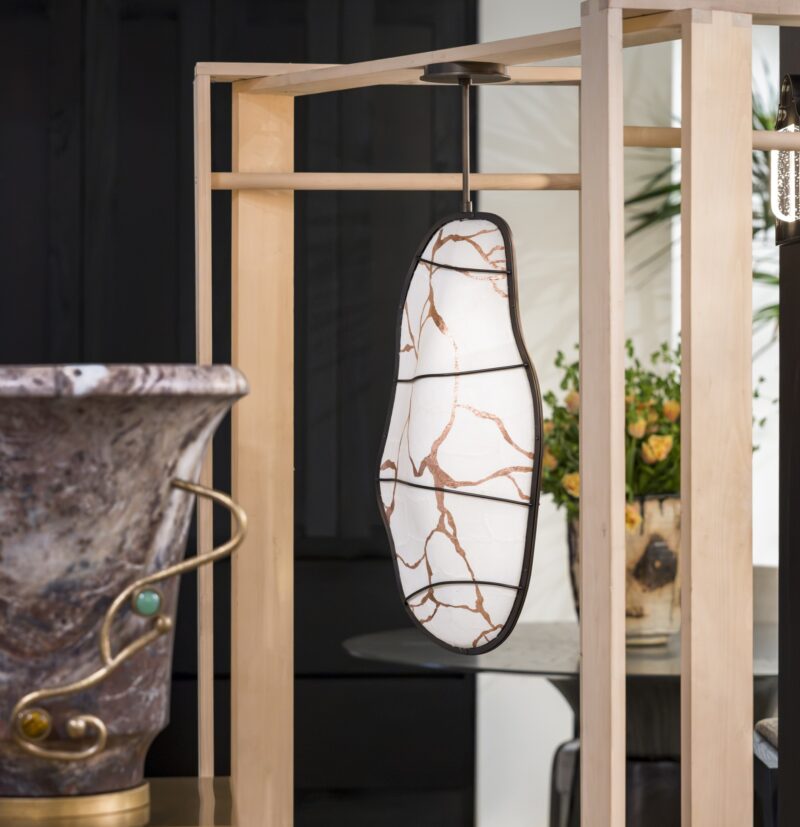
The Whisper pendant draws from two disparate but complementary sources: the biological form of the silkworm cocoon and the Japanese art of kintsugi. The cocoon represents a "perfect form" of nature—simultaneously delicate and protective. To achieve the surface texture, Ho’s team utilized handmade Japanese washi paper, which was intentionally torn and then meticulously rejoined. The resulting seams were traced in gold leaf, echoing the kintsugi tradition of repairing broken pottery with precious metals to celebrate the history of an object rather than disguising its flaws. When illuminated, the pendant emits a soft, diffused glow that mimics light passing through raw silk.
The Forma Pendant: Numerology and Infinity
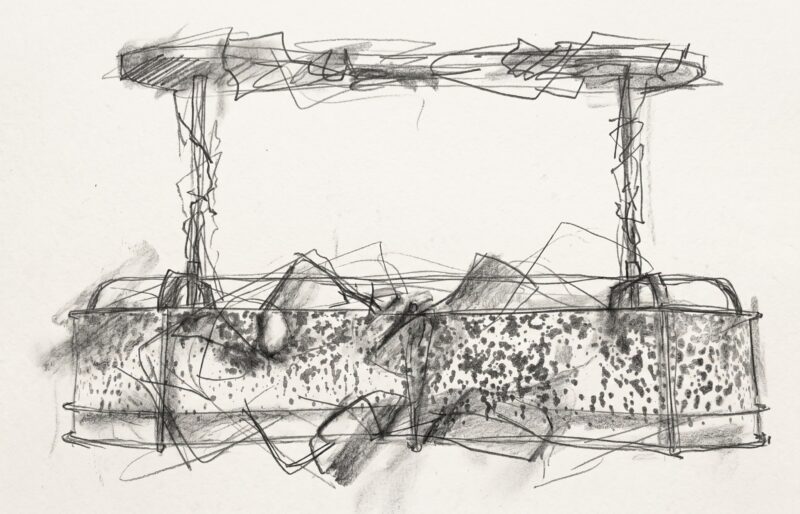
The third piece, the Forma pendant, is an exploration of Chinese numerology and geometric symbolism. The number eight is widely regarded in Chinese culture as a harbinger of good fortune and prosperity. When rotated horizontally, the numeral becomes the mathematical symbol for infinity. Ho’s design utilizes a brass frame and glass panels decorated with gold and silver leaf. The aesthetic intention was to create a visual representation of "fortune falling from heaven," merging the cultural significance of luck with the timeless concept of an infinite cycle.

Supporting Data and Market Context: The Rise of Experiential Luxury
Ho’s focus on travel-inspired, narrative-driven design aligns with broader trends in the global luxury furniture and interior design market. According to recent industry reports, the global luxury furniture market was valued at approximately $28.5 billion in 2023 and is projected to grow at a compound annual growth rate (CAGR) of over 5% through 2030. A significant driver of this growth is the increasing consumer demand for "story-driven" and "artisanal" pieces that offer a sense of uniqueness in an era of mass production.
Furthermore, the "Unbound" collection reflects a shift toward collaborative business models in the design world. By partnering with other high-profile designers, Ho is tapping into a "multiplier effect" where the combined brand equity of the participants attracts a wider demographic of collectors and trade professionals. The use of rare crafts like cloisonné also addresses a growing interest in the preservation of intangible cultural heritage, a factor that increasingly influences purchasing decisions among ultra-high-net-worth individuals (UHNWIs).

Broader Impact and Industry Implications
The success of Jiun Ho’s latest venture suggests a growing appetite for design that prioritizes "richness of experience" over mere functionality. By integrating his personal history as a "Malaysian kid" working on world-class skyscrapers with his current status as a San Francisco creative leader, Ho has created a brand identity that is uniquely global yet deeply personal.
The implications of the Unbound collection extend beyond the objects themselves. The project sets a precedent for how design firms can navigate the balance between commercial viability and artistic integrity. By imposing a strict size constraint (36x36x36), Ho forced a focus on detail and materiality that is often lost in larger-scale manufacturing. This "micro-design" approach allows for a higher concentration of craft per square inch, effectively turning furniture into a medium for storytelling.

As the interior design industry continues to evolve in the late 2020s, the work of Jiun Ho serves as a reminder of the value of the "lived experience." His journey from the rural landscapes of Malaysia to 135 different countries provides a blueprint for how designers can use travel not as an escape, but as a rigorous research tool. In the world of Jiun Ho, a side table is never just a side table; it is a mountain in Yunnan, a broken piece of pottery in Kyoto, or a symbol of infinite fortune. This narrative-heavy approach ensures that while a client might purchase a physical object, they are ultimately investing in a piece of a much larger, global story.