admin
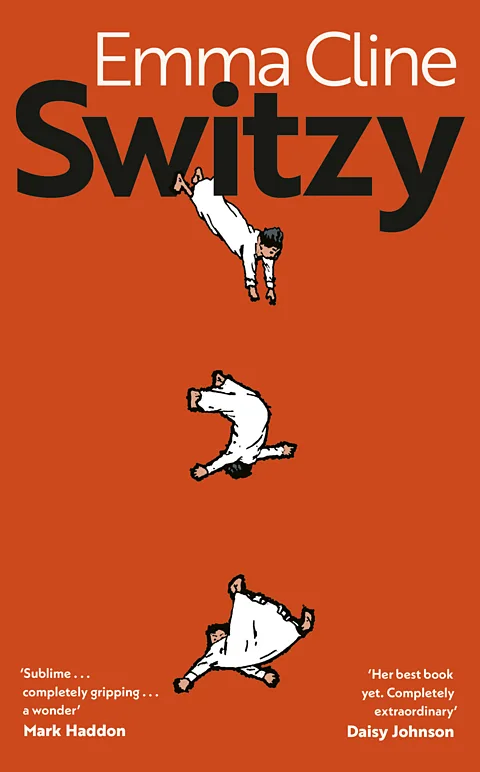
The publication of Emma Cline’s third novel, Switzy, in September 2026 has ignited a complex discourse across the literary landscape, bridging the gap between mainstream popularity and high-brow critical scrutiny. Centered on the final days of a retired executive suffering from early-stage Alzheimer’s disease, the novel navigates the contentious territory of assisted dying with a clinical yet deeply intimate prose style. Despite its somber subject matter, the book quickly ascended to the top of bestseller lists, fueled by a robust digital marketing campaign and a fervent grassroots following on social media platforms such as TikTok and Instagram. However, its subsequent exclusion from the 2026 Booker Prize shortlist—after having been featured on the longlist—has sparked a broader debate regarding the intersection of literary merit, "hype cycles," and the role of prestigious awards in the digital age.
Narrative Architecture and Thematic Core
Switzy follows David Hastings, a man who has spent his life navigating the upper echelons of the corporate world, only to find his cognitive faculties betraying him. The novel opens with David aboard a private jet bound for Zurich, a luxury afforded to him by a former business associate. His destination is an assisted dying clinic, a choice he makes to avoid what he describes as a "forced march" through a decade of neurological decline.
Accompanying David is Cody, a young assistant tasked with managing the logistics of David’s final week. This includes a final stop in London to dine with his estranged daughter, Rebecca. The narrative tension is driven not by the question of whether David will go through with his plan—his mind is made up before the first page—but by the friction between his fading memories and the sterile reality of his impending end. Cline utilizes a close third-person perspective that mimics the fragmentation of David’s consciousness. He carries a small leather notebook to ground himself, recording essential facts: the name of his grandson, his current location, and the countdown of days remaining.
The novel’s title, Switzy, is a colloquialism for Switzerland, which has long served as a global hub for assisted dying. By framing the journey through the eyes of a "one-percenter," Cline explores how wealth can purchase a sanitized, controlled exit, yet cannot shield an individual from the existential dread of a dissolving identity.

The Booker Prize Controversy and Digital Advocacy
The 2026 Booker Prize cycle was marked by the presence of several high-profile authors, but none commanded the digital presence of Emma Cline. When the shortlist was announced and Switzy was omitted, the reaction from "BookTok" and "Bookstagram" was swift. Jack Edwards, a prominent literary influencer with millions of followers, led the charge, signaling a growing divide between traditional institutional gatekeepers and the modern reading public.
The controversy reached a peak when Patricia Lockwood, a member of the Booker judging panel, addressed the omission by stating that the committee had to remain insulated from "hype cycles." This comment suggested a perceived lack of substance beneath the novel’s aesthetic appeal, a charge that fans and some critics found dismissive. Supporters of the novel argue that Switzy represents a rare achievement: a book that handles a "tough sell" subject with enough stylistic grace to capture a wide audience without sacrificing intellectual depth.
Contextual Background: Assisted Dying and Dementia
To understand the resonance of Switzy, one must look at the global socio-legal context of its themes. Assisted dying remains one of the most divisive issues in contemporary ethics. In the United Kingdom, where much of the book’s promotional controversy unfolded, Parliament recently narrowly rejected proposals to legalise assisted dying for the terminally ill. Conversely, Switzerland has permitted assisted suicide since 1942, provided the motives are not selfish. Organizations such as Dignitas and Pegasos have made the country a destination for "suicide tourism," a phenomenon Cline’s novel explores through David’s clinical journey.
Furthermore, the portrayal of Alzheimer’s disease in Switzy aligns with a growing public health crisis. According to data from the World Health Organization (WHO), more than 55 million people worldwide live with dementia, a figure expected to rise to 139 million by 2050. Cline’s focus on the "deteriorating consciousness" reflects a collective anxiety regarding the loss of self. David’s obsession with a notebook mirrors the real-world "memory wallets" and cognitive aids used by those in the early stages of the disease.
Chronology of Emma Cline’s Literary Ascent
Emma Cline’s career has been defined by her ability to inhabit the minds of characters on the fringes of societal norms or personal collapse.

- 2016: Cline releases her debut novel, The Girls, inspired by the Manson Family cult. It becomes a global phenomenon, praised for its psychological acuity.
- 2020: The short story collection Daddy is published, further establishing her interest in power dynamics and moral ambiguity.
- 2023: The Guest is released, following a young woman drifting through the Hamptons. It solidifies Cline’s reputation for writing "vibe-heavy" yet structurally precise fiction.
- Late 2025: Rumors of a "heavy" new project begin to circulate in literary circles.
- September 2026: Switzy is published. It immediately enters the New York Times and Sunday Times bestseller lists.
- October 2026: The novel is longlisted for the Booker Prize.
- November 2026: Its omission from the shortlist triggers a social media backlash, coinciding with renewed legislative debates on assisted dying in several Western nations.
Critical Analysis: Prose vs. Plot
While the public reaction has been largely positive, critical reception of Switzy has been polarized. On one hand, authors like Matt Haig and Samantha Harvey have lauded the book as a "miracle" and "very impressive," focusing on Cline’s ability to render the mundane details of life—the fabric of a suit, the wallpaper of a childhood room—with heartbreaking clarity.
On the other hand, some critics have questioned the novel’s pacing and its protagonist’s relatability. Writing for the Los Angeles Review of Books, Nick Roberts noted the difficulty of engendering empathy for an "unpleasant one-percenter" who remains emotionally distant from his family even at the end of his life. A viral critique on Substack by Devon Halliday, titled "Literary Fiction Has Lost The Plot," used Switzy as a primary example of a modern trend toward "slow, vague, broody" narratives that prioritize atmosphere over traditional storytelling.
Cline’s defense of this approach, as stated in her interview with the New Yorker, is that the "awareness of the end would be paralyzing." The book’s fragmented structure is a deliberate stylistic choice meant to place the reader in a state of disorientation similar to David’s.
Broader Implications and Institutional Impact
The saga of Switzy highlights a significant shift in how literary value is determined. The "Justice for Switzy" movement demonstrates that social media influencers now wield enough power to challenge the decisions of prestigious award panels. This creates a tension between "prestige" and "popularity" that major prizes are struggling to navigate.
Furthermore, the novel’s success indicates a public appetite for literature that confronts mortality without the buffer of sentimentality. By refusing to take a moral stance on David’s decision, Cline forces the reader to act as the "Ghoul"—the character in the novel who assesses David’s lucidity. The reader must decide if David’s choice is an act of courage or a final act of corporate-style control over an uncontrollable biological process.

Conclusion: The Finality of the Narrative
As 2026 draws to a close, Switzy stands as a definitive cultural artifact of the year. It has successfully moved the needle on how dementia is represented in fiction, moving away from the perspective of the caregiver to the internal, crumbling world of the patient. Whether it is remembered as a "literary fad" or a masterpiece of existential fiction remains to be seen, but its impact on the current cultural conversation is undeniable.
Emma Cline has succeeded in making a story about death feel remarkably vital. In exploring what remains when the "tools used to prop up the idea of who we are" fall away, Switzy touches upon a universal vulnerability. As the author herself reflected, the questions David Hastings faces—what stays with us and what remains of our living—are the fundamental inquiries of the human condition. In the absence of a Booker Prize win, the novel’s "justice" may ultimately be found in its enduring presence on the nightstands of readers worldwide, serving as a stark, beautifully written reminder of the mortality that binds all humanity.