admin
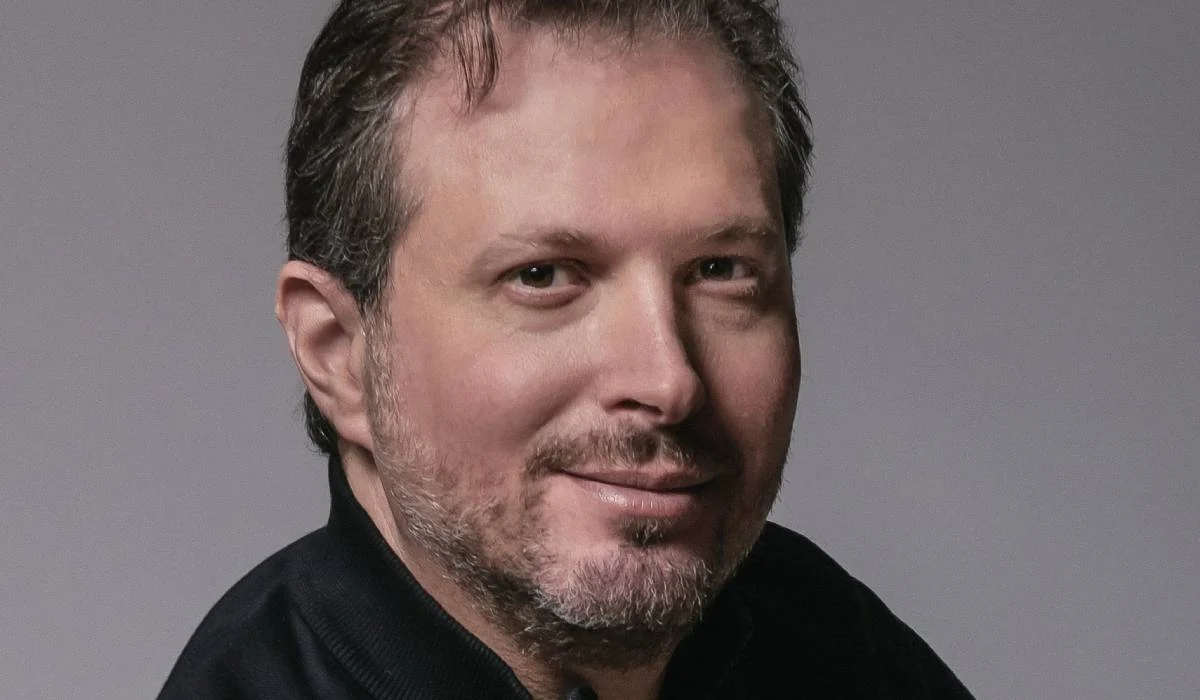
The American restaurant industry is currently navigating a period of profound structural instability, characterized by a persistent labor crisis and a widening gap between consumer expectations and service delivery. For Rom Krupp, the founder and CEO of technology firm OneDine, the solution to these systemic issues does not lie in traditional retention strategies, but in a fundamental reassessment of how technology facilitates the relationship between the server and the guest. Krupp, whose background in sociology and economics informs his approach to business, has spent the last 20 months developing a platform designed to mitigate the staggering financial losses associated with employee churn. This initiative, known as the Restaurant Ordering Mentor (ROM), represents a pivot away from consumer-facing digital ordering and toward a model that prioritizes human-led hospitality.
The economic scale of the challenge facing full-service dining is immense. According to data from the U.S. Bureau of Labor Statistics, approximately 2.3 million servers are employed in the United States annually. However, the industry is perpetually chasing its own tail, with roughly 423,000 positions remaining vacant at any given time. The National Restaurant Association reports a server turnover rate of 89 percent, while a study from Cornell University estimates the replacement cost for a single employee at approximately $5,800. For an industry where average net profits hover around 3.6 percent and 42 percent of establishments failed to turn a profit last year, the cumulative cost of this churn—estimated at $5 billion annually—is a primary driver of financial distress.
The Myth of Retention in Low-PPA Environments
Krupp’s analysis of the sector suggests that the industry’s obsession with retention may be misplaced. In conversations with dozens of CEOs, Krupp found that most executives relied on a standardized response: "We are working on retention." However, Krupp argues that retention is often a privilege reserved for high-end establishments with high per-person averages (PPA). In the casual and mid-market dining sectors, top-tier servers naturally gravitate toward higher-check environments or advance out of the role entirely.
This realization led to a shift in OneDine’s development strategy. Rather than attempting to fix the unfixable nature of churn, Krupp sought to address the cost of churn. The goal was to create a system that allows a restaurant to function at peak efficiency even when staffed by new employees who lack deep institutional knowledge. By reducing the "ramp-up" time—the period during which a new hire learns the menu and service protocols—restaurants can protect their margins and maintain service standards regardless of staff longevity.
The Sociology of Service: Moving Beyond the Flight Attendant Model
Central to Krupp’s philosophy is the distinction between "order taking" and "hosting." He posits that the industry has inadvertently adopted what he calls the "flight attendant model." In the airline industry, attendants are primarily tasked with safety and logistics; if they get the passenger from one point to another, the consumer is conditioned to overlook a lack of personalized hospitality. Krupp argues that full-service dining has fallen into a similar trap, where the server’s primary focus is the technical execution of the order, leaving hospitality as a secondary "bonus" rather than a core requirement.
The "Restaurant Ordering Mentor" was designed to reverse this trend. By automating the technical complexities of order entry, ROM allows servers to focus on the "party" they are hosting. The platform is a point-of-sale (POS) agnostic intelligence layer that resides on handheld devices. Unlike traditional handheld POS systems that require servers to navigate complex menus, sub-menus, and modifier screens, ROM utilizes a natural language interface.
Technical Mechanics of the ROM Platform
The ROM system functions through a text-based input method that mimics the way modern employees communicate via mobile devices. Instead of searching for a specific button for a "ROM Burger" and then navigating to a "No Ketchup" modifier, a server can simply type "R burger, no ketch, on rings." The AI interprets the shorthand, maps it to the restaurant’s specific menu data, and handles the backend logic of the POS.
This approach addresses a significant cognitive hurdle identified in academic research. A Cornell study found that a fully proficient server must memorize between 150 and 300 menu items, including variants, modifiers, and approximately 40 cooking or allergy combinations. Typically, it takes a new hire between 90 and 120 "covers" (individual guest interactions) to reach this level of proficiency. During this learning phase, error rates are typically 3 percent higher, and the PPA is often 8 percent lower because the server lacks the confidence or knowledge to suggest upsells and pairings.
By removing the need for memorization, ROM effectively "mentors" the server in real-time. The system suggests preferred pairings and upsells based on the items being ordered, ensuring that even a first-day employee can perform with the efficiency of a veteran.

Validation Through Testing and Implementation
Before bringing the product to market, OneDine conducted rigorous internal testing at its headquarters in Plano, Texas. The company recruited 10 random individuals with no prior experience with the system. After a 15-minute orientation, these individuals were tasked with taking tableside orders using a menu they had never seen before. Within two hours, the test subjects were entering orders as quickly as they could with pen and paper, while maintaining high levels of eye contact and guest engagement.
To further validate these findings, OneDine utilized body cameras to track server behavior. The data showed that servers using ROM maintained eye contact levels comparable to those using traditional handwritten notes, a feat that traditional handheld POS systems often fail to achieve because they require the server to focus on the screen to find buttons.
The first real-world implementation of ROM occurred recently at a restaurant in Flint, Michigan. The on-site results mirrored the laboratory tests: training for new servers was reduced from a traditional four-to-six-week ramp-up period to just a few minutes of instruction per shift. The implementation process itself is 95 percent automated, integrating directly with existing POS and recipe management systems, with a 5 percent manual adjustment period to account for specific restaurant verbiage and allergy protocols.
The Backlash Against Table-Side Automation
The development of ROM also comes at a time of shifting consumer sentiment regarding technology in dining. Krupp admits that OneDine had to backtrack on some of its own previous initiatives involving QR codes and guest-facing digital ordering. While digital payments have been widely accepted by the American public, digital ordering in full-service environments has faced a negative trend in consumer perception.
Krupp attributes this to a "venting" effect. As limited-service restaurants (fast food and fast casual) have moved aggressively toward kiosks and voice AI, consumers who choose a full-service restaurant are doing so specifically because they want to be served. When these guests are met with a "do-it-yourself" digital interface, it creates a friction point that undermines the value proposition of the dining experience.
"I’m regressing back to say, it’s okay to do digital payments, but don’t do anything else digital in the hands of the guests," Krupp noted. By putting the technology in the hands of the server rather than the guest, ROM aims to use AI to facilitate human connection rather than replace it.
Broader Industry Implications and the Path Forward
The introduction of ROM arrives at a critical juncture for the hospitality industry. With labor costs rising and the pool of experienced servers shrinking, the ability to operationalize "hospitality-as-a-service" through technology could be the difference between survival and closure for many casual dining brands.
The "ramping up" phase of employment has historically been a hidden drain on restaurant profits. If 30 percent of a restaurant’s staff is consistently in a state of "ramping up" due to high turnover, the restaurant is perpetually operating at a lower PPA and a higher error rate than its data would otherwise suggest. By neutralizing the negative impacts of churn, ROM offers a way for operators to stabilize their financial performance.
Ultimately, the ROM platform represents a shift in how the industry views its workforce. It moves away from the idea of the server as a data-entry clerk for the kitchen and back toward the idea of the server as a guest experience architect. As the industry continues to grapple with the realities of the post-pandemic economy, the successful integration of AI tools that support, rather than supplant, the human element of service will likely define the next era of American dining. Rom Krupp’s OneDine is betting that the future of hospitality isn’t found in a QR code, but in a well-supported server who finally has the time to look a guest in the eye.