admin
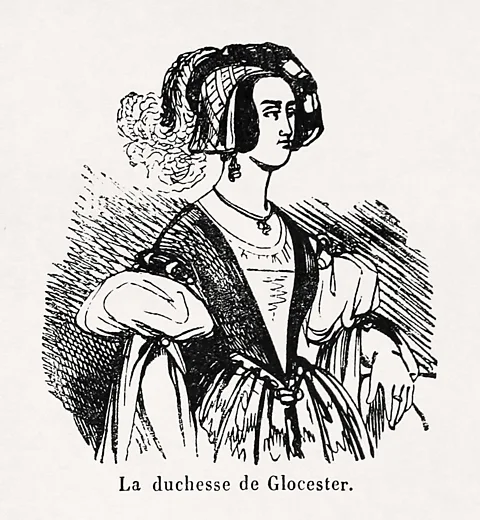
The year 1441 marked a seismic shift in the political landscape of medieval England, centered on the sensational trial of Eleanor Cobham, Duchess of Gloucester. As the wife of Humphrey of Lancaster, Duke of Gloucester—the uncle and heir presumptive to the childless King Henry VI—Eleanor stood on the precipice of the English throne. However, her trajectory was abruptly terminated by a series of accusations involving necromancy, heresy, and treasonable witchcraft. This scandal, which captivated the 15th-century public and devastated the House of Lancaster, remains a subject of intense historical debate. The release of Philippa Gregory’s latest historical novel, Royal Witch, has reignited discussions regarding whether Eleanor was a calculating practitioner of the dark arts or a victim of a meticulously orchestrated political smear campaign.
The Political Landscape of the Mid-15th Century
To understand the gravity of the charges against Eleanor Cobham, one must look at the precarious state of the English monarchy during the reign of Henry VI. Ascending to the throne as an infant, Henry VI grew into a king characterized by piety and a perceived lack of the martial vigor expected of a medieval monarch. By the early 1440s, the King remained unmarried and childless, leaving his uncle, Humphrey, Duke of Gloucester, as the immediate heir to the crown.
Humphrey was a figure of significant influence, known as a patron of the arts and a defender of English interests in France. However, his power was contested by a faction led by his half-uncle, Cardinal Henry Beaufort, and William de la Pole, the Earl of Suffolk. This internal rivalry created a volatile atmosphere at court, where any perceived weakness in one faction was ruthlessly exploited by the other. Eleanor Cobham, Humphrey’s second wife and former lady-in-waiting, became the catalyst for his downfall. Her transition from a mistress of the Countess of Hainault to the Duchess of Gloucester had already garnered her enemies, who viewed her as an ambitious social climber.

A Chronology of the 1441 Crisis
The downfall of the Duchess was swift, unfolding over the summer and autumn of 1441. The timeline of her prosecution illustrates the coordinated effort to dismantle the Gloucester influence:
- June 1441: Rumors began to circulate regarding a group of scholars and "wise persons" who were allegedly predicting the King’s death through astrological means. The King’s Council initiated a secret investigation.
- July 1441: Roger Bolingbroke, a renowned scholar and personal physician to the Duke of Gloucester, was arrested alongside Thomas Southwell, a canon of St. Stephen’s Chapel. Under interrogation—and likely torture—Bolingbroke implicated Eleanor Cobham, claiming she had commissioned him to cast an astrological chart to determine when King Henry VI would die.
- July 12, 1441: Upon hearing of the arrests, Eleanor fled to the sanctuary of Westminster Abbey to escape immediate detention.
- July–August 1441: Eleanor was formally charged with 18 counts of necromancy, heresy, and witchcraft. A special commission of bishops and secular lords was convened to oversee the trial.
- October 1441: Eleanor was brought before an ecclesiastical court. While she denied the most serious charges of treason (plotting the King’s death), she admitted to obtaining love potions and fertility aids from Margery Jourdemayne, a woman known as the "Witch of Eye."
- November 1441: Eleanor was found guilty. She was sentenced to life imprisonment and ordered to perform three days of public penance.
The Nature of the Allegations: Necromancy and Treason
The charges leveled against Eleanor Cobham were not merely religious; they were inherently political. In the medieval mind, the use of magic to predict the death of a monarch was synonymous with treason. If one "knew" the King was to die, they were seen as actively wishing for it or clearing a path for his successor.
The specific allegations included the creation of a wax effigy of King Henry VI. It was claimed that Eleanor and her associates melted this figure over a slow fire, believing that as the wax dissolved, the King’s physical health would similarly waste away. Such practices, categorized as "image magic," were the most feared forms of sorcery in the Middle Ages.
However, many historians, including Dr. Euan Roger, a principal records specialist at the National Archives, suggest that the evidence was heavily manipulated. The confession of Roger Bolingbroke was a centerpiece of the prosecution, yet it was obtained under duress. Furthermore, the practice of astrology was a standard intellectual pursuit for the nobility of the era. Royal figures frequently consulted astrologers to determine "propitious days" for weddings or battles. By framing these common practices as "necromancy"—the summoning of the dead to gain hidden knowledge—the Beaufort faction successfully transformed a scholarly interest into a capital crime.

The Role of Gender and Ambition
The case of Eleanor Cobham highlights the specific vulnerabilities of high-ranking women in the 15th century. As Gemma Hollman notes in Royal Witches: From Joan of Navarre to Elizabeth Woodville, accusations of witchcraft were often the most effective way to neutralize a woman who exercised too much influence or whose husband was too close to the throne.
In her novel Royal Witch, Philippa Gregory challenges the "passive victim" narrative. She depicts Eleanor as a woman of immense agency who consciously used every tool at her disposal—including the occult—to secure her future. Gregory argues that the historical tendency to view Eleanor solely as a pawn ignores the reality of medieval power dynamics. In Gregory’s view, Eleanor was a "ruthless figure" who was the author of her own destiny, driven by a desire to "win my own title, win my own fortune."
Conversely, many historians view Eleanor’s admission to using fertility potions as a sign of desperation rather than malice. In an era where a noblewoman’s security was tied entirely to her ability to produce an heir, her recourse to "wise women" like Margery Jourdemayne may have been a common, if risky, domestic practice rather than a grand satanic conspiracy.
Public Penance and the Destruction of Reputation
The punishment meted out to Eleanor was designed to maximize her humiliation and strip her of her royal dignity. In November 1441, the Duchess was forced to undergo a grueling public penance in the streets of London. On three separate market days, she was made to walk barefoot, dressed only in a white kirtle (a simple undergarment), carrying a heavy wax taper weighing two pounds.

Her route took her through the most crowded parts of the city:
- Monday: From Temple Bar to St. Paul’s Cathedral.
- Wednesday: From the Swan in Thames Street to Christchurch, Aldgate.
- Friday: From Queenhithe to St. Michael’s, Cornhill.
This spectacle was intended to show the populace that even the highest-ranking woman in the land was subject to the law and the Church. Following this public shaming, her marriage to Duke Humphrey was forcibly dissolved. She spent the remainder of her life in custody, moved between various castles including Chester, Kenilworth, and finally Peel Castle on the Isle of Man, where she died in 1452.
Her associates suffered even more brutal fates. Roger Bolingbroke was executed at Tyburn, where he was hanged, drawn, and quartered. Margery Jourdemayne was burned at the stake at Smithfield, a punishment reserved for female heretics.
Broader Impact and Historical Implications
The trial of Eleanor Cobham was not an isolated scandal; it had profound consequences for the English state. Firstly, it effectively ended the political career of Humphrey, Duke of Gloucester. Disgraced by his wife’s conviction, his influence at court evaporated. He died in 1447 under suspicious circumstances shortly after being arrested for high treason, leaving a power vacuum at the heart of the government.

This vacuum was eventually filled by the rival House of York, led by Richard, Duke of York. The destabilization of the House of Lancaster, precipitated by the Eleanor Cobham scandal, is widely cited by historians as one of the primary catalysts for the Wars of the Roses—a series of bloody dynastic conflicts that would plague England for thirty years.
Furthermore, the trial established a legal precedent for using witchcraft as a weapon against the nobility. The legislation and methods used to convict Eleanor were later mirrored in the proceedings against Anne Boleyn nearly a century later. It demonstrated that the charge of "spiritual treason" could be used to bypass traditional legal protections afforded to the aristocracy.
Fact-Based Analysis of the Legacy
Eleanor Cobham remains a polarizing figure in historical scholarship. To some, she represents the "egotistical and narcissistic" ambition required to survive in the medieval court, as Philippa Gregory suggests. To others, she is the ultimate example of how a woman’s personal life—specifically her reproductive struggles and intellectual interests—could be weaponized to destroy a political dynasty.
The data surrounding the trial suggests a high degree of coordination among the King’s Council. The speed with which the ecclesiastical commission was formed and the severity of the sentences for her co-defendants point toward a "show trial" intended to send a message to the Duke of Gloucester. Regardless of whether Eleanor truly practiced necromancy, her trial proved that in the 15th century, the perception of guilt was just as lethal as the act itself. By looking into the "darkness" of Eleanor’s story, modern historians and novelists alike continue to uncover the complex intersection of magic, gender, and power that defined the late Middle Ages.