Jia Lissa
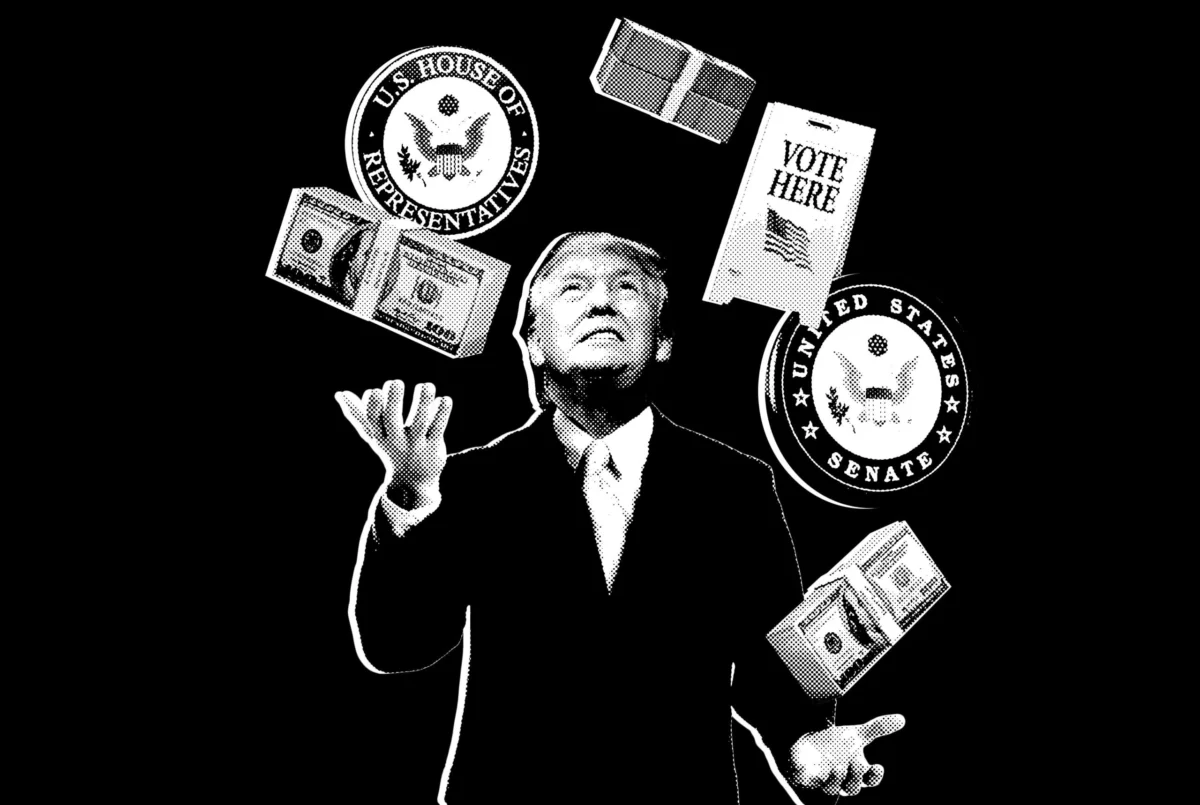
The Trump White House and its Republican allies are reportedly in a strategic retreat concerning the upcoming midterm elections, having largely conceded the battle for control of the House of Representatives and now channeling resources and efforts almost exclusively into safeguarding their slim Senate majority. This significant recalibration, confirmed by multiple sources familiar with recent discussions between White House aides and GOP group officials, underscores a deepening pessimism within the party as the election approaches. The pivot represents a stark admission of the challenging political landscape facing Republicans, who just months ago harbored ambitions of expanding their legislative power.
Acknowledging the House as a ‘Lost Cause’
The consensus among White House strategists and affiliated Republican groups is that retaining the House majority has become an increasingly improbable outcome. What were once considered target races for flipping Democratic seats to offset anticipated losses are now widely viewed as unattainable. This grim assessment is evidenced by concrete actions taken by major Republican super PACs. The Congressional Leadership Fund (CLF), a powerful political action committee aligned with Speaker Mike Johnson, has reportedly pulled significant advertising buys from Democratic-held districts in critical states such as Michigan and Ohio. These districts were previously earmarked as potential pickups, indicating a fundamental shift from offensive to defensive posturing.
Furthermore, the CLF has ceased ad spending in Nebraska’s 2nd congressional district, a seat being vacated by the retiring Republican Don Bacon, suggesting a lack of confidence in holding even traditionally Republican-leaning areas. The fund has also begun canceling existing ad reservations in races where Republican incumbents are seeking reelection, specifically in New Jersey and Iowa. These decisions are not merely tactical adjustments but reflect a broader strategic concession, signaling that resources are being diverted from what are now perceived as unwinnable contests to more salvageable battles. The move echoes historical precedents where a party facing a difficult midterm environment opts to consolidate its resources on the most viable races rather than spreading them thin across a losing battleground.
The Intensified Fight for the Senate
With the House seemingly out of reach, the focus has dramatically shifted to the Senate, which, while still presenting significant challenges, is viewed as a more winnable fight. White House aides and GOP strategists reportedly see the Senate majority as "still in play," a sentiment echoed by various independent polling models and prediction markets. This relative optimism is bolstered by early returns for mail ballots in key Senate battleground states, which sources indicate are comparable to turnout levels seen in the 2024 presidential election. Such early engagement is often a positive indicator for incumbent parties, suggesting that a concerted get-out-the-vote effort could potentially counteract broader anti-incumbent sentiment.
MAGA Inc., a pro-Trump super PAC, has also been involved in private discussions about potential pathways to secure the Senate. Strategists have identified a combination of Senate seats in Alaska, Iowa, and Ohio as crucial for forming a "firewall" that could effectively block Democrats from gaining control. These states represent diverse political landscapes, from Alaska’s rugged independent streak to Iowa’s agricultural conservatism and Ohio’s industrial swing-state dynamics, each requiring tailored campaign approaches. Success in these races would be instrumental in negating potential Democratic gains elsewhere and maintaining the current balance of power.
However, even the Senate battleground has seen its own strategic retreats. Trump officials, for instance, appear to have largely conceded the North Carolina Senate race. The Senate Republicans’ campaign arm, the National Republican Senatorial Committee (NRSC), paused its ad spending in the state at the beginning of October, a move mirrored by other outside groups. This decision is particularly telling given that Michael Whatley, a former Republican National Committee chair, is on the ballot, making the abandonment of the race a significant blow to the party’s prestige and a clear indicator of the challenging environment. Just a few months prior, such a retreat from a competitive state like North Carolina, with a high-profile Republican candidate, would have been considered unthinkable.
Official Responses and the Broader Political Climate
Amidst these strategic adjustments, official statements from the White House and the Republican National Committee maintain a public stance of optimism and determination. White House spokesperson Liz Huston affirmed, "President Trump is committed to maintaining Republican majorities in both the House and Senate." Similarly, Republican National Committee spokesperson Natalie Baldassare stated, "Republicans remain laser focused on winning and protecting and expanding President Trump’s majorities. We’re thinking outside the box to fight the typical midterm precedent." These statements, while outwardly confident, belie the internal discussions and strategic shifts that suggest a more defensive posture.
The underlying cause for this difficult political climate, according to sources, is a combination of persistent economic concerns and the ongoing impact of the "Iran war." High gas prices and the rising cost of living, which voters directly attribute to the conflict, remain sticky issues in the minds of the electorate. This economic discontent, coupled with a general weariness, has created a challenging environment for the incumbent party. Historically, midterm elections often serve as a referendum on the sitting president and their party, and the current economic headwinds appear to be strengthening the case for a protest vote against the Republicans.
Trump’s Direct Engagement Strategy
With just 20 days remaining until the election, Trump officials are increasingly focused on maximizing turnout from the dedicated MAGA base, rather than attempting to sway undecided or swing voters who, according to recent polls, are not breaking for Republicans. This strategy hinges on President Trump’s unique ability to energize his core supporters through direct voter outreach and high-profile rallies.
The president has embarked on an aggressive campaign trail schedule, crisscrossing the country to rally his base, even in states that, under normal circumstances, should be reliably Republican. Early in the week, Trump stumped in Ohio, a state where Democratic candidate Sherrod Brown has consistently polled ahead of his Republican opponent, Jon Husted. Husted has faced a barrage of negative ads branding him as "the face of data centers," highlighting the challenges Republicans face even in traditionally strongholds.
On Tuesday, Trump traveled to Wasilla, Alaska, a significant location in Republican lore as the former home of Sarah Palin, to bolster Republican Senate incumbent Dan Sullivan. Sullivan has been trailing Democrat Mary Peltola, underscoring the precarious nature of even long-held Republican seats. Following stops in Arizona and Kentucky later in the week, Trump is scheduled to host a high-stakes, $1 million-per-plate fundraiser dinner for MAGA Inc. at his Mar-a-Lago club. This event is critical for replenishing the super PAC’s war chest, which is being rapidly depleted by the intense and costly midterm campaign.
Trump remains steadfast in his belief that his personal presence and direct appeals can drive his supporters to the polls, a strategy he successfully deployed in the 2016 and 2024 presidential elections. However, this approach is not universally embraced within the Republican party. Despite his efforts, President Trump’s approval ratings continue to be among the lowest on record for any president at this stage of their term, casting a shadow over the effectiveness of his rallies in certain contexts. For instance, the president has notably not held a rally in Iowa with Republican candidate Ashley Hinson, who has recently distanced herself from the president by calling for measures to end the Iran war, signaling a potential fracturing within the party over key policy issues and the role of the president’s endorsement.
Broader Implications and Future Outlook
The current trajectory of the midterm elections, particularly the anticipated loss of the House, carries profound implications for the remainder of the Trump presidency and the broader political landscape. A Democratic-controlled House would almost certainly initiate a wave of investigations into the administration, scrutinizing everything from policy decisions to personal conduct, potentially leading to legislative gridlock and a more confrontational political environment. The ability of the White House to pass its legislative agenda would be severely hampered, shifting the focus from policy implementation to defensive maneuvering against congressional oversight.
Should Republicans also lose the Senate, the consequences would be even more far-reaching. A Democratic Senate would gain significant power over judicial appointments and executive branch nominations, effectively allowing the opposition party to block presidential appointments and reshape the federal judiciary for decades to come. This scenario would drastically alter the balance of power in Washington, making it exceedingly difficult for the Trump administration to advance its conservative agenda.
The internal struggles and strategic shifts within the Republican party also highlight a potential reckoning for the GOP as it looks towards the 2026 presidential election. A significant midterm defeat could trigger a period of introspection and debate over the party’s direction, its reliance on the Trump brand, and its messaging on key economic and foreign policy issues. While President Trump remains a dominant figure, the mixed reception to his campaign appearances and the strategic retreats suggest that his influence, while powerful with his base, may not be sufficient to overcome broader national trends and economic anxieties. The coming weeks will undoubtedly define not only the immediate legislative future but also set the stage for the next cycle of American politics.