admin
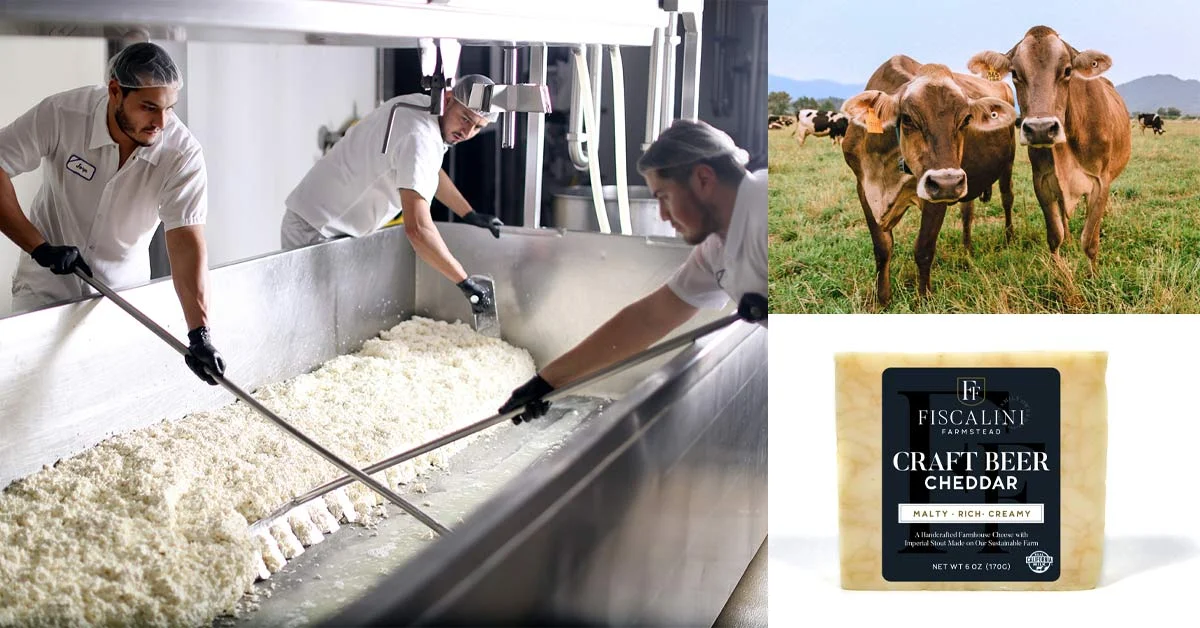
The history of beer cheese in the United States is a narrative of regional ingenuity that has evolved from a humble tavern snack into a sophisticated category of artisanal dairy production. While the traditional "beer cheese" known to many consumers is a spreadable dip characterized by sharp cheddar and a spicy kick, a new generation of American farmstead cheesemakers is redefining the term. This modern movement integrates craft beer directly into the cheesemaking process, creating a culinary synergy that emphasizes local terroir, complex fermentation, and technical precision.
The Historical Foundations of a Regional Staple
The origins of beer cheese are rooted in the 180-mile "Beer Cheese Trail" in Clark County, Kentucky. Historical records suggest the product was first served in the 1940s at a restaurant owned by Johnny Allman on the banks of the Kentucky River. The original recipe, which has since been carried forward by entities like Howard’s Creek Authentic Beer Cheese, was born out of a desire for sustainability. According to Kathy Gorman Archer, president of Howard’s Creek, the initial effort utilized leftover sharp cheddar and remaining beer to create a durable, flavorful spread.
The classic Kentucky style is defined by its inclusion of cayenne pepper, garlic, and other spices—a profile Archer attributes to Allman’s interest in southwestern flavors. For decades, this model defined the category: a processed blend of finished cheese, beer, and seasonings. However, the contemporary landscape has shifted. The industry is moving away from post-production blending and toward "infused" or "washed" cheeses, where the beer is treated as a primary ingredient during the curd-setting or aging stages.
The Science of Fusion: pH Balance and Microbial Synergy
Integrating beer into the cheesemaking process is a complex technical challenge that requires a deep understanding of biochemistry. The primary variable in this fusion is pH, the measure of acidity or alkalinity. Fresh milk typically maintains a pH between 6.4 and 6.8. During cheesemaking, the introduction of starter cultures and rennet triggers the separation of solids (curds) from liquids (whey).
If a cheesemaker introduces beer—which is naturally acidic—too early or in the wrong concentration, it can disrupt the binding of the curds. According to industry experts, if the pH remains too high (above the low 5s), the curds fail to bond properly. Conversely, if the pH drops too low (below 4), the resulting cheese becomes rubbery and loses its structural integrity.
To combat this, modern artisans like Rynn Caputo of Caputo Brothers Creamery have developed scientific protocols for "marinating" curds or even "dry hopping" the milk itself. By exposing the milk to hops before the curdling process begins, cheesemakers can capture the aromatic qualities of the beer—such as citrus, pine, or floral notes—without compromising the delicate microbial environment required for high-quality cheese.
Regional Innovations: From the Pacific Northwest to the Atlantic Coast
The trend toward beer-infused cheese is a national phenomenon, driven by partnerships between independent breweries and local dairies. These collaborations often serve as a form of "liquid terroir," reflecting the specific agricultural profiles of their respective regions.
Oregon: The Pioneer Spirit of Rogue Creamery
In Central Point, Oregon, Rogue Creamery has long been a leader in artisanal innovation. Known for producing the world-renowned Rogue River Blue, the creamery has spent nearly a decade collaborating with Hopworks Brewery to produce its Chocolate Stout Cheddar. Unlike traditional beer cheese, this product introduces the beer as the whey begins to separate from the curd. This timing ensures the malt profile is infused into the cheese’s structure, creating a marbled aesthetic and a subtle sweetness.
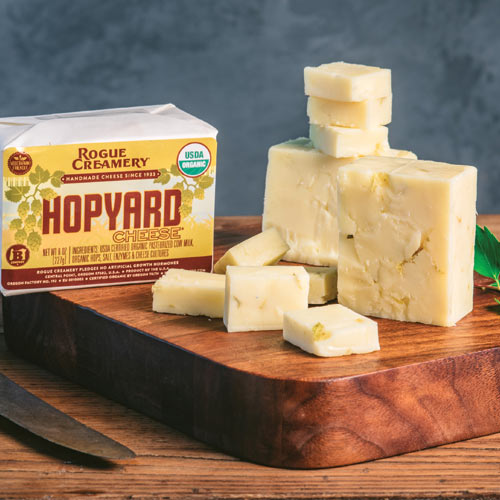
Rogue has further pushed the boundaries with its "Hopyard" cheddar, which utilizes fresh, local Northwest hops mixed directly with the curds. This process mirrors the "dry hopping" technique used in brewing India Pale Ales (IPAs), resulting in a cheese that serves as a direct bridge between the dairy and brewing industries.
California: Farmstead Traceability at Fiscalini
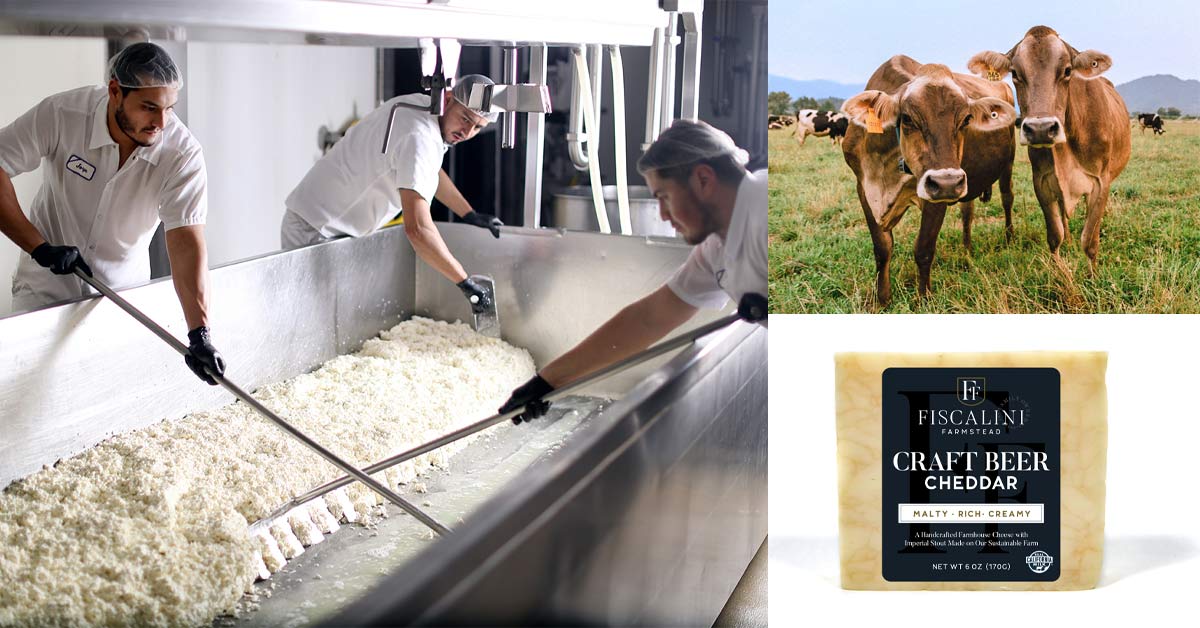
In Modesto, California, Fiscalini Farmstead represents the "farmstead" designation, meaning the cheese is produced on the same premises where the milk is harvested. This provides a level of traceability that is highly valued in the specialty food market. Their "Craft Beer Cheddar" is the result of a partnership with Dust Bowl Brewing.
Fiscalini utilizes a "mottled" infusion process where Black Blizzard Imperial Stout is mixed with the curds before they are pressed into 40-pound blocks. The overnight pressing process forces the beer into the heart of the cheese, ensuring that the roasty notes of coffee and chocolate are present in every bite. This method highlights the "culinary collaboration" between brewmasters and cheesemakers, as both disciplines rely on the activation of enzymes to transform raw ingredients into complex finished products.
Pennsylvania: The Power of Local Distribution
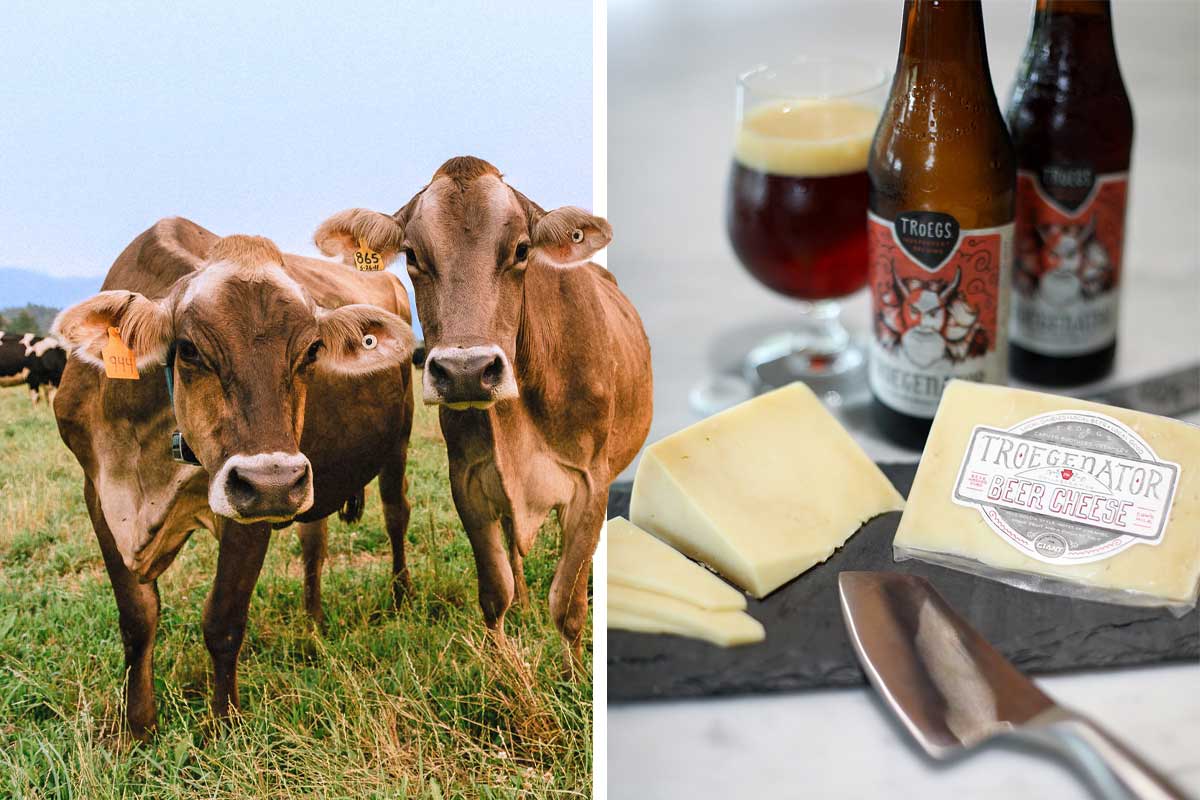
In Pennsylvania, the collaboration between Caputo Brothers Creamery and Tröegs Independent Brewing illustrates the economic impact of local partnerships. Facilitated by Giant Food Stores, this initiative sought to create a product with a direct regional impact.
Caputo Brothers, originally focused on Italian-style cheeses, adapted their techniques to create a Gouda-style cheese infused with Troegenator Double Bock. The success of this product led to more experimental offerings, such as a cheese infused with Mad Elf—an 11% ABV Belgian holiday ale. For this specific variety, the rind is rubbed with a mixture of cocoa, cinnamon, espresso, and beer, resulting in a product that resembles a slice of chocolate cake but maintains the savory profile of an aged cheese.
The Rise of the Urban Creamery and Fresh Beer Cheese
While many beer cheeses are aged for months or years, a parallel movement is thriving in urban centers, focusing on fresh, high-turnover products. Urban Stead Cheese in Cincinnati, Ohio, operates as one of the few urban creameries in the United States. To honor the city’s German heritage, founders Andrea Robbins and her team developed a Kentucky-style beer cheese using Braxton Brewing’s Storm Golden Cream Ale.
Unlike aged cheddars, this fresh cheese—often described as a hybrid of ricotta and cream cheese—can be produced and sold within days. This model offers significant economic advantages for small producers, providing a steady cash flow while other wheels age in the cave for 20 months or more. The use of a cream ale adds a subtle corn and spicy hop presence, making it a versatile ingredient for chefs who use it in everything from pasta fillings to caprese salads.
Economic Impact and Market Implications
The growth of the beer cheese category reflects broader trends in the American food industry, specifically the rise of "collaborative consumption" and the demand for artisanal, locally-sourced goods. According to data from the Brewers Association, small and independent craft brewers contributed $72.2 billion to the U.S. economy in recent years. Simultaneously, the specialty cheese market has seen consistent growth as consumers move away from mass-produced, processed options.
The benefits of these collaborations are three-fold:
- Marketing Synergy: Both the brewery and the creamery benefit from cross-promotion, tapping into each other’s established fan bases.
- Agricultural Sustainability: These products often utilize regional grains and dairy, supporting local farmers and reducing the carbon footprint associated with long-distance shipping.
- Product Diversification: For creameries, beer cheese offers a way to differentiate their product line in a crowded market, providing a "gateway" product for consumers who may be new to artisanal cheese.
Future Outlook: The Professionalization of Craft Pairings
As the category matures, the distinction between "beer cheese" as a dip and "beer-infused cheese" as a gourmet staple will likely become more pronounced. The establishment of businesses like Custom Cheesemakers—a side venture of Caputo Brothers that produces custom beer cheese for breweries nationwide—suggests that this is no longer a niche hobby but a formalized sector of the dairy industry.
The evolution of beer cheese from a sustainable way to use leftovers in 1940s Kentucky to a high-tech, collaborative art form in the 2020s demonstrates the resilience and creativity of American food producers. By focusing on the scientific harmony between malt, hops, and milk, today’s cheesemakers are ensuring that beer cheese remains a vital, evolving part of the American culinary identity. Whether it is a washed-rind double cream from Indianapolis or a clothbound stout cheddar from California, the intersection of the brewhouse and the creamery continues to yield some of the most innovative flavors in the modern market.