 admin
admin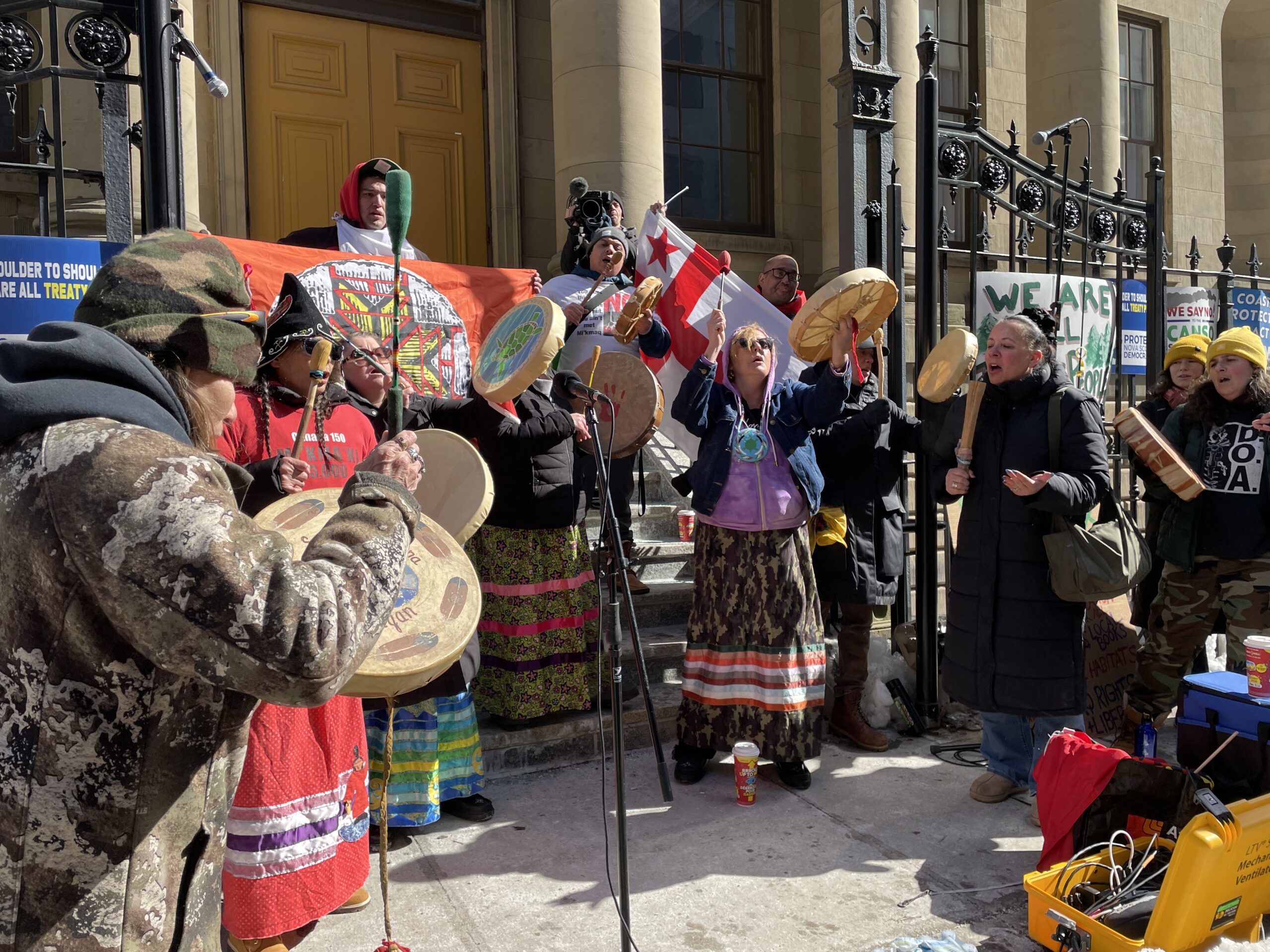
Halifax, Nova Scotia – A chorus of discontent resonated through the streets of Halifax on Tuesday as hundreds of protesters converged outside the Nova Scotia legislature, Province House, to voice their strong opposition to the provincial government’s recent budget cuts to cultural programs and its controversial resource extraction policies. The demonstrations highlighted a growing chasm between the Progressive Conservative government’s fiscal agenda and the public’s expectations for social equity, environmental protection, and Indigenous rights.
The focal point of the protests was the recently tabled 2026-27 budget, which unveiled a substantial $1.2-billion deficit and signaled a period of "difficult decisions" for the province. Premier Tim Houston, conspicuously absent from Province House during the protest as he attended a mining convention in Toronto, became a symbol of the perceived disconnect between the government and its constituents. Protesters accused the Premier and his administration of neglecting treaty obligations and prioritizing corporate interests over community well-being and environmental stewardship.
The Genesis of Discontent: Austerity Measures and Their Impact
The provincial budget, delivered last week, outlined aggressive cost-saving measures aimed at curbing the rising deficit. Key among these were a five percent annual reduction in the civil service and a three percent cut across public services and Crown corporations, projected to yield $95 million in savings. More dramatically, the budget revealed the elimination or reduction of over 280 grants spanning multiple government departments, targeting a savings of $130.4 million.

These grant reductions, though presented as necessary fiscal prudence, have sparked outrage due to their wide-ranging impact. Programs supporting scholarships, arts funding, and crucial initiatives for Mi’kmaw and Black and African Nova Scotian communities are among those slated for cuts. For many, these cuts represent more than just financial adjustments; they signify a withdrawal of support for the province’s most vulnerable and culturally significant sectors.
The discontent had been simmering prior to Tuesday’s protest. Just days earlier, Premier Houston faced a chorus of boos at the African Heritage Month gala in Halifax, a stark public display of frustration underscoring the deep resentment over the budget’s implications for racialized communities. Critics argue that scaling back funding for initiatives designed to uplift and support these communities undermines years of progress towards equity and inclusion.
Melanie Peter-Paul, a Mi’kmaw land defender, articulated the sentiment, stating, "It tells us that reconciliation is being treated as symbolic, not structural. And we’re not asking for special treatment, we’re asking for the bare minimum." This statement encapsulates the view that the budget cuts affecting Mi’kmaw organizations and truth and reconciliation efforts are not merely financial, but a fundamental betrayal of commitments made to Indigenous peoples.
The Resource Extraction Conundrum: Uranium Mining and Treaty Rights
Adding another layer of controversy to the budget’s fiscal austerity are the government’s resource extraction policies, particularly the contentious decision to repeal a 44-year moratorium on uranium mining. This move, enacted a year prior to the current protests, has ignited a fierce environmental and Indigenous rights debate.

Alexina Doucette, another Mi’kmaw land, water, and treaty defender, powerfully expressed the long-term perspective of Indigenous communities: "We’re looking out for our next seven generations and not just our children. We’re talking about the animals and the trees and everything. It’s pretty sad where we’re at right now. It’s sad to say this is Nova Scotia." Her words underscore the profound spiritual and cultural connection Indigenous peoples have to the land and the potential intergenerational impacts of industrial resource extraction.
The Ecology Action Centre, a leading environmental advocacy group, has been at the forefront of the campaign to reinstate the ban, collecting 8,600 signatures on petitions calling for its re-establishment. These petitions were scheduled to be tabled at the legislature on Tuesday, demanding greater transparency from the Progressive Conservative government.
Elizabeth Peirce, co-founder of People Not Plunder, criticized the lack of public engagement surrounding the policy shift. "When you announce legislation that dramatically impacts health, environment, Indigenous rights, you need to consult," she asserted. "There was no warning, no consultation on any of this. When (Premier Houston) was elected, re-elected last November, this was not part of his election platform. It took everyone by surprise." This highlights a significant procedural concern, suggesting a deviation from democratic norms of consultation and public discourse on major policy changes. The sudden repeal of such a long-standing moratorium, without apparent public mandate or consultation, has fuelled accusations of an opaque decision-making process driven by corporate interests.
Legislative Battleground: Frustration Inside Province House
While protesters rallied outside, a heated and often fractious debate unfolded inside Province House. The Speaker repeatedly called for order during question period, struggling to contain the palpable tensions between government and opposition benches.

NDP Leader Claudia Chender minced no words in her criticism of the budget, stating, "Real talk, there are so many small, cruel, impactful cuts in this budget that Nova Scotians are having a hard time keeping track over which services, programs, and resources have been slashed." She specifically referenced the elimination of a student transit pass program in Halifax, citing it as an example of cuts that disproportionately affect vulnerable populations.
Interim Liberal Leader Iain Rankin challenged the government’s priorities, pointing to the decision to eliminate bridge tolls at the MacKay and Macdonald bridges in Halifax. "Why was eliminating a bridge toll here in Halifax that nobody was asking for prioritized over safeguarding these important programs that help marginalized communities?" Rankin questioned, implying a misalignment of the government’s fiscal priorities with the needs of its citizens. The bridge toll elimination, a popular measure for some commuters, has been framed by the opposition as a politically motivated decision that drained provincial revenue while essential social programs faced the axe.
Government cabinet ministers, across all departments, maintained a unified defense of the budget. They argued that despite the "tough decisions," the fiscal plan was essential to preserve core services such as health care and education, asserting that these vital sectors remained protected from the broader austerity measures. However, this defense has largely failed to placate critics who argue that the burden of fiscal restraint is unfairly distributed.
The Premier’s absence from the legislature during such a critical period of public and political debate further inflamed tensions. NDP Leader Chender called it "extremely insulting that the premier is not in the province. I mean, we are in the midst of a provincial conversation right now about the failure of this budget to meet the moment." Rankin echoed this sentiment, suggesting that the Premier’s decision to call the House back into session knowing he would be absent was "revealing" and indicated that "he doesn’t want to be here."
The opposition’s strategic move to table petitions in unison—by Liberal Derek Mombourquette, NDP Kendra Coombes, and independent MLA Becky Druhan (a former member of Houston’s own caucus and cabinet)—underscored the broad, multi-partisan concern regarding the government’s direction. Druhan’s participation was particularly noteworthy, signaling deep dissent even from within former government ranks.

Broader Implications and the Path Forward
The protests and legislative skirmishes highlight a critical juncture for Nova Scotia. The government’s austerity budget, while framed as necessary for fiscal stability, is being perceived by a significant portion of the populace as a retreat from social progress and a disregard for environmental responsibilities and Indigenous rights.
The debate extends beyond mere budgetary figures; it touches upon fundamental questions of governance, democratic accountability, and the province’s values. The lack of consultation on both the budget cuts and the uranium mining moratorium repeal has led to accusations of an autocratic approach, eroding public trust and alienating key stakeholders. The "People Not Plunder" movement and the strong stance of Mi’kmaw land defenders emphasize the need for a more inclusive and respectful engagement process, particularly concerning decisions that impact the environment and Indigenous territories.
The implications for the Houston government are significant. While they contend their decisions are for the long-term fiscal health of the province, the immediate political fallout has been substantial. The widespread public dissatisfaction, coupled with a fractious legislative environment, suggests a challenging road ahead for an administration facing accusations of being out of touch with the needs and concerns of many Nova Scotians.
The clash between economic expediency and social-environmental responsibility is a recurring theme in modern governance. In Nova Scotia, this conflict is now front and center, with the outcome poised to shape the province’s social fabric, environmental landscape, and political discourse for years to come. As the government attempts to navigate a path towards fiscal recovery, it must also contend with the deep-seated concerns of its citizens who demand respect for treaties, protection of the environment, and equitable support for all communities. The protests on Province House Hill serve as a powerful reminder that while budgets are about numbers, they are ultimately about people and the future they envision for their province.