 admin
admin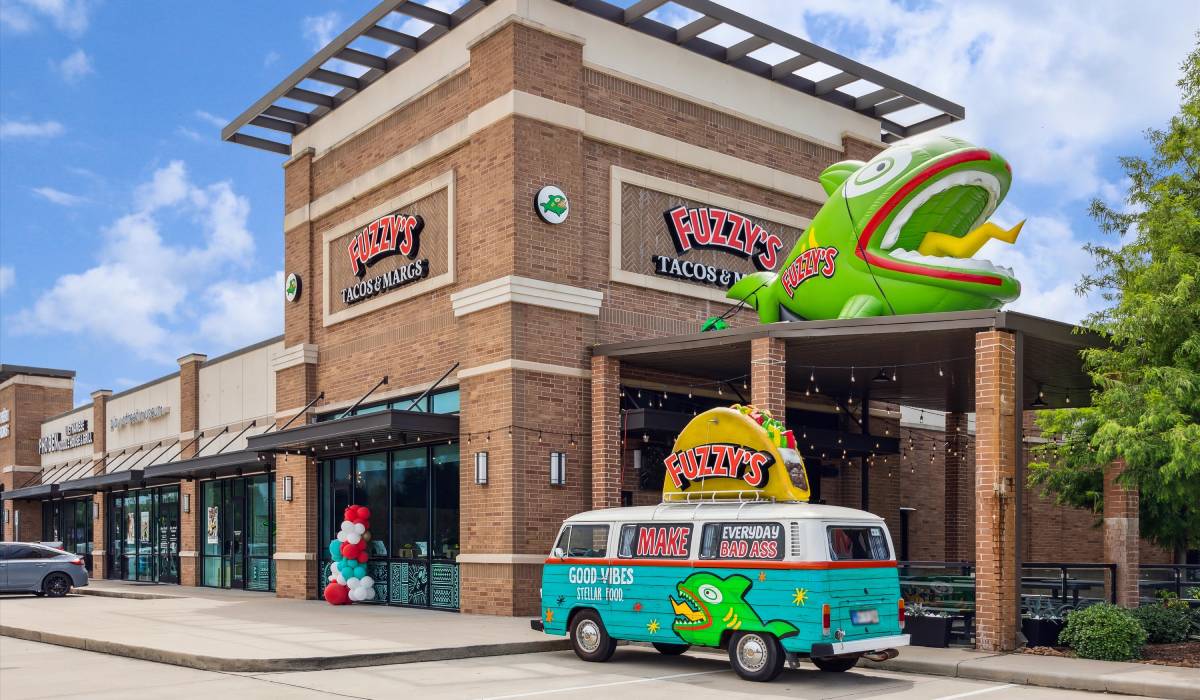
John Peyton has spent the vast majority of his professional life navigating the nuanced world of hospitality, specializing in welcoming people into environments that exist in the delicate space between the public square and the private home. With a career spanning high-level leadership roles at Starwood Hotels & Resorts and Realogy, Peyton’s transition to the role of CEO at Dine Brands in January 2021 was less of a career pivot and more of a strategic homecoming. Under his stewardship, the parent company of Applebee’s Neighborhood Grill + Bar, IHOP, and Fuzzy’s Taco Shop has embarked on an ambitious multi-year transformation. This strategy moves beyond traditional menu engineering to focus on the "total guest experience," a shift designed to secure market share in an increasingly volatile casual-dining sector.
The timing of Peyton’s arrival was critical. Joining Dine Brands in the depths of the COVID-19 pandemic, he inherited a landscape where dining rooms were dark and corporate synergy was maintained through screens. However, these early trials provided a unique vantage point. Peyton recognized that while the pandemic had temporarily broken the physical connection between brands and guests, the fundamental tenets of hospitality—service, atmosphere, and perceived value—remained the primary drivers of long-term loyalty. Today, Dine Brands operates as a massive franchisor with a footprint that mirrors the demographic diversity of the United States, serving approximately 200 million guests annually across its two primary legacy chains.

The Strategic Evolution of Dine Brands: A Chronological Overview
To understand the current trajectory of Dine Brands, one must look at the sequence of strategic moves made since 2021. The company’s journey from pandemic recovery to aggressive growth can be mapped through several key phases:
- The Recovery Phase (2021–2022): Focus was placed on stabilizing the franchise system, optimizing off-premises channels (delivery and to-go), and ensuring health and safety protocols were standardized.
- The Diversification Phase (December 2022): Dine Brands announced the acquisition of Fuzzy’s Taco Shop for $80 million, signaling an intent to enter the high-growth fast-casual Mexican segment and test the scalability of its corporate "technology stack."
- The Value Redefinition Phase (2023–2024): Recognizing the impact of persistent inflation on discretionary income, the company shifted from "discount" marketing to "structured value" platforms, such as Applebee’s "2 for $25" and IHOP’s "House Faves."
- The Innovation and Co-Branding Phase (2025–2026): The launch of the first domestic Applebee’s-IHOP co-branded location in Seguin, Texas, marked the beginning of a new development engine designed to maximize real estate efficiency and daypart coverage.
Redefining Value in an Inflationary Economy
In the contemporary dining economy, the definition of value has undergone a radical transformation. Peyton observes that for decades, casual dining value was synonymous with deep discounting—typically centered on appetizers or specific low-cost entrees. However, modern consumers, squeezed by rising costs in housing and transportation, are now seeking "predictable value." This has led to the rise of the "complete meal" offering, where the total cost of the experience is transparent from the moment the guest opens the menu.
Applebee’s has leaned heavily into this trend with its "2 for $25" platform, which provides two entrees and one appetizer for a fixed price. Michelle Chin, who joined as Applebee’s Chief Marketing Officer in September 2023, emphasizes that value is no longer just about the price point on the receipt; it is about the "vibe" of the restaurant. If a family is going to spend $60 to $80 on a meal out, the cleanliness of the dining room, the quality of the lighting, and the attentiveness of the service must justify that expenditure.

To support this, Applebee’s is currently executing a massive three-year "Looking Good" reimage program. This initiative involves significant capital investment in interior and exterior enhancements, including new signage, contemporary artwork, updated fixtures, and refreshed color palettes. The data suggests this focus on "the box" is paying off: remodeled units are reporting sales lifts ranging from 5% to over 15%. As of the third quarter of 2025, approximately 80 units had been completed, with a goal to refresh 50% of the entire 1,400-plus unit portfolio by the end of 2027.
IHOP: Operational Efficiency and the Speed of Culture
While Applebee’s focuses on the "Neighborhood" connection, IHOP is undergoing a transformation centered on operational agility and cultural relevance. Lawrence Kim, President of IHOP, has prioritized a "barbell" strategy that balances aggressive value with premium, "internet-worthy" innovation.
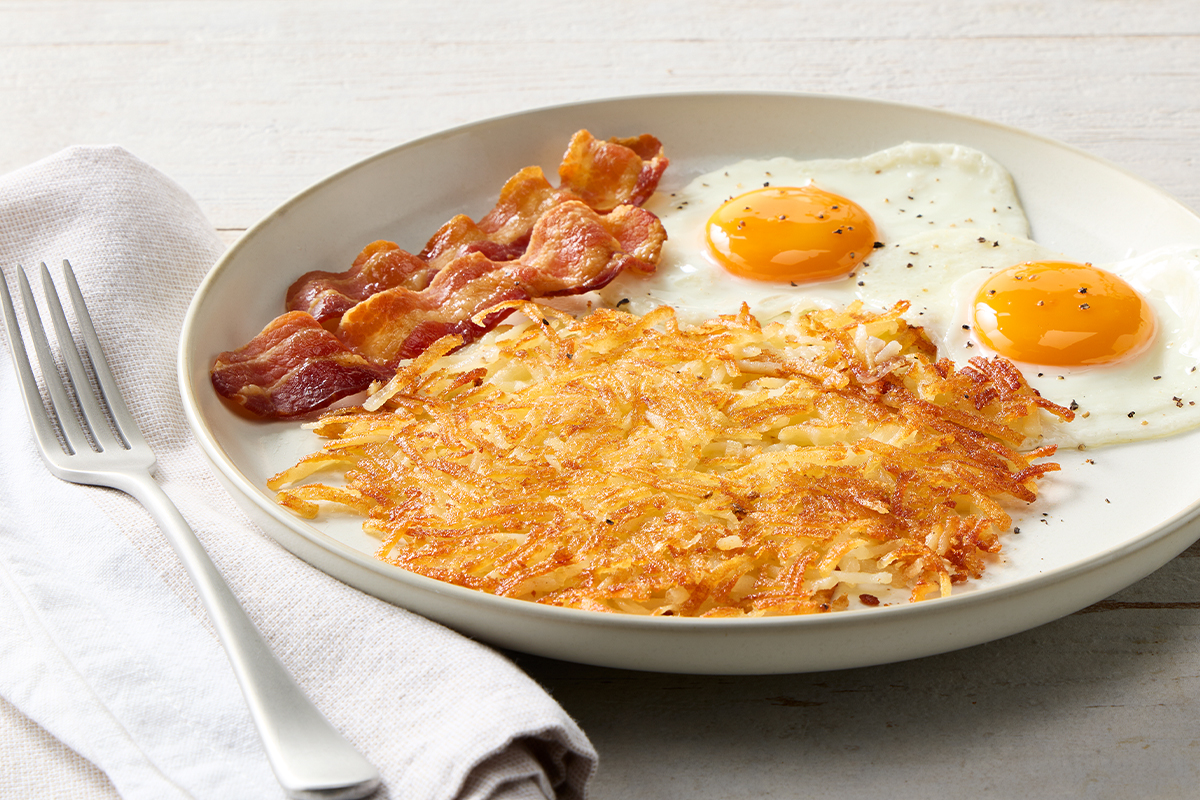
In 2024, IHOP launched its $6 House Faves menu as a weekday promotion to combat declining morning traffic. The success was immediate, leading the brand to outperform industry traffic benchmarks for much of 2025. By September 2025, the brand made the strategic decision to expand House Faves to a seven-day-a-week offering. Peyton notes that this was not a desperate move for traffic but a "designed and tested" profitable platform. By Q3 2025, IHOP achieved its first quarter of positive traffic in several years, a significant milestone in a sector where many competitors are seeing negative guest counts.

Beyond pricing, Kim has moved to simplify the back-of-house operations. In a dramatic shift, IHOP reduced its annual Limited-Time Offer (LTO) count from 26 in 2024 to just six in 2025. This reduction in complexity has resulted in measurable improvements in service: average ticket times have dropped by over six minutes, and order accuracy has climbed by 10%. This operational "breathing room" allows staff to focus on hospitality—the "magic" Kim insists is the brand’s true competitive advantage.
The Co-Branded Prototype: A "Game-Changing" Growth Engine
Perhaps the most audacious element of the Dine Brands growth plan is the "dual-branded" concept, which places Applebee’s and IHOP under a single roof. This strategy addresses the fundamental "daypart" problem in the restaurant industry: IHOP typically struggles to drive dinner traffic, while Applebee’s has virtually no breakfast presence.
The co-branded model features a shared kitchen, a unified Point of Sale (POS) system, and a cross-trained staff. Guests enter a space divided by brand aesthetics—Applebee’s red and IHOP’s blue—but are presented with a combined menu. The financial implications are staggering. The first domestic test site in Seguin, Texas, reported doubling its revenue after converting from a standalone IHOP to a co-branded unit.

Peyton identifies several key benefits of this model:
- Franchisee ROI: Revenue increases of 1.5x to 2.5x with a payback period often under three years.
- Real Estate Efficiency: The model allows Dine Brands to enter smaller markets that might not support two separate buildings but can thrive with one "all-day" destination.
- Operational Synergy: Shared labor and back-of-house costs significantly improve four-wall margins.
Dine Brands plans to have at least 50 co-branded locations in the U.S. by the end of 2026, with an ultimate domestic potential for up to 900 units. This represents a significant portion of the company’s future development pipeline, especially as standalone Applebee’s development has slowed due to high construction costs.
Fuzzy’s Taco Shop and the "Fast Casual Plus" Experiment
The acquisition of Fuzzy’s Taco Shop provided Dine Brands with a laboratory for fast-casual innovation. Peyton is candid about the fact that the brand required refinement after its acquisition. The corporate team has since streamlined the menu and upgraded protein quality, but the most significant change is the "Fuzzy’s 2.0" prototype.

This "Fast Casual Plus" model blurs the lines between a taco shop and a sports bar. While guests still order at the counter, the environment is heavily influenced by full-service hospitality, featuring multiple televisions and table-side service for follow-up orders. This hybrid approach is designed to increase "second order" incidence—specifically for drinks and additional tacos—thereby raising the average check without the labor overhead of a traditional sit-down restaurant. With 109 locations currently, Fuzzy’s serves as the "fourth lane" of growth for Dine, offering a lower-entry-cost option for franchisees.
Market Analysis and Future Outlook
The broader casual dining landscape remains a "battle for market share," as Peyton describes it. With Waffle House currently holding the top spot in unit count for family dining, IHOP (2nd) and Applebee’s (3rd) are using their scale to negotiate better supply chain costs and reinvest those savings into the guest experience.
Industry analysts suggest that Dine Brands’ move toward "hospitality-led value" is a necessary response to the "commoditization" of fast food. As QSR (Quick Service Restaurant) prices rise, the price gap between a fast-food meal and a casual dining experience has narrowed. By improving the "vibe" and service levels, Dine Brands is betting that consumers will choose a $15 sit-down experience over a $12 drive-thru bag.

As the company moves into 2026, the success of this strategy will be measured by two metrics: sustained traffic growth and franchisee profitability. With Applebee’s posting positive same-store sales in Q3 2025 and IHOP’s traffic trending upward, the early data supports Peyton’s "experience-first" thesis. By treating restaurants as "cousins of hotels"—places where the environment is as important as the product—Dine Brands is attempting to future-proof two of America’s most iconic legacy chains for the next 45 years.