 admin
admin
The Genesis of a Cultural Juggernaut
America’s Next Top Model (ANTM) debuted in 2003 on the now-defunct UPN network, arriving at a pivotal moment in television history. Created by Tyra Banks and producer Ken Mok, the series was marketed as a democratization of the fashion industry. Its stated mission was to take young women from diverse backgrounds and provide them with the professional tools—runway coaching, photographic posing, and personal branding—necessary to succeed in an infamously elitist field.
The show was a pioneer in the reality competition subgenre, arriving just years after the debut of Big Brother and alongside early hits like Survivor and Fear Factor. ANTM effectively merged the "fly-on-the-wall" domestic drama of contestants living in a shared residence with the high-stakes performance pressure of weekly eliminations. This formula proved exceptionally successful; at its peak, the show reached an estimated 100 million viewers across 170 countries, spawning dozens of international "Top Model" franchises from Australia to Vietnam.
A Chronology of Controversy and Re-evaluation
The trajectory of ANTM can be mapped through a series of escalating "cycles" that pushed the boundaries of the reality format. While the show was initially praised for its inclusivity, later seasons drew criticism for what many viewed as a shift from professional mentorship to psychological exploitation.
2003–2005: The Formative Years and the "Tiffany Incident"
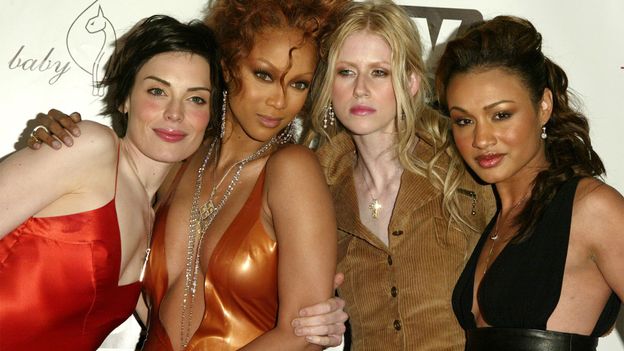
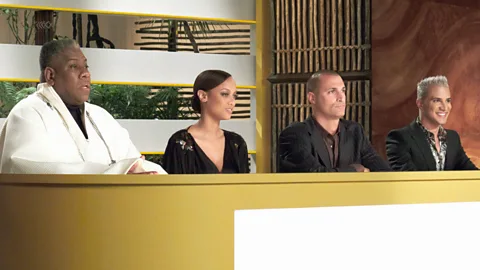
In its early cycles, the show established its core judging panel, including runway coach Miss J. Alexander and creative director Jay Manuel. However, Cycle 4 (2005) provided what remains the show’s most infamous moment: Tyra Banks’ explosive confrontation with contestant Tiffany Richardson. After Richardson reacted to her elimination with perceived indifference, Banks shouted, "I was rooting for you. We were all rooting for you! How dare you! Learn something from this!" This moment, which became a viral meme decades later, serves as the starting point for the new Netflix documentary, symbolizing the intense power dynamic between the host and the contestants.
2005–2012: Escalating Photoshoot Concepts
As the show matured, production sought more provocative themes to maintain ratings. This era saw the introduction of shoots that have since been condemned as racially and socially insensitive. In 2005 (Cycle 4) and again in 2009 (Cycle 13), contestants participated in "switching ethnicities" shoots involving darkening skin tones with makeup, a practice widely recognized as blackface. Other controversial themes included a homeless-themed shoot using actual unhoused individuals as props and a "crime scene" shoot where models posed as murder victims.
2015–2020: Cancellation and Social Media Resurgence
The original run ended in 2015, followed by a brief two-season revival on VH1. However, the true reckoning began in 2020 during the COVID-19 pandemic. With audiences confined to their homes, many revisited the series on streaming platforms, viewing it through a modern sociological lens. Clips of judges criticizing models’ weight, mocking physical features, and pressuring contestants into unwanted dental surgeries—such as Cycle 6 winner Dani Evans being told to close the gap in her front teeth—circulated on social media, leading to a public demand for accountability.
The Darker Side of Production: Allegations and Ethics
The upcoming Netflix docuseries, Reality Check, features testimony from former contestants who allege that the pursuit of "good television" often came at the expense of their safety and mental well-being. One of the more harrowing accounts involves a contestant who describes being filmed while intoxicated and having sex with a man, only to be pressured by producers to confess the incident to her boyfriend on camera.
Furthermore, the documentary addresses allegations of sexual harassment. Footage revisited in the series shows a contestant complaining about harassment from a male model during a shoot, only to be chastised by Banks for not handling the situation with more "professionalism." In the docuseries, Banks reflects on the incident, stating, "None of us knew. Network executives didn’t know. And I did the best I could at that time. But she deserved more."
Another significant area of concern involves the "villain edit," a reality TV editing technique where footage is manipulated to portray a contestant in a negative light. Ebony Haith, a contestant from the show’s first cycle, notes in the documentary that the participants eventually realized the show’s primary goal was not to launch modeling careers but to manufacture conflict for entertainment.
Statistical Context and the Reality of the "Top Model" Stigma
While the show promised a gateway to the high-fashion world, the statistical reality for its graduates was often starkly different. Data suggests that of the 24 winners and hundreds of finalists, only a small percentage achieved sustained success in high-fashion editorial or runway work.
Industry experts point to a "reality TV stigma" that hampered many contestants’ prospects. Belinda Naylor, a fashion podcaster and presenter, explains that the fashion industry’s inherent snobbery often worked against ANTM alumni. Designers and casting directors frequently viewed reality stars as "commercial" or "gimmicky," preferring models scouted through traditional agencies. Cycle 6 winner Dani Evans noted that her association with the show actually closed doors, as high-end designers were hesitant to book someone associated with the "melodrama" of television.
Official Responses and Participant Perspectives
The response to the retrospective criticism of ANTM has been polarized. Tyra Banks has acknowledged the "insensitivity" of certain past moments, tweeting in 2020 that "those were some really off choices." In the Netflix series, she admits to losing her temper and occasionally crossing professional boundaries. Executive producer Ken Mok has also expressed regret, specifically citing the "crime scene" photoshoot as a "mistake" and a "celebration of violence."
Conversely, some former participants have criticized the current trend of re-evaluating the show through a modern "woke" lens. Adrianne Curry, the winner of Cycle 1, declined to participate in the Netflix documentary and described the project as an attempt to judge a 20-year-old show by standards that did not exist at the time. Curry argued on social media that the "psychoanalyzing" of the series decades later is "absurd."
Broader Cultural Impact and Sociological Implications
Despite the controversies, sociologists note that ANTM’s impact on media representation cannot be ignored. Danielle Lindemann, author of True Story: What Reality TV Says About Us, points out that the show was a pioneer in diversity. "This was a show filled with people of color, queer people, and at least some different body types," Lindemann noted. She suggests that by bringing queer representation to a massive audience over a decade before the legalization of same-sex marriage in the US, ANTM helped pave the way for modern successes like RuPaul’s Drag Race.
However, the show also serves as a cautionary tale regarding the "Wild West" era of reality television in the early 2000s. It existed alongside programs like The Swan, which focused on extreme plastic surgery makeovers, and Joe Millionaire, which relied on elaborate deception. Together, these shows reflect a period where the dehumanization of participants was often a prerequisite for commercial success.
Analysis of the Docuseries’ Role
The release of Reality Check: Inside America’s Next Top Model represents a growing trend in the streaming era: the "re-investigative" documentary. Similar to projects examining the conservatorship of Britney Spears or the downfall of Victoria’s Secret, this series seeks to peel back the layers of a cultural phenomenon to reveal the systemic issues within.
By providing a platform for former contestants like Dionne Walters and Shandi Sullivan to share their experiences, the docuseries shifts the narrative from the judges’ podium to the participants’ reality. It challenges the audience to reconcile the entertainment they enjoyed in the 2000s with the human cost of its production. As the fashion and media industries continue to grapple with issues of consent, diversity, and mental health, the legacy of America’s Next Top Model remains a vital, if uncomfortable, case study in the power and peril of the reality television lens.