 admin
admin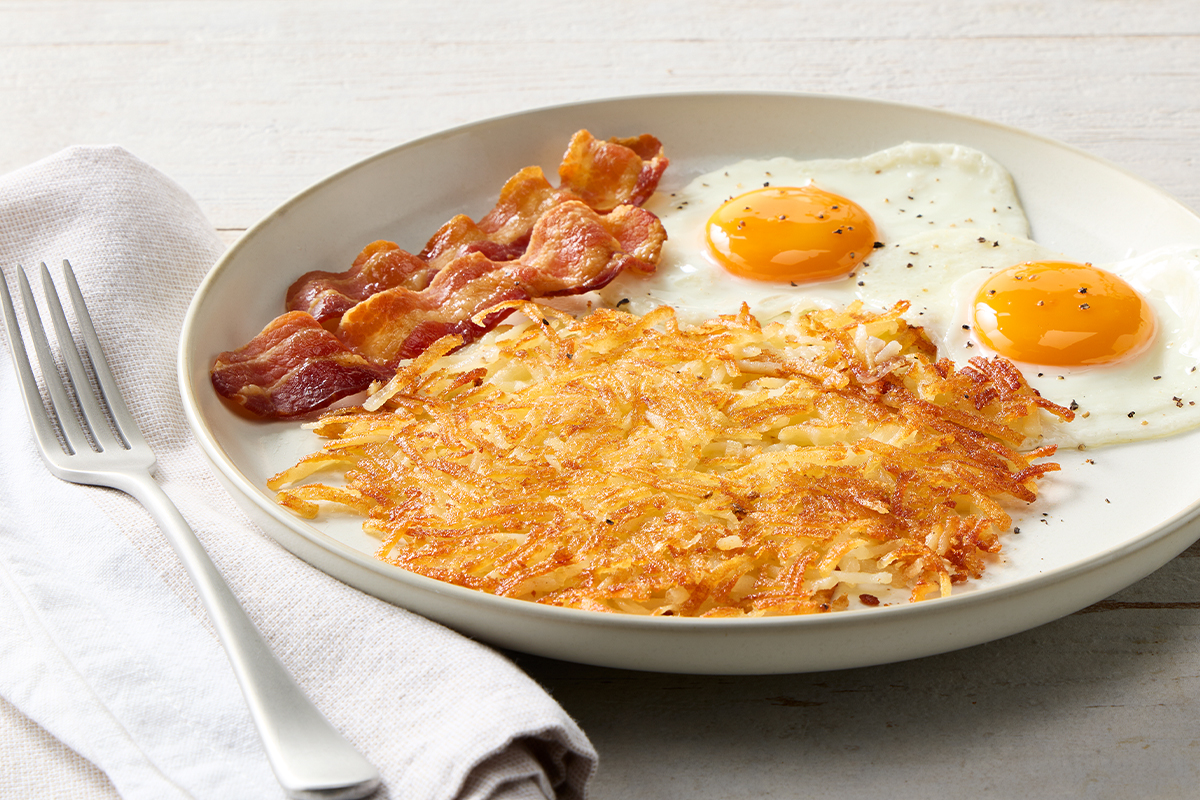
In the high-stakes environment of full-service breakfast dining, the operational decisions made in the back-of-house ripple through every aspect of the business, from ticket times and labor efficiency to storage capacity and long-term guest retention. For multi-unit operators, these decisions are rarely based on culinary tradition alone; instead, they are the result of rigorous performance evaluations under real-world service conditions. Sean Stone, an industry veteran who oversees a portfolio of ten locations—including seven Bisbee Breakfast Club outposts and three Jerry Bob’s restaurants—recently conducted a comprehensive audit of one of the most fundamental components of the American breakfast: the hashbrown.
Stone’s journey from a "scratch-only" skeptic to a proponent of high-performance shelf-stable formats highlights a broader shift within the hospitality industry. As labor markets tighten and consumer expectations for consistency rise, the "format" of a product—whether it is scratch-made, frozen, refrigerated, or shelf-stable—has become a primary lever for operational success. In Stone’s kitchens, the hashbrown became the definitive test case for how prep formats directly impact the bottom line and the guest experience.
The Operational Reality of the Modern Breakfast Kitchen
The breakfast segment of the restaurant industry is unique in its demand for rapid-fire execution. Unlike dinner houses that may operate with expansive 20-person crews and longer preparation windows, breakfast-focused concepts like the Bisbee Breakfast Club often operate with lean, high-efficiency teams.
“We’re not running 20-man crews like a dinner house might,” Stone says. “We’re running small crews of three, four people that need to be as efficient and timely as they possibly can.”
In this environment, speed is a non-negotiable requirement. However, speed achieved at the expense of consistency is a recipe for operational failure. If a guest receives a perfectly crispy side of potatoes on Monday but a soggy, under-seasoned portion on Saturday, the brand’s reliability is compromised. This reality pushed Stone and his team to evaluate every hashbrown format available on the market through side-by-side testing. The criteria were stringent, focusing on four key performance indicators: browning capability, seasoning retention, hold time, and structural integrity.
The Pitfalls of Scratch Preparation and Labor Variability
For many years, the industry standard for high-quality dining was "scratch-made." Stone’s team initially leaned into this philosophy, experimenting with various methods to perfect the house-shredded potato. The process, however, proved to be an operational nightmare.
Scratch preparation offers a high degree of control in theory, but in practice, it requires constant, expert-level attention that is difficult to sustain across multiple shifts and locations. Stone’s team experimented with different shredding methods, various water-holding techniques to prevent oxidation, and multiple drying processes to ensure the potatoes would fry rather than steam.
“We tried all kinds of different versions of shredding, holding it in water, trying to dry it out,” Stone explains. “By comparison, we were inconsistent with that, no matter what we attempted to do.”
The primary variable was labor. In a kitchen where staff rotate and different prep cooks bring different levels of experience, the "human element" became a liability for consistency. One cook might over-soak the potatoes, while another might fail to dry them sufficiently, leading to a product that behaved differently on the griddle from hour to hour.
Evaluating Frozen and Refrigerated Alternatives
When scratch-made prep failed the consistency test, Stone turned to frozen and refrigerated formats. While these options simplified the labor-intensive shredding process, they introduced new sets of physical and culinary challenges.
Frozen products, while convenient, often suffer from "moisture migration." During the freezing process, ice crystals can damage the cellular structure of the potato. When placed on a hot griddle, the exterior may brown quickly due to the high heat, but the internal moisture remains trapped.
“A lot of frozen products can brown on the outside, but the moisture inside prevents them from holding their shape the same way,” Stone observes. “That moisture also keeps them from absorbing and retaining seasonings as well.”
Refrigerated shreds, while avoiding the ice crystal issue, often have a limited shelf life and can be prone to "graying" or oxidation if the cold chain is even slightly interrupted. Furthermore, both frozen and refrigerated formats require significant "prime real estate" in the form of expensive freezer and cooler space.
The Case for Shelf-Stable High-Performance Potatoes
The transition to shelf-stable products was not immediate. In a kitchen culture that prides itself on quality, "shelf-stable" can often be a dirty word, synonymous with low-quality, highly processed substitutes. Stone admits he was among the most vocal critics of the idea.
“There was definitely hesitation. I was definitely one of the skeptics,” he says.
However, the results of the rigorous side-by-side comparison were undeniable. Stone tested Golden Grill® Hashbrowns from Basic American Foods™ against his own scratch-made versions and the leading frozen competitors. The shelf-stable product consistently outperformed the other formats in the metrics that mattered most to a high-volume line cook: browning, texture, and repeatability.
The technical advantage of the Golden Grill format lies in its preparation. Made from 100 percent U.S.A.-grown Russet potatoes with minimal ingredients, the product is dehydrated in a way that preserves the potato’s starch structure. When rehydrated, the shreds behave like fresh potatoes but without the excess surface moisture that plagues scratch-made or frozen versions. This allows for a superior Maillard reaction—the chemical reaction between amino acids and reducing sugars that gives browned food its distinctive flavor.
“It tastes like a potato. It has the firmness of a potato,” Stone says. “It’s simply more consistent than a regular potato.”
Quantifiable Data: Guest Preference and Industry Research
Stone did not rely solely on his own palate to make the final decision. He conducted blind taste tests with his most important stakeholders: the guests. During active service, the kitchen sent out side-by-side samples of the different hashbrown formats. The results were lopsided.
“Our guests consistently chose the Golden Grill hashbrown,” Stone says.
This anecdotal evidence is backed by broader industry data. According to the Hashbrown A&U (Attitude and Usage) Research conducted in May 2024, Golden Grill Russet Hashbrowns were preferred over frozen and refrigerated alternatives in terms of overall satisfaction and product liking. The research suggests that consumers prioritize a specific "crunch-to-tender" ratio—a crispy exterior with a fluffy, distinct interior—that is difficult to achieve with high-moisture frozen products.
Furthermore, the study highlighted that "seasoning retention" is a major factor in guest satisfaction. Because the shelf-stable shreds are rehydrated, they are able to "lock in" salt and pepper more effectively than frozen shreds, which often shed their seasoning as moisture evaporates during the cooking process.
The Hidden Economics: Storage, Space, and Supply Chain
Beyond the plate, the switch to a shelf-stable format solved a significant logistical headache for Stone’s ten locations. In the restaurant business, every square foot of refrigeration is a high-cost asset.
Stone conducted a space-utilization analysis and found that the footprint required for fresh potatoes was unsustainable. “If I compared the amount of space required for fresh potatoes only, it is 2.5 times the amount of space I need now,” he notes.
By moving to a shelf-stable product, Stone was able to:
- Reduce Refrigeration Pressure: Freeing up cooler space for high-perishability items like proteins and dairy.
- Simplify Inventory Management: Shelf-stable products have a significantly longer window of usability, reducing the risk of waste due to spoilage or oxidation.
- Stabilize Food Costs: By using a product with a consistent yield (no peeling or trimming waste), the "cost per serving" became a predictable metric rather than a fluctuating estimate.
Broader Implications for the Foodservice Industry
Sean Stone’s experience after nearly 20 years of partnership with Basic American Foods reflects a larger evolution in the culinary world. The industry is moving away from a binary view of "scratch vs. processed" and toward a philosophy of "performance-based sourcing."
In the current economic climate, restaurant operators are facing a "perfect storm" of rising labor costs, high turnover, and inflationary pressure on ingredients. In this context, the value of a product is no longer just its price per pound, but its "total cost of ownership," which includes the labor required to prep it, the energy required to store it, and the waste generated by its inconsistency.
“I had to get out of my own head,” Stone says of his initial skepticism. “The industry isn’t the same industry it was 15 years ago.”
The modern operator must be a scientist as much as a chef. The decision to use a specific format of potato is a strategic move that stabilizes the back-of-house, allowing the limited staff to focus on guest interaction and higher-level culinary tasks rather than the repetitive, variable labor of shredding and drying potatoes.
Conclusion: The Tested Path Forward
For full-service operators reassessing their menus in 2025 and beyond, the question of prep format is central to survival. The goal is to find the intersection of speed, storage efficiency, labor stability, and guest approval.
In the kitchens of Bisbee Breakfast Club and Jerry Bob’s, that intersection was found on the griddle. By subjecting every available format to the pressures of real-world service, Sean Stone moved past perception and embraced a data-driven solution. As the industry continues to evolve, the success of operators will likely depend on their ability to perform similar evaluations—challenging their own biases to find the tools that deliver the most consistent results for the guest.
For Stone, the results are clear. The hashbrowns on his plates today are not just a side dish; they are a testament to an operational philosophy that prioritizes measurable performance. In the demanding world of the morning rush, consistency is the ultimate luxury, and for this operator, it was found in the most unexpected of formats.