 admin
admin
In the fall of 2024, multidisciplinary artist Chloë Bass received an unexpected email from Percent for Art, the division of New York City’s Department of Cultural Affairs responsible for allocating one percent of city-funded construction project budgets to public artwork. The message informed Bass, a born-and-raised New Yorker known for her diverse artistic practice, that she was a semifinalist being considered to create art for five forthcoming city projects. To her surprise, a scroll through the list of locations revealed a stark reality: nearly all were slated to be new jail facilities. Bass’s unsolicited nomination placed her directly at the intersection of a contentious urban development project and a deeply entrenched philosophical debate surrounding justice, incarceration, and the role of design in carceral spaces.
The Borough-Based Jail Program: A Response to Rikers Island’s Legacy
Chloë Bass was among multiple artists identified to potentially contribute to the Borough-Based Jail (BBJ) program, an ambitious and costly initiative designed to replace the notoriously decrepit and violent Rikers Island complex. The BBJ program envisions four "modern, more human jail sites" in Queens, Brooklyn, Manhattan, and the Bronx, aiming to decentralize and drastically reduce the city’s overall jail capacity. However, Bass, a self-proclaimed abolitionist, publicly declined the offer. She articulated her refusal by stating that "signing a contract that says this jail will exist certainly beyond the bounds of my lifetime" was incompatible with her principles. Furthermore, she emphasized that if anyone were to benefit from the substantial $900,000 art budget allocated to the project, "it should be a person whose life has been adversely impacted by the criminal legal system." Her stance ignited further discussion about the ethics of artistic engagement with carceral infrastructure and the broader implications of "reimagining" jails.
The impetus for the BBJ program stems directly from the long-standing humanitarian crisis at Rikers Island. For decades, Rikers, a sprawling complex of ten jails with a capacity for over 14,000 beds (prior to the removal of a jail barge), has been synonymous with violence, neglect, and systemic abuse. Reports from human rights organizations, federal monitors, and even the city’s own Department of Investigation have consistently detailed inhumane conditions, including rampant violence, inadequate medical and mental healthcare, and a pervasive culture of fear and impunity. The island’s isolation has compounded these issues, making it difficult for families to visit and for legal and social services to be effectively delivered.
A Legal Mandate and a Divided City
The decision to close Rikers Island is not merely a policy preference but a legal mandate. In 2019, the New York City Council voted to close the facility by August 2027, a deadline that is increasingly appearing unattainable due to construction delays and ballooning costs. This landmark decision followed years of tireless advocacy by groups like the Campaign to Close Rikers, which includes organizations such as the Urban Justice Center’s Freedom Agenda project.
For many, including Edwin Santana, a community organizer with Freedom Agenda, the BBJ program represents a necessary, albeit imperfect, step forward. Santana, who experienced incarceration on both Rikers Island and its infamous jail barge, vividly recalls the dehumanizing conditions: "feeling like nobody knew I was there, like I was trapped in a different world amongst rats, roaches, and people who didn’t care about my wellness." He and his colleagues argue that while the plan is not a "magic wand," it offers a tangible improvement over Rikers. Sarita Daftary, cofounder and codirector of Freedom Agenda, emphasizes that genuine "culture change" within the carceral system is impossible at Rikers, given its "crumbling buildings on an isolated island built on toxic land."
Proponents of the BBJ plan highlight its potential for significant decarceration. The program purportedly aims to reduce the city’s total jail capacity by up to 75 percent and could lower the current jail population by approximately 39 percent. Furthermore, the new borough-based facilities are projected to save the city $1.2 billion annually, primarily by cutting staffing costs for the Department of Corrections (DOC). Overtime expenses alone at DOC have historically accounted for an staggering $20 million monthly. Daftary explains that these savings would come from a reduced incarcerated population and designs that require less staff, such as direct access to recreation areas without escorts and reduced transportation costs due to proximity to courthouses. The Campaign to Close Rikers advocates for reinvesting these substantial savings into communities most impacted by the criminal legal system, funding vital social services and alternatives to incarceration.
The Language of Dignity Versus the Reality of Detention
The architectural firms involved in the BBJ projects, notably HOK, partnering with general contractor Tutor Perini on the Brooklyn and Manhattan sites, have publicly embraced language that mirrors the rhetoric of prison abolitionists. Official releases and design documents from the NYC Department of Design and Construction’s "Design Principles and Guidelines" frequently cite "transformation" and "human dignity" as core elements. The introduction to these guidelines even references George Floyd’s death, framing the BBJ plan as a response to "deep racial inequities" and a "transformed approach to criminal justice." The publicly listed goals for the four new facilities claim they will "embody a generative spirit."
Renderings for the Brooklyn jail, a 15-story, 712,150-square-foot facility, showcase an entry plaza with planters and sculptural benches, a "calm" double-height lobby with tall windows, and an underground tunnel providing a "dignified connection" to adjacent courthouses. The façade is designed to blend with the neighborhood’s brick and brownstone architecture, alternating glass with terra-cotta. Inside, plans emphasize daylight and "familiar materials" for cells, visitation areas, and specialized spaces such as "horticulture classrooms, mental health suites, and vocational training rooms." HOK describes its guiding design vision as "sculpted by light," with every decision, from wood-grain ceiling finishes to soft seating, evaluated "for its ability to uphold dignity and lower stress."
However, a closer examination reveals a fundamental tension within this "humane design" philosophy. Despite the aspirational language, subtle references to surveillance and control remain embedded in project descriptions. One HOK team member discussing "sculpt[ing] the light poetically" is followed by a brief noting that "lighting stays even so faces are easy to read"—a clear nod to surveillance capabilities. Critics argue that regardless of aesthetic improvements or "dignified" materials, a space designed to strip individuals of their liberty, particularly many who cannot afford bail, fundamentally cannot be humane. The design guidelines themselves present a paradox, citing "a sense of dignity" in the same sentence as requirements for "maintaining visual oversight" and processes such as "body scans, searches, and clothing changes."
Abolitionist Architecture: Designing for Justice, Not Jails

This inherent contradiction raises a critical question: why, as a society, do we refuse to be truly creative when it comes to the physical infrastructure of the criminal legal system? For abolitionist architect Deanna Van Buren, founder of the California-based firm Designing Justice + Designing Spaces, this question is central to her work. Van Buren critiques the prevailing "hammer" approach in the U.S., where jails and prisons are seen as the default solution for resolving harm. She argues for a shift in premise: "We should get specific and ask why people are in jail in the first place. Design is a problem-solving activity; it requires a premise from which you’re designing from." In the U.S., that premise remains punishment.
Van Buren’s firm works on a range of projects that embody an abolitionist vision, from prototypes for short-term transitional housing for people reentering communities from prison to restorative justice centers. She underscores the "lack of understanding and holding of an ecosystem required" for true justice, advocating for investment in community-anchored care sites that prevent incarceration rather than perpetuating it. Her firm’s collaboration with Community Works in San Francisco provides a powerful example. This Bay Area organization, grounded in restorative justice principles, recently opened a new hub designed with healing at its core. The space features reclining chairs, colorful rugs and walls, potted plants, natural light, and circular architecture—all intentionally chosen to create a welcoming, non-carceral environment. Adrienne Hogg, coexecutive director of Community Works, highlights how intentional design choices, such as movable furniture, reduce fear and shame among participants. A young man seeking services, previously self-conscious in a shared coworking space, now "feels relaxed, like I’m not always being scrutinized" in the new facility. This hub, serving 550 people in six months, cost $600,000 to build and operates at an annual expense of $258,500 – a stark contrast to the billions being spent on new jails.
The Economic and Social Case for Alternatives
The financial disparity between building new jails and investing in alternatives to incarceration (ATIs) is striking. New York’s Avenues for Justice (AFJ) provides another compelling case study. Gamal Willis, AFJ’s chief program officer, notes that in 2025, the organization worked with 400 individuals aged 13 to 24. It costs approximately $8,000 to provide one young person with comprehensive services, including mentorship, case management, court advocates, mental health and wellness workshops, food and education support, individualized and group counseling, and job readiness programming. Willis likens the BBJ plan to "fixing a leaking hole in the roof with mops," arguing it only "can soften certain things, but the real issue is the hole in the roof." He questions whether new jails can truly address underlying issues of "inequality, the violence, and the stigmas that go with the system."
A key rationale for the borough-based jails’ locations is their proximity to communities, intended to foster greater awareness and engagement. However, critics argue this approach has historically failed. Kandra Clark, director of policy at Urban Pathways and a partner of the Campaign to Close Rikers, recalls her experience in the now-closed Queens Detention Complex. Despite its embeddedness within a vibrant urban neighborhood, surrounded by restaurants and shops, the reality inside remained grim, with cement floors and inhumane conditions. While Clark supports the BBJ plan as a means to improve current conditions and channel community reinvestment, she stresses the necessity of expanding ATIs like East Harlem’s Exodus, which serves individuals with all types of charges, including serious offenses, to "fully end incarceration someday."
Timeline Delays and Escalating Costs
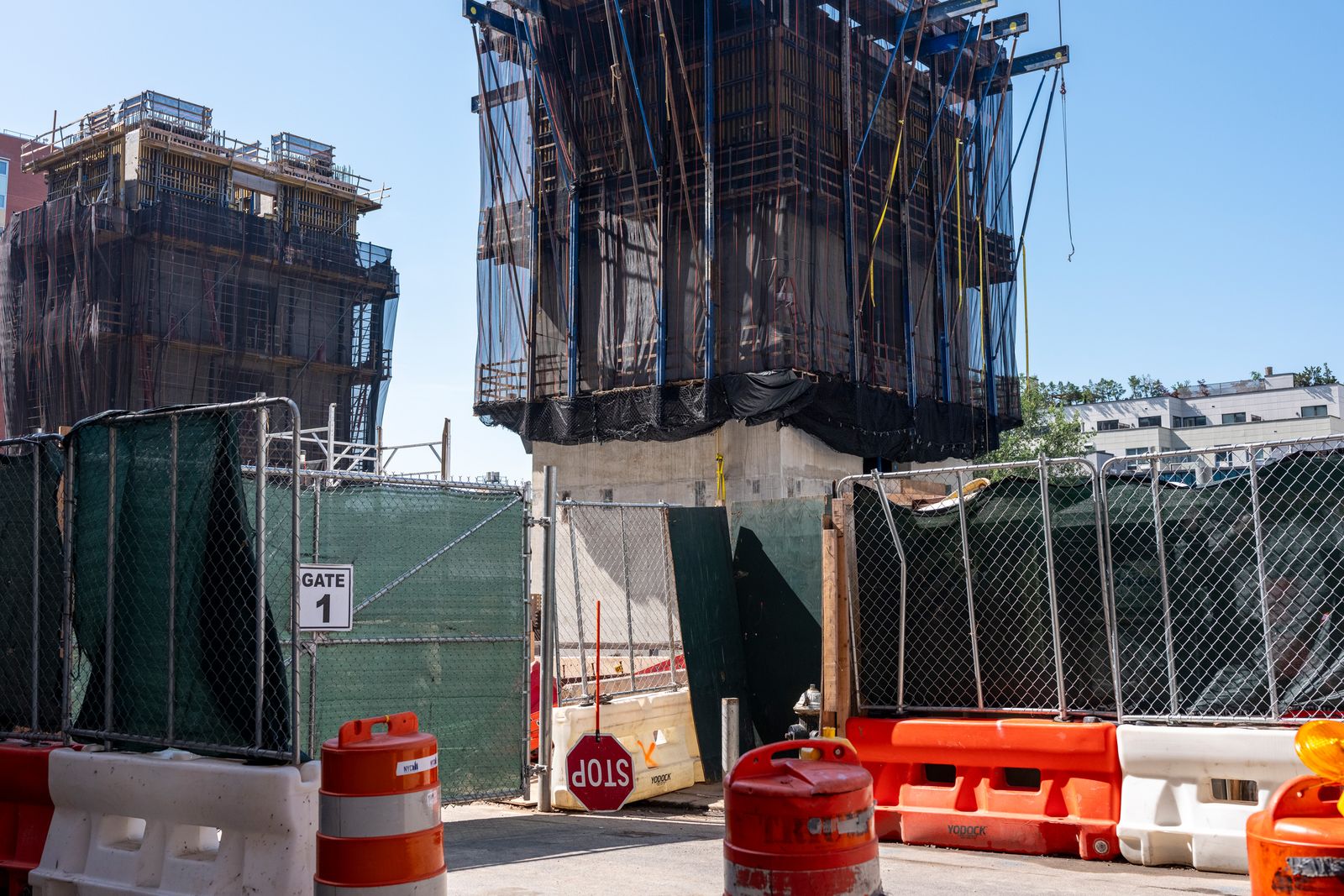
The BBJ plan has faced significant hurdles, including substantial delays and ballooning costs. As of January 2026, only the Brooklyn facility is under construction, slated for completion in 2029—two years after the mandated August 2027 deadline for Rikers’ closure. The other three borough jails may not be completed until 2032. Original cost projections from 2019, initially around $8 billion, have nearly doubled to an estimated $16 billion. Furthermore, the city has already increased the proposed number of jail beds across the four facilities from an initial 3,545 to 4,160 and has reportedly reneged on certain allotted outdoor spaces, raising concerns among advocates about the long-term commitment to decarceration.

Diana Zúñiga, a California-based community organizer and policy advocate, highlights the historical pattern of "boutique facility approaches" in the prison system, which often fail to deliver on promises of improved conditions. Having visited carceral facilities since childhood, Zúñiga deeply understands the gravity of jail conditions and the profound sense of isolation and dehumanization experienced by both incarcerated individuals and their loved ones. Her prior work with Californians United for a Responsible Budget (CURB) and Reimagine LA led to the successful halting of Los Angeles County’s $3.5 billion jail expansion in 2019. She also co-developed the county’s Alternatives to Incarceration Workgroup report, which provides over 100 recommendations for public safety that do not rely on carceral facilities or police. "I don’t want our people in those conditions. I just know there’s a better way, that this system of throwing away and isolating our people is not the route," Zúñiga states.
A Call for Collective Buy-In and Radical Reimagination
The ongoing debate in New York City reflects a broader national reckoning with the efficacy and ethics of mass incarceration. Advocates for abolition, like those at The Fortune Society, Common Justice, and HOLLA, demonstrate that community-based services and diversion programs can achieve public safety at a fraction of the cost of building new jails. These programs, which often liaise with city courts to enroll individuals in ATIs and restorative justice initiatives instead of sentencing them to incarceration, simply require a collective buy-in—from real estate developers and architects to political leaders and neighbors, alongside significantly larger support from the judicial system.
Deanna Van Buren emphasizes the difficulty of innovation in a space "so entrenched in terror." She champions radical alternatives, such as mobile infrastructure, pop-up trials, and temporary pilot programs that design responses to harm without requiring separation from family and the outdoors, constant surveillance, and rigid control over movement. "The jails aren’t built yet, right?" she asks, underscoring a crucial point. "So it’s not too late. It’s never too late to change strategy and change tactics." The decision New York City faces is not just about replacing one infamous jail complex with another, but about whether to continue investing in a system of punishment or to boldly reimagine public safety through genuine community-centered care and restorative justice.