 admin
admin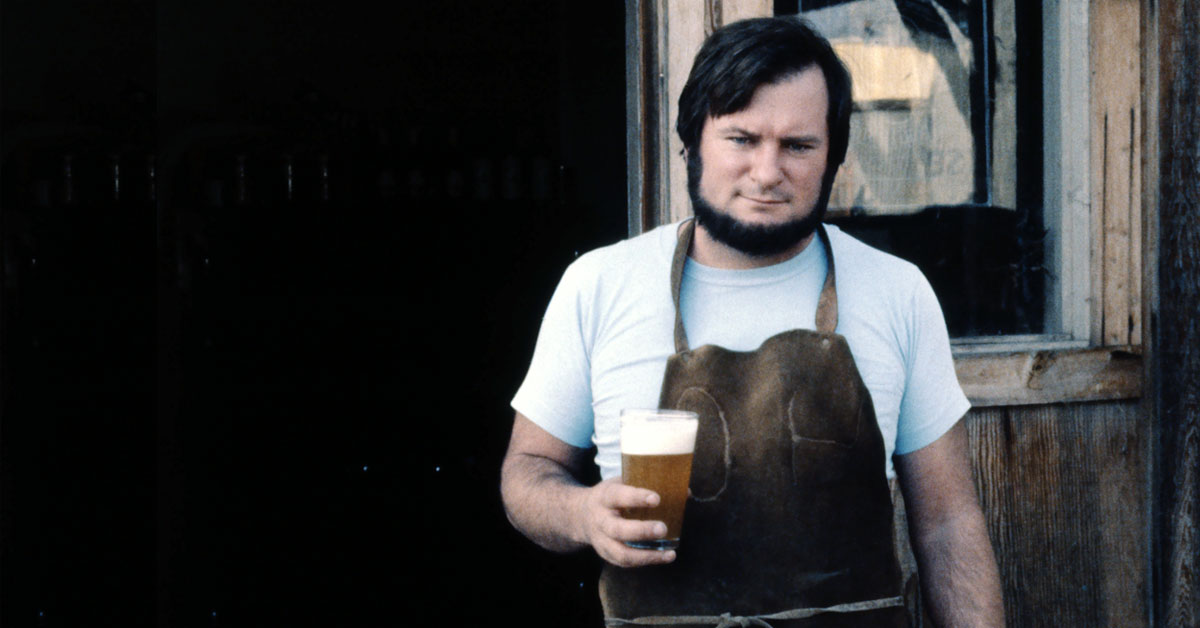
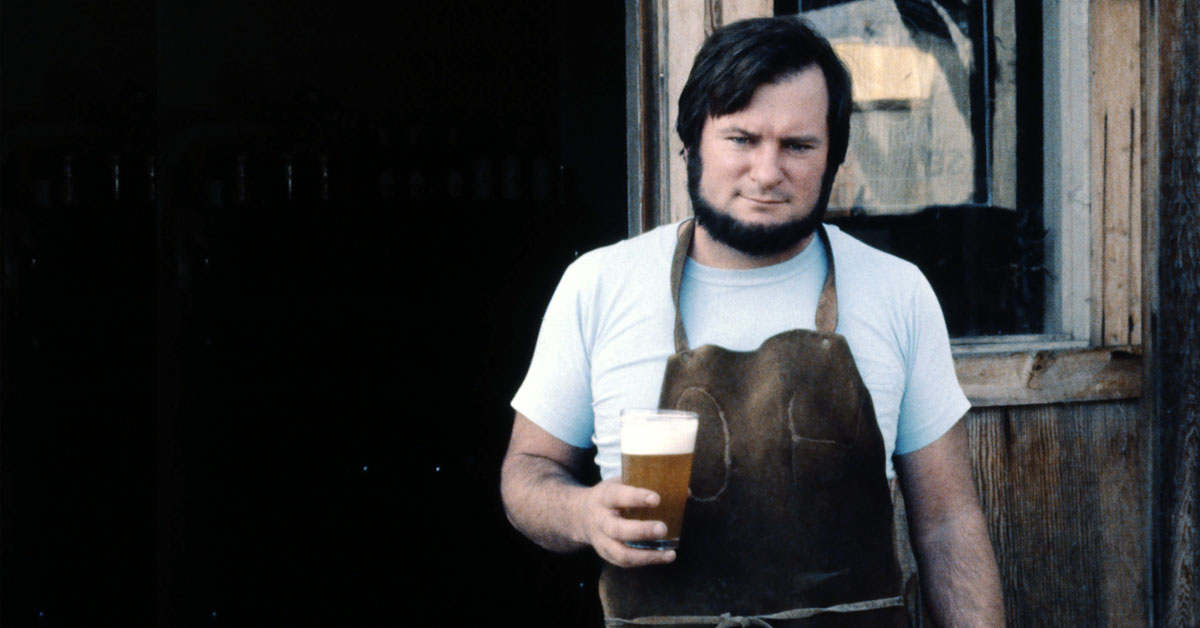
The death of Jack McAuliffe in July at the age of 80 marks the end of an era for the American beverage industry, signaling the loss of a man whose vision fundamentally restructured the global beer landscape. McAuliffe, a Navy veteran and self-taught engineer, is widely credited with launching the first modern microbrewery in the United States, New Albion Brewing Company, in 1976. While the venture lasted only six years, its influence reverberates through the nearly 10,000 craft breweries operating across the country today. McAuliffe’s journey from a curious sailor in Scotland to a revolutionary brewer in Sonoma, California, serves as the foundational narrative for the $28 billion U.S. craft beer industry.
The Post-Prohibition Vacuum and the Industrial Monopoly
To understand the magnitude of McAuliffe’s contribution, one must look at the state of American brewing in the mid-20th century. Following the repeal of Prohibition in 1933, the American beer market underwent a period of intense consolidation. Small, local breweries that had once populated every major city were systematically shuttered or acquired by larger conglomerates. By the 1970s, the market was dominated by a handful of industrial giants producing a singular style: the light, highly carbonated adjunct lager.
In 1976, the year New Albion was founded, there were fewer than 50 brewing companies operating in the entire United States. Most of these were large-scale industrial plants focused on efficiency and mass distribution rather than flavor complexity or traditional brewing methods. For the average American consumer, "beer" was a monolithic product. The concept of a "microbrewery"—a small-scale facility producing traditional, full-flavored ales—was not just rare; it was non-existent in the commercial sphere.
The Scottish Inspiration and the Birth of New Albion
McAuliffe’s path to industry disruption began in the 1960s while he was stationed at a U.S. Navy submarine base in Dunoon, Scotland. It was there that he was introduced to the rich, diverse world of British ales. Unlike the thin lagers of his home country, these beers—stouts, porters, and pale ales—offered a depth of malt and hop character that captivated him. Upon his return to California, McAuliffe found himself unable to find anything resembling the beers he had enjoyed abroad.
This dissatisfaction led him to homebrewing, a hobby that was technically illegal at the federal level until 1978. McAuliffe, however, was undeterred by legal ambiguity or the lack of commercial precedents. He envisioned a brewery that would replicate the small-scale, quality-focused operations he had seen in the United Kingdom. In 1976, alongside partners Jane Zimmerman and Suzy Stern, McAuliffe pooled approximately $5,000 to launch New Albion Brewing Company in Sonoma, California.
The brewery was a masterclass in DIY engineering. Because commercial brewing equipment for small-scale operations did not exist, McAuliffe was forced to improvise. He repurposed stainless steel dairy equipment and 55-gallon Coca-Cola syrup drums to create his brewing system. This resourceful "maker" ethos would eventually become a hallmark of the craft beer movement, which has long relied on the adaptive reuse of industrial tools and spaces.
A Chronology of the Craft Beer Revolution
The timeline of New Albion’s operation is brief but packed with historical significance:
- 1976: New Albion Brewing Company opens in a rented warehouse in Sonoma, California. It is the first new brewery to open in the U.S. since Prohibition that was not owned by a major conglomerate.
- 1977-1979: The brewery gains a cult following. McAuliffe produces three primary styles: a Pale Ale, a Porter, and a Stout. These beers are significantly more bitter and darker than anything available on the mass market.
- 1978: President Jimmy Carter signs H.R. 1337, which federally legalizes homebrewing for personal use. This legislation, fueled in part by the interest generated by pioneers like McAuliffe, creates a pipeline for future professional brewers.
- 1980: Ken Grossman, who would later found Sierra Nevada Brewing Company, visits New Albion. He observes McAuliffe’s equipment and methods, using them as a blueprint for his own facility in Chico, California.
- 1982: Despite its cultural impact, New Albion faces insurmountable financial hurdles and a lack of distribution infrastructure. The brewery ceases operations.
- 1983: The equipment from New Albion is purchased by the founders of the Hopland Brewery (later Mendocino Brewing Company), which becomes California’s first brewpub.
- 2012: Jim Koch and Boston Beer Company partner with McAuliffe to re-release New Albion Ale for a limited run, introducing his original recipe to a new generation of drinkers.
The Ingredient Revolution: The Rise of the Cascade Hop
One of McAuliffe’s most enduring contributions to the American palate was his early adoption of the Cascade hop. Developed by the USDA-funded breeding program at Oregon State University and released in 1972, the Cascade hop was largely rejected by major industrial brewers. Its distinct aromatic profile—characterized by notes of grapefruit, pine, and floral citrus—was considered too aggressive for the bland lagers of the time.
McAuliffe, however, saw the Cascade hop as the key to creating a uniquely American version of the British Pale Ale. By featuring Cascade hops prominently in his New Albion Pale Ale, he set the stage for the "hop-forward" revolution. This decision directly influenced Ken Grossman, who made the Cascade hop the centerpiece of Sierra Nevada Pale Ale in 1980. Today, the Cascade hop remains one of the most widely planted hop varieties in the world and is the defining characteristic of the American Pale Ale (APA) and India Pale Ale (IPA) styles.
Industry Reactions and Tributes
The impact of McAuliffe’s work is perhaps best articulated by those who followed in his footsteps. Jim Koch, the founder of Boston Beer Company and a central figure in the second wave of craft brewing, noted that McAuliffe was the "proof of concept" the industry needed.
"Jack was truly an American original," Koch stated. "Before him, starting a brewery from scratch was thought impossible. After him, 10,000 people have done it."
Ken Grossman, whose Sierra Nevada Brewing Company is now one of the largest craft breweries in the world, credited McAuliffe with showing the transition from hobbyist to professional. Grossman’s visit to New Albion provided the technical inspiration needed to build Sierra Nevada’s original brewhouse out of recycled dairy parts, much like McAuliffe had done.
Maureen Ogle, a prominent beer historian and author of Ambitious Brew, described McAuliffe as a brilliant but idiosyncratic figure. "He did not suffer fools gladly," Ogle recalled. "He was intelligent, had a wicked ability to build anything, and was mostly bored by people. But he was a joy to know because he was so authentically himself."
Economic and Cultural Implications
The closure of New Albion in 1982 was not a failure of vision, but rather a reflection of the hostile economic environment for small businesses at the time. In the early 1980s, the three-tier system of alcohol distribution—consisting of producers, wholesalers, and retailers—was heavily weighted in favor of large-scale producers. Small breweries struggled to find wholesalers willing to carry low-volume, niche products.
However, the "New Albion Model" proved that there was a market for high-quality, flavorful beer. This realization led to the rise of the brewpub model in the mid-1980s, where breweries could sell beer directly to consumers on-site, bypassing the difficulties of traditional distribution.
Today, the craft brewing industry is a significant driver of the U.S. economy. According to data from the Brewers Association:
- As of 2023, there are over 9,700 craft breweries in the U.S.
- The craft brewing industry contributed $72.2 billion to the U.S. economy in 2022.
- The industry provides more than 460,000 total jobs, including 189,000 jobs directly at breweries and brewpubs.
- Craft beer accounts for roughly 13% of the total beer market by volume and nearly 25% by dollar value, reflecting the premium consumers are willing to pay for diverse flavors.
The Enduring Legacy of the DIY Spirit
McAuliffe’s legacy extends beyond the liquid in the glass. He established the "adaptive reuse" ethos that remains a cornerstone of craft brewing culture. By converting an old warehouse into a brewery, he showed that craft beer could revitalize post-industrial spaces. Today, breweries are frequently the first businesses to move into neglected urban neighborhoods, acting as anchors for economic redevelopment in former factories, banks, and schools.
Furthermore, McAuliffe’s willingness to share his knowledge with future competitors like Ken Grossman established a culture of collaboration that is unique to the craft beer industry. Unlike the cutthroat competition seen in the industrial lager era, craft brewers often share yeast strains, technical advice, and even equipment, maintaining a "rising tide lifts all boats" philosophy.
In the final analysis, Jack McAuliffe was more than a brewer; he was a disruptor who challenged the status quo of American consumerism. He proved that a single individual with a mechanical mind and a refined palate could dismantle a corporate monopoly. As modern consumers enjoy the vast array of IPAs, stouts, and sours available at their local taprooms, they are participating in a movement that began with a few thousand dollars and some repurposed soda syrup drums in a drafty Sonoma warehouse. McAuliffe’s roadmap turned a basement passion into a global profession, forever changing the way the world thinks about beer.