 admin
admin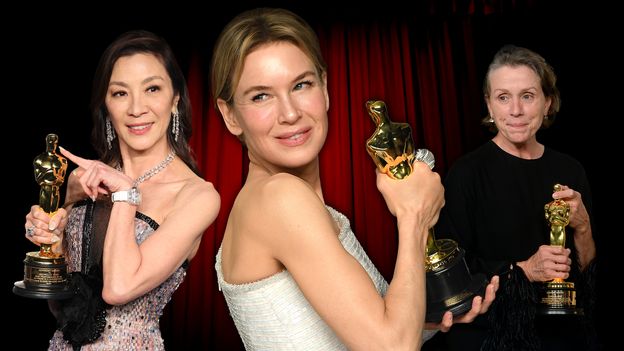
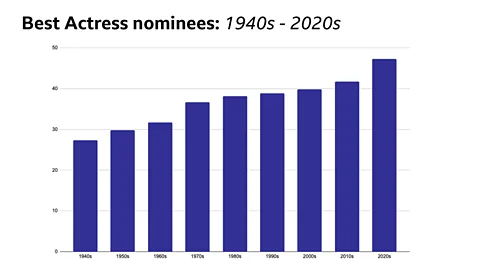
For decades, the unofficial expiration date for a Hollywood actress was widely understood to be her 30th birthday, a cultural norm that dictated the types of stories told on the silver screen and the careers of the women who told them. However, recent research and award season trends suggest that the "prestige" sector of the film industry is undergoing a significant demographic transformation. According to comprehensive research conducted by the BBC, the average age of Best Actress nominees at the Academy Awards has seen a consistent, decade-by-decade increase, signaling a departure from the youth-obsessed standards of the mid-20th century. In the 1940s, the average age of a Best Actress nominee was just 27; by the 1970s, it had risen to 37; and by the 2000s, it reached 40. As the industry moves through the 2020s, the average age has climbed to 47, reflecting a broader acceptance of mature female narratives in high-art cinema.
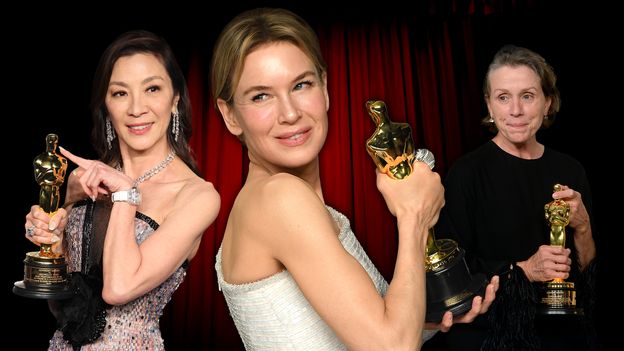
This statistical shift is supported by a string of recent victories and nominations for veteran performers. Michelle Yeoh’s historic win at age 60 for Everything Everywhere All at Once serves as a cornerstone of this new era, but she is far from an isolated case. Recent winners include Renée Zellweger, who won at 50 for Judy; Frances McDormand, who secured her third Best Actress trophy at 63 for Nomadland; and Jessica Chastain, who won at 45 for The Eyes of Tammy Faye. The current landscape of nominees further emphasizes this trend, featuring powerhouse performances from Annette Bening (65), Brazil’s Fernanda Torres (59), and Demi Moore (62). While outliers exist—such as 25-year-old Mikey Madison’s recent win for the screwball comedy Anora—the overarching trajectory of the Academy suggests that "prestige" is increasingly synonymous with "experience."
The Historical Context of the "Star Machine"
To understand the weight of this shift, one must look back at the rigid structures of the Golden Age of Hollywood. In her 2007 seminal work The Star Machine, film historian Professor Jeanine Basinger described an industry that viewed glamorous women as "fragile products." During the 1930s and 40s, the studio system functioned as a high-output factory where youth was the primary currency. Basinger noted that the camera was a "cruel observer" that prioritized the unlined faces of ingénues. In that era, a female star who could maintain her status for a decade was considered a success; those who lasted two decades were phenomenal; and anyone who surpassed that mark was deemed a "miracle" or a "legend."
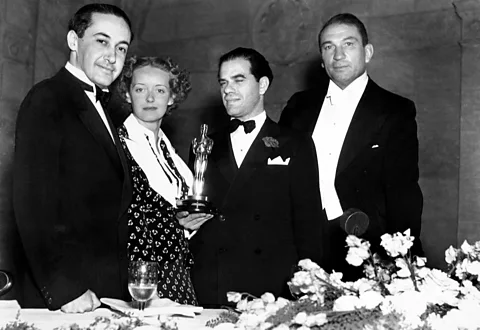
The icons of that period, such as Bette Davis, Ingrid Bergman, and Vivien Leigh, all secured their Best Actress trophies while in their 20s. Bette Davis, for instance, won her first Oscar for Dangerous (1935) at age 27. The rare exception to this rule was Katharine Hepburn, who remains the record holder for the most Best Actress wins. Hepburn’s career trajectory was an anomaly; she won three of her four Oscars after the age of 60, proving that while the "miracle" was possible, it was not the standard. For the vast majority of women in the 20th-century film industry, aging meant a swift transition into supporting "mother" roles or a total disappearance from the screen.
Drivers of the Demographic Shift
Several systemic factors have contributed to the rising age of Oscar nominees. Dr. Stacy L. Smith, founder of the USC Annenberg Inclusion Initiative, notes that the definition of a "prestige" film has evolved. "When we started this work in 2007, I would always joke that you had to be named Judi [Dench], Maggie [Smith], or Meryl [Streep] to work as an older woman in Hollywood," Smith told the BBC. "I just don’t think that that’s the case anymore." She attributes this to a greater range of roles in art-house driven content where the focus is on the "craft of an actor" rather than the commercial appeal of youth.
The rise of the female writer-director is perhaps the most critical catalyst for this change. Elizabeth Kaiden, co-founder of The Writers Lab, points out that veteran actresses are now having films specifically "built for them." This shift is evident in the work of directors like Chloé Zhao, whose film Nomadland was a vehicle for Frances McDormand, and Justine Triet, whose Anatomy of a Fall featured a complex, career-defining performance by 45-year-old Sandra Hüller. In 2025, Coralie Fargeat’s The Substance provided Demi Moore with a leading role that directly interrogated the horrors of ageism, earning her critical acclaim at 62.
Furthermore, the diversification of the Academy’s voting body has played a role. Following the #OscarsSoWhite and #MeToo movements, the Academy expanded its membership to include more international voters. This globalization has brought in perspectives from cultures that may not share the same "pro-youth bias" prevalent in the United States. Recent nominations for Fernanda Torres in the Brazilian drama I’m Still Here and trans actress Karla Sofía Gascón (52) in Emilia Pérez highlight how world cinema often celebrates mature female leads with greater frequency than domestic blockbusters.
The Disconnect Between Prestige and Pop Culture
Despite the progress seen on the Oscar stage, a significant gap remains between "awards-worthy" films and the broader commercial industry. Data provided by the USC Annenberg Inclusion Initiative reveals a stark contrast: while the average age of Best Actress nominees is nearing 50, the average age of a female lead in Hollywood’s top 100 highest-grossing films was just 34 in 2025. In comparison, the average age for male leads in those same films was 42. Since the study began in 2007, the average age for women in commercial leads has never exceeded 36.
This discrepancy highlights a persistent double standard. In 2015, actress Maggie Gyllenhaal famously went public with the revelation that, at age 37, she was told she was "too old" to play the romantic interest of a 55-year-old male actor. This sentiment is echoed in recent casting data. In 2025, out of Hollywood’s top 100 films, only four featured women aged 45 or older as leads or co-leads. Notably, one of those was a voice-acting role (Ginnifer Goodwin in Zootopia 2), and none of them were women of color. Conversely, 31 men in the same age bracket—including stars like Pedro Pascal, Tom Cruise, and Anthony Mackie—were cast as leads in major commercial projects.
Dr. Stacy L. Smith characterizes this as blatant discrimination. "You can’t tell me that over this age on screen, there aren’t qualified female actors able to do protagonist roles," she stated. The reality is that older women are often relegated to a "finite group" that receives opportunities only within the bubble of prestige cinema, while the lucrative world of big-budget franchises remains largely closed to them.
The Invisible Generation: Women Over 60
The statistics become even more dire for women over the age of 60. A report titled It’s a Man’s (Celluloid) World by the Center for the Study of Women in Television and Film found that in 2025, only 2% of major female characters in top-grossing films were over 60. While male characters also face a decline in roles as they age, men over 60 still accounted for 8% of major roles—four times the representation of their female counterparts.
Dr. Martha Lauzen, the author of the report, warns that the visibility of women like Frances McDormand or Demi Moore at the Oscars can create a false sense of security. "When the public see these women nominated, many of them assume that ageism in the business is a thing of the past," Lauzen noted. "But for older women on screen, their numbers begin to plummet in their late 30s and early 40s… By the time they reach their 60s, they become virtually invisible." This invisibility is why films featuring older female protagonists, such as Jamie Lee Curtis in Freakier Friday or Amy Madigan in Weapons, tend to capture so much media attention—they are the exceptions that prove the rule.
Future Implications and the Role of Screenwriters
The future of age diversity in Hollywood may ultimately rest in the hands of screenwriters. Nitza Wilon, co-founder of The Writers Lab, emphasizes that the industry’s "spectacle" at the Oscars does not always reflect the reality of the labor market. Data from 2025 shows that out of 511 U.S. feature films, only 12% were written by women over the age of 40. Without a pipeline of scripts that center on the lived experiences of mature women, the current "graying" of the Best Actress category may remain a high-end trend rather than a fundamental shift in the industry.
As the Academy continues to prioritize "artsy, art-house driven content" that values the craft of acting over the fleeting allure of youth, the Best Actress category will likely continue to skew older. However, for this change to permeate the rest of Hollywood, there must be a concerted effort to dismantle the age-based double standards in commercial casting and to support the female writers and directors who are currently the primary architects of these mature narratives. For now, the Oscars serve as a hopeful, if somewhat isolated, beacon of progress in an industry that is still learning how to value the "miracle" of a long-term female career.