 admin
admin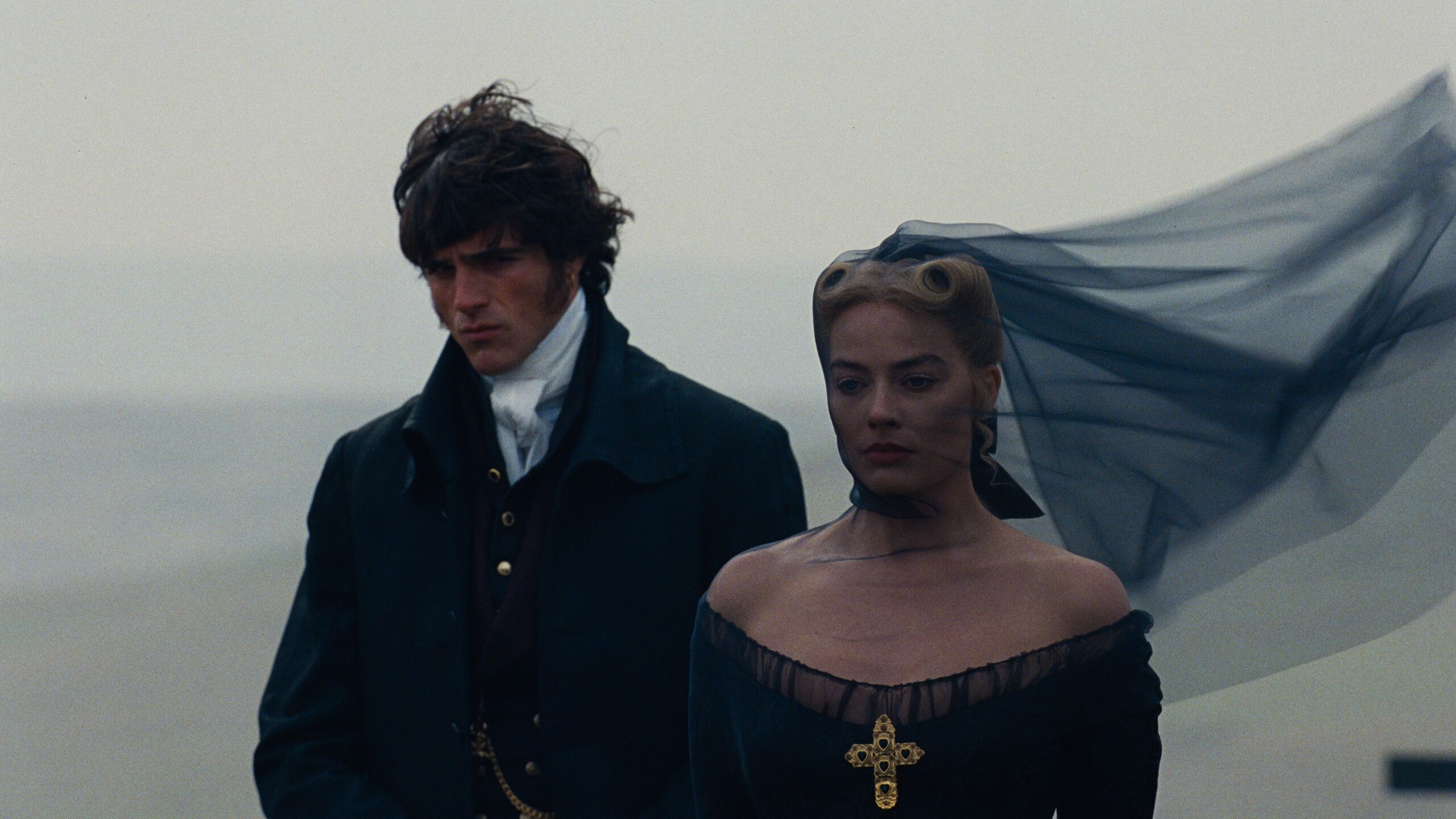
Emily Brontë’s Wuthering Heights, a novel that scandalized Victorian society with its raw depiction of passion, revenge, and the untamed spirit, continues to captivate and provoke nearly two centuries after its initial publication. First released in 1847 under the androgynous pseudonym Ellis Bell, a strategic choice to circumvent the societal biases against female authors seeking serious literary recognition, the novel’s unvarnished portrayal of human savagery and depravity stunned critics on both sides of the Atlantic. The tale’s dark, brooding atmosphere and morally ambiguous characters pushed the boundaries of what was considered acceptable in literature, leaving an indelible mark on the literary landscape.
Over the decades, Wuthering Heights has seen numerous adaptations, each attempting to capture the novel’s potent emotional core. Among the most iconic is William Wyler’s 1939 film, starring Laurence Olivier and Merle Oberon, which garnered eight nominations at the 1940 Academy Awards. More recent cinematic interpretations include Andrea Arnold’s stark 2011 rendition featuring Kaya Scodelario, and Bryan Ferriter’s 2022 take, demonstrating the enduring appeal and adaptability of Brontë’s narrative.

The latest highly anticipated cinematic reimagining, slated for a Valentine’s Day 2026 release, is director Emerald Fennell’s ambitious vision, featuring Hollywood stars Margot Robbie as Catherine Earnshaw and Jacob Elordi as Heathcliff. Fennell, known for her distinctive directorial style in films like Promising Young Woman and Saltburn, revealed at the Brontë Women’s Writing Festival in September 2025 that Brontë’s seminal work profoundly impacted her at the age of 14, describing the novel as having "cracked [her] open." She candidly acknowledged the inherent challenge and "extreme masochism" involved in adapting a work that resonates so deeply, highlighting the book’s "enormous amount of sadomasochism" as a key reason for its initial shock value.
Fennell preemptively addressed potential criticism regarding her unconventional approach, stating, "I can’t make something for everyone." Early critical reception appears to bifurcate precisely along these lines. Upon the lifting of the review embargo a week before the film’s February 2026 premiere, the cinematic world witnessed a polarized response, with a wave of five-star accolades juxtaposed with a scattering of one-star critiques. This divergence leaves audiences with a sense of anticipation and uncertainty about the film’s ultimate impact. Warner Bros. Pictures has strategically positioned the film as "Emerald Fennell’s take on a classic," a marketing approach that acknowledges significant departures from the source material and previous adaptations. Notably, several characters central to the original novel and earlier screen versions have been omitted, while the film embraces contemporary elements such as red latex attire, unconventional outdoor romantic gestures, and an avant-garde soundtrack by acclaimed artist Charli XCX.
The Cinematic Landscape and its Influence on Travel Trends
In an era where digital experiences increasingly shape real-world travel aspirations, the allure of cinematic worlds is undeniable. The upcoming Wuthering Heights film, with its dramatic landscapes and intense character portrayals, is already proving to be a significant catalyst for travel interest, particularly in the rugged beauty of Yorkshire. Despite the inherently bleak and often tragic narrative of Heathcliff and Catherine’s story, the film’s aesthetic and thematic resonance are driving a surge in bookings and searches for getaways inspired by its setting.

Airbnb reported a notable increase in interest surrounding the film’s promotional efforts. Searches for "West Yorkshire Valentine’s getaways" saw a significant spike, with a 67% increase among UK Gen Z travelers and a 59% rise globally. This data underscores the potent connection between popular culture and consumer travel behavior, demonstrating how even a story of tormented love and desolate moors can inspire romantic escapades. Yorkshire, with its windswept landscapes and dramatic vistas, is emerging as a prime destination for travelers seeking an immersive experience that echoes the film’s atmosphere.
Unveiling the Filming Locations: A Journey Through Yorkshire’s Wild Heart
The question of where the latest cinematic rendition of Wuthering Heights was filmed has ignited considerable interest, drawing attention to the stark and dramatic landscapes of the Yorkshire Dales National Park. The production team strategically selected locations that not only provide a breathtaking natural backdrop but also carry historical resonance, echoing the novel’s original setting. From the ancient lead mining remains in Swaledale to the sweeping expanses of Arkengarthdale and the stately charm of country houses, these sites have been transformed into the visual tapestry of Fennell’s provocative interpretation.
Old Gang Lead Mines, Swaledale, Yorkshire Dales National Park: A Haunting Industrial Heritage
Early glimpses of the film reveal a horse-drawn carriage navigating a narrow valley, its path marked by a curving bridleway and the skeletal remains of 19th-century lead mining structures, including a prominent chimney. In other scenes, stars Margot Robbie and Jacob Elordi are depicted traversing misty landscapes, their figures dwarfed by the dramatic scenery. These atmospheric ruins are the remnants of Yorkshire’s once-thriving lead mining industry, specifically the Old Gang Smelt Mill site.

Sarah Whiteley, Senior Historic Environment Officer at the Yorkshire Dales National Park, played a crucial role in facilitating the production’s access to this protected heritage site. She oversaw the careful integration of film elements, ensuring minimal impact on the archaeological remains. "The locations team wanted to put an installation of a sort of cliff face type prop," Whiteley explained, "so we decided which was the least damaging place to put that."
Prior to the cast’s arrival, the site was temporarily closed to the public. The crew worked meticulously to enhance the already evocative atmosphere, constructing and painting props and incorporating additional vegetation to create an otherworldly film set. Over ten days of filming, often conducted in the early morning mist, actors including Robbie, Elordi, and the young performers portraying adolescent Cathy and Heathcliff, Owen Cooper and Charlotte Mellington, immersed themselves in the archaeological ruins. "There were some fantastic costumes," Whiteley recalled, "absolutely beautiful. [The production crew] used dry ice quite a lot to get a foggy kind of look. There was just this fantastic atmosphere of everybody working towards a common goal."
Park authorities strongly advise visitors to the Old Gang site to respect its historical integrity by refraining from touching the ruins or removing any artifacts. Furthermore, reaching this remote location requires careful planning. Mark Sadler, the National Park’s communications manager, cautions that "there is no public transit or car park" directly at the site, necessitating a mile-long walk to access it. This requires a degree of preparedness for those wishing to follow in the footsteps of the film crew.

Bouldershaw Lane, Swaledale, Yorkshire Dales National Park: Echoes of a Fateful Wedding Day
Scenes featuring Margot Robbie, adorned in a billowing white wedding veil and gown and carrying a bouquet, trudging through a wide field, were filmed near Bouldershaw Lane in Swaledale. This location, situated not far from the Old Gang site, offers expansive views as a road ascends towards Langthwaite village and the surrounding moorland.
According to Sadler, this particular scene was captured in a field on the right-hand side of the road, approximately a mile from the main access point. An old farm building within the private field also served as a filming backdrop. While the field itself is inaccessible to the public, its contents are visible from the road. Visitors undertaking the five-and-a-half-mile circular walk from Surrender Bridge, which traverses Old Gang and circles Reeth High Moor, will pass by this filming location.
Melbecks Moor, Swaledale, Yorkshire Dales National Park: Vast, Remote, and Historically Rich
Several released film stills and clips depict Robbie and Elordi, as well as their younger counterparts, wandering across the expansive moors or pausing to survey the panoramic vistas of the dales. Melbecks Moor, a highly remote and exposed high moor in upper Swaledale, is identified as another significant filming location. This area, renowned for hosting Britain’s highest pub, the Tan Hill Inn, is steeped in history, featuring remnants of ancient lead mining activities, including disused buildings, old trackways, and spoil heaps.

Sadler confirmed that additional filming took place on Melbecks Moor, though the precise scenes shot there remain unspecified. He noted that some building ruins on the moor were utilized, and that props and special effects were employed to enhance the landscape. "In some of these locations, props were brought in, special effects were added to fill the landscape out," Sadler elaborated. "If you go there now, it’s pretty much open moorland with a more than five-mile walk to get to the area."
The unpredictable weather of the Yorkshire Dales, where "you can have four seasons in one day at any time of the year," adds to the dramatic and untamed quality of these locations. As the land is privately owned, visitors are urged to exercise care and respect for the environment and the local communities. The lengthy treks required to reach these remote moorland areas emphasize the isolation and wildness that are so central to the narrative of Wuthering Heights.
Booze Moor, Arkengarthdale, Yorkshire Dales National Park: A Scenic Gateway
Arkengarthdale, the northernmost of the Yorkshire Dales, served as another key filming area. The production crew established a base in Langthwaite, a village nestled within the dale and home to the historic Red Lion Inn. This traditional pub, a familiar backdrop in numerous films and television series, provided convenient access to a bridleway leading across Booze Moor. This route opens onto expansive moorland dotted with further evidence of ancient mining operations, where additional scenes for the film were shot. The specific scenes filmed on Booze Moor have not been publicly detailed.

Simonstone Hall, Hawes, Yorkshire Dales: A Luxury Base for Cinematic Creation
For approximately two and a half weeks during the principal photography period, Simonstone Hall, a distinguished country house hotel in Hawes, became the operational hub for Fennell, her cast, and crew. The entire 20 rooms of the hotel were reserved, providing a comfortable and well-appointed base for the production.
Jake Dinsdale, the owner of Simonstone Hall, reported that lead actors Margot Robbie and Jacob Elordi occupied premium rooms, with Elordi opting for a dog-friendly suite. During the day, cast and crew utilized the hotel’s facilities for script rehearsals and post-production interviews. Dinsdale highlighted the proximity of the filming location to the hotel, stating, "The [filming] location is very, very close to Simonstone Hall."
To capitalize on the film’s release and its connection to the region, Simonstone Hall is set to offer Wuthering Heights-themed stays during February and March 2026. These packages are designed to allow guests to experience the same atmosphere and amenities that the cast and crew enjoyed. Dinsdale elaborated on the guest experience: "They had afternoon tea. They had some great meals together, a Sunday roast. We did some walks with them, and they enjoyed the outdoor fire pits on our terrace late into the night, chatting and laughing. We have some resident pigs, chickens, and peacocks. They really enjoyed those and having a flavor of the countryside. I think that the packages we put together with candlelit dinners, cosy nights, gorgeous views, nice interiors, and open fires aim to offer that same experience." This initiative demonstrates a proactive approach by local businesses to leverage the cultural impact of major film productions, creating unique tourism opportunities.

Broader Implications and the Enduring Power of Wuthering Heights
The choice of Yorkshire Dales as the primary filming location for Emerald Fennell’s Wuthering Heights is a testament to the enduring power of landscape in storytelling. The rugged, untamed beauty of the moors and the historical layers of industrial heritage provide a natural canvas that perfectly complements the novel’s themes of wild passion, social isolation, and the destructive forces of nature and human emotion.
The film’s polarized reception and its unconventional artistic choices suggest a deliberate departure from traditional adaptations, aiming to provoke a new generation of viewers and readers. By embracing a more avant-garde and contemporary sensibility, Fennell is not merely retelling a story but reinterpreting its core emotional truths for a modern audience. The integration of elements like Charli XCX’s music and the suggestive visual motifs indicate a desire to explore the primal, visceral aspects of the novel that may have been muted in previous adaptations.
The surge in travel interest to West Yorkshire, particularly for Valentine’s getaways, highlights the symbiotic relationship between cinema and tourism. This trend suggests that even narratives centered on profound human suffering and despair can inspire a desire for immersive experiences, offering a tangible connection to the emotional landscapes portrayed on screen. The success of such adaptations often hinges on their ability to translate the psychological depth of the source material into compelling visual narratives, thereby igniting imaginations and inspiring journeys to the very places that shaped the original story. As audiences prepare to engage with Fennell’s vision, the enduring legacy of Emily Brontë’s masterpiece continues to resonate, proving that its exploration of the human heart remains as potent and relevant as ever.