 admin
admin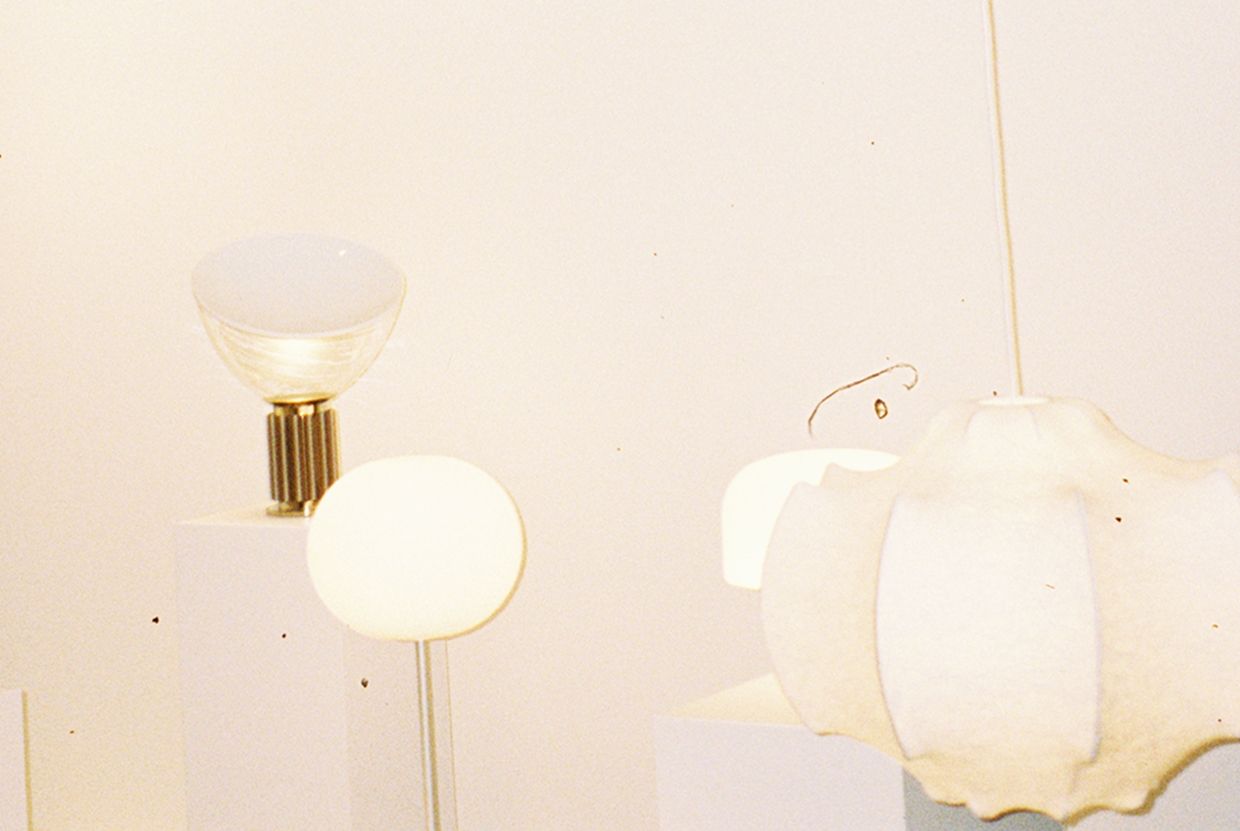
The opulent chrome-clad dinner in Stockholm, held earlier this month to commemorate the centenary of the late Danish design icon Verner Panton, was more than a tribute; it was a crucible for a simmering existential debate within the global design community. Erik Rimmer, the esteemed editor of Bo Bedre, widely regarded as the unofficial bible of Nordic design, provocatively challenged a panel of industry stalwarts. Surrounded by the shimmering reflections of Panton’s Panthella lamps and Pantonova seating, a mischievous glint in his eye, Rimmer cast a deliberate hook: "I’ve covered a lot of Scandinavian design in my career," he declared, "and I must say, it can be quite boring." His question hung in the air, a direct query to the custodians of a long-dominant aesthetic: what did they think of that?
The Nordic Design Hegemony and Its Discontents
Scandinavian design, characterized by its sleek lines, functional minimalism, natural materials, and the intangible comfort of hygge, has enjoyed an unparalleled reign over global interiors for decades. Its ascent to mainstream ubiquity peaked in the late 2010s, becoming synonymous with modern sophistication and understated elegance. This pervasive influence was evident even in publishing trends; Dwell magazine, for instance, featured the word "Scandinavian" in no fewer than 50 headlines describing homes during that period. However, a noticeable shift has occurred since 2020, with a significant reduction in such features, signaling a potential ebb in its stylistic dominance.
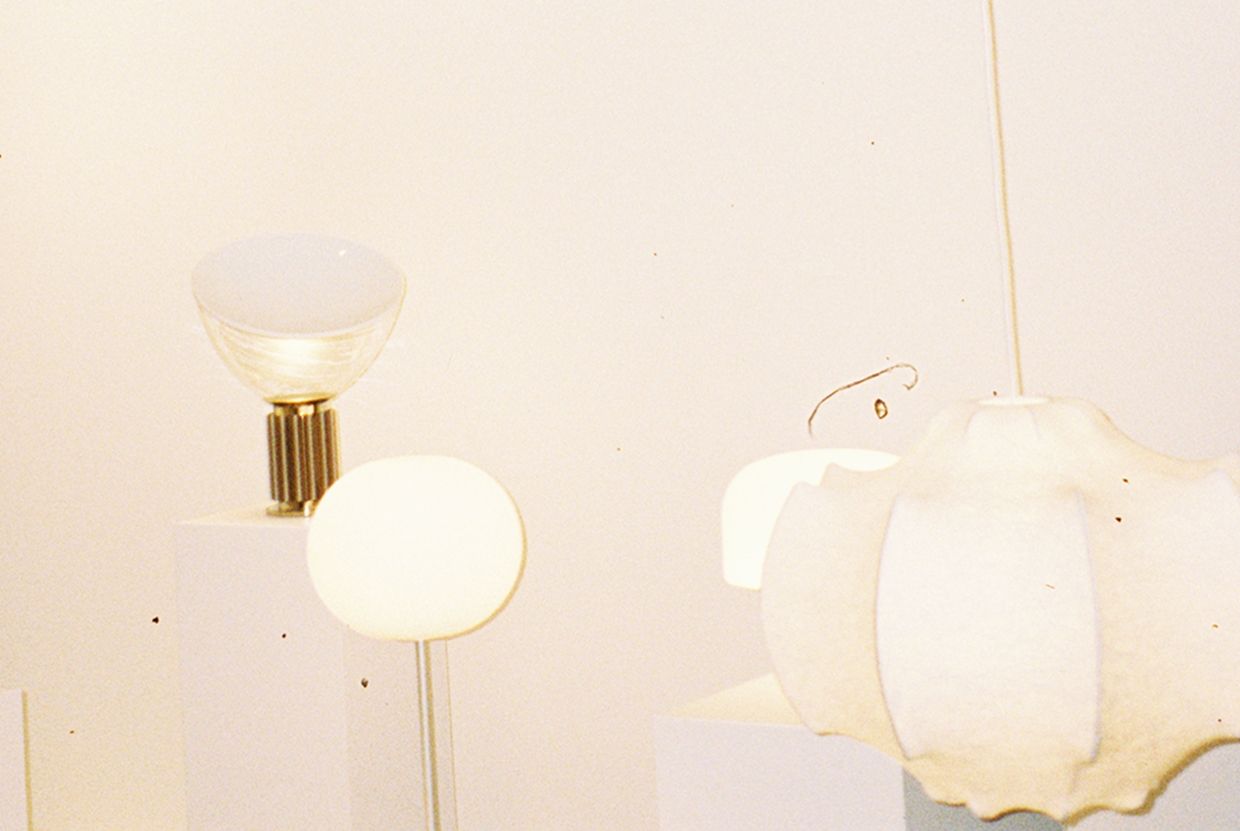
The provocative question at the Panton dinner in Stockholm, part of the broader Stockholm Design Week events, encapsulated a growing anxiety within the design world. The once-unquestionable luster of Scandinavian aesthetics, and its now-clichéd descriptors – sleek, minimalist, clean-lined, natural, hygge, and above all, timeless – began to show hairline fractures. A chorus of influencers, critics, and designers consulted by Dwell at the outset of the year unequivocally expressed a weariness with minimalism, often perceived as shorthand for the Scandi aesthetic. Their collective sentiment gravitated towards a desire for greater richness, complexity, and a departure from the notion that subtlety is the sole conduit to serenity, or that reduction is an end in itself. This shift reflects a broader cultural yearning for authenticity and personality in living spaces, moving beyond uniform, pared-down aesthetics.
Industry Leaders Confront the Challenge
The panel, comprised of leading figures from prominent design brands, largely sidestepped Rimmer’s direct provocation, yet their responses revealed an underlying acknowledgement of the need for evolution. Phillipp Materna, the design lead for Ferm Living, a dynamic Danish brand known for its contemporary takes on home furnishings (from "blob mirrors" to "bouclé lounges" catering to millennials graduating from IKEA), deftly avoided the trap, stating he "wasn’t going to go there." Yet, he subtly suggested looking to "distant shores" for new perspectives, a nod to his own Canadian origins and perhaps a broader implication that fresh ideas might originate beyond the traditional Nordic sphere. Monique Faber, Chief Design Officer at Louis Poulsen, a modernist goliath, also gave Rimmer’s prompt a discerning "side eye," understandably reluctant to label her company’s iconic designs as "snoozy." While no one explicitly agreed with Rimmer, the collective sentiment hinted at an unspoken consensus: there was indeed room, and perhaps a growing demand, for fresh thinking and innovative approaches. This cautious optimism from industry insiders underscored a pivotal moment for Scandinavian design, poised between its celebrated heritage and an imperative for renewal.
A Global Renaissance of Expressive Design

The appetite for design that transcends traditional minimalist boundaries is not confined to Scandinavia; it’s a global phenomenon. Diverse pockets of creativity are showcasing a desire for punchier, more narrative-driven pieces that challenge established norms. From Puerto Rico, Estudio PM garnered significant attention at ICFF, North America’s premier furniture fair, winning a design contest for their tables and stools crafted from reclaimed textiles. One particular piece, inspired by horned masks traditionally worn during island festivals to ward off evil, spoke volumes. These creations, described as "collages celebrating ephemerality," are "intended to change over time as an exploration of form and narrative," a stark contrast to the Scandinavian emphasis on static timelessness.
Similarly, at last year’s 3 Days of Design in Copenhagen, some of the most memorable contributions originated from Belgium. Antwerp-based Valerie Objects debuted "Klasky-Csupo–colored lighting" by design duo Muller Van Severen, conceived from a flea market find – a testament to how humble origins can inspire playful yet precious design. Further afield, at We Design Beirut in Lebanon, which recently concluded its second edition in 2025, designers actively subverted conventional notions of preservation. Dwell‘s managing editor, Jack Balderrama Morley, witnessed a ceramics artist deliberately shattering pieces to integrate them into new works in real-time. This "performance craft" served as a powerful metaphor for the "continual reconstruction that Lebanese designers must take on," highlighting destruction as a catalyst for perpetual renewal rather than a loss. These international examples underscore a burgeoning global movement toward design that is bold, storied, and embraces transformation, offering a compelling counter-narrative to the long-standing reign of Nordic restraint.
Heritage Brands: Navigating the Weight of Legacy
For the venerable institutions holding the keys to Nordic design’s masterworks, such radical liberty is often an unattainable luxury. The thought of Carl Hansen & Søn "sledgehammering a Wishbone chair" to reassemble it into a new form would undoubtedly elicit horror from devotees. In Stockholm, the palpable tension stemmed from heritage brands grappling with the complexities of evolving while honoring their profound legacies. Often, a brand’s greatest asset—its history—can also be its most formidable obstacle, particularly as its roots reach further back in time.

Take Rörstrand, the Swedish tableware brand, which celebrated its 300th anniversary. It has only now ventured into a colorway, a caramel tone dubbed "Jubilee," that marks a meaningful departure from its traditional palette of blues and greens. Even then, the press kits, including those for this writer, featured the classic blue tea cup sets, illustrating the deep-seated reverence for established aesthetics. This gradual, almost imperceptible shift highlights the immense challenge of innovating within a rich historical context.
Louis Poulsen’s Monique Faber acknowledges this inherent tension, noting that a brand’s defining designs can inadvertently overshadow new work. However, she believes these icons "should serve as a point of reference and inspiration, without setting boundaries." To this end, Louis Poulsen has carefully expanded its offerings. Exhibits in Stockholm featured rechargeable, portable versions of beloved classics like Verner Panton’s Panthella and Poul Henningsen’s PH series, which also celebrated its centenary this year. A 2025 release, the VL 45 Radiohus, a portable, orb-like light based on Vilhelm Lauritzen’s late-1930s pendant, exemplifies this archival flex, maintaining the "serene, safe, and sedate" qualities of classic Scandi comfort.
Further demonstrating this delicate balance, Louis Poulsen collaborated with designer Gabriel Tan, whose studio operates in Porto and Singapore – precisely the "distant shores" Materna alluded to. Tan, known for his respectful interpretations of classics (like the Luva modular sofa for Herman Miller, referencing Vico Magistretti’s Maralunga), introduced the "Rumee light" for Poulsen. Unlike the ambient, orbital glow of a Flowerpot or Panthella, the Rumee is a directional, handheld lamp, "adorably anthropomorphic" in its focused beam. Tan himself uses it to read to his children, illustrating how modern functionality can be woven into a heritage aesthetic without compromising its essence.
Swedish rug maker Kasthall, founded in 1889, offers another model for evolution. Its CEO, Mirkku Kullberg, partnered with London design studio Barber Osgerby to inject a "fresh perspective." Edward Barber, speaking in Stockholm, detailed the iterative process of working directly with weavers in Sweden to develop new colorways for a collection set to debut in Milan. This collaborative, hands-on approach demonstrates a proactive engagement with external creative forces to refresh a legacy brand. These examples from Louis Poulsen, Rörstrand, and Kasthall illustrate the diverse strategies heritage brands are employing to navigate the delicate path between honoring their iconic past and forging a relevant future in a rapidly changing design landscape.
Ferm Living: A New Generation’s Reinterpretation
In contrast to the venerable legacy brands, Ferm Living, established in 2005, finds itself in a uniquely advantageous position. Without a centuries-old archive to contend with, the brand possesses a remarkable freedom to innovate and redefine Scandinavian aesthetics. As Phillip Materna, Ferm Living’s design lead, articulated, "As a comparatively new company, we don’t have a history to lean on, which frees us to invent our own future, and to try things." This liberation allows Ferm Living to advance the Scandinavian design conversation without the gravitational pull of historical expectations.
Materna himself, with his background in Canada and his tenure at Michael Anastassiades Studio in London—a clear "distant shore" perspective—has been instrumental in this repositioning. His experience, spanning collaborations with global design powerhouses like Herman Miller, B&B Italia, and Cassina, has equipped him with a nuanced understanding of design principles both within and beyond the Nordic sphere. He aims to demonstrate that Danish design extends beyond a rigid adherence to minimalism and simplicity.
A compelling example from Ferm Living’s upcoming spring/summer collection is a black, ash-wood credenza. While it retains the clean-lined, structural integrity characteristic of Nordic furniture, its scalloped facade introduces an element of delightful disorganization. This intentional irregularity suggests the unpredictable beauty of natural processes, creating a piece that is both sophisticated and playfully irreverent. It’s a "strict wood box" that simultaneously embraces an organic, almost chaotic aesthetic, thereby expanding the definition of Scandinavian design to include richer textures and more complex visual narratives. Materna’s approach at Ferm Living effectively repackages the subdued elegance of Scandinavian design with a refreshing twist, offering consumers an aesthetic that is both familiar and distinctly contemporary, subtly challenging the notion that Nordic design must always be perfectly streamlined to be authentic.

The Digital Dimension: Design in the Attention Economy
Materna’s insight that much of the "boring" perception of Nordic design is swayed by how we consume it—through small screens rather than in tangible reality—strikes at the heart of a profound shift in the design world. In today’s attention economy, the virtual realm holds immense, sometimes disproportionate, value. Our homes are no longer strictly private sanctuaries; they are often curated and broadcasted for "clout," leveraged for income, and increasingly designed with an audience in mind, sometimes more for external validation than for personal comfort.
This digital-first mindset permeates major design events. Salone del Mobile in Milan, often dubbed "the Super Bowl of furniture fairs," has, in recent years, transformed into an "attention vortex." Brand activations by fashion houses frequently eclipse traditional furniture installations in drawing crowds, and queues form not for groundbreaking kitchen designs, but for "gram-worthy moments." At the 2024 edition of the Salone, the longest line observed was for a presentation by the late director David Lynch, which notably featured a minimal number of actual chairs. This phenomenon underscores a critical challenge for design: how to maintain genuine quality and function in an era where immediate visual impact and shareability often take precedence. The "felt experience of quality and function," as Materna suggests, might still win out for longevity, but the initial allure, the "brazenness" that stops a mid-scroll, is increasingly vital for initial engagement.
Stockholm Creative Edition: A Counter-Narrative

Amidst these discussions of legacy and digital influence, Stockholm Creative Edition emerged as a vibrant counter-narrative to any anxieties surrounding Scandinavian design’s perceived decline. Billed as its own distinct design week, it presented a striking contrast to the more conventional trade show format of the Stockholm Furniture Fair (which took a year off to regroup for its 75th anniversary). Hosted in a gallery-esque space within a building designed by Ragnar Östberg (who also created Stockholm’s City Hall), the event radiated a "pert energy" and an "exuberance unbridled from expectation." It boldly asserted that the region’s output was far from passé.
The exhibition showcased a refreshing blend of innovation and playful irreverence. While some pieces, like a "desperately colorful and imposing textile work devoid of apparent provenance," might have benefited from more restraint, others cleverly reimagined classic forms and materials. Carl Lindström, for instance, presented a series of benches and bookshelves ingeniously "hewn from cheap doors," transforming discarded materials into functional, aesthetically engaging furniture. This approach not only champions sustainability but also injects a sense of humor and accessibility into design.
Architect Josefin Antus’s "Ark 1.0 lamps" offered a delicate counterpoint, a trio of geometric forms softly glowing in amber and yellow hues. Crafted from a single piece of paper using a Japanese book-binding technique, the pulp in the paper created a "gaussian glow," marrying engineered silhouettes with the ethereal beauty of handcrafted materials. Adding to this diverse display, Niklas Runesson, a third-generation woodworker, exhibited a collection of sculptural furniture that resembled "frozen water." These pieces boldly departed from the crisp modernism often associated with the region, embracing organic, fluid forms that spoke to a different kind of natural inspiration.
Runesson articulated a philosophy that perfectly encapsulates this new wave of Nordic creativity: "I absolutely believe in timeless design. There’s no reason to create yet another dining chair when so many brilliant, expressive, and well-thought-out chairs have already been designed." However, he added a crucial caveat: "But you can still challenge it with new forms on a smaller scale." This perspective highlights an evolution rather than a revolution—a subtle distortion of established realities, often with an effect designed to captivate the digital gaze. Stockholm Creative Edition demonstrated that the spirit of innovation in Nordic design is thriving, embracing new materials, sustainable practices, and an adventurous aesthetic that promises to keep the region at the forefront of global design.

Redefining Timelessness: Evolution in an Enduring Legacy
Erik Rimmer’s loaded question at the Verner Panton centenary dinner resonates with dual interpretations. Was it a genuine challenge, questioning if enough was being done within the Nordics to evolve its formidable legacy? Or was it a moment of justified smugness, an unspoken affirmation that while novelty is fleeting, the core "stuff" of Scandinavian design is ultimately unassailable? In the shimmering chrome room, a spectacle perhaps intentionally "social media–worthy," one could perceive a defense mechanism against irrelevance. Yet, strip away this "clicky veneer," and what remains is an undeniable truth: some of the most famous lamps, chairs, and pendants ever conceived. These objects belong to a profound and enduring design legacy, one that might, by its very consistency and understated elegance, occasionally feel a "little bit boring" to those seeking constant novelty.
The discourse at Stockholm Design Week, coupled with global shifts, suggests that "timelessness" itself is being redefined. It’s no longer just about static perfection or unwavering adherence to a singular aesthetic. Instead, it encompasses adaptability, narrative depth, sustainable practices, and a willingness to engage with the digital landscape without sacrificing core values. Scandinavian design is not dying; it is evolving, demonstrating a subtle yet persistent capacity for renewal. From the considered archival reinterpretations of Louis Poulsen to the playful irreverence of Stockholm Creative Edition, the region is finding new ways to challenge its own benchmarks, ensuring its profound legacy continues to inspire, even if it requires a fresh perspective to truly appreciate its enduring, and perhaps quietly revolutionary, charm.