 admin
admin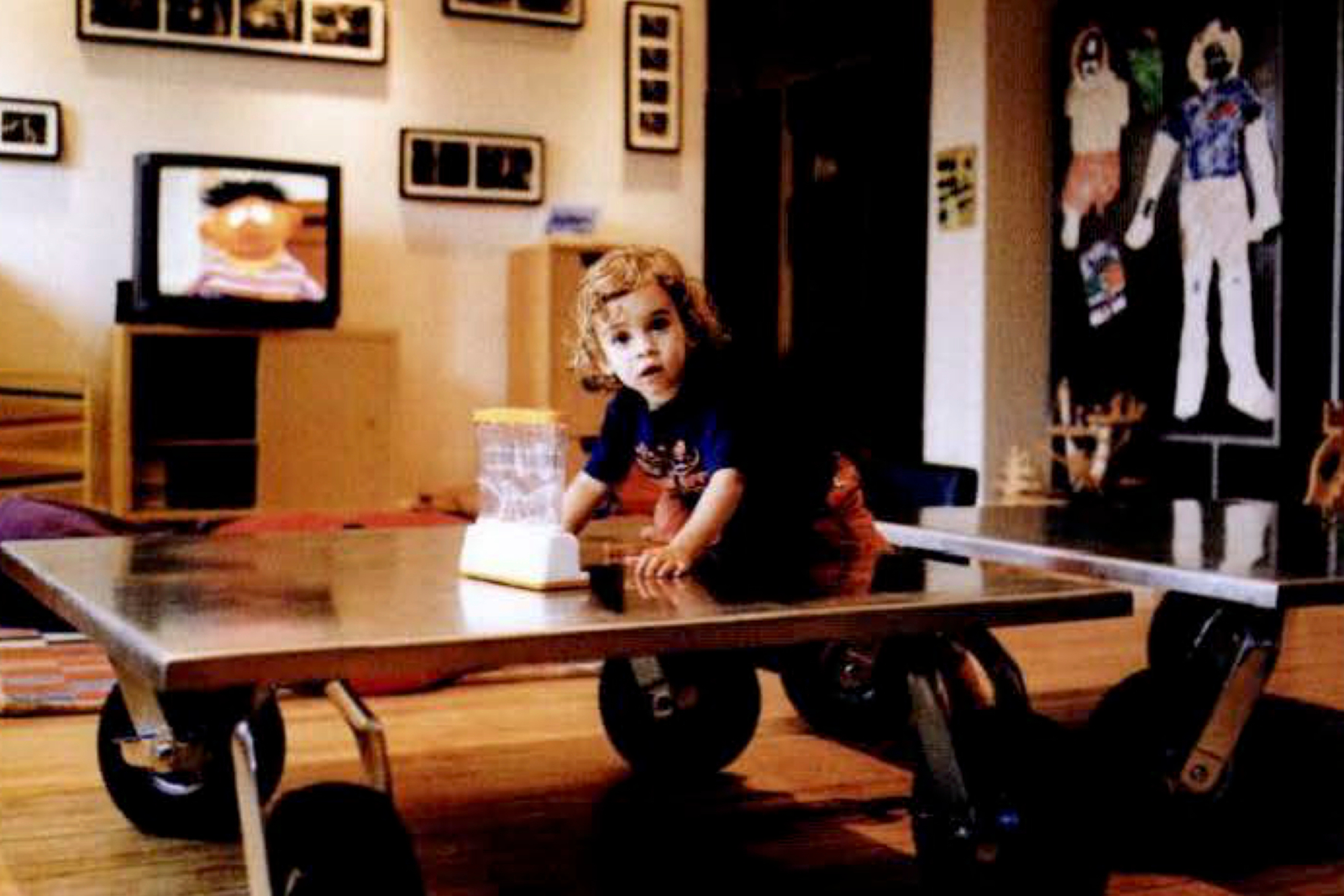
In the bustling Ravenswood corridor of Chicago, a distinctive lifestyle, reminiscent of characters from a John Irving novel, has unfolded within the walls of a 19th-century industrial edifice. For nearly two decades, the Heltzer family — furniture designer and manufacturer Michael Heltzer, his wife Elizabeth, and their three children, George, Rose, and Henry — have not only lived but thrived in a working furniture factory, a unique blend of domesticity and industrial enterprise. This symbiotic existence, chronicled in Dwell’s December 2001 issue, now stands at a pivotal juncture as Michael Heltzer prepares to relocate the manufacturing arm of his eponymous firm, Heltzer Furniture, to a new, larger facility, marking the end of an era for this extraordinary live/work space.
Michael Heltzer’s Unconventional Path: From Wall Street to Workshop
The narrative of Michael Heltzer’s journey is one of profound transformation, a departure from the conventional trajectory of a white-collar professional to embrace the grit and creativity of industrial design. A graduate of a prestigious New York law firm, Milbank Tweed, Heltzer quickly realized his sartorial preference for T-shirts and worn jeans over tailored suits was indicative of a deeper misalignment with the corporate world. "I knew I was in trouble when I started picking up stuff on the street and making things at night," Heltzer, then 40, reflected in 2001. This nascent urge to create, to engage with materials and craftsmanship, ultimately led him to abandon the legal profession.
Returning to his native Chicago, Heltzer enrolled in classes at the Chicago Art Institute, maintaining a part-time legal practice to sustain himself. It was during this period that a pivotal opportunity arose: a teacher from the Art Institute granted him access to his factory, a space where Heltzer could immerse himself in the practicalities of fabrication. He dedicated countless hours to mastering vintage, pre-war machine tools, delving into the intricacies of welding, forming, and bending. This hands-on experience laid the foundation for his future enterprise, equipping him with the technical prowess necessary to translate design concepts into tangible products.
Heltzer’s entrepreneurial leap was driven by a bold idea: a glass-and-stainless-steel cafe table atop a concrete pedestal. Leveraging his network of family and friends, he directly marketed this innovative piece to architects and restaurant owners. The response was immediate and overwhelming. "I got 60 orders the first month," Michael recounted, a testament to the product’s appeal and market demand. This early success provided the impetus he needed to formally transition, declaring, "Then I quit the law."
The Ravenswood Factory: A Canvas of History and Industry
The stage for the Heltzers’ unconventional life was set in Chicago’s Ravenswood neighborhood, a district historically defined by its industrial backbone. The three-story brick building, which Michael Heltzer acquired from the Chicago Historical Society in 1987, was a relic of a bygone era. Originally constructed in the 19th century as a candy factory, it once boasted a small orchard to supply homegrown cherry flavor for its confections. It stood as one of many industrial structures, long past their prime, lining a railroad corridor that once pulsed with freight traffic but by the late 20th century primarily served commuter trains.
Upon purchasing the building, Heltzer found the former orchard site transformed into a vacant lot, cluttered with discarded bottles. Undeterred, he initially camped on the third floor, slowly embarking on the restoration process while simultaneously establishing his nascent furniture manufacturing operation downstairs. This adaptive reuse of a derelict industrial building was ahead of its time, predating the widespread urban trend of loft conversions that would sweep across America in the subsequent decades. While many urbanites sought out "facsimiles of industrial buildings" for their loft living aspirations, the Heltzers inhabited a real factory, one that remained a vibrant center of production.
The Ravenswood neighborhood itself, situated on Chicago’s North Side, has a rich industrial history, evolving from a planned commuter suburb in the mid-19th century to a hub for manufacturing and warehousing. By the late 20th century, many of these industrial structures faced obsolescence, presenting opportunities for creative redevelopment. Heltzer’s decision to establish his business and home there not only breathed new life into a specific building but also mirrored a broader urban revitalization movement focused on preserving architectural heritage through adaptive reuse.
A Home Forged in Industry: The Evolution of the Heltzer Family Space
The integration of the Heltzer family’s life into the factory was a gradual, organic process, driven by the dual forces of business expansion and family growth. When Michael first moved in, the building was a raw, expansive shell. His manufacturing operation, initially modest, grew to occupy 13,000 square feet, encompassing a basement metal shop, a first-floor wood shop, and offices on the second floor. Finished pieces were eventually stored off-site and sold through showrooms, including a prominent one in the Chicago Merchandise Mart, a global hub for home furnishings and design.
The living space, spanning a floor and a half (3,400 square feet), evolved in tandem. When Elizabeth, a social worker, moved in with Michael in 1991, the residential area consisted of little more than a bedroom and an open loft. Their marriage in 1993 and the subsequent arrival of their children necessitated a more structured domestic environment. "Henry was born in January of ’94. We needed the space to be different, so we turned a walk-in closet off the bedroom into his room," Elizabeth recalled.
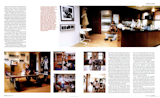
As the family expanded with Rose and George, so did the need for dedicated living areas. The open loft, once serving as an informal showroom for Heltzer’s growing line of over 150 products (ranging from teak-covered coat hooks made from scrap wood to sophisticated wall units), gradually transformed. "When Rose was born, it pushed us out of the back of the building, and we moved to the front. Then the back space was for the kids," Elizabeth explained. The original primary bedroom became a communal "late-night movie room," dominated by a sleeper sofa and a VCR, with an industrial-themed black-and-white photograph, salvaged by Michael from a dumpster, hanging above. The parental bedroom eventually found a new home towards the rear of the building.
Downstairs, former tenant spaces were reconfigured into bedrooms for the older children, and a third bedroom was added with George’s arrival. The Heltzer aesthetic—characterized by a shiny, stainless-steel industrial modernism—permeated the living quarters. Room dividers and stair rails were crafted from woven mahogany strips, mirroring elements found in their furniture line. The bathroom showcased hand-cut aqua slate pieces, remnants from the renovation of their Chicago showroom, and prototypes of teak hooks adorned the walls. The dining area featured signature Heltzer pieces: a table and chairs in steel, glass, and wood. Even the garden displayed one of Michael’s latest creations, a glass birdbath on a concrete pedestal.
A Childhood Immersed in Creativity and Community
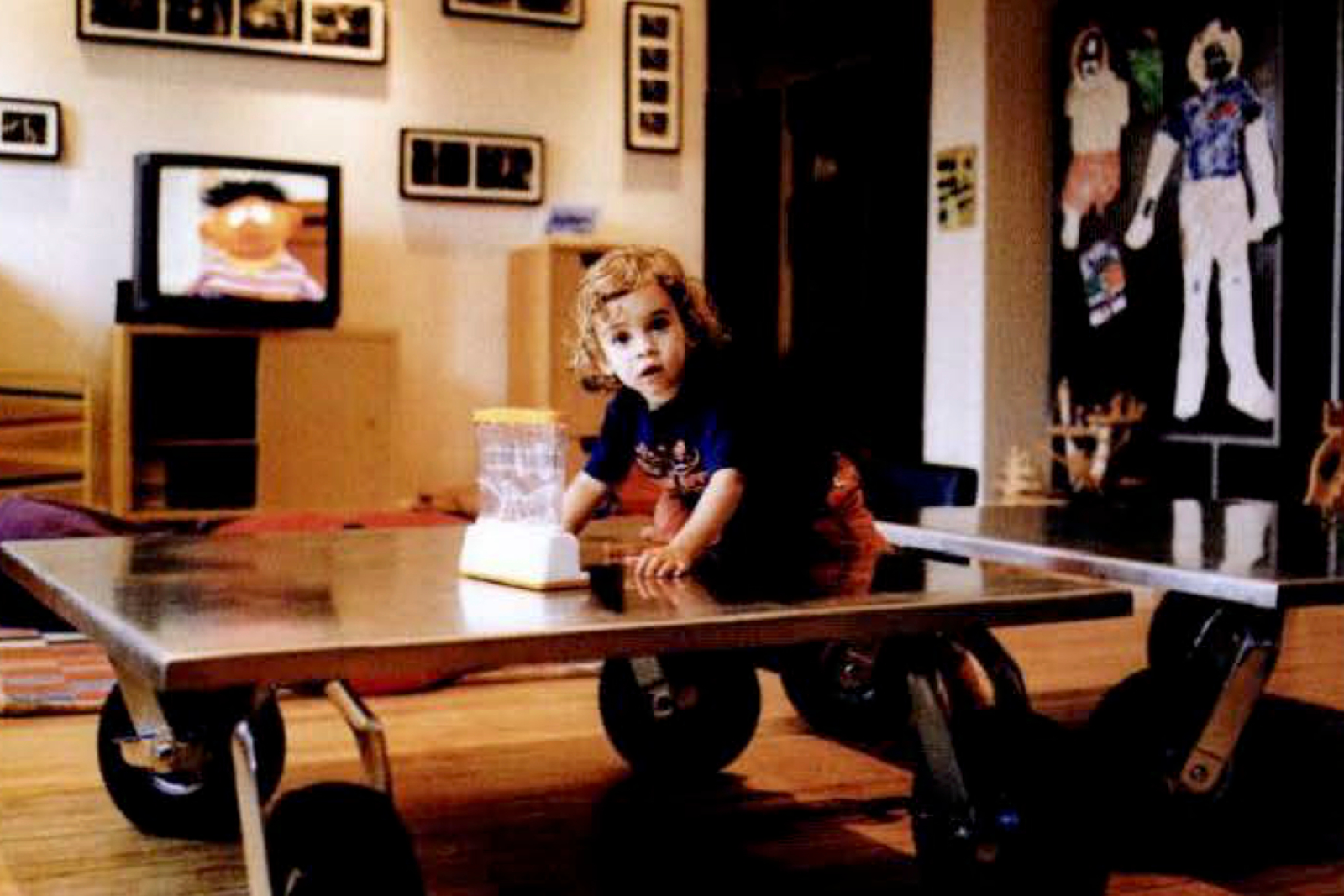
Raising three young children—George, Rose, and Henry, who in 2001 ranged from two to seven years old—within an active factory presented a unique, if unconventional, upbringing. The children’s rooms, brightly painted, surrounded a communal playroom, a space that was a testament to Michael Heltzer’s design philosophy. Custom-designed stainless-steel panels allowed them to display their art projects with magnets, while small chairs encircled stainless-steel tables mounted on wheels, creating a "work" area. Michael even crafted a series of wooden hutches for their toys and art supplies, integrating play with the industrial environment.
This immersion extended beyond their designated play areas. The factory’s bustling office, located adjacent to the playroom, often became an extension of the children’s imaginative world, with Rose frequently found hiding under the marketing manager’s desk. The children had unfettered access to the entire operation, "mooching quarters" for the Coke machine, visiting their favorite employees, and witnessing firsthand the process of creation. This daily exposure to manufacturing, design, and commerce offered them an education far removed from a typical suburban childhood.
Elizabeth Heltzer consistently expressed her appreciation for this unconventional environment. "It’s never been an issue," she stated regarding the perceived strangeness of raising a family in a factory. "I love that these kids see all kinds of people making things. And there’s always someone looking out for them. Rose ran into the alley one time, and in a minute all these guys from the shop were out there." This anecdotal evidence highlights the strong sense of community and informal safety net that developed among the factory’s 25 employees and the Heltzer children, a tangible benefit of the integrated live/work model.
The factory floor itself was a dynamic workshop. Michael Heltzer, who designed most of the firm’s products, worked in close collaboration with his fabricators, including two Art Institute-trained sculptors, Janet Benes (facilities manager) and Joe Litzenberger (vice president of design). Litzenberger humorously described their process: "We’re like old Jewish tailors. We don’t work from drawings." This artisanal approach, despite the pressures of a growing business, fostered a hands-on, iterative design process. Heltzer characterized it as "a casual system with a lot of pressure," where orders were often managed with scribbled Post-It notes, a testament to the organic, yet demanding, nature of their operation.
In 2001, Heltzer was particularly engaged with the development of the Kubis panel, a steel room divider and hanging storage system. This "hot new product," a direct descendent of the playroom panels, presented a unique challenge: a small, "H"-shaped metal clip designed to lock with a ball bearing, which, unlike most of the Heltzer line, had to be outsourced. This detail underscored the complexities of scaling up production and the constant innovation required in the competitive furniture design industry.
A New Horizon: Expansion and the End of an Era
The unique home/factory lifestyle that defined the Heltzer family for years was always destined to evolve. By July 2001, plans were firmly in motion for a significant expansion: Heltzer Furniture was set to relocate its primary manufacturing operations to a new plant constructed in a former boatyard along the banks of the Chicago River. The strategic decision was to maintain product development in the Ravenswood location, allowing Michael Heltzer to continue his creative work in the familiar setting while scaling up production capacity elsewhere.
This transition, scheduled for the end of 2001, represented a major step for the business, reflecting its growth and success. However, it also signaled the dismantling of the deeply intertwined family and factory life. The emotional weight of this change was palpable, especially for the youngest Heltzers. Elizabeth noted, "Rose is upset. She loves the people in the office. It’s going to be a huge transition for all of us." For the children, the factory employees were not just co-workers but an extended family, their daily interactions forming a significant part of their formative years. The move would mean a separation from this vibrant, protective community they had always known.
Broader Implications: Urban Development and the Future of Live/Work
The Heltzers’ story is more than just a personal anecdote; it offers a compelling case study in urban adaptive reuse, the challenges and rewards of small-scale manufacturing in a metropolitan context, and the evolving concept of live/work spaces. Their existence in Ravenswood harked back to a pre-industrial revolution model, where the artisan lived above their workshop, blurring the lines between professional and domestic life. This model, while unique in its industrial setting, provided the children with an unparalleled understanding of craftsmanship, entrepreneurship, and community.
The relocation of Heltzer Furniture’s manufacturing highlights the pressures and opportunities faced by urban businesses. While the Ravenswood space allowed for intimate integration, growth often necessitates larger, more specialized facilities, often found in areas with better logistical access or greater space for expansion. The move to the Chicago River, a historic artery of industry and commerce, symbolized a new chapter for the company, potentially enhancing its production capabilities and market reach.
For Ravenswood, the departure of the manufacturing operation meant the loss of a tangible piece of its industrial heritage in active use, but it also opened up possibilities for further redevelopment of the building. The retention of product development in the original factory underscored the value of the space as a creative hub, even as its industrial function shifted.
The Heltzer family’s journey encapsulates a significant trend in urban living and design at the turn of the millennium. It challenged conventional notions of domesticity and work, demonstrating that a factory could be a nurturing, stimulating environment for a family. As urban centers continue to grapple with housing, economic development, and the preservation of historical structures, the Heltzers’ experience serves as a powerful reminder of the innovative ways in which old buildings can be reimagined, and how personal and professional lives can intertwine to create something truly unique. The transition of Heltzer Furniture marks the end of a remarkable experiment, but its legacy of integrated living and design continues to resonate within the broader discourse of modern architecture and urban development.