 admin
admin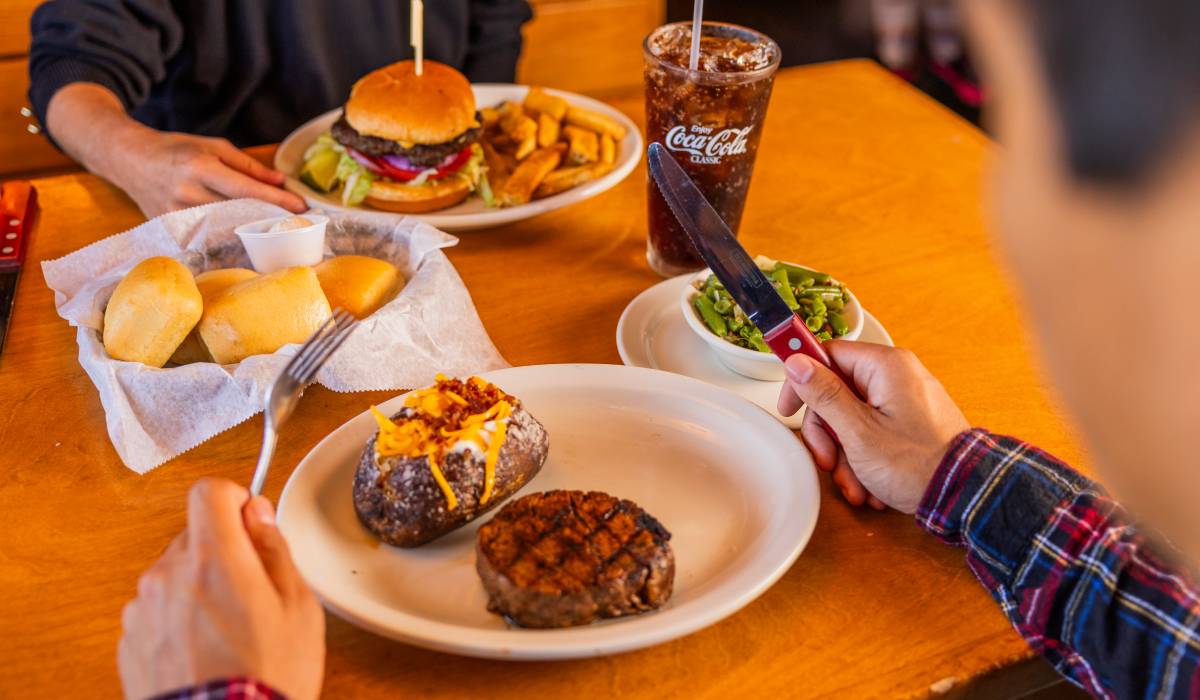
Texas Roadhouse has solidified its position as a dominant force in the casual dining sector, concluding a milestone year that saw the brand achieve its 60th consecutive quarter of same-store sales growth. This 15-year streak, which stretches back to 2010, marks a period of unprecedented stability for the Louisville-based steakhouse chain, occurring amidst a decade of significant macroeconomic shifts, a global pandemic, and evolving consumer preferences. As the company prepares for its 2026 fiscal year, leadership remains focused on a "back-to-basics" philosophy centered on high-level hospitality, quality food, and a value proposition that has allowed the brand to gain market share even as competitors struggle with volatile traffic trends.
A Legacy of Consistency in a Volatile Market
The casual dining industry has faced a gauntlet of challenges over the past three years, including record-high inflation, labor shortages, and a cautious consumer base. However, Texas Roadhouse’s Q4 results underscored a resilience that many of its peers have failed to replicate. The brand reported a 4.2 percent increase in same-store sales for the final quarter of the year, driven by a 2.8 percent increase in guest traffic and a 2.3 percent increase in average check size. When excluding the anomalous disruptions of 2020, the company has maintained positive comparable growth for 15 years—a feat that CEO Jerry Morgan attributes to a structural commitment to the guest experience rather than mere market fluctuations.
Morgan, who will celebrate five years as CEO in March and has been with the company since 1997, addressed investors regarding whether the brand’s success stems from structural advantages or a "trade-down" effect where consumers move from fine dining to casual dining to save money. While Morgan noted that consumer behavior is difficult to predict with certainty, he emphasized that the brand’s reputation for value is its greatest asset. By focusing on quality food and hospitality, the brand has created a "settled-in" position where guests feel confident spending their discretionary income, regardless of the broader economic climate.
Financial Milestones and Unit Economics
The fiscal year was defined by several significant financial benchmarks. Total revenue for the company climbed to $5.9 billion, supported by positive sales and traffic growth across all three of its primary brands: Texas Roadhouse, Bubba’s 33, and the fast-casual concept Jaggers.
The unit economics of the flagship Texas Roadhouse brand continue to set industry standards. Average-unit volumes (AUVs) have surged to over $8.4 million, a staggering increase from the $5.55 million reported in 2019 and the $4.805 million seen in 2016. At company-owned locations, average weekly sales reached $160,021 in Q4, with $22,099 of that total coming from to-go orders. This represents a steady climb from the previous year’s weekly average of $153,867.
The secondary brands are also showing signs of scaling potential. Bubba’s 33, the company’s sports-restaurant concept, saw a 1 percent comparable sales lift in Q4, contributing to a 7.7 percent increase on a two-year stack. Weekly sales for Bubba’s locations averaged approximately $122,000. Meanwhile, Jaggers, the company’s foray into the fast-casual chicken and burger market, reported average weekly sales of nearly $73,000 across its 16 locations. While Jaggers does not yet report same-store sales due to its smaller footprint, the revenue figures suggest a strong proof-of-concept as the company prepares for further expansion.
Chronology of Expansion and Acquisitions
The company’s growth trajectory in 2025 was aggressive, culminating in the opening of its 800th systemwide restaurant. The expansion breakdown for the year included:
- 20 new corporate-owned Texas Roadhouse locations in the U.S.
- 7 new Bubba’s 33 locations.
- 1 new corporate Jaggers location.
- 3 franchised Texas Roadhouse units and 1 franchised Jaggers.
In a strategic move to consolidate its portfolio and increase corporate earnings, Texas Roadhouse also acquired 20 franchise stores during the year. By the end of Q4, the company-owned base had grown to 648 Texas Roadhouses, 56 Bubba’s 33 units, and 10 Jaggers. Including international and domestic franchises, the total system count reached 816 restaurants, up from 784 in the previous year.
Looking ahead to 2026, the company plans to open approximately 35 new company-owned stores. Franchisees are expected to contribute another 10 units, including six international Texas Roadhouse locations and four domestic Jaggers restaurants. This disciplined growth strategy ensures that the company maintains its culture and operational standards while steadily increasing its geographic footprint.
Navigating Inflationary Pressures and Margin Compression
Despite the top-line success, Texas Roadhouse has not been immune to the inflationary pressures plaguing the restaurant sector. Commodity inflation, particularly in the beef market, remains a significant headwind. In Q4, commodity inflation reached 9.5 percent, while wage and labor inflation rose by 2.9 percent. These factors led to a 15.6 percent decrease in restaurant margin dollars, falling to $204.8 million. As a percentage of sales, margins slid by 309 basis points to 13.9 percent.

Keith Humpich, Chief Accounting and Financial Services Officer, noted that while margins were pressured, the company still reported the second-highest restaurant margin dollars and earnings per share in its history. The company’s balance sheet remains robust, ending the year with more than $130 million in cash and over $730 million in cash flow from operations. This liquidity allowed the brand to fund $388 million in capital expenditures, execute the $108 million acquisition of franchise units, and return $330 million to shareholders through dividends and share repurchases.
To combat rising costs in 2026, the company is implementing a modest 1.9 percent menu price increase in early Q2. This follows a 3.1 percent increase maintained through Q1. Morgan emphasized that the brand remains conservative with pricing, aiming to stay well below the average price increases seen in the full-service dining segment to preserve its value perception among consumers.
Technological Innovation and Operational Efficiency
Texas Roadhouse has historically been cautious regarding technology, preferring to focus on the human element of service. However, the company has recently completed several digital initiatives designed to improve throughput and employee satisfaction without compromising the brand’s identity.
In 2025, the company finalized the rollout of its "Digital Kitchen" system and upgraded its guest management software. The digital kitchen utilizes Kitchen Display Systems (KDS) to replace traditional paper tickets, creating a quieter, more organized environment for back-of-house staff. While the KDS has improved the execution of to-go orders, Morgan reiterated that the company remains steadfastly against third-party delivery, preferring to maintain control over the guest experience and food quality.
Furthermore, the company is expanding its test of handheld tablets for servers. After a 40-store pilot and a subsequent software rewrite, the program will expand in 2026. These devices allow servers to input orders directly at the table, which leadership believes will increase order accuracy and speed up table turns. The guest management software has also proven vital, allowing operators to optimize floor plans and accurately quote wait times, a necessity for a brand that frequently sees waitlists exceeding an hour.
Cultural Foundations and Community Impact
The legacy of the late founder Kent Taylor remains a central component of the company’s identity. Morgan, who rose through the ranks from a Managing Partner to the executive suite, continues to champion the "Managing Partner" model, where store-level leaders have a financial stake in their specific restaurant’s success. This model is credited with the brand’s high retention rates and consistent execution.
The company also emphasized its commitment to corporate social responsibility in its year-end report. Through the "Dine to Donate" program, Texas Roadhouse raised over $30 million for local schools and nonprofits. The brand also served 1.2 million free meals to veterans and active-duty military on Veteran’s Day. Additionally, the company contributed $1.1 million to the American Tinnitus Association in honor of Kent Taylor, continuing a tradition of supporting causes that were personal to the founder.
Analysis of Future Implications
As Texas Roadhouse enters 2026, its primary challenge will be balancing the rising cost of beef with its commitment to value. The brand is guiding for commodity inflation of approximately 7 percent and wage inflation between 3 and 4 percent for the coming year.
Analysts suggest that Texas Roadhouse’s ability to maintain high traffic despite these pressures is a result of its "earned" loyalty. While many casual dining chains have pivoted to heavy discounting or delivery-centric models, Texas Roadhouse has doubled down on the in-restaurant experience. The introduction of a beverage focus, including $5 margaritas and mocktails, has also successfully increased the average check without alienating budget-conscious diners.
The continued expansion of Bubba’s 33 and Jaggers represents a strategic hedge against saturation in the steakhouse market. By diversifying its offerings—from sports bar dining to fast-casual chicken—Texas Roadhouse is positioning itself to capture a wider variety of dining occasions. If the brand can maintain its operational discipline and culture of "Roadie" hospitality, its 15-year growth streak appears likely to extend well into the next decade.