 admin
admin
The emergence of Indigenous-led initiatives in the Canadian craft beer industry has sparked a profound national dialogue regarding the intersection of cultural representation, historical trauma, and economic sovereignty. In March 2021, the "Celebrating Sisters" campaign, spearheaded by a collective known as the Indigenous Brew Crew (IBC), sought to honor Indigenous women through the medium of craft beer. While the initiative was initially met with enthusiasm by many within the industry, it simultaneously ignited a firestorm of criticism from Indigenous community members and activists. This tension highlighted a fundamental paradox: the effort to reclaim space in a modern industry while contending with a legacy of state-mandated alcohol exclusion and the systemic use of substance abuse as a tool of colonization.
The Catalyst: The Celebrating Sisters Campaign and Its Dissolution
The "Celebrating Sisters" campaign was designed as a cross-Canada collaboration intended to raise awareness and funds for Indigenous women’s causes. A central element of the campaign was the artistic contribution of Chief Lady Bird, an Anishinaabe artist who designed a label featuring a blackbird against a woodland background. The visual representation was widely praised for its beauty, yet the medium—alcohol—remained a point of deep contention.
Critics, including many Indigenous social media users, argued that associating Indigenous identity with alcohol disregarded the intergenerational trauma caused by substance dependency in their communities. Chief Lady Bird and the IBC engaged in transparent public discourse, acknowledging the difficulty of reconciling the industry with Canada’s history of exploitation. However, the internal and external pressures proved insurmountable for the collective. By late 2021, the Indigenous Brew Crew dissolved, and the campaign ceased operations. This event served as a stark reminder that for Indigenous people, the craft beer industry is not merely a business sector but a battlefield for self-determination and healing.
A Chronology of State-Sanctioned Exclusion
To understand the current friction, one must examine the legislative framework that governed Indigenous access to alcohol for over a century. The Indian Act of 1876 was the primary instrument used by the Canadian federal government to regulate nearly every aspect of Indigenous life, from land use to cultural practices. Under this Act, and subsequent amendments, Indigenous people were legally prohibited from purchasing, possessing, or consuming alcohol.
For decades, "Indian Beer"—a term used for non-alcoholic substitutes—was the only legal option available to First Nations people, reinforcing a secondary status within Canadian society. These prohibitionist laws were framed as "protective" measures but were fundamentally designed to facilitate the erasure of Indigenous identity, a process the 2015 Truth and Reconciliation Commission (TRC) labeled "cultural genocide."
The chronology of legal shifts illustrates a slow and uneven transition toward liquor rights:
- 1876-1951: Total prohibition on the sale and possession of intoxicants to Indigenous people.
- 1951: Amendments to the Indian Act allowed provinces to permit Indigenous people to consume alcohol in public drinking establishments, though possession on reserves remained restricted.
- 1960s-1970s: The "Sixties Scoop" and the continued operation of residential schools exacerbated communal trauma, while alcohol was increasingly used as a coping mechanism for the psychological wounds of state-enforced family separation.
- 1985: Bill C-31 granted First Nations bands the authority to enact their own liquor bylaws on reserves, shifting the power of prohibition or regulation from the federal government to local Indigenous leadership.
The Modern Landscape of Indigenous Entrepreneurship
Despite this dark history, a growing number of Indigenous entrepreneurs are entering the craft beer sector, viewing it as a pathway to economic sovereignty and cultural storytelling. According to data from Indigenous Tourism BC and various provincial liquor boards, the number of Indigenous-owned or led breweries has seen a modest but significant increase over the last five years.

These business owners often face a "double burden": they must navigate the standard challenges of the highly competitive craft beer market while also managing the social responsibilities and stereotypes associated with their heritage. Melanie MacInnes, a Métis woman and co-owner of Locality Brewing in Langley, British Columbia, exemplifies this struggle. After winning the 2022 BC Food & Beverage Award for Best Indigenous-Led Business, MacInnes noted that accepting the nomination felt like a heavy responsibility, requiring her to "walk the walk" of representing her community in a sensitive industry.
Similarly, Matthew Sabourin of La Brasserie Nonsuch Brewing Co. in Winnipeg has utilized his platform to educate the public. Nonsuch offers "Beer Bannock" experiences, pairing traditional Indigenous unleavened bread with craft ales. These sessions are held beneath a mural of Louis Riel, the Métis leader, serving as an educational forum on Indigenous history.
Case Studies in Sovereignty and Representation
The diversity of Indigenous involvement in the industry ranges from urban craft taprooms to farm-based production facilities.
Kahnawake Brewing Company (Quebec)
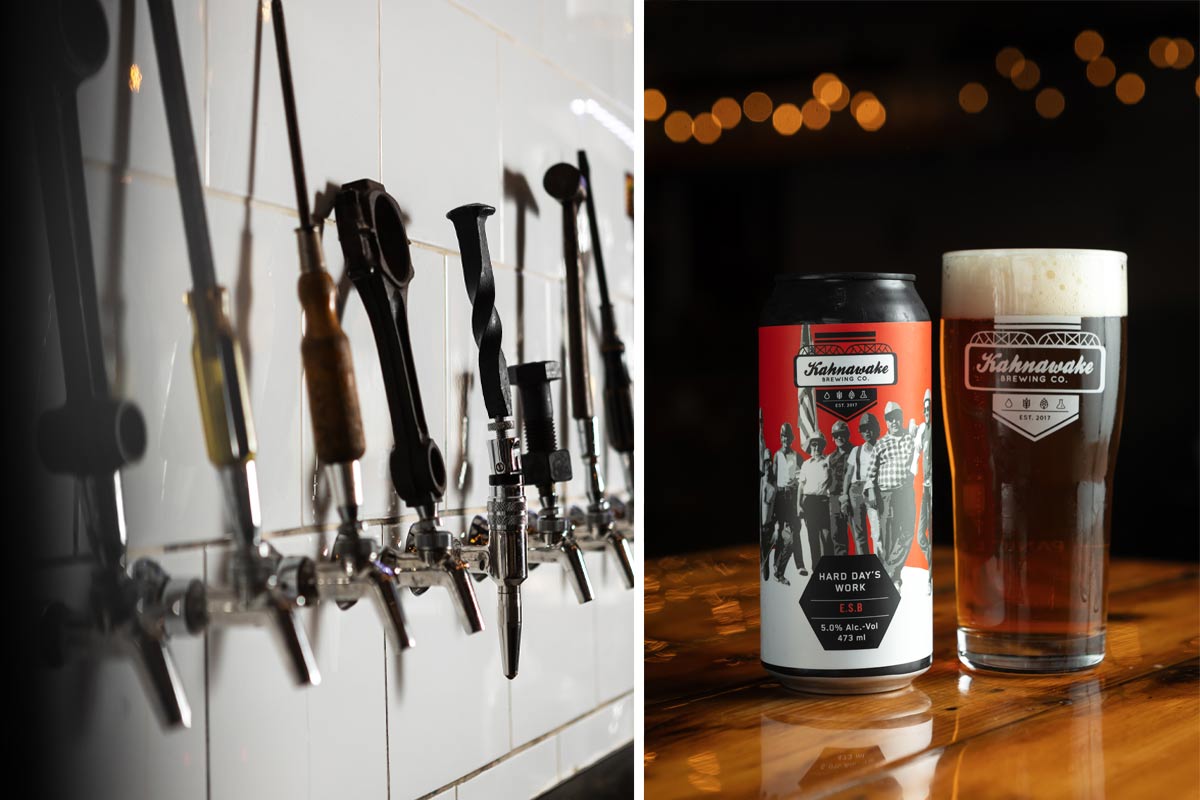
Located on the South Shore of Montreal, Kahnawake Brewing Company is recognized as the first Indigenous-owned craft brewery situated on Indigenous land in Canada. Co-owner Fred Leblanc, a former ironworker, has integrated Mohawk history into the brewery’s branding. The "Black Bridge" taproom refers to the Saint-Laurent Railway Bridge, a structure built in 1900 by Mohawk ironworkers and French laborers. The brewery’s success, evidenced by multiple medals at the Canada Beer Cup in 2024 and 2025, demonstrates the viability of Indigenous-owned businesses within their own territories.
Red Tape Brewery (Ontario)
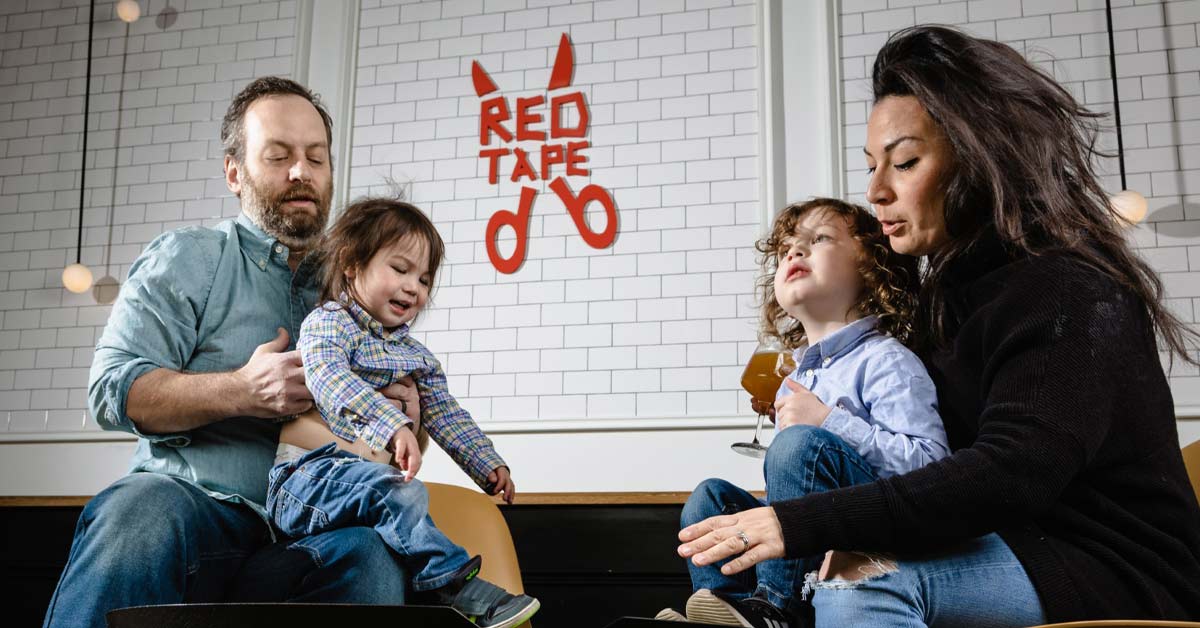
In Toronto, Sarabeth Holden, an Inuit brewer and children’s book author, operates Red Tape Brewery. Holden’s approach focuses on "bespoke beers" and the inclusion of ingredients tied to the Inuit experience. Her "Paunnat Saison" utilizes dwarf fireweed, a plant significant to Northern cultures. Holden has noted that while she occasionally faces industry-wide biases—such as being overlooked by tradespeople or not fitting the stereotypical "look" of a brewer—her community has remained a pillar of support.
Two Loons Brewing (Ontario)
Jason Tremblay, a Métis head brewer at Two Loons Brewing, views the industry through the lens of the "Indigenous entrepreneurial spirit." He argues that the history of Métis families being forced to "hustle in plain sight" after the government theft of their lands in the 1870s created a resilient business class. Tremblay emphasizes that while the territory is fraught, the reclamation of brewing as a craft is an act of economic independence.
Industry Implications and the Path to Reconciliation
The presence of Indigenous people in the brewing industry has broader implications for Canadian commerce and social policy. Organizations such as Farm Credit Canada and the Manitoba Métis Federation have begun providing financial infrastructure specifically tailored to Indigenous-led agricultural and fermented beverage projects.
Darnell Stager of Indigenous Tourism BC suggests that the historical "economic gatekeeping" used to keep Indigenous people out of the alcohol industry was a direct assault on their sovereignty. He posits that true self-determination means Indigenous people must have the right to participate in any industry they choose, including those that have historically caused harm.

Furthermore, the concept of "Indigenous inclusion" is being redefined. It is no longer sufficient for breweries to simply offer a land acknowledgment. Industry leaders like Inez Cook, co-founder of the Nuxalk-owned restaurant Salmon n’ Bannock, advocate for direct person-to-person engagement. Cook emphasizes that reconciliation in the business world is driven by "actions and changed behavior," such as sourcing ingredients from Indigenous suppliers and establishing genuine relationships with local Tribal Nations.
Fact-Based Analysis of Future Challenges
The path forward for Indigenous brewing remains complex. Anishinaabe professor Niigaan Sinclair notes that alcohol has been a "violent intrusion" into Indigenous lives, yet he acknowledges the need to "figure out a relationship with all things," including substances derived from natural elements. He argues that sovereignty does not mean a lack of regulation, but rather the responsibility of the community to make its own decisions regarding consumption and production.
Key challenges for the sector include:
- Supply Chain Representation: Increasing the visibility of Indigenous people in malt production, hop farming, and distribution.
- Harm Reduction: Balancing business growth with community-led initiatives to address alcohol-related trauma.
- Intellectual Property: Protecting Indigenous symbols and traditional knowledge from being used by non-Indigenous breweries for marketing purposes without consultation or compensation.
As the Canadian craft beer industry faces a period of market saturation and economic cooling, the integration of Indigenous perspectives offers a potential avenue for renewal. By prioritizing people over profits and respecting the deep, often painful history of the land, the industry may find a sustainable model for inclusion. The success of Indigenous brewers suggests that while the "silence" surrounding alcohol and Indigenous history is being broken, the resulting conversation requires ongoing sensitivity, respect, and a commitment to genuine reconciliation.