 admin
admin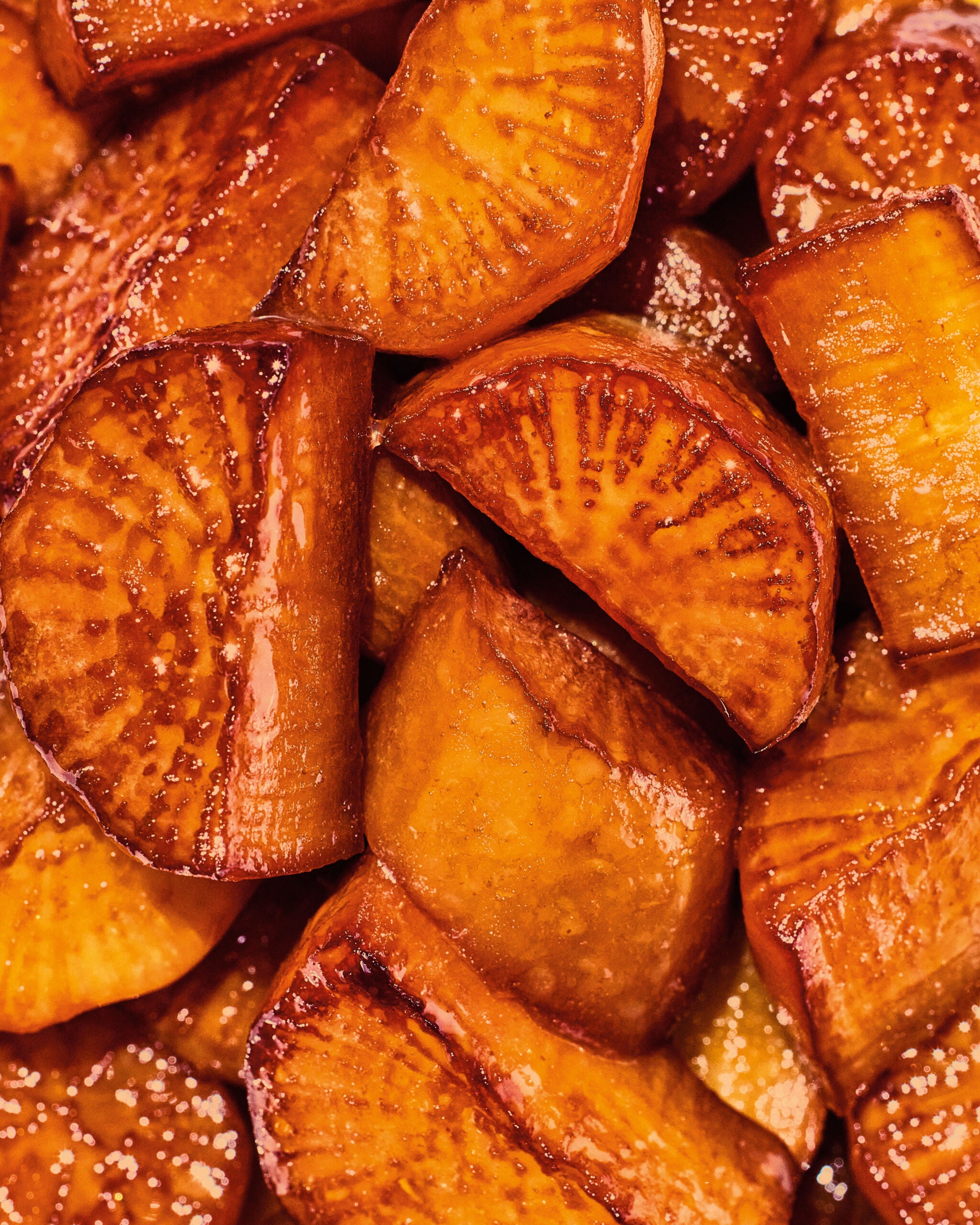
Inspired by the classic French combination of radishes and butter, this Japanese rendition transforms humble daikon radish into a dish that embodies the essence of comfort and culinary artistry. Pan-fried to a perfect golden-brown hue, this dish is more than just a side; it’s an experience, a testament to the nuanced textures and savory depths achievable with simple ingredients. The preparation centers around achieving a state described by the Japanese onomatopoetic term "hoku-hoku." This term, rather than denoting a precise physical characteristic, evokes a sensation – the delightful yielding of something hot, soft, and with a slightly dry, almost fluffy interior. It’s the kind of satisfying mouthfeel that warms you from the inside out, particularly welcome after braving a chilly day. When this tender daikon meets the toasty, umami-rich embrace of shoyu (Japanese soy sauce), the result is a symphony of flavors and textures that transcends its humble origins. It stands as an exemplary side dish, capable of elevating any meal, or as a sophisticated otsumami, a carefully curated snack designed to complement the enjoyment of beverages.
The art of transforming daikon, a staple in Japanese cuisine often perceived for its sharp, pungent qualities when raw, into something so exquisitely tender and flavorful, lies in the precise application of heat and seasoning. This recipe, while seemingly straightforward, hinges on the careful balance of butter for richness, soy sauce for its complex savory notes, and a finishing touch of lemon juice to cut through the richness and brighten the overall profile. The process of pan-frying allows for the development of a beautifully caramelized exterior, creating a delightful contrast with the meltingly soft interior that defines the "hoku-hoku" texture.
The Culinary Roots and Inspiration
The genesis of this dish can be traced to a familiar Western culinary pairing: butter and radishes. French cuisine has long celebrated the simple elegance of small, peppery radishes, often served with a generous dollop of good quality butter, allowing their natural bite to be softened and enhanced by the creamy richness. This Japanese interpretation, however, takes a bold step by substituting the delicate spring radish with the more substantial daikon. Daikon, also known as white radish or mooli, is a versatile vegetable deeply embedded in the Japanese culinary landscape. It is used in everything from simmering stews (like oden) and pickles (tsukemono) to grated as a condiment (daikon oroshi) to accompany fried dishes. Its ability to absorb flavors and transform in texture when cooked makes it an ideal canvas for this shoyu-butter glaze.
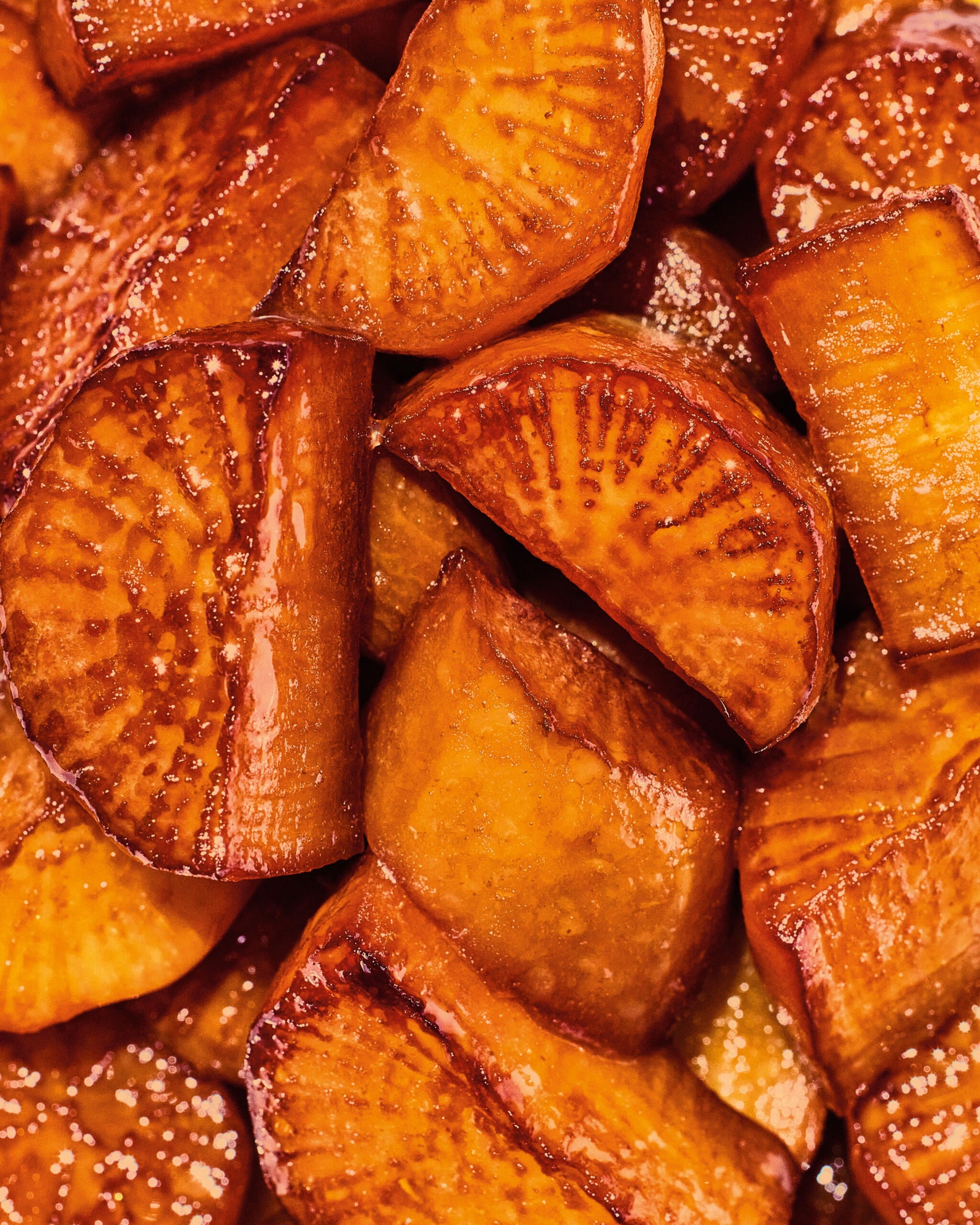
The concept of hoku-hoku is a fascinating aspect of Japanese food appreciation, highlighting a culture that places significant value on the tactile and sensory experience of eating. Unlike Western descriptions that might focus on terms like "creamy," "crisp," or "chewy," Japanese onomatopoeia delves into more nuanced textural descriptions. "Hoku-hoku" captures that specific sensation of a food that is cooked through, warm, and possesses a light, yielding quality without being mushy. Think of perfectly steamed rice, or a well-cooked potato – these are the kinds of foods that embody this delightful texture. Applying this to daikon, which can often be quite firm, speaks to a masterful understanding of cooking techniques designed to unlock its hidden potential for tenderness and subtle sweetness.
Crafting the Perfect Shoyu-Butter Glazed Daikon
The preparation of Shoyu-Butter Glazed Daikon is an exercise in controlled heat and patient technique. The recipe, as outlined, calls for a medium skillet to be heated over medium-high heat, where butter is allowed to melt and shimmer. This initial high heat is crucial for creating a foundation of flavor and color. The daikon, typically cut into substantial, bite-sized pieces to allow for even cooking and to prevent them from disintegrating, is then introduced to the skillet in a single layer. This ensures that each piece has ample contact with the hot butter, promoting uniform searing and caramelization.
A key element of the process is the initial application of soy sauce. One tablespoon is sprinkled evenly over the daikon. This initial dose of soy sauce begins to work its magic, infusing the daikon with its signature umami and contributing to the Maillard reaction, the chemical process responsible for the browning and complex flavor development. Once the daikon has achieved a preliminary golden hue on one side, the heat is reduced to medium-low. This lower temperature is critical for allowing the daikon to cook through to that desired hoku-hoku state without burning.
Covering the skillet during this stage traps the steam, facilitating a gentle steaming process that softens the daikon from within. The instruction to turn the daikon once ensures that both sides achieve a deep, inviting golden-brown color, a visual cue that the vegetable is nearing perfection. The total cooking time, typically between 8 to 10 minutes, is a window for the transformation to occur – from firm and slightly pungent to tender, subtly sweet, and deeply flavorful.
The final flourish involves removing the skillet from the heat. This is when the remaining soy sauce and a splash of fresh lemon juice are introduced. The residual heat in the pan is sufficient to emulsify the butter and soy sauce, creating a glossy glaze that coats each piece of daikon. The lemon juice, a crucial counterpoint, adds a bright, zesty note that cuts through the richness of the butter and the saltiness of the soy sauce, preventing the dish from becoming too heavy and adding a refreshing dimension. The gentle tossing ensures that every piece is perfectly coated, ready to be served.
Nutritional Considerations and Culinary Versatility
While the primary appeal of Shoyu-Butter Glazed Daikon lies in its exquisite taste and texture, it’s also worth noting the nutritional contributions of its core ingredients. Daikon radish itself is a low-calorie vegetable, rich in vitamin C and certain digestive enzymes. Soy sauce, while high in sodium, provides essential amino acids. Butter contributes healthy fats. When consumed in moderation as part of a balanced diet, this dish can be a wholesome addition.
The versatility of Shoyu-Butter Glazed Daikon extends beyond its role as a simple side. It can be incorporated into a variety of culinary contexts:
- As a Staple Side Dish: It pairs exceptionally well with grilled meats, fish, or poultry, offering a contrasting texture and flavor profile. Its savory notes complement the richness of proteins, while its tenderness provides a comforting element.
- As an Otsumami: In Japan, otsumami are small dishes enjoyed with alcoholic beverages. This glazed daikon, with its complex flavors and satisfying texture, makes for an elegant and flavorful accompaniment to sake, shochu, or even a crisp beer.
- In a Bento Box: Its robust flavor and appealing appearance make it a welcome addition to a packed lunch, holding its own even when served at room temperature.
- As a Vegetarian Main Component: While often served as a side, a generous portion of Shoyu-Butter Glazed Daikon, perhaps alongside some steamed rice and other vegetable dishes, can form a satisfying vegetarian meal.
The Broader Context: Textures and Flavor in Japanese Cuisine
The appreciation for specific textural qualities, as exemplified by hoku-hoku, is a recurring theme in Japanese gastronomy. This focus on texture, or menshi (麺糸), plays a significant role in how dishes are perceived and enjoyed. Terms like bari-bari (crispy), fuwa-fuwa (fluffy), and neba-neba (slimy or viscous) are used to describe the mouthfeel of various foods, contributing to a holistic dining experience that engages multiple senses.

The combination of soy sauce and butter, while appearing simple, speaks to a broader culinary trend of cross-cultural fusion and adaptation. While butter is not a traditional staple in Japanese cooking in the same way it is in Western cuisines, its incorporation into dishes has become increasingly common, particularly in modern Japanese cuisine. The richness of butter can mellow the intensity of certain Japanese ingredients and create new flavor dimensions. The shoyu-butter glaze, therefore, represents a harmonious blend of traditional Japanese flavors with a touch of Western indulgence, creating a dish that is both familiar and novel.
The emphasis on achieving a perfect hoku-hoku texture in daikon also highlights a deeper respect for ingredients and the transformative power of cooking. It is about coaxing out the best qualities of a vegetable, turning something that might otherwise be considered plain into a culinary star. The visual appeal of the deep golden-brown exterior, achieved through careful pan-frying, further enhances the dish’s desirability.
In conclusion, Shoyu-Butter Glazed Daikon is more than just a recipe; it is a culinary philosophy. It celebrates the art of transforming simple ingredients into something extraordinary through thoughtful technique and an understanding of nuanced sensory experiences. The dish’s ability to evoke warmth, comfort, and sophisticated flavor makes it a standout in any culinary repertoire, a testament to the enduring appeal of well-executed Japanese home cooking.