 admin
admin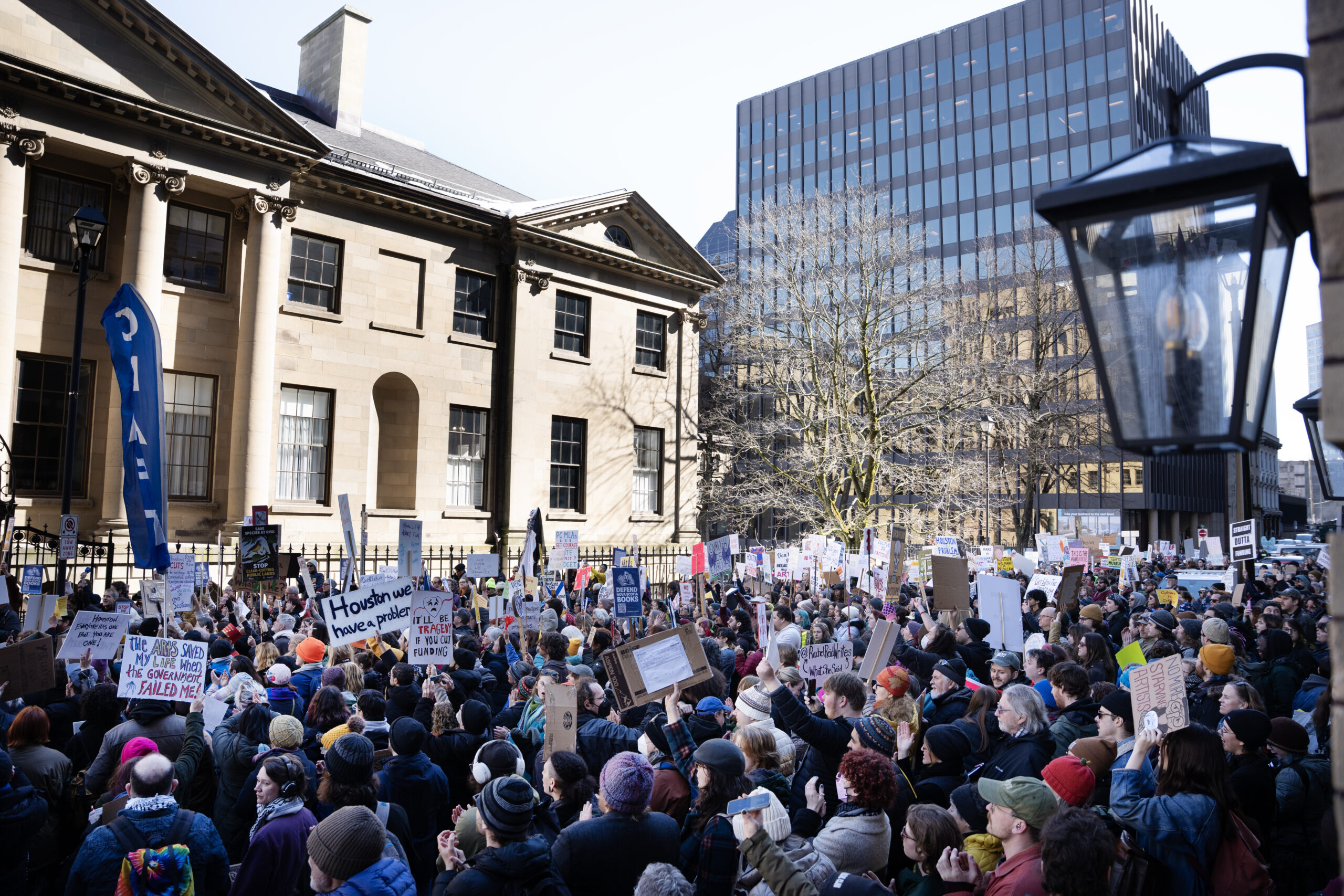
Premier Tim Houston returned to Nova Scotia this Wednesday, immediately plunging into a political firestorm as he faced sharp criticism from opposition parties and a vocal throng of protesters gathered outside the legislature, all unified in their condemnation of the province’s recently unveiled austerity budget. The Premier, who also holds the energy portfolio, had just concluded his participation in a mining conference in Toronto, only to be met with a province in uproar over significant spending cuts. Despite the palpable public discontent and the fervent calls for reconsideration, Houston reiterated his administration’s firm commitment to its fiscal plan, signaling no immediate intention to alter the controversial budget.
The Genesis of Discontent: A $1.2 Billion Deficit and Tough Decisions
The core of the provincial government’s justification for the sweeping cuts lies in Nova Scotia’s projected $1.2-billion deficit for the 2026-27 fiscal year. Premier Houston described this financial reality as a "sad reality," underscoring the difficult choices his government believes it must make. "This is a tough time for our province. This is a tough time for our country," he stated in the legislature, later elaborating to reporters, "We’ll listen carefully. We’ll understand. If we can support, we’ll support. In many of these cases, the sad reality is that our financial situation is driving the decisions that we’re having to make, and they’re hard decisions."
The 2026-27 budget, tabled just last week, had already foreshadowed an era of "difficult decisions." This fiscal blueprint outlines a series of drastic measures aimed at curbing provincial expenditures, primarily through the elimination or reduction of more than 280 grants across a multitude of government departments. These actions are projected to yield savings of $130.4 million, a figure the government asserts is essential to stabilize the province’s financial footing.
The Broad Sweep of Cuts: Impact on Arts, Culture, Education, and Community
The comprehensive nature of these grant reductions has sent shockwaves through various sectors of Nova Scotian society. Programs spanning from educational scholarships crucial for students’ access to higher learning, to vital arts funding that underpins the province’s vibrant cultural scene, are all slated for significant curtailment. Beyond these, initiatives specifically designed to support Mi’kmaw and Black and African Nova Scotian communities, which often address historical inequities and foster cultural preservation, also face the axe.

The arts and culture sector, in particular, has voiced profound alarm. Organizations across the province, from small community theatres to larger heritage institutions, rely heavily on provincial grants to sustain their operations, employ artists and cultural workers, and deliver programming. Jacob Sampson, associate artistic director of the 2b Theatre Company in Halifax, articulated the precarity many non-profits face. "The reality is that the vast majority of these organizations are not-for-profit," Sampson explained. "So every dime that we bring in, both from government funding… and fundraising, gets spent on workers, on goods and services and it’s spent here in Nova Scotia." The concern is that these cuts will not only stifle artistic creation but also lead to job losses and a diminished cultural landscape, impacting the province’s identity and appeal.
Similarly, the education sector anticipates a chilling effect on student opportunities. Reduced scholarships could make post-secondary education less accessible for financially vulnerable students, potentially hindering talent retention within the province. For Mi’kmaw and Black and African Nova Scotian communities, the targeted initiatives often represent critical support for cultural revitalization, economic development, and social programming, making these cuts particularly impactful on efforts towards equity and reconciliation.
A Deepening Crisis for Vulnerable Families: The Caregiver Benefit Reduction
Perhaps one of the most contentious aspects of the budget is the proposed 20 per cent cut to the provincial caregiver benefit. This reduction directly impacts families supporting individuals with disabilities, a demographic already facing significant financial and emotional burdens. Parents of people with disabilities gathered at the legislature on Wednesday, expressing profound anxiety over how this cut will affect their ability to provide essential care.
Caregivers Nova Scotia, an advocacy organization, has highlighted the alarming lack of clarity surrounding the implementation of this reduction. The group states it has not received definitive information from the government on whether the monthly benefit itself will be reduced for all recipients, or if the program will instead serve fewer people overall. This uncertainty compounds the stress for families who rely on the benefit for critical support, which often helps cover costs associated with respite care, specialized equipment, therapy, and personal assistance, enabling individuals with disabilities to live with greater dignity and inclusion within their communities.
The caregiver benefit is not merely a financial handout; it is a recognition of the invaluable and often unpaid labour provided by family caregivers, which significantly reduces the strain on the public healthcare system. Critics argue that cutting this benefit is not only short-sighted but could lead to increased demand for more expensive institutional care down the line, ultimately shifting costs rather than saving them.
Political Fallout and Opposition’s Stance

Premier Houston’s unwavering defence of the budget has been met with fierce condemnation from opposition benches. NDP Leader Claudia Chender minced no words, accusing the government of being "confused and tone deaf about what they’re doing and who it’s helping, and who it’s hurting." Chender emphasized the widespread dissent, stating, "We have everyone from caregivers to disability advocates to museums to artists telling them that it’s going to decimate their sector, it’s going to hurt the industry, it’s going to put people at risk." She further challenged the government’s narrative of financial mismanagement, asserting that the current measures "won’t" address the underlying issues.
Interim Liberal Leader Iain Rankin echoed similar sentiments, albeit with a glimmer of hope for the protesting public. Rankin encouraged Nova Scotians to "keep the pressure up" on the Premier, suggesting that public outcry could still lead to a policy reversal. "The premier has been known to walk back policies," Rankin observed, implying that sustained public and political pressure might yet force the government to reconsider its current course. This sentiment suggests a strategic approach by the opposition to galvanize public opinion and leverage it against the government’s resolve.
A City in Protest: Voices from the Streets of Halifax
While the political sparring unfolded inside the hallowed halls of Province House, the streets outside erupted in a vibrant display of democratic protest. For the second consecutive day, hundreds of Nova Scotians converged on the legislature, their collective voices rising in a powerful demonstration against the budget cuts. Loud chants, accompanied by a sea of colourful signs, filled the air, compelling police to shut down surrounding streets in downtown Halifax to accommodate the burgeoning rally.
The diverse crowd reflected the wide-ranging impact of the budget, comprising artists, musicians, heritage group members, disability advocates, parents, and concerned citizens. Their unified demand was clear: the government must rollback the budget cuts, particularly those affecting arts and community grants. The energy of the protests underscored a deep-seated frustration with what many perceive as an assault on the province’s social fabric and its most vulnerable populations.
Protesters shared personal stories of how the cuts would affect their lives and livelihoods. Artists spoke of the precariousness of their profession and the vital role grants play in enabling them to create and contribute to the local economy. Parents of children with disabilities recounted the daily struggles they face and how the caregiver benefit provides a lifeline, without which their families would be pushed to the brink. The sheer volume and intensity of the protests signal a significant challenge to the government’s mandate and its ability to govern without significant public opposition.
Broader Economic and Social Implications

The implications of these budget cuts extend far beyond the immediate beneficiaries of the grants and benefits. Economists and social policy experts warn of potential ripple effects across Nova Scotia. The arts and culture sector, for instance, is not merely a recipient of government funding; it is an economic driver, supporting jobs in ancillary industries like tourism, hospitality, and local retail. Cuts here could lead to a contraction in these related sectors, diminishing Halifax’s allure as a cultural hub and impacting regional economies.
Furthermore, reducing support for Mi’kmaw and Black and African Nova Scotian communities could undermine ongoing efforts towards reconciliation and equity. These initiatives are often critical for community development, health outcomes, and educational attainment, areas where historical disadvantages persist. A rollback in funding risks exacerbating existing disparities and creating new challenges for these communities.
The 20 per cent cut to the caregiver benefit also raises significant social policy questions. While framed as a cost-saving measure, the potential for increased pressure on families, higher rates of burnout among caregivers, and a greater reliance on more expensive institutional care could negate any immediate fiscal savings. It also sends a troubling message about the value placed on the care of individuals with disabilities and the role of family caregivers in society.
The Road Ahead: Mounting Pressure and Uncertain Outcomes
As Premier Houston stands firm on his budget, the pressure from opposition parties, advocacy groups, and the public continues to escalate. The coming weeks will be critical in determining whether the government will maintain its unyielding stance or if the collective outcry will force a re-evaluation of its fiscal strategy. The Liberal interim leader’s suggestion that the Premier has a history of walking back policies offers a glimmer of hope for those campaigning against the cuts, indicating that the fight is far from over.
The situation underscores the complex interplay between fiscal responsibility, social equity, and political will. While the government cites a significant deficit as the driving force behind its decisions, opponents argue that the chosen path disproportionately harms vulnerable populations and vital community sectors, potentially sacrificing long-term social and economic well-being for short-term savings. The future of Nova Scotia’s social programs, cultural landscape, and support systems for its most vulnerable citizens now hangs in the balance, subject to the ongoing debate and the sustained efforts of those fighting for a different budgetary future.