 admin
admin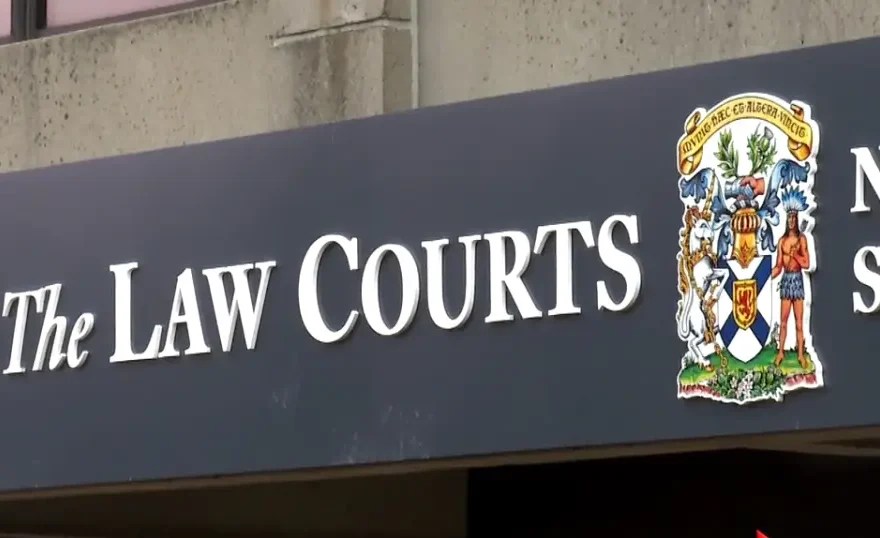
The mother of an Indigenous sexual abuse victim has voiced profound disappointment, asserting that the justice system in Nova Scotia has unequivocally failed her daughter following the sentencing of a former Canadian Armed Forces member to five years in prison for sexually abusing his teenage babysitter. The emotional plea highlights a persistent concern among Indigenous communities regarding equitable treatment and the comprehensive hearing of victims’ voices within the Canadian legal framework.
The Sentencing and Its Immediate Aftermath
On Friday, February 21, 2026, Justice James Chipman of the Nova Scotia Supreme Court accepted a joint sentencing recommendation put forth by both the Crown and defence counsel, leading to the imposition of a five-year prison sentence for John Alexander Cripps. Cripps, formerly associated with the Canadian Armed Forces, had previously pleaded guilty to two serious charges: sexual interference and using telecommunications to lure a child under the age of 16 to facilitate a sexual offence.
Immediately following the court’s decision, the victim’s mother, whose identity is protected by Global News to safeguard her daughter’s anonymity, expressed her deep anguish and frustration. "The judge could have given him a harsher sentence instead of precedent," she stated outside the courthouse, her voice heavy with emotion. Her concern was compounded by the fact that eight other charges Cripps initially faced, including multiple counts of sexual assault, were dismissed as part of the plea agreement. "If you look at the file, there’s been several charges that were dismissed. As the victim’s mother and as an advocate for my daughter in this moment, I feel that her voice has not been fully heard. That some of her trauma has been dismissed." This sentiment underscores a critical tension between the practicalities of plea bargaining and the profound need for victims and their families to feel genuinely acknowledged and justly served by the legal process.
A Disturbing Timeline of Abuse
The harrowing events leading to Cripps’ conviction began in 2021 when he and his former partner engaged the then 13-year-old girl to babysit for the summer months. The agreed statement of facts presented in court laid bare a disturbing pattern of abuse that occurred while the young girl was residing in their home. Cripps admitted to sexually assaulting the girl on six separate occasions during this period, betraying the trust placed in him by the family and the inherent vulnerability of a child under his care.
Following the conclusion of the summer, the predatory behaviour did not cease. Cripps continued to engage in sexually explicit communication with the victim, leveraging digital platforms to maintain contact in a manner designed to facilitate further sexual misconduct. This insidious communication persisted for nearly a year until his eventual arrest in June of 2022, when law enforcement intervened to halt the ongoing exploitation.
Upon his arrest, Cripps was initially charged with a total of ten counts, reflecting the breadth and gravity of his actions. These charges encompassed various forms of sexual assault and exploitation. The legal proceedings that followed saw a significant development in December of last year when Cripps entered a guilty plea to two of the ten charges. Specifically, he admitted guilt to sexual interference, which pertains to engaging in sexual activity with a person under 16 years of age, and using telecommunications to lure a child under 16 to facilitate a sexual offence, a charge designed to address the digital grooming aspect of his crimes. The remaining eight counts, including the more general charges of sexual assault, were subsequently dismissed by the court during the sentencing hearing on February 21, 2026, a decision that has become a focal point of the mother’s critique.

The Unbearable Weight of Trauma: Victim Impact Statements
Central to the sentencing process, and indeed to the very purpose of justice, are the victim impact statements. In this case, the victim, now 18 years old and protected by a publication ban, had her powerful statement read aloud in court by the Crown. The statement offered a searing, unfiltered account of the profound and devastating impact the abuse had wrought upon her young life. It detailed how the trauma led her to attempt suicide multiple times, a tragic testament to the psychological scars inflicted by Cripps’ actions.
"For the entire first year after he assaulted me, I was barely surviving," the victim’s statement eloquently conveyed, painting a vivid picture of her struggle. "Life stopped feeling like life. My family watched me disappear. They lost their daughter in all the ways that mattered." These words articulate not just personal suffering but also the ripple effect of such crimes, demonstrating how the trauma extends to and deeply affects the entire family unit, witnessing their loved one’s profound distress and transformation.
In a poignant display of solidarity and shared grief, both the victim’s mother and grandmother also delivered their own victim impact statements in court. The mother, holding an eagle feather – a potent symbol of strength, courage, and spiritual connection in many Indigenous cultures – spoke passionately outside the courthouse. "I was holding my eagle feather, that it gave me strength and courage to speak the truth," she explained. Her voice carried a broader message, extending beyond her personal ordeal to advocate for all vulnerable children. "Our Aboriginal children, our children in general, deserve to have more justice in the system. They deserve to be heard." This statement underscores a deep-seated concern within Indigenous communities regarding the systemic challenges they often face in accessing and experiencing justice.
Navigating the Complexities of Sentencing: Concurrent Terms and Legal Precedent
Justice Chipman’s decision to impose a five-year prison sentence for each of the two charges, to be served concurrently, is a key element drawing criticism from the victim’s family. In Canadian law, concurrent sentences mean that multiple sentences run at the same time, rather than one after the other (consecutively). In Cripps’ case, this means his total time in prison will be five years, not ten years. While concurrent sentences are common in cases where offenses are closely related or part of a single criminal transaction, for victims and their families, it can often feel like a reduction in the severity of the punishment, failing to adequately reflect the multiplicity of offenses or the cumulative trauma inflicted.
The mother’s reference to the judge’s reliance on "precedent" highlights a tension between judicial discretion and established sentencing guidelines. Canadian courts operate within a framework that considers previous rulings for similar offenses, aiming for consistency and fairness. However, judges also have the discretion to deviate from these precedents when aggravating or mitigating factors warrant it. In cases of child sexual abuse, aggravating factors often include the victim’s age, the position of trust held by the offender, the duration and nature of the abuse, and the profound impact on the victim. The mother’s perspective suggests a belief that these aggravating factors, particularly the lasting trauma and the Indigenous identity of her daughter, were not sufficiently weighed against the joint sentencing recommendation.
Joint sentencing recommendations, where both the Crown and defence agree on a proposed sentence, are a common feature of the Canadian justice system. They often arise from plea bargains, allowing for a more efficient resolution of cases and providing some certainty for both the accused and the victim, albeit sometimes at the cost of a full trial and potentially a harsher sentence. While judges are not bound by joint recommendations, they typically give them significant weight unless they are clearly contrary to the public interest or fall outside the acceptable range of sentences for the specific offenses. The mother’s lament that her daughter’s trauma was "dismissed" speaks to the perceived inadequacy of this outcome, especially when multiple serious charges were dropped as part of the agreement.
Broader Implications: Indigenous Justice and Systemic Challenges

This case resonates deeply with broader concerns about the treatment of Indigenous peoples, particularly women and girls, within the Canadian justice system. Numerous reports and inquiries, including the National Inquiry into Missing and Murdered Indigenous Women and Girls (MMIWG), have highlighted systemic biases, discriminatory practices, and a lack of culturally appropriate responses that often leave Indigenous victims and their families feeling marginalized and unheard. The MMIWG Inquiry’s final report, released in 2019, identified a "genocide" against Indigenous women, girls, and two-spirit people in Canada, pointing to systemic discrimination and violence across various institutions, including the justice system. It emphasized the urgent need for transformative changes to ensure that Indigenous voices are not only heard but acted upon, and that justice is delivered in a way that is restorative and meaningful to affected communities.
Statistics consistently show that Indigenous individuals are overrepresented at various stages of the criminal justice system, both as victims and as offenders. Indigenous women and girls, in particular, face disproportionately higher rates of violence and sexual abuse. When they do interact with the justice system, they often encounter barriers related to language, cultural insensitivity, a lack of understanding of Indigenous legal traditions, and a deep-seated mistrust stemming from historical injustices. The mother’s poignant appeal for "our Aboriginal children" to have "more justice in the system" is a direct reflection of these pervasive issues.
The charges Cripps pleaded guilty to – sexual interference and luring – carry significant penalties under the Criminal Code of Canada, reflecting society’s condemnation of crimes against children. Sexual interference, particularly when the offender is in a position of trust, can lead to sentences ranging from probation to several years in prison, with higher maximums for repeat offenders or particularly egregious circumstances. Luring a child is also treated with extreme gravity, given its role in facilitating exploitation. While five years is a substantial sentence, the context of dismissed charges and the victim’s profound suffering fuel the perception of inadequacy for those directly affected.
Accountability and Future Proceedings
The fact that Cripps was a former member of the Canadian Armed Forces adds another layer of scrutiny, raising questions about accountability within institutional settings. While the details of his military service or any related internal investigations are not publicly detailed in this specific report, cases involving institutional figures often prompt broader discussions about vetting processes, disciplinary measures, and the support systems available for victims within such environments.
The legal proceedings for John Alexander Cripps are not entirely concluded. He is scheduled to appear before a judge again on March 20, 2026, to face additional allegations of failing to comply with a court order and for being at large of an undertaking. These further charges suggest ongoing legal entanglements and potentially continued challenges for the justice system in managing his conduct.
This case serves as a stark reminder of the enduring trauma inflicted by sexual abuse and the complex, often contentious, nature of seeking justice within a legal system that must balance legal precedents, procedural efficiencies, and the profound human cost of crime. For the victim’s family, particularly her Indigenous mother, the fight for her daughter’s voice to be fully heard and for a justice that truly reflects the gravity of her suffering continues, echoing the calls for systemic change from Indigenous communities across Canada. The outcome of Cripps’ sentencing, while legally concluded for these charges, opens up a broader dialogue about how the justice system can better serve its most vulnerable citizens and address the historical and ongoing inequities faced by Indigenous peoples.