 admin
admin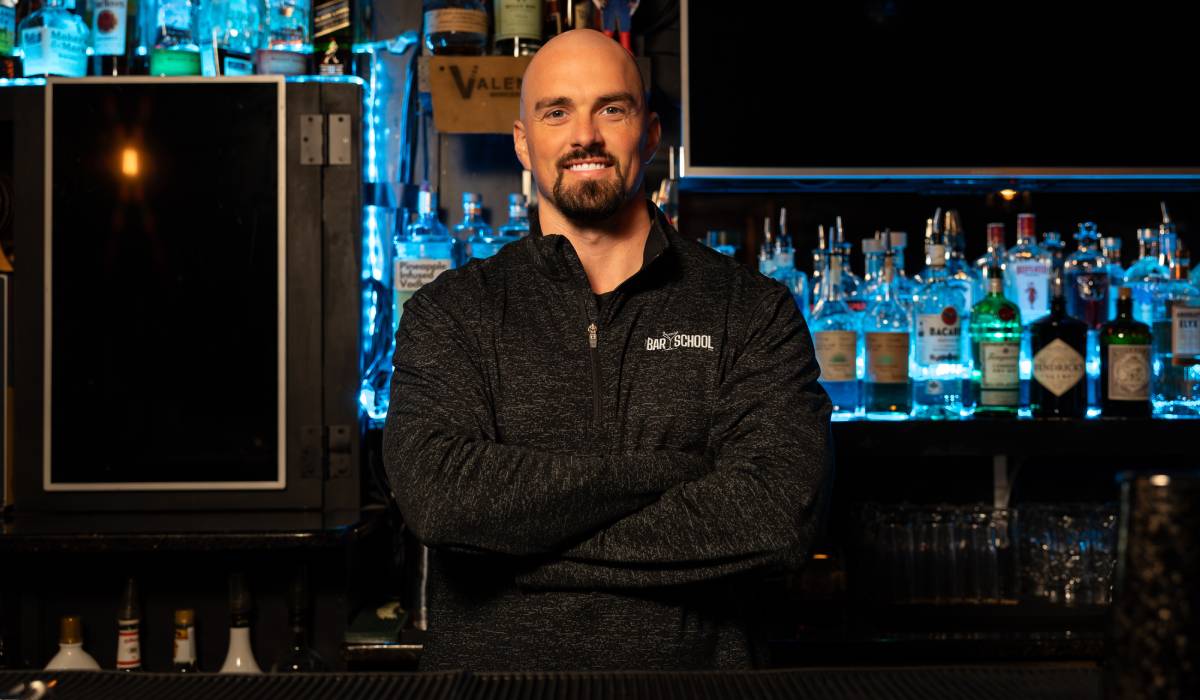
The modern beverage industry is currently defined by a stark dichotomy that Joe Stake, a veteran bartender and entrepreneur, describes as a "line in the sand." On one side of this divide is the "high-brow" world of craft mixology, characterized by complex ingredients, technical precision, and an often-exclusionary culture of expertise. On the other side lies "low-brow" service, encompassing high-volume environments like sports bars and neighborhood pubs where speed, efficiency, and customer familiarity take precedence over artisanal flair. Stake, the founder of The Bar School and owner of the Worcester-based cocktail bar Valentino’s, is spearheading a movement to dissolve this barrier through a revamped educational model that prioritizes the realities of a busy shift over theoretical or elitist standards.
With over 12 years of experience behind the bar and in management, Stake’s approach is rooted in the practical necessity of the hospitality trade. His journey began not as a pursuit of a lifelong passion, but as a pragmatic career shift. After graduating from an accelerated four-year college program at the age of 19, Stake found that his youth was a barrier to entry in the traditional corporate business world. This led him to a bartending role at a local sports club, an experience that provided him with a foundational understanding of high-volume service and the immediate problem-solving required in the industry. Over the subsequent decade, he moved through various roles in the Northeast, eventually opening Valentino’s in 2017 with his cousin. This trajectory from the "trenches" of local bars to the ownership of a respected cocktail establishment informs his belief that the industry’s current educational frameworks are often disconnected from the daily experience of the working bartender.
The Evolution of Bartending Education and the Rise of The Bar School
The launch of The Bar School several years ago was a direct response to what Stake identifies as "gatekeeping" within the beverage community. Historically, bartending was learned through informal apprenticeships or on-the-job training. However, as the "craft cocktail" movement gained momentum in the early 21st century, a new layer of elitism emerged. Social media and industry forums began to dismiss structured education, such as bartending schools or online courses, as illegitimate. Stake argues that this perspective is counterproductive, creating unnecessary barriers for newcomers who feel intimidated by the perceived complexity of modern mixology.
The Bar School’s curriculum is designed to be an "unfiltered" entry point. The introductory course, filmed on-site at Valentino’s, avoids the trap of focusing on obscure historical recipes that a bartender may never be asked to make. Instead, it emphasizes the "modern classics" and the high-frequency orders that dominate current consumer trends. Stake’s philosophy is built on the reality that in 15 years of service, many of the "mandatory" drinks taught in traditional schools have never actually been ordered by a guest. By focusing on the drinks that actually drive revenue in today’s market, Stake aims to prepare students to be "floor-ready" for a busy Friday night shift immediately upon completion of the program.
A Data-Driven Approach to Hospitality and Income
Central to Stake’s educational model is the acknowledgment that bartending is a sales-driven profession. In the United States, where the tipping culture remains the primary engine of compensation for service workers, Stake believes that training must include a focus on revenue generation. According to data from the U.S. Bureau of Labor Statistics (BLS), there are approximately 450,000 bartenders currently employed in the U.S., with a significant portion of their total earnings derived from gratuities rather than base wages.
Stake’s advanced course, which debuted last year, treats bartending as a three-pillar discipline: customer service and sales, advanced mixology, and marketing. The sales component teaches students the psychology of upselling—how to guide a customer from a well-spirit to a premium brand or from a draft beer to a higher-margin cocktail—without being pushy. Stake demonstrates how subtle changes in phrasing and engagement can lead to higher check averages and, consequently, higher tips. This pragmatic focus on the "bottom line" distinguishes his program from those that view bartending solely as a culinary or artistic pursuit.
Practical Mixology and the Economics of the Bar
In the advanced mixology segment of his program, Stake emphasizes high-impact, low-investment techniques. He argues that a bar does not need expensive, specialized equipment to elevate its beverage program. For example, at Valentino’s, one of the most successful offerings is a pineapple-coconut margarita. The base is created by infusing coconut tequila with fresh pineapple in a standard $25 glass jug equipped with a pour spout.
This infusion serves multiple purposes: it acts as a visual "hook" for customers sitting at the bar, it creates a unique product that cannot be found elsewhere, and it allows for high-margin pricing. By teaching these "simple wins," Stake empowers bartenders to improve their workplace’s profitability and their own professional value without requiring a massive capital outlay from the owner. This approach aligns with broader industry trends toward "premiumization," where consumers are willing to pay more for perceived quality and unique experiences, even in neighborhood bar settings.
The Professionalization of the Bartender as a Personal Brand
One of the most innovative aspects of Stake’s curriculum is the emphasis on self-promotion and marketing. Drawing a parallel to real estate agents or independent contractors, Stake encourages bartenders to view themselves as a brand. In the current digital landscape, a bartender’s ability to draw a crowd can be as valuable as their ability to mix a drink.
The Bar School provides students with a toolkit for social media marketing, including professional graphics for over 35 common cocktails. The goal is to teach bartenders how to "own" their following, using platforms like Instagram and TikTok to announce their shifts, promote specials, and build a base of "regulars." Stake’s analysis suggests that the most successful bartenders in the modern era are those who act as their own marketing department, driving foot traffic to the establishment and ensuring a steady stream of income regardless of the bar’s independent marketing efforts.
Industry Context and Future Implications
The emergence of platforms like The Bar School comes at a critical time for the hospitality industry. Following the disruptions of the COVID-19 pandemic, the service sector has faced a persistent labor shortage and a high rate of turnover. Traditional "on-the-job" training has become more difficult as experienced staff leave the industry, creating a "knowledge gap" that online platforms are beginning to fill.
Stake’s forward-looking strategy includes a major media shoot completed for a 2026 rollout, which involves collaborations with several major beverage brands. This content—spanning podcasts, videos, and specialized tutorials—will address regional differences in bartending. Stake acknowledges that the "Margarita culture" of California may differ significantly from the "Old Fashioned culture" of New York or the specific preferences found in the Midwest. By tailoring content to these market-specific nuances, he hopes to create a global resource that remains locally relevant.
Analysis of the Impact on Career Perception
Joe Stake’s mission ultimately seeks to change the cultural perception of bartending as a "fallback" job. By applying his MBA-level business education to the bar industry, he demonstrates that hospitality offers significant autonomy, high income potential, and a viable career path for those willing to treat it with professional rigor.
The implications of this shift are twofold. First, it democratizes the industry by removing the elitist barriers that have historically separated "mixologists" from "bartenders." Second, it professionalizes the role by emphasizing the business and marketing skills necessary for long-term success. As the industry continues to evolve, the integration of practical mixology with aggressive sales and personal branding—as advocated by Stake—is likely to become the new standard for professional beverage education.
Stake’s message to the next generation of hospitality workers is clear: by committing to the fundamentals of the "busy shift" and embracing the business side of the bar, individuals can find both financial stability and professional fulfillment in a field that has often been undervalued by the traditional workforce. The Bar School stands as a testament to the idea that in the world of hospitality, the most valuable knowledge is that which can be applied when the house is full and the tickets are printing.