 admin
admin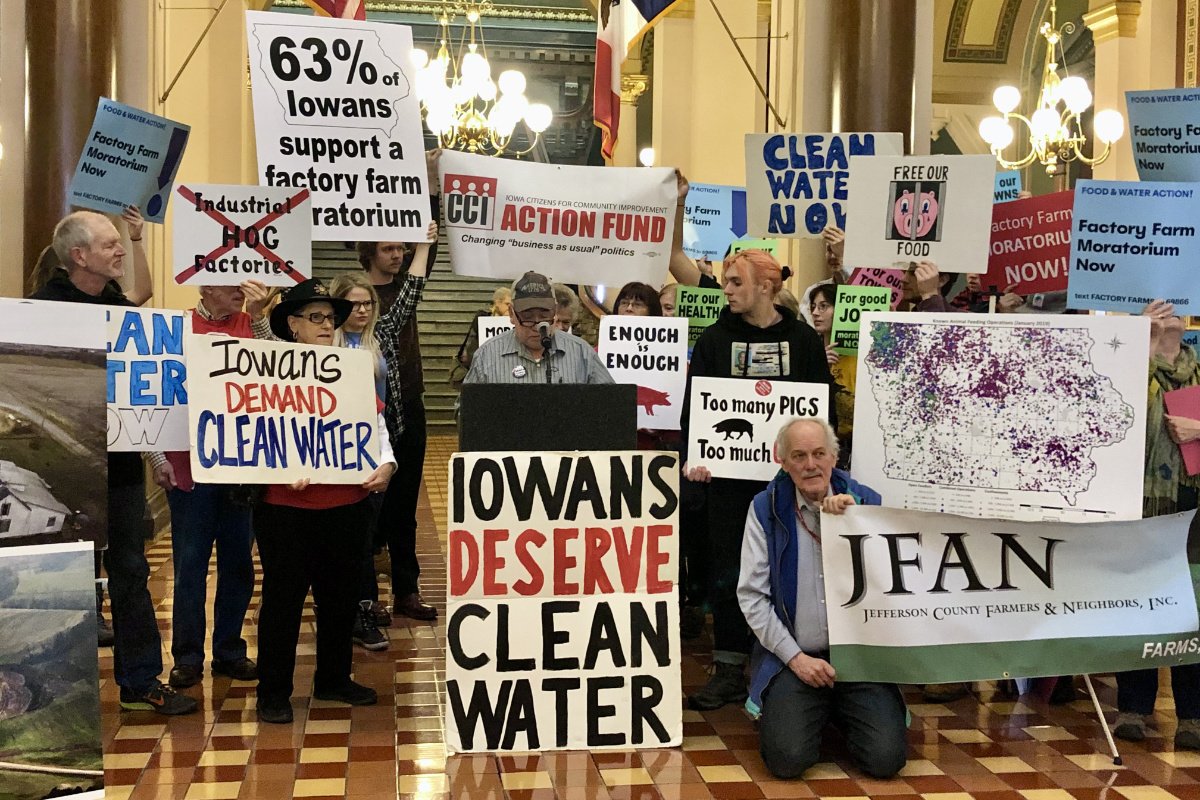
In the heartland of America, where sprawling fields and towering grain silos define the horizon, the intricate web of corporate, political, and cultural forces shaping agricultural practices often remains obscured. Yet, these are the very issues that Art Cullen, the Pulitzer Prize-winning editor of the Storm Lake Times Pilot in Storm Lake, Iowa, has diligently exposed for over three decades. His relentless reporting has not only served his town of 11,000 residents but has also resonated nationally, spotlighting the profound implications of industrial agriculture on the environment, public health, and rural communities.
Cullen, a native of Storm Lake, leads a family-run newspaper, with his brother, wife, and son also on staff. This deep local rootedness grants him an unparalleled perspective on the challenges facing Iowa, a state synonymous with agriculture but increasingly grappling with its dark underbelly. In 2017, Cullen earned the coveted Pulitzer Prize for editorials that "successfully challenged powerful corporate agricultural interests in Iowa," a testament to his unwavering commitment to truth in the face of immense pressure. His recent book, Dear Marty, We Crapped In Our Nest: Notes From the Edge of the World, a collection of his impactful columns, further amplifies these critical discussions, which are now gaining significant national prominence as the country navigates a pivotal election year.
A Deep Dive into Iowa’s Agricultural Crossroads
Iowa stands at a critical juncture, facing a confluence of environmental degradation, public health crises, and significant demographic shifts, all intricately linked to its dominant agricultural model. The state’s landscape, once dotted with diverse family farms, has increasingly been transformed by large-scale industrial hog facilities and monoculture cropping systems. These changes, driven by economic incentives and corporate consolidation, have profound and often detrimental consequences that Art Cullen has meticulously documented.
The issues Cullen highlights—water pollution from industrial animal agriculture, illnesses linked to farm chemicals, the impacts of continued corporate consolidation, and the critical role of immigrant labor—are no longer confined to local discourse. They represent pressing national concerns that demand urgent attention. The conversation around these topics is evolving, propelled by a growing populism that increasingly scrutinizes corporate power within the food system.
Immigration, Labor, and the Meatpacking Industry
One of the most immediate and sensitive issues currently impacting Iowa is the enforcement of immigration policies, particularly in states like Minnesota, which share economic ties and labor pools with Iowa. Storm Lake itself is a majority-Latino community, a demographic reality directly tied to the presence of large meatpacking plants. These facilities, essential to the national food supply chain, rely heavily on immigrant labor, often undocumented, to perform demanding and hazardous work.
Cullen observes a pervasive sense of fear and apprehension within Storm Lake’s immigrant community, leading many to "lay low" and avoid public spaces. However, he also points to a tacit acknowledgment at higher levels of government regarding the indispensable role of these workers. The severe disruptions experienced during the COVID-19 pandemic, which saw the temporary closure of major pork slaughter plants like those operated by Tyson in Storm Lake and Waterloo, resulted in a dramatic 50 percent surge in meat prices within a week. This economic shock, Cullen suggests, underscored the critical necessity of immigrant labor for maintaining the meat supply chain, leading to a de facto understanding that mass deportations would have catastrophic economic repercussions. While the political climate remains unpredictable, the economic realities of the meatpacking industry appear to exert a sobering influence on enforcement priorities.
Iowa’s Political and Environmental Inflection Point
The current political landscape in Iowa is marked by an unprecedented level of fluidity. For the first time since 1968, the state is witnessing open U.S. Senate and gubernatorial races simultaneously, signaling a potential seismic shift. Historically, Iowa has trended Republican, with recent years characterized by an entirely Republican congressional delegation and state government. However, with the incumbent Republican Governor Kim Reynolds and Senator Joni Ernst not seeking re-election, Democrats perceive a genuine opportunity to reclaim these key seats. Such an outcome would fundamentally alter the political atmosphere in a state that, as Cullen notes, has "raced backwards in time" in terms of social progress, stifling discussions on racial history and shaming LGBTQ+ individuals.
Beyond the ballot box, nature itself is forcing significant changes upon Iowa’s agricultural practices. Climate change is manifesting through increased disease outbreaks in livestock and severe water scarcity across the Great Plains, impacting cattle ranching. The shifting dynamics are evident in the closures of some beef plants and the emergence of producer-owned alternatives, reflecting a sector in profound flux.
Cullen critically assesses the "50-year experiment in supply-side economics" in agriculture, declaring it a failure. He argues that this economic model has not delivered prosperity for agriculture or rural communities, and has instead contributed to the degradation of the environment and a deterioration of political culture. The pollution of water resources serves as a stark symptom of this failed approach, reinforcing the notion that Iowa is at a multi-faceted inflection point where environmental, social, and economic issues are inextricably linked.

The Crisis of Water Quality and Public Health
Water quality stands as one of the most pressing environmental concerns in Iowa, a state crisscrossed by rivers and streams vital to its ecosystem and communities. Cullen’s latest documentary series, "What’s Eating Iowa?", dedicates an episode to this critical issue, exploring its deep roots in industrial agriculture. The public’s concern is palpable; last summer, a thousand people gathered at Drake University to discuss nitrate levels in the Raccoon River, an astonishing turnout for a discussion on agricultural runoff. This level of engagement signals a growing public outcry over polluted waterways.
Iowans are increasingly linking agricultural practices, particularly the use of fertilizers like anhydrous ammonia, to the contamination of their water sources. Nitrate pollution, a direct consequence of runoff from farm fields, poses significant health risks and contributes to ecological damage far beyond Iowa’s borders, notably the hypoxic "dead zone" in the Gulf of Mexico. Despite overwhelming public concern, the Republican-led legislature, heavily influenced by the agribusiness lobby, has consistently resisted meaningful regulation of agriculture and drainage districts. This political deadlock prevents an honest and robust discussion about the root causes of water pollution and its link to public health.
The health implications are particularly alarming. Iowa boasts the second-highest cancer rate in the United States, surpassed only by Kentucky, a state historically impacted by tobacco. Disturbingly, Iowa also records a very high rate of youth cancer, along with the highest rates of breast and prostate cancer in North America, concentrated in regions with the highest density of livestock operations. In areas like Storm Lake, where residents routinely endure the stench of hog waste, a clear connection is being drawn between environmental exposures, industrial agricultural practices, and the alarming rise in cancer rates. These communities are slowly recognizing how large-scale agribusiness, while promising economic benefits, has inadvertently undermined the health and well-being of rural populations.
Challenging the "Anti-Farmer" Label: Propaganda and Political Resistance
Speaking out against industrial agricultural practices in Iowa often carries the risk of being labeled "anti-farmer," a powerful pejorative designed to silence critics and stifle meaningful debate. This narrative, meticulously crafted and propagated, creates a false dichotomy: one must either be "pro-pollution" or "anti-farmer." Cullen refers to this as "cropaganda," a deliberate campaign of disinformation aimed at protecting the interests of powerful agribusinesses.
The current state agriculture secretary, Mike Naig, whose professional background includes working for Monsanto—a company synonymous with agricultural chemicals and genetically modified seeds—exemplifies this dynamic. When Chris Jones, a Democratic research scientist and water researcher, launched a "quixotic" campaign for Iowa Secretary of Agriculture advocating for clean water, he was immediately branded "anti-farmer" by the incumbent. This tactic effectively frames environmental protection as an attack on farmers, even though, as Cullen argues, "You can have prosperous agriculture and clean air and water. They’re not mutually exclusive."
The pervasive influence of corporations like Monsanto (now Bayer) in shaping agricultural policy and public perception is a critical aspect of this challenge. These companies have historically cultivated an image of being "on the side of the farmer," providing essential inputs like seeds, fertilizers, and pesticides. This narrative, coupled with extensive lobbying efforts and financial contributions to political campaigns, has allowed agribusiness to wield immense power in state legislatures, effectively blocking regulations that could impact their profitability but improve environmental and public health outcomes.
The Broader Impact and Implications for the Nation
Art Cullen’s work at the Storm Lake Times Pilot transcends local journalism, offering a microcosm of broader national issues. The struggles in Iowa reflect a wider discontent across rural America, where communities grapple with the environmental and social costs of an industrialized food system dominated by a few powerful corporations. The rising populism that Cullen observes is not confined to one political ideology; it represents a growing demand for accountability from corporate entities and a re-evaluation of economic models that prioritize profit over people and planet.
The upcoming elections in Iowa could serve as a bellwether for national sentiment, demonstrating whether voters are willing to challenge established narratives and elect leaders committed to environmental stewardship and rural revitalization. The shift in agricultural practices, driven by climate change and disease, will necessitate innovative solutions and policy changes that move beyond the outdated "supply-side" approach.
Ultimately, Cullen’s enduring contribution lies in his steadfast commitment to investigative journalism, providing a voice for those most affected by these systemic issues. His work underscores the vital role of local newspapers in holding power accountable and informing public discourse on matters of national significance. As the nation confronts complex challenges related to food security, environmental sustainability, and social equity, the lessons emerging from Iowa’s agricultural heartland, illuminated by the persistent efforts of journalists like Art Cullen, become increasingly relevant for all. The questions he raises—about who truly benefits from the current system, and at what cost—are questions the entire country must urgently address.