 admin
admin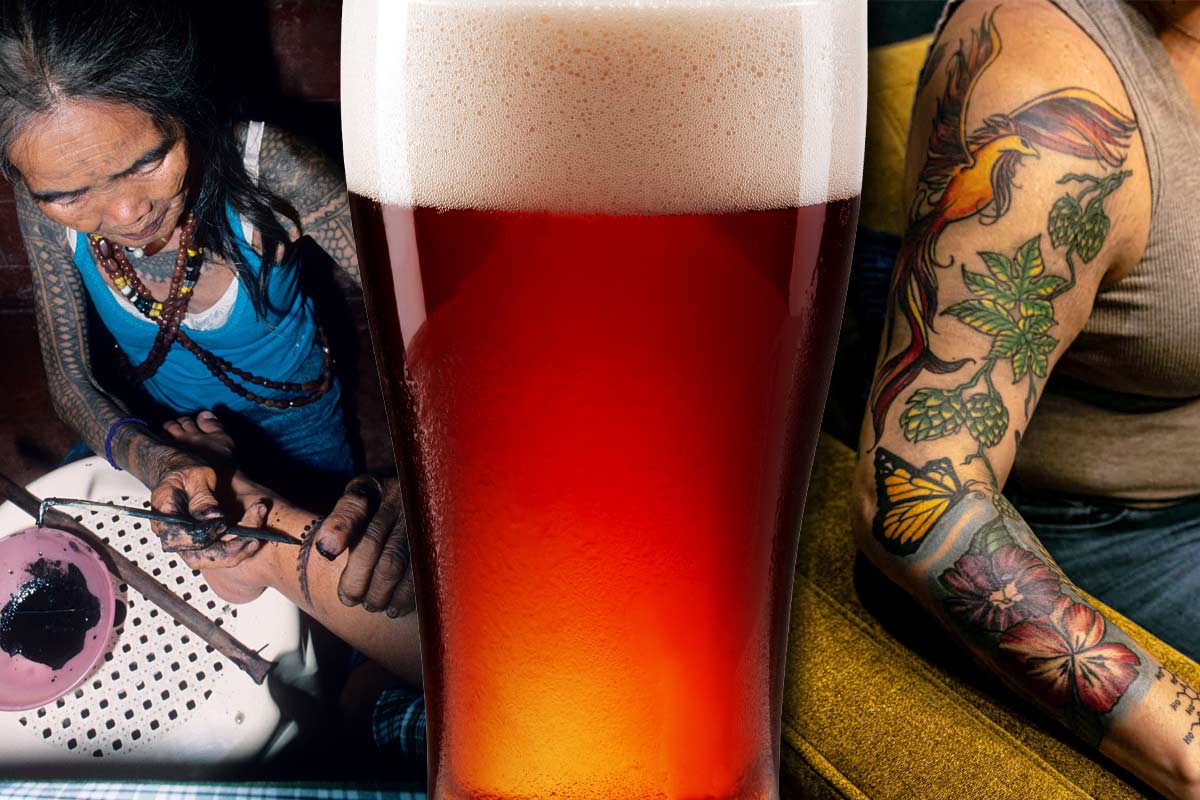
The practices of tattooing and fermentation, while seemingly disparate in modern industrial contexts, represent two of humanity’s oldest and most profound technologies of transformation. Across diverse global cultures, from the subarctic forests of northern Japan to the tropical savannas of Guyana, these two crafts have historically intersected within the realms of ritual, community identity, and spiritual continuity. Both tattooing and fermentation involve the deliberate alteration of raw materials—skin and organic matter—to create something that signifies permanence, nourishment, and belonging. While tattooing inscribes lineage and status onto the human canvas, fermentation preserves the harvest and facilitates communal ritual, with both acting as conduits for ancestral knowledge and cultural resilience.
The Hearth as the Nexus of Ainu Tradition
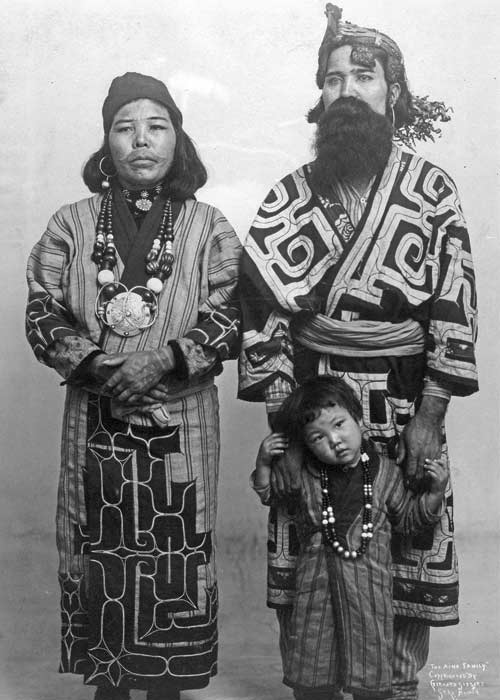
For the Ainu, the Indigenous people of Hokkaido, Sakhalin, and the Kuril Islands, the domestic hearth served as the physical and cosmological center where tattooing and fermentation converged. Historically, Ainu society was organized around the spiritual authority of the kamuy (divine beings), with Kamuy Fuchi, the goddess of the hearth, overseeing all domestic labor.
The relationship between ink and drink in Ainu culture was literal. Ainu women, who were the primary practitioners of both tattooing and brewing, collected soot from the underside of earthenware cooking pots used to brew tonoto, a fermented beverage made from rice or millet. This soot was then mixed with water steeped in ash tree bark to create a deep, indelible pigment. This pigment was applied to the lips and hands of young women using a makiri (tattooing knife), marking their transition into adulthood and providing spiritual protection.
The fermentation of tonoto was equally ritualistic. As the sole caretakers of the beverage, women offered prayers to the kamuy throughout the brewing process. The act of using brewing soot for tattooing created a closed loop of spiritual significance: the fire that cooked the food and fermented the grain also provided the medium to mark the body. This practice was severely suppressed during the Meiji period (1868–1912) as part of a forced assimilation policy by the Japanese government, which viewed tattooing as "barbaric." However, recent cultural revitalization efforts in Japan have seen a renewed academic and communal interest in these linked traditions as symbols of Ainu sovereignty.
Chemical Intersections in Kalinga Batok
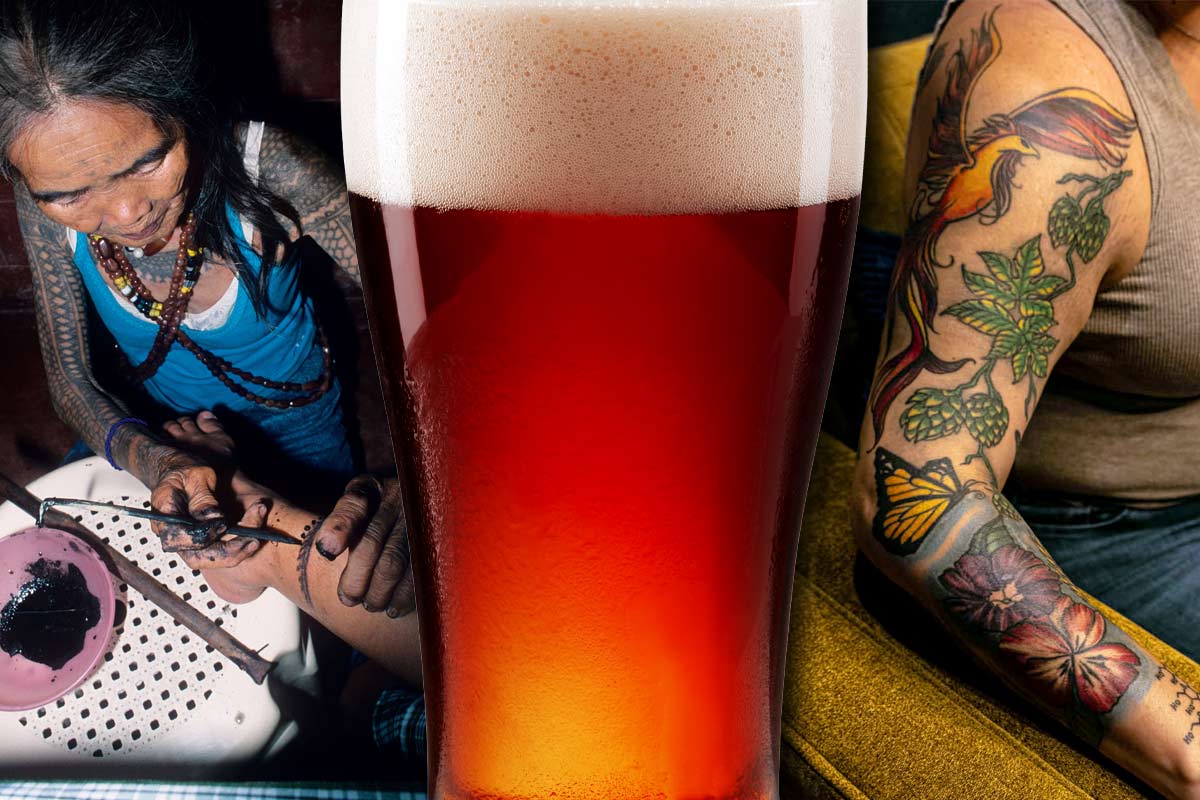
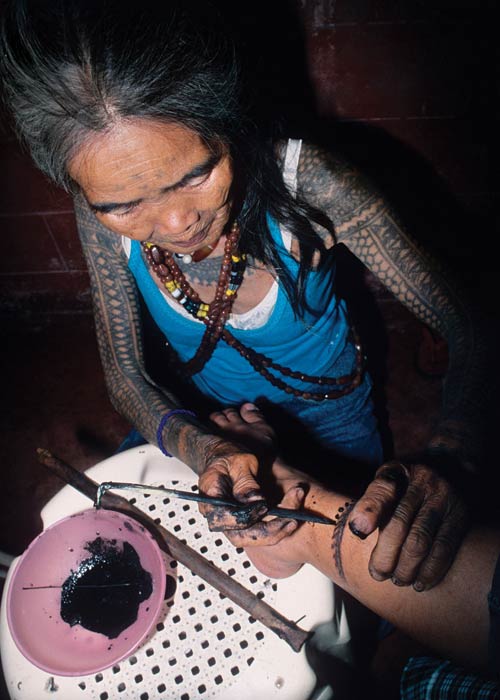
In the rugged Cordillera region of the northern Philippines, the Kalinga people have maintained the tradition of batok, a hand-tapped tattooing method. While batok is widely recognized today through the global fame of Maria "Whang-od" Oggay, the world’s oldest living mambatok (tattoo artist), its historical connection to fermentation offers a unique look at indigenous chemistry.
Traditional Kalinga tattoo ink was often composed of soot mixed with water or plant-based carriers. In certain historical iterations, sugarcane juice was utilized as a mixing agent. Because sugarcane juice contains natural sugars and wild yeasts, the mixture would undergo a subtle fermentation process if left to rest. While the primary function of the ink was the mechanical deposition of carbon into the dermis, the use of a fermentable medium highlights the integration of local agricultural products into the toolkit of the artisan.
For the Kalinga, these markings were not merely decorative. For men, tattoos were earned through acts of bravery and successful defense of the community, while for women, they represented beauty and social standing. These life transitions were celebrated with fermented beverages such as tapuy (rice wine) or tuba (palm wine). The presence of both "ink and drink" at these communal milestones reinforced the social fabric of the village, turning the body into a living record of the community’s history and its relationship with the land.
The Makushi and the Alchemy of the Cassava
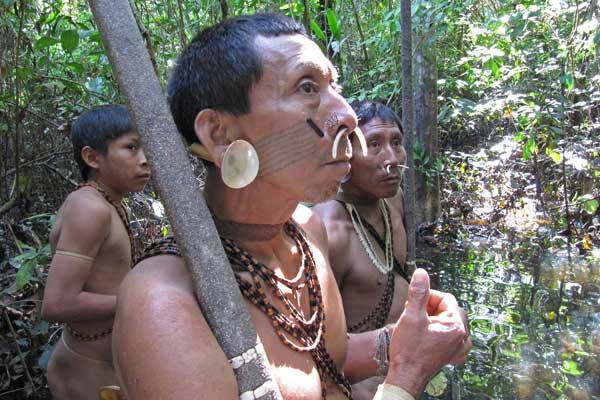
In the Guiana Shield of South America, the Makushi people demonstrate perhaps the most direct functional link between tattooing and fermentation. Their staple crop, cassava, requires complex processing to remove toxins and convert starches into fermentable sugars. This process culminates in the production of parakari, a unique cassava beer that utilizes a dual-fermentation process involving specialized molds and yeasts.
Anthropological records indicate that Makushi women traditionally received kansku markings—tattoos specifically designed as brewing and cooking charms. These tattoos often featured motifs of bees or scorpions, intended to impart "sweetness" or a "sting" (potency) to the fermented brew. In the Makushi language, the term yekî refers both to the sting of an insect and the state of being intoxicated, illustrating a linguistic and ritual bridge between the markings on the skin and the effect of the drink.
According to cultural anthropologist Dr. Lars Krutak, these tattoos were considered essential for a woman’s social and ritual efficacy. A woman was often required to have tattooed arms before she was permitted to serve fermented beverages to men during formal gatherings. Here, the tattoo functioned as a biological and spiritual certification of the brewer’s skill, suggesting that the transformation of the body was a prerequisite for the successful transformation of the grain.
Hawaiian Epistemology and Body Sovereignty
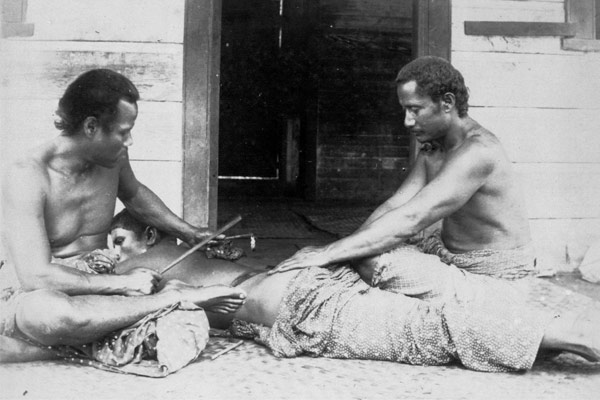
In Hawaii, the intersection of tattooing (kākau) and fermentation (specifically the production of poi from fermented taro) is rooted in the concept of genealogy (moʻokūʻauhau). Native Hawaiian traditions view the kalo (taro) plant as Hāloa, the elder brother of the Hawaiian people. Consequently, the cultivation and fermentation of kalo into poi is not merely food preparation but an act of kinship and ancestral care.
Dr. Lindsay Malu Kido, a scholar specializing in Indigenous body sovereignty, notes that kākau serves a parallel purpose by inscribing a person’s genealogy directly onto their skin. The revival of hand-tapped tattooing in Hawaii is frequently framed as a movement toward decolonization. By reclaiming traditional markings, individuals reassert authority over their bodies, moving away from Western aesthetic standards. Similarly, the traditional fermentation of poi represents a reclamation of Indigenous food systems. Together, these practices form a holistic approach to identity that prioritizes continuity with the past over modern industrial homogenization.
A Chronology of Suppression and Revival
The history of these dual practices is marked by a clear timeline of colonial suppression followed by contemporary resurgence:
- Late 19th Century: Colonial administrations in Japan, the Philippines, and the Americas begin outlawing indigenous tattooing, often associating it with paganism or criminality.
- Early 20th Century: Traditional fermentation practices are marginalized by the introduction of industrial alcohol and Western dietary staples.
- 1970s–1990s: The "Indigenous Renaissance" begins globally. Activists and elders start documenting fading traditions, including tattoo motifs and ancestral brewing recipes.
- 2010–Present: A global surge in interest regarding "probiotic" cultures and "ancestral" arts leads to a convergence of tattooing and fermentation in the craft industry.
Modern Implications: The Craft Brewery Movement
The legacy of "ink and drink" has found an unexpected echo in the modern craft brewing industry. While the spiritual and ancestral contexts have shifted, the underlying logic of using the body to signal a relationship with a transformative craft remains.
Modern brewers frequently utilize tattoos to mark their professional identity, often featuring botanical illustrations of Humulus lupulus (hops), the chemical structures of alpha acids, or the cellular diagrams of Saccharomyces cerevisiae (yeast). For many in the industry, these tattoos serve as a "badge of office" and a testament to the transformative power of the brewing profession.
Rachael Engel, a brewer at Sound2Summit Brewery, and Sandra Murphy, owner of Murphy’s Law Brewery, both describe their tattoos as symbols of personal evolution. For Murphy, a sleeve featuring ale yeast cell walls and barley stalks served as a memorial and a source of strength following personal tragedy. For Engel, her tattoos marked a journey of self-discovery and identity reclamation. These contemporary examples suggest that even in a secular, industrial society, the act of marking the skin remains a powerful way to process the internal transformations brought about by a dedicated craft.
Analysis of Cultural Continuity
The intersection of tattooing and fermentation provides a lens through which to view human history as a series of deliberate transformations. Anthropologically, these practices suggest that humans have never been content to leave the world—or themselves—in a "raw" state. By fermenting, we make the environment more nourishing; by tattooing, we make the body more meaningful.
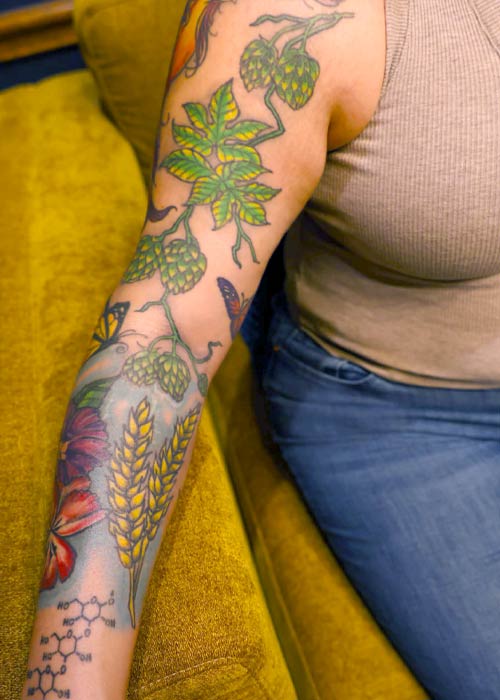
From a sociological perspective, the decline of these practices under colonial rule was not merely a loss of "art," but a dismantling of the social technologies that kept communities bonded to their land and each other. The current revival of both traditional tattooing and artisanal fermentation represents a broader societal pushback against the "placelessness" of modern life. Whether it is a Kalinga woman receiving her batok or a Texas brewer tattooing a hop vine, these acts are assertions of presence and history.
Conclusion
Tattooing and fermentation are more than just hobbies or aesthetic choices; they are foundational human technologies that have shaped identity for millennia. By examining the Ainu hearth, the Kalinga mountains, the Makushi savannas, and the Hawaiian islands, it becomes clear that the transformation of the body and the transformation of food are deeply linked. Both require time, care, and a relationship with the natural world. In a globalized era, these "traces of where we come from" continue to offer a roadmap for who we might become, proving that the ancient grammar of ink and drink remains as relevant today as it was at the dawn of the first hearth.