 admin
admin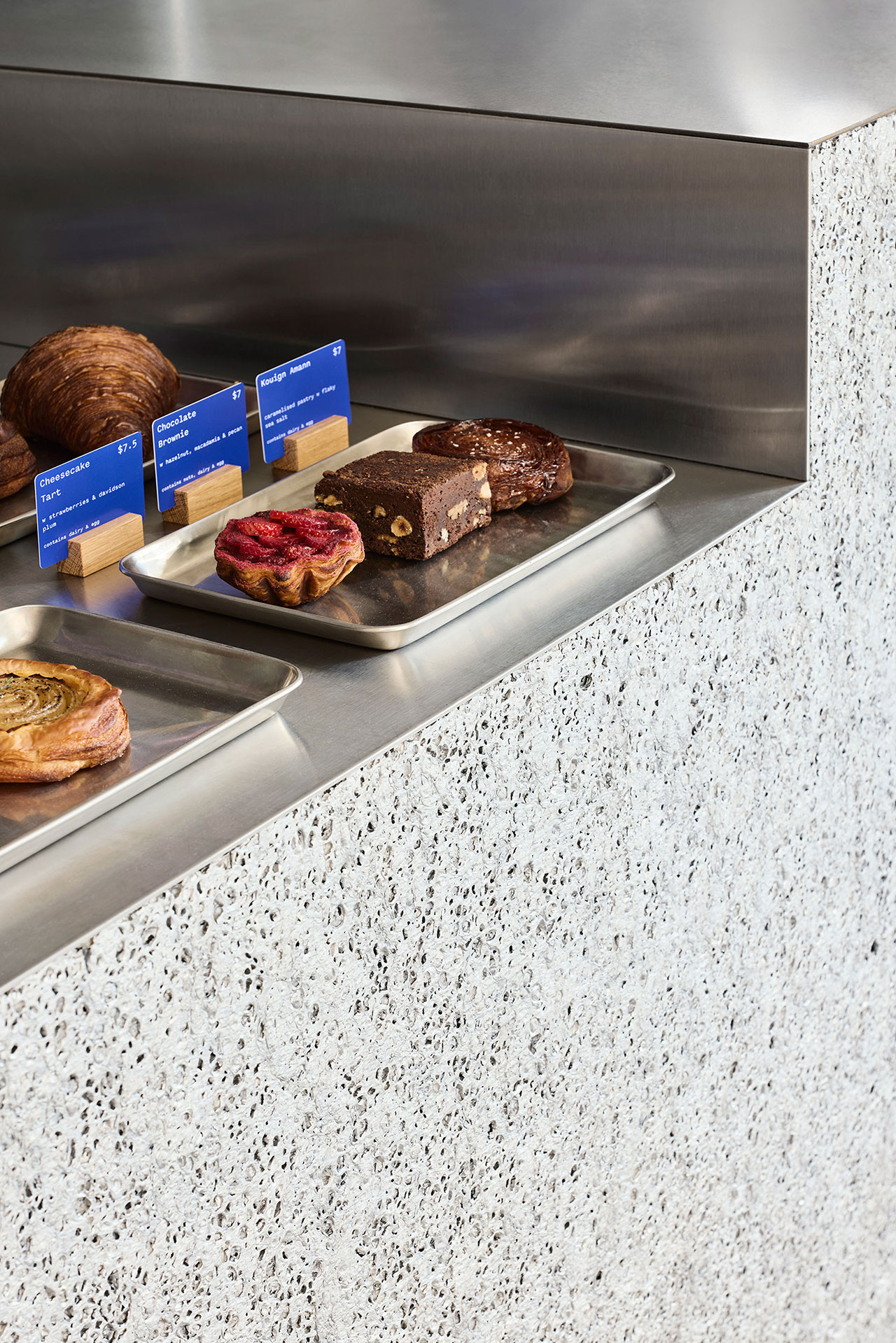
The sensory landscape of Melbourne’s culinary scene has gained a significant new landmark with the unveiling of the Baker Bleu flagship in Cremorne, a project that harmonizes the technical precision of modern architecture with the ancient, tactile craft of sourdough baking. Designed by the acclaimed firm IF Architecture, the space functions as more than a retail outlet; it is a meticulously choreographed spatial narrative that documents the journey of a loaf from the heat of the oven to the hands of the consumer. Located in the heart of Cremorne—a suburb rapidly transforming from an industrial precinct into a premier creative and technological hub—the new flagship represents a pivotal evolution for the cult-favorite bakery. The interior environment is characterized by a sophisticated interplay of textures, where the "gnarly," dark-crusted aesthetic of artisanal bread is juxtaposed against a monolithic, reductionist backdrop of recycled aluminum, stainless steel, and American Oak.
The Evolution of a Cult Culinary Icon
The opening of the Cremorne flagship marks a significant milestone in the chronology of Baker Bleu, a brand that has ascended to the pinnacle of Australia’s artisanal baking industry. Founded by Mike and Mia Russell, Baker Bleu first garnered attention for its commitment to long-fermentation sourdough and ethical sourcing, eventually becoming the preferred supplier for some of Melbourne’s most prestigious restaurants. The brand’s growth has been defined by a series of strategic expansions, beginning with its original hole-in-the-wall presence in Elsternwick before moving to a larger, highly acclaimed site in Caulfield North.
This latest iteration in Cremorne is the result of a multi-year collaboration between the Russells and Iva Foschia, the founder and lead architect of IF Architecture. This ongoing dialogue has allowed the design team to develop a deep understanding of the baker’s "daily ritual," ensuring that the physical environment supports the specific operational requirements of high-volume sourdough production while maintaining the intimate, human-centric experience that customers associate with the brand. The Cremorne site was selected not only for its strategic location near Melbourne’s central business district but also for its architectural potential to house a large-scale production facility alongside a premium front-of-house experience.
Spatial Choreography and Operational Efficiency
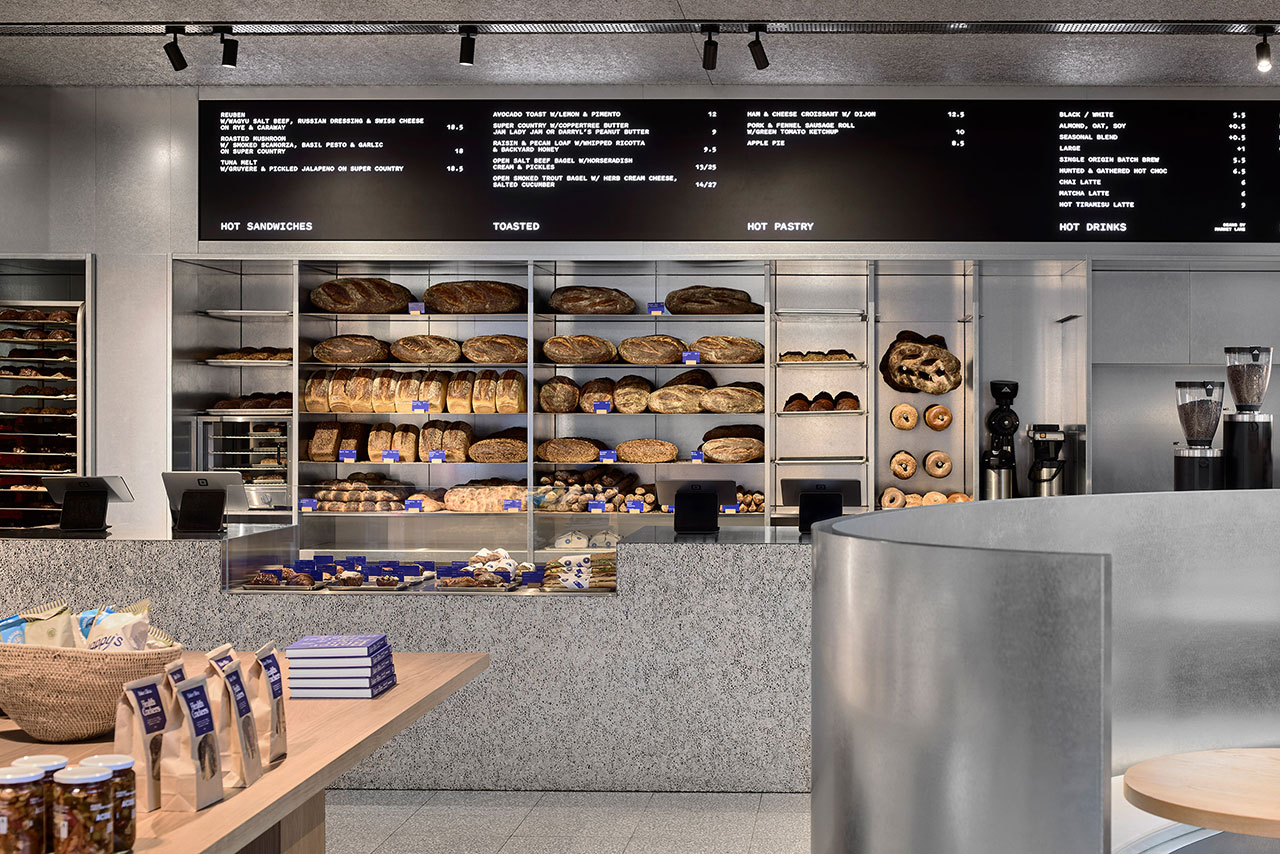
One of the primary challenges addressed by IF Architecture was the rationalization of an irregular floor plan. To resolve the tenancy’s footprint, the architects introduced a primary intervention: a large, L-shaped joinery wall. This structural element serves as the spine of the bakery, clarifying circulation paths and separating distinct operational zones without sacrificing the sense of openness.
The spatial layout is designed to prioritize "immediacy," an architectural principle derived from the culinary value of fresh bread. The proximity between the back-of-house production area and the front-of-house display is carefully compressed. This ensures that bread moves from the oven to the cooling racks and then to the customer with minimal interruption. If a customer arrives at the opportune moment, the transaction involves a loaf that is still radiating heat from the bake—a tactile confirmation of the bakery’s transparency.
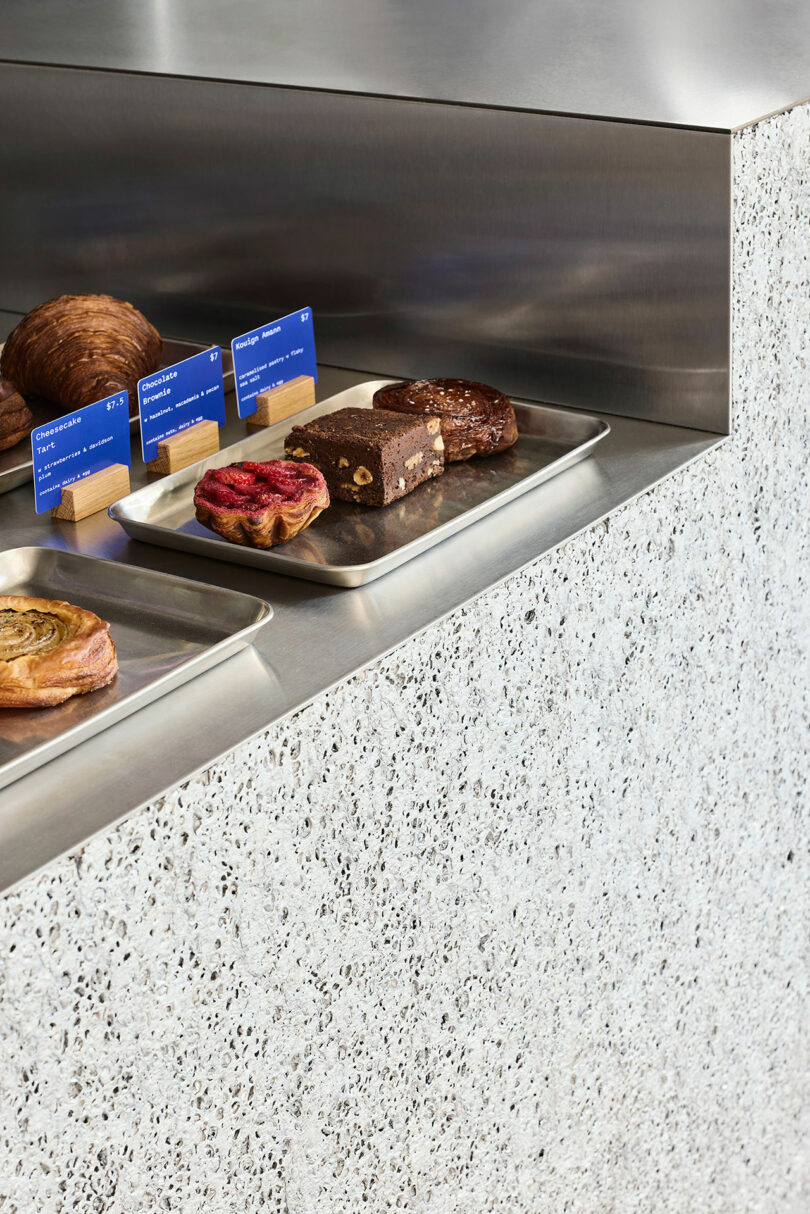
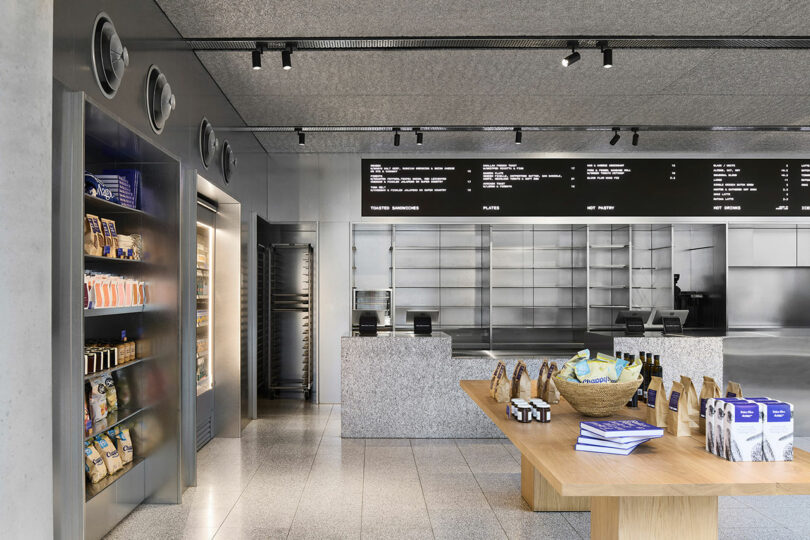
Customer flow is managed through a central American Oak display table, which acts as a navigational anchor. This placement naturally directs queues and separates different types of patrons: those seeking a quick coffee, those purchasing daily loaves, and those opting for a "dine-in" experience in the seating alcove. By creating intentional paths rather than transactional corridors, the design reduces the typical congestion associated with high-traffic bakeries, allowing the atmosphere to remain calm even during peak morning hours.
Materiality as a Metaphor for Fermentation
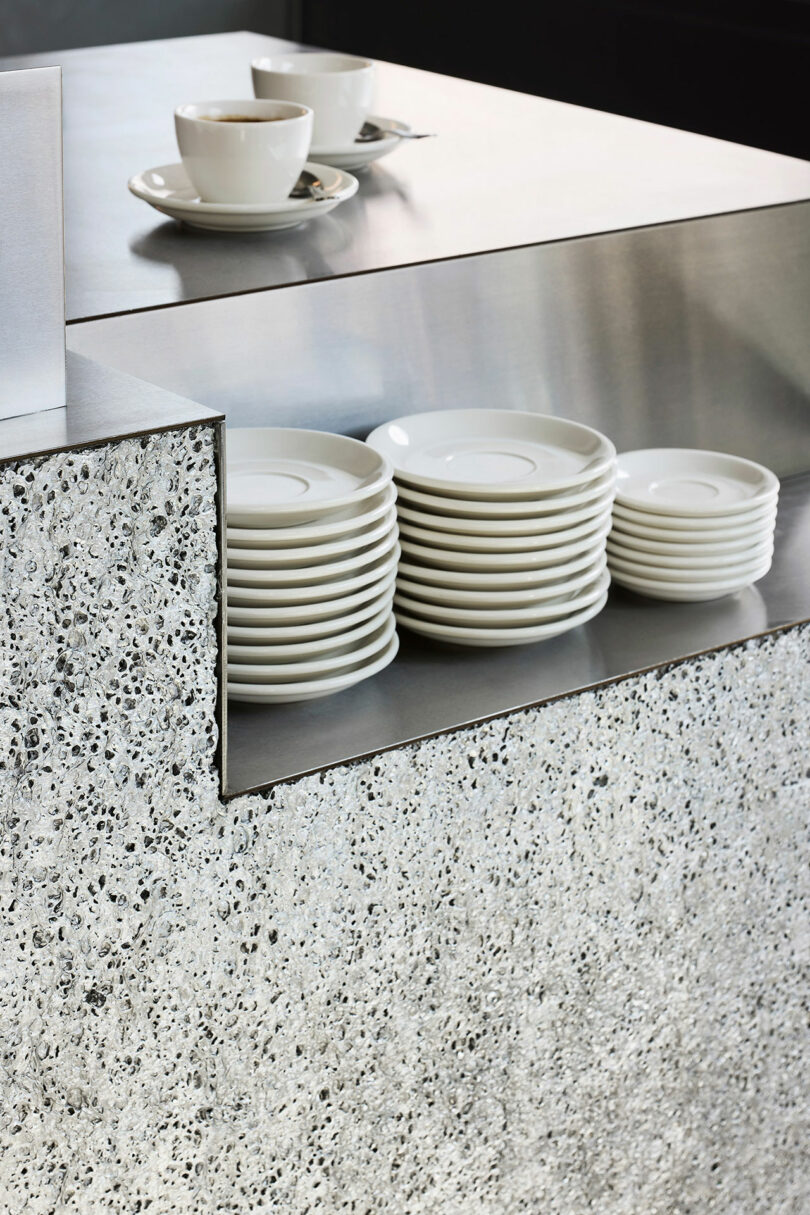
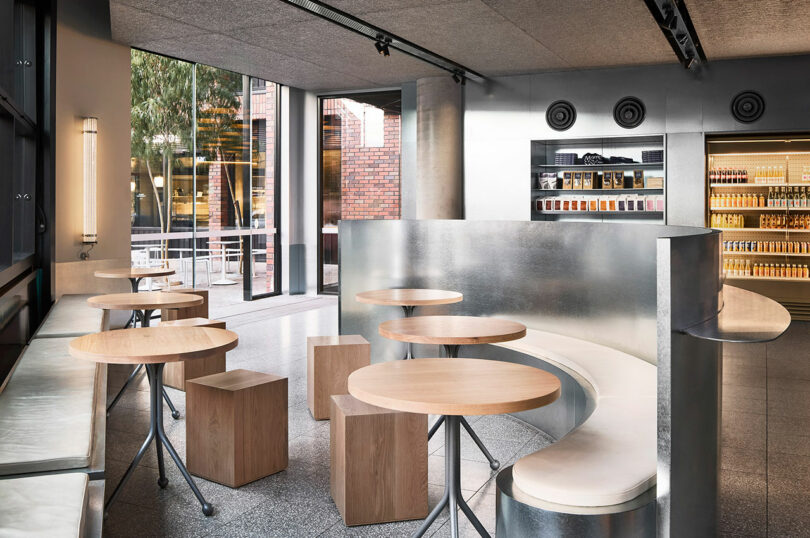
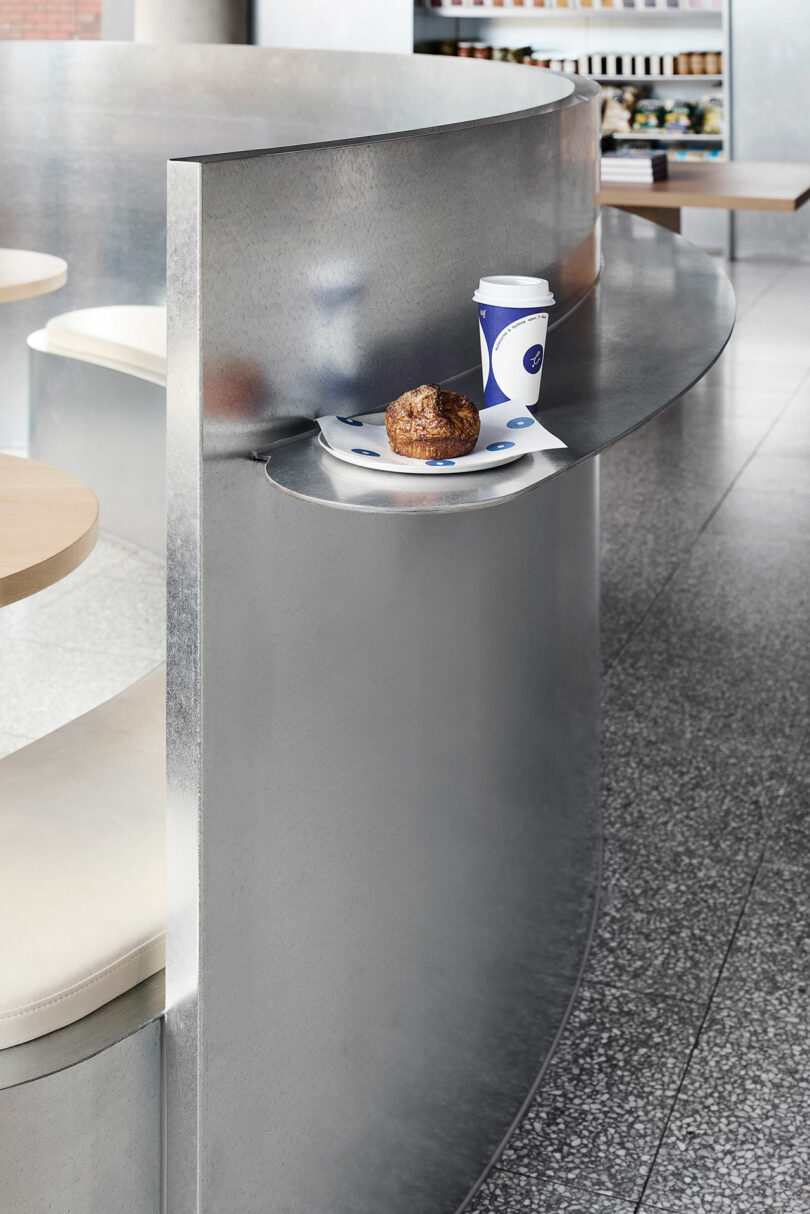
The most striking feature of the interior is the use of textured, recycled aluminum paneling that lines the walls and wraps upward to the ceiling. This material choice is deeply symbolic, intended to reference the "alveoli"—the irregular air pockets and cavities formed within the dough during Baker Bleu’s signature three-day fermentation process. The 3D-milled surfaces of the aluminum provide a poetic reflection of the bread’s internal structure, embedding the story of the product directly into the architecture of the space.
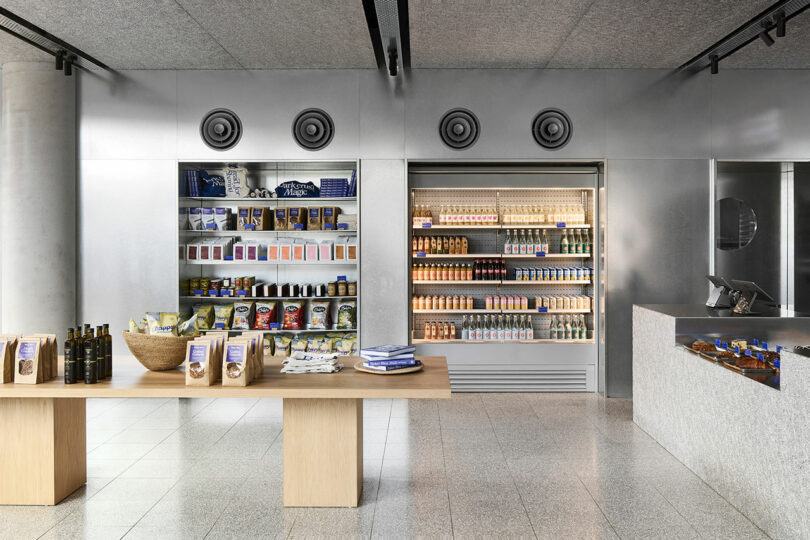
The choice of aluminum also aligns with a broader commitment to sustainability. By utilizing recycled content, the project reflects the bakery’s own ethos of ethical consumption and waste reduction. Pragmatically, the perforated and textured panels serve an acoustic function, softening the clatter of trays and the hum of machinery, which can often become overwhelming in industrial-style bakeries. This is contrasted with exposed services and structural elements, such as the galvanized steel I-beams that support the seating, maintaining an "industrial frankness" that pays homage to Cremorne’s manufacturing heritage.
Complementing the cool tones of the metal and the grey-flecked terrazzo flooring are touchpoints of American Oak. These timber elements—found in the central display table, stools, and tabletops—provide necessary warmth and a domestic sensibility. The material palette is rounded out by polished stainless steel counters and a textured aluminum point-of-sale, creating a high-contrast environment where the raw, organic forms of the bread are highlighted as sculptural objects.
Integration of Graphic Identity and Wayfinding
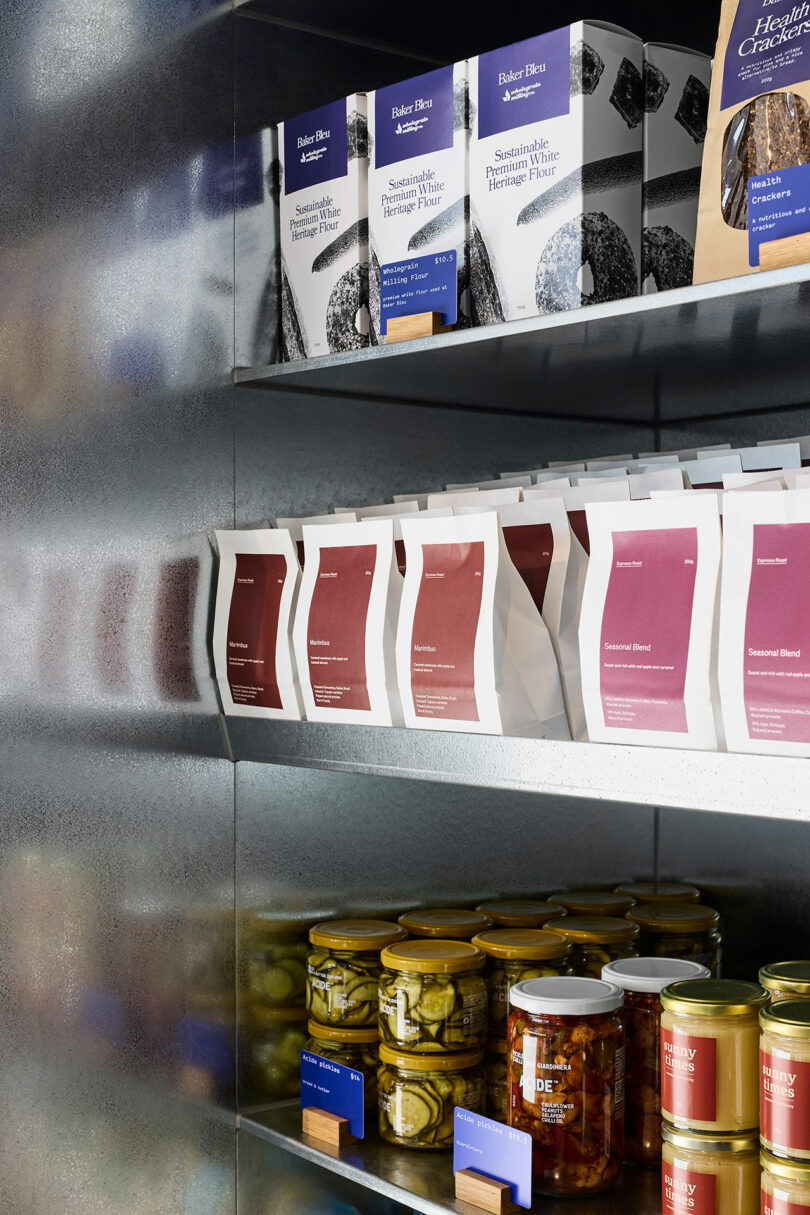
The architectural vision is further refined by the graphic identity developed by Studio Round. In a departure from typical retail branding, which often seeks to dominate a space, the visual language at Baker Bleu Cremorne is restrained and integrated. The neutrality of the material palette—terrazzo, steel, and aluminum—provides a "quiet" backdrop that allows the typography and signage to breathe.
A digital menu board is seamlessly framed within the L-shaped joinery wall, treated as a compositional element rather than an afterthought. Wayfinding is similarly intuitive; for example, a self-serve water station is built into a metallic alcove, highlighted by subtle feature lighting and crisp graphic cues. This "embedded" approach to branding ensures that the visual identity feels like an extension of the architecture, reinforcing a no-nonsense ethos that prioritizes the product over ornamentation.
Urban Context and the "Silicon Yarra" Demographic
The location of the flagship in Cremorne is a strategic response to the suburb’s evolving demographic. Often referred to as "Silicon Yarra," Cremorne is home to a high concentration of tech firms, creative agencies, and luxury car showrooms. This professional population demands a hospitality experience that is both efficient and high-end—a "third space" that functions as a site for informal meetings as well as a reliable source for premium staples.
To engage with the streetscape, IF Architecture utilized large awning windows that open the interior to the sidewalk. This design choice allows the "city to bleed into the cafe," creating a permeable boundary that activates the street frontage. Outdoor seating, featuring white tables built around existing trees and cobblestone surfaces, extends the bakery’s footprint into the public realm. This connection to the outdoors ensures that the bakery serves as a community hub, grounding the high-concept interior in its local urban context.
Broader Implications for the Bakery Typology
The Baker Bleu flagship represents a significant shift in the "bakery typology," moving away from the rustic, farmhouse aesthetic that has dominated the industry for decades. Instead, it proposes a new model: the "industrial laboratory" as a site of craft. By treating bread-making as a performance and the bakery as a stage, IF Architecture has elevated the act of buying a loaf into a sophisticated retail experience.
This project suggests that the future of artisanal food retail lies in the successful marriage of operational transparency and high-design materiality. As consumers increasingly seek out brands with authentic stories and sustainable practices, the physical environment must act as a primary communicator of those values. In Cremorne, the architecture does not merely house the process; it explains it.
Conclusion and Project Credits
The collaboration between IF Architecture, Baker Bleu, and Studio Round demonstrates the power of interdisciplinary design in creating a cohesive brand experience. Through the repetition of forms, the refinement of materials, and a deep respect for the time-honored process of sourdough fermentation, the Cremorne flagship stands as a testament to the idea that architecture and baking share a common goal: the perfection of a craft through continual refinement.
The project was captured by renowned photographer Sharyn Cairns, whose work highlights the interplay of light and shadow across the aluminum and timber surfaces. For those interested in the technical specifications of the design or the branding strategies employed, further information is available through the official portfolios of IF Architecture and Studio Round. As Baker Bleu continues to influence the national culinary landscape, this flagship remains a definitive statement on the intersection of design, sustainability, and the daily ritual of the loaf.