 admin
admin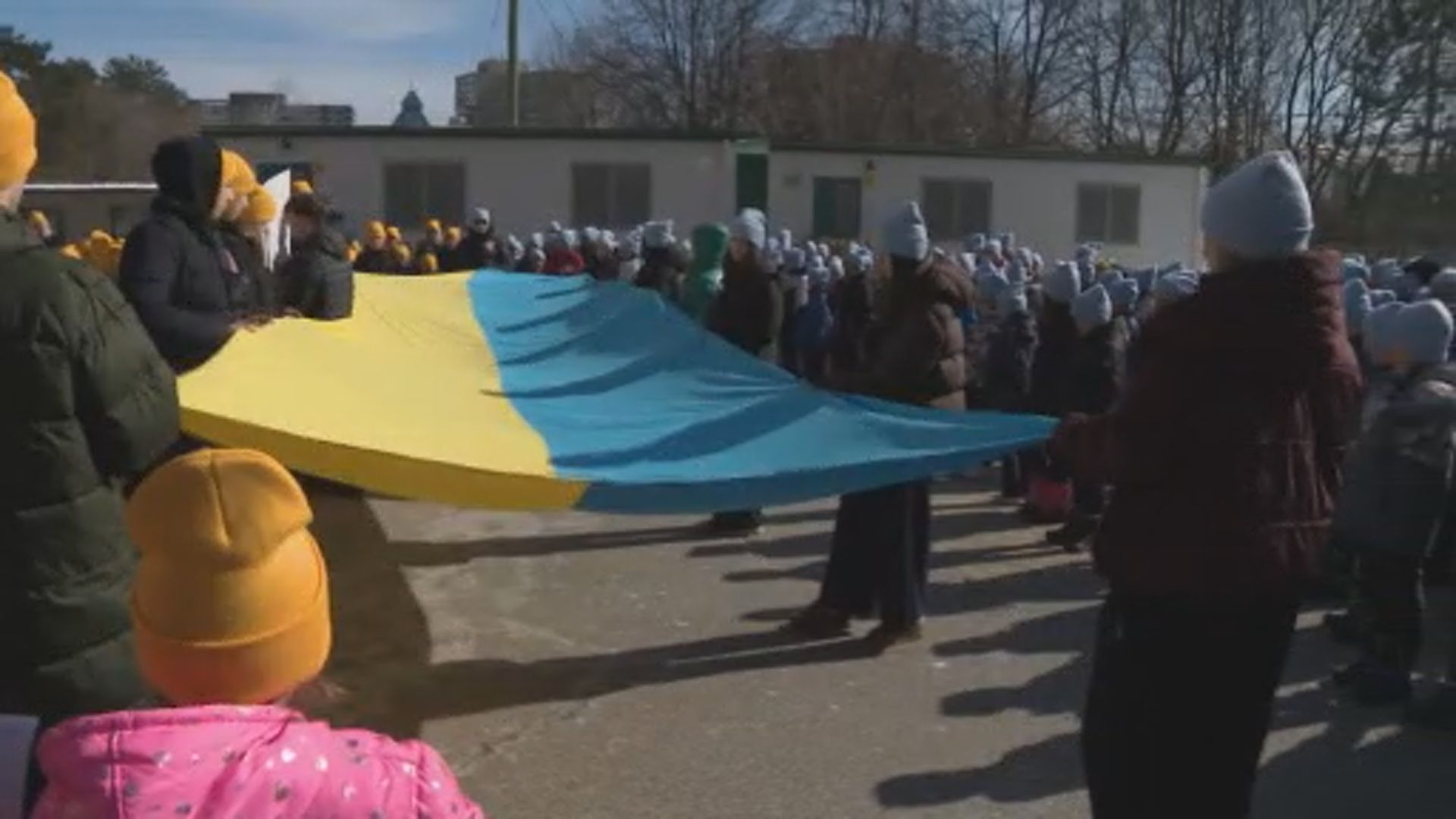
As Canadians across the nation paused to mark the four-year anniversary of Russia’s full-scale invasion of Ukraine, the commemorations served as a profound reminder of the ongoing conflict’s devastating human cost and the remarkable resilience of a people forced to rebuild their lives far from home. For the hundreds of thousands of Ukrainians who have found refuge in Canada, this sombre milestone resonates deeply, intertwining memories of sudden displacement with the persistent anxiety for loved ones still enduring the ravages of war.
The journey of Kristina Miroshnyk, now a resident of Winnipeg, encapsulates the harrowing experience of many. Originally from Sumy, a city in eastern Ukraine situated a mere 30 kilometres from the Russian border, Miroshnyk harboured growing anxieties in early 2022 as the specter of invasion loomed. Despite her apprehension and consideration of relocating to a safer part of the country, the prevailing sentiment offered little comfort. "Everyone said to me just calm down, everything will be all right, it’s the 21st century, no one will allow this to happen," she recounted to Global News from her Winnipeg home this week. This widespread disbelief, rooted in the perceived impossibility of a large-scale European conflict in the modern era, left many unprepared for the swift and brutal reality that unfolded.
In a desperate attempt to preempt the escalating threat, Miroshnyk purchased a train ticket to Lviv, a city strategically located closer to the Polish border, hoping to secure a safer haven for herself and her daughter. Yet, on the very day they were slated to depart, an unforeseen delay kept them in Sumy. The dawn of February 24, 2022, brought with it the chilling confirmation of their worst fears. "The next morning I got a call at around, I don’t remember, 5:30 a.m., or 6 a.m. It was my friend who was panicking and she was like screaming, ‘It’s a war, the war has started,’" Miroshnyk recalled, the terror of that moment still palpable. This sudden, violent awakening forced her and her daughter into an immediate flight, first to Poland, where her husband was working, then onward to Greece, before finally seeking safety and stability in Canada. Their odyssey reflects the urgent, often circuitous routes taken by millions fleeing the conflict.

Canada’s Humanitarian Response: A Lifeline for Displaced Ukrainians
Kristina Miroshnyk and her family represent a fraction of the approximately 300,000 Ukrainians who have arrived in Canada since the full-scale invasion, leveraging the Canada-Ukraine Authorization for Emergency Travel (CUAET) program. Launched in March 2022, CUAET was designed as a rapid, temporary measure to provide Ukrainians and their immediate family members with a fast-tracked pathway to temporary resident status in Canada, complete with open work and study permits. This initiative underscored Canada’s commitment to supporting those displaced by the conflict, offering a critical lifeline to individuals and families seeking refuge from the war zone.
However, four years into the conflict, the temporary nature of CUAET has begun to present new challenges for many. While grateful for the initial sanctuary, Ukrainians in Canada now face the daunting task of securing their long-term future. Many are actively working to extend their work permits or navigate the complex process of applying for permanent residency. This transition is particularly pressing for families whose children have already integrated into Canadian schools and communities, establishing roots that make the prospect of further displacement or return to a war-torn country increasingly difficult. The mental and emotional toll of this uncertainty, coupled with the ongoing trauma of war, continues to weigh heavily.
Sustained Support and Lingering Anxieties
For those like Anastasiia Ravska, also living in Winnipeg, the physical distance from the conflict does little to diminish its psychological impact. "My parents are still back home in Ukraine and lots of my friends and my male friends, lots of them were drafted and now they’re fighting," Ravska shared, articulating the pervasive sense of helplessness and worry that afflicts many in the diaspora. Her efforts, though seemingly small, are a testament to the enduring connection and commitment: "I do what I can do, I’m trying to support them, I am always trying to donate something to them as much as I can." Such acts of solidarity, whether through financial contributions, advocacy, or emotional support, form a vital network sustaining those on the front lines and those displaced.
The Canadian government has pledged over $9.7 billion in multi-faceted assistance to Ukraine since the invasion, encompassing military, financial, humanitarian, and immigration support. This commitment includes significant military aid, such as armoured vehicles, artillery ammunition, and training for Ukrainian forces, alongside substantial financial loans and humanitarian assistance channeled through various international organizations. Despite this robust support, the scale of the destruction and the ongoing human suffering in Ukraine remain immense, with estimated millions internally displaced and countless others seeking refuge abroad.

Schools as Sanctuaries: Nurturing a Generation in Exile
The integration of Ukrainian children into Canadian schools has become a cornerstone of the country’s humanitarian response. These educational institutions have often transformed into de facto community hubs, offering not just academic instruction but also essential social and emotional support. R.F. Morrison School in Winnipeg exemplifies this dedication, where it’s estimated that approximately half the students in most classes are Ukrainian-born. The school marked the four-year anniversary with a poignant assembly, featuring poetry readings and commemorative pieces that allowed students to express their experiences and remember their heritage. Such events play a crucial role in fostering a sense of belonging and cultural continuity for young newcomers.
In Toronto, St. Demetrius Catholic School has welcomed an astonishing 185 students from Ukraine, demonstrating the significant influx into urban centres. Principal Lily Hordienko described the school’s comprehensive approach to integration: "Basically from the moment they would enter we would give them toiletries, we would give them food, we would give them clothing, anything they would need." She emphasized the immediate and profound need: "Basically we would try to help them knowing they had arrived with nothing and had no way of knowing how to help themselves." This holistic support system extends beyond academics, addressing the fundamental needs of children and families arriving with little more than the clothes on their backs.
Polina Zaitseva, a Ukrainian student at St. Demetrius Catholic School, articulated the constant undercurrent of fear that persists even in a safe environment. "It’s been really stressful because around a year ago my father’s house was attacked, so I was really worried about him," she shared, highlighting the psychological burden carried by many young people whose families remain in harm’s way. These experiences underscore the fact that for Ukrainian children in Canada, the war is not a distant news story but an intimate and ongoing reality.
A Nation United in Remembrance: Commemorations Coast to Coast
The ceremonies at these schools were just two of countless commemorations held across Canada, from coast to coast, demonstrating a unified national expression of solidarity with Ukraine. In Toronto, a solemn prayer service took place at St. Demetrius Church, specifically dedicated to all Ukrainian children displaced or tragically lost in the war. These religious services provide a crucial space for spiritual reflection, communal grieving, and hope amidst despair.

Further west, in Saskatoon, a commemoration vigil was held in the chapel of St. Thomas More College. Petro Zerko, a second-generation Ukrainian-Canadian, reflected on the bittersweet nature of these annual gatherings. "It’s sad that it’s becoming just a common occurrence every year, attending this vigil," he noted, acknowledging the weariness of a prolonged conflict. Yet, he also emphasized the profound importance of remembrance: "Obviously, we look forward to the end of this war, but it’s great that we still keep those that fought for the freedom in our memory, especially on a day like today." The Ukrainian Canadian Congress (UCC), a leading advocacy group for the community, also organized a walk in Saskatoon, mobilizing public support and raising awareness about the ongoing crisis.
These diverse commemorative events, ranging from school assemblies and prayer services to public vigils and marches, serve multiple purposes. They honour the victims, acknowledge the suffering, celebrate Ukrainian resilience, and critically, seek to maintain public and political attention on a conflict that shows no immediate signs of abatement.
Global Appeals and the Shadow of "War Fatigue"
On the international stage, the Governing Council Members of the Community of Democracies, which includes Canada, issued a strong statement on the anniversary. They reaffirmed their unwavering solidarity with the people of Ukraine and reiterated their call for all nations to exert sustained pressure on Russia. A critical focus of their appeal was the urgent need for Russia to return the thousands of Ukrainian children who have been forcibly abducted and deported to Russia, often subjected to illegal adoption and re-education. The Council firmly stated that "the protection of children in armed conflict is not optional, negotiable, or political," underscoring the egregious violation of international law and humanitarian principles. Estimates from Ukrainian and international bodies suggest tens of thousands of children have been taken, a crime against humanity that continues to draw widespread condemnation.
Despite these strong international declarations and continued governmental support, a growing concern among some Ukrainians in Canada is the perceived waning of public interest and the onset of "war fatigue." Kateryna Rudenko, who arrived in Halifax in 2022 as a student, articulated this apprehension. "People seem to be forgetting about the war, they don’t seem as interested anymore in discussing it," she observed. "They seem to be more and more uncomfortable with sitting with our grief, witnessing our grief although the shellings only have been worse since 2022." This sentiment reflects a painful reality for those directly affected by the conflict, who feel that as the world moves on, their suffering and the ongoing violence in their homeland risk being relegated to the background. Rudenko urged for greater public education about Ukraine’s rich history and complex geopolitical context, believing that a deeper understanding would foster more enduring empathy and support.

The geopolitical implications of a prolonged conflict are vast, extending beyond Ukraine’s borders. It has fundamentally reshaped the European security landscape, led to a re-evaluation of energy dependencies, and tested the resolve of international alliances. For Canada, the war has reinforced its role as a staunch advocate for democracy and international law, while also presenting the domestic challenge of integrating a large refugee population with diverse needs and aspirations.
An Unbreakable Spirit: Resilience in the Face of Adversity
Four years on, the war in Ukraine remains a brutal reality, marked by relentless fighting, immense destruction, and an ongoing humanitarian crisis. Yet, amidst the despair, the spirit of the Ukrainian people, both within Ukraine and in the diaspora, remains unbroken. Their resilience is a testament to their unwavering commitment to their nation’s sovereignty and future.
Anastasiia Ravska’s powerful metaphor aptly captures this enduring state of being for many Ukrainians. "It’s kind of playing peek-a-boo when you’re a child," she said. "If you close your eyes, you may feel like you’re out of the room, but you’re still present and what is going on around you is still happening. That’s the kind of situation we are all put into." This illustrates that for Ukrainians, the war is not a distant, ignorable event; it is a pervasive, inescapable presence that shapes their daily lives, hopes, and anxieties, even thousands of kilometres away.
As Canada and its allies reaffirm their commitment to Ukraine, the four-year mark serves as a poignant reminder that the journey towards peace and recovery is long and arduous. The sustained support, both humanitarian and military, coupled with a vigilant global consciousness, will be crucial in ensuring that the hopes of Ukrainians for a free and sovereign nation, and for a safe return home, do not fade into the background. The personal stories shared across Canada underscore the profound human impact of this conflict and the imperative to remember, support, and advocate for an end to the suffering.