 admin
admin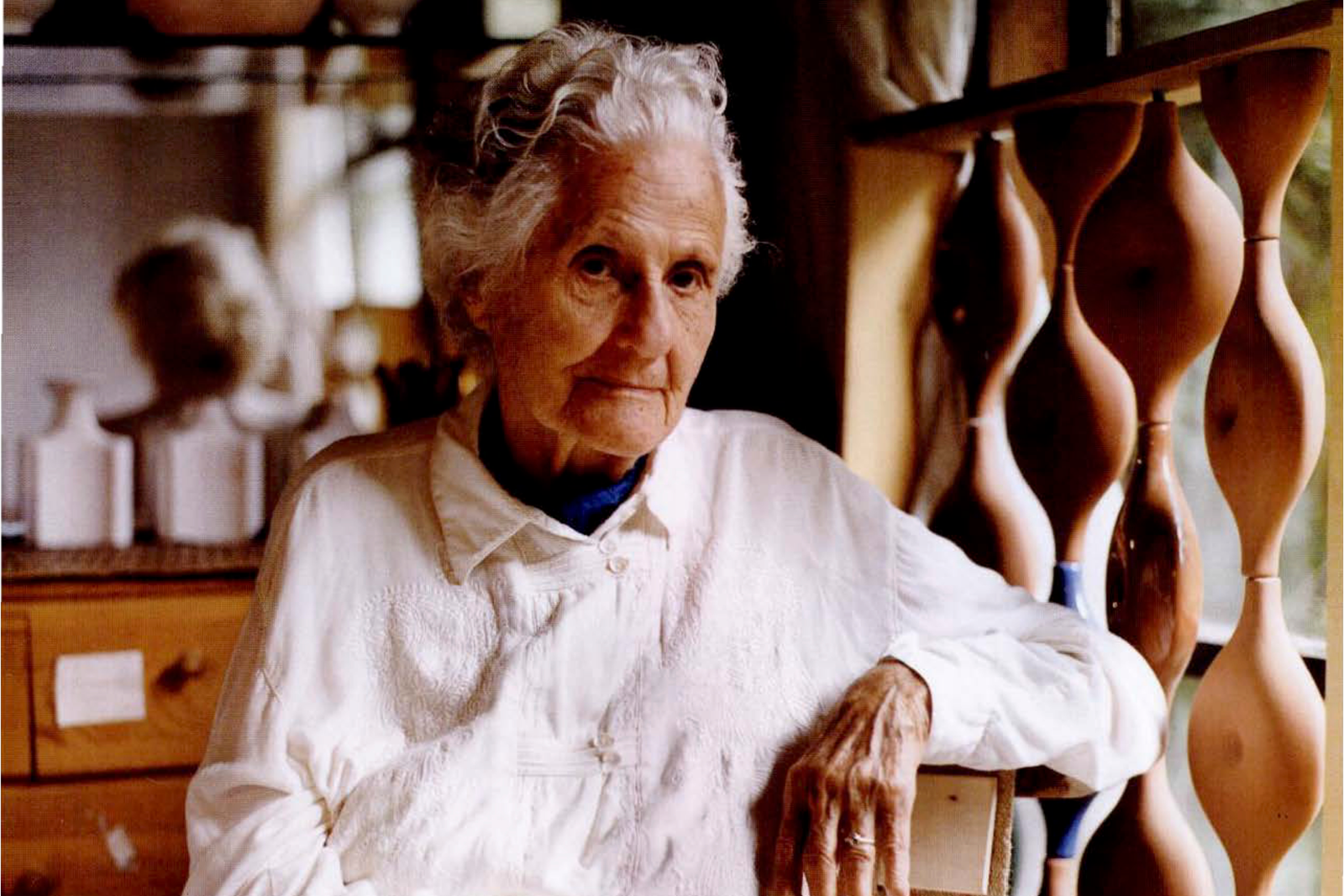
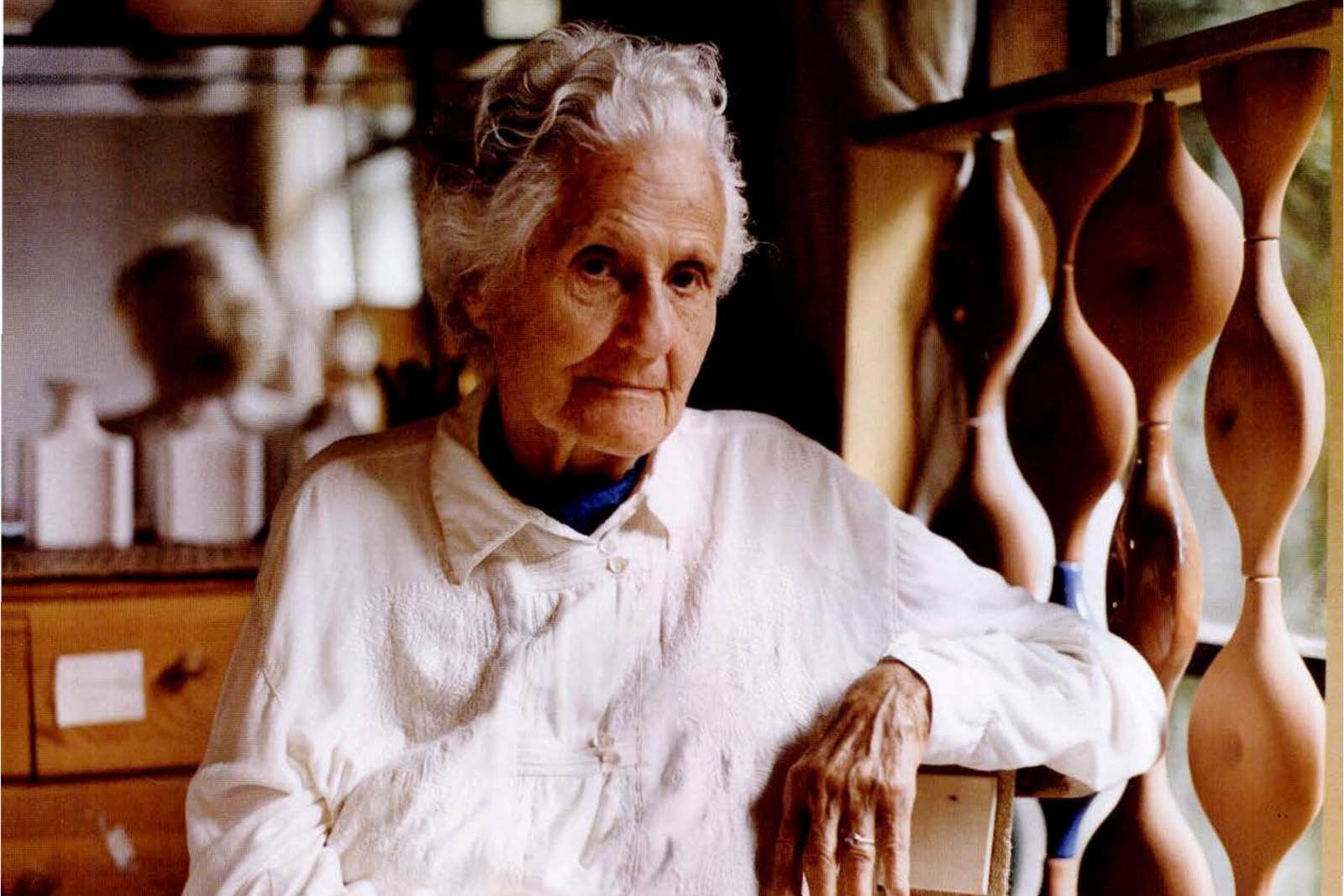
From the Dwell archives of February 2001 emerges a captivating portrait of Eva Zeisel, a titan of 20th-century design whose remarkable longevity and unwavering conviction offered a rare, firsthand perspective on the evolution of modernism. Born in 1906, Zeisel had already lived nearly a century when interviewed, her life a testament to resilience, creativity, and a profound belief in imbuing everyday objects with joy and humanity. Her sharp intellect and broad interests extended beyond the confines of design, encompassing international politics, domestic affairs, and the timeless essence of beauty itself. In 2001, she held strong opinions on figures as diverse as Vladimir Putin and Hillary Clinton, the design store Totem, and the fundamental life force she simply called "Beauty," demonstrating a mind perpetually engaged with the world around her.
A Life Forged in Tumult: Early Years and European Upheaval
Eva Zeisel’s journey began in Budapest, Hungary, into an educated and prosperous family that fostered her early artistic inclinations. Her intellectual mother, Laura Polanyi, was a historian and activist, while her uncle, Karl Polanyi, became a renowned economic historian. This stimulating environment undoubtedly shaped Zeisel’s holistic view of the world and her later critical approach to design. By 1920, at the tender age of 14, she embarked on a potter’s apprenticeship, a decision that would lay the groundwork for a career spanning more than 75 years. This early practical training, rooted in traditional craftsmanship, provided a stark contrast to the emerging industrial ethos of modernism.
Her formative years coincided with the blossoming of the Arts and Crafts movement and Art Nouveau, influences visible in her childhood surroundings. "An exhibition of Charles Rennie Mackintosh was in Vienna in 1904 or 5, just before my birth. That had a large influence on early Hungarian furniture design," Zeisel recounted, highlighting the geometric yet organic aesthetic that permeated her family home. Her baby furniture, crafted from unpainted fir with "round geometric rings on a square background," was a direct echo of Arts and Crafts principles, emphasizing natural materials and honest construction over excessive ornamentation. These were the foundational visual experiences that would subtly inform her later work, even as she navigated the rapidly changing landscape of 20th-century design.
However, Zeisel’s early career was not solely defined by artistic exploration; it was profoundly shaped by the political upheavals gripping Europe. After establishing herself as a successful ceramicist in Hungary, Germany, and Berlin in the 1920s, she moved to the Soviet Union in 1932 to take on significant roles, including artistic director for the Ukrainian ceramic industry and later for the Russian porcelain and glass industry. Her experiences there took a harrowing turn in 1937 when, during Stalin’s Great Purge, she was falsely accused of conspiring against the state and endured 16 months of solitary confinement. This traumatic period, detailed in her autobiography, "Eva Zeisel: On Design," profoundly impacted her worldview, reinforcing a deep appreciation for human connection and emotional honesty—values she would later embed in her designs.
Upon her release and expulsion from the Soviet Union in 1938, she found refuge briefly in Vienna and then in London, where she married Hans Zeisel, a legal scholar. Recognizing the escalating dangers of pre-World War II Europe, the couple immigrated to the United States in 1938, arriving just ahead of the global conflict. This forced migration, a common experience for many European intellectuals and artists of the era, brought her to a new continent eager for fresh design perspectives.
A New Beginning: MoMA and the American Design Landscape
Zeisel’s arrival in New York City was met with an extraordinary affirmation of her talent: an offer to design a dinner set for the Museum of Modern Art (MoMA). This commission, initiated around 1942 and resulting in the seminal "Museum" dinnerware, not only launched her American career but also signaled a significant shift in American taste. At a time when functionalism and austerity were gaining traction, MoMA’s recognition of Zeisel’s more organic and tactile approach highlighted a burgeoning desire for design that married utility with warmth. The subsequent exhibition of her work at MoMA in 1946 solidified her reputation as a leading voice in contemporary design.
It was during the setup of this groundbreaking exhibition that MoMA curator Greta Daniels shared her vision for a future show: "the rise and decline of modernism." In hindsight, Daniels’s foresight was remarkable, hinting at a cyclical nature of aesthetic movements that many would only acknowledge decades later. Yet, as Zeisel observed in 2001, "rumors of modernism’s death have been greatly exaggerated." Modernism, in its myriad forms, proved to be an enduring, if evolving, force. Zeisel, uniquely positioned at its inception, reflected, "I was practically born when it was born."
The Anti-Machine: Zeisel’s Critique of Austere Modernism
While Zeisel’s work often incorporated the clean lines and functionality associated with modernism, her philosophy diverged sharply from its more ascetic interpretations. Her earliest exposure to hardline modernism came at the 1925 Paris World Exhibition, where she encountered Le Corbusier’s furniture. "It was awe-inspiring in its Puritan atmosphere. This I well remember," she recalled. Yet, she remained "unenthused by the coolness of the modern aesthetic," aligning herself with critics who felt Le Corbusier’s work replaced sentimentalism with an overly rigid rationalism.
This marked a pivotal moment in her design philosophy. Zeisel fundamentally disagreed with the notion that simplicity was an inherent natural phenomenon or the ultimate design goal. "Simplicity is not a natural phenomenon. The shells of the sea, the leaves of the forest, the clouds of the sky, the wings of the butterfly, the palace of the spider—none would pass the test of modern simplicity," she argued, highlighting nature’s inherent complexity and organic beauty. For Zeisel, the principles often lauded in architectural and design circles—"simplicity, truth in materials, geometric forms and lines, rejection of ornament"—had, in fact, "stifled its inherently communicative nature."
She vehemently rejected Le Corbusier’s infamous declaration that "we want objects to be our mute slaves rather than soulful friends. We want instruments. We exact from them punctuality, accuracy, and unobtrusive presence." This statement, central to the "machine for living" ideology, epitomized everything Zeisel sought to counter. For her, design was not about creating mute instruments but about fostering a "soul contact" between the maker, the object, and the user. She desired objects that delighted, that communicated, that evoked a feeling of connection. "I was always playful. I was far from taking my design seriously as any form of art at that time. But I thought then what I think now: that the designer must make soul contact with his client."
The "Magic Language" of Design: Communication and Delight
Zeisel’s approach was to craft objects that spoke, using what she termed the "magic language" of design. This language comprised shapes, contours, colors, sounds, and the rich tapestry of associations we form with objects. In her hands, the lines of a vase were not merely functional but could convey "plumpness or silliness or elegance or grace or tenderness or wit." Her designs were characterized by fluid, organic forms, soft curves, and a tactile quality that invited touch and interaction.
A prime example of this philosophy is her Hallcraft/Century dinner service, a commercially successful line produced in the 1950s. This collection, a masterful composition of "echoing curves," featured elements where "two sensuous arcs rise to pull away from each other over a void." Each piece, from plate to bowl to cup, was a subtle form in itself, yet infinitely recombinable, creating a dynamic interplay of shapes that Zeisel likened to "cyclical themes in a fugue." The success of Hallcraft/Century, which sold millions of pieces, demonstrated that consumers deeply resonated with her humanistic approach, preferring soulful companions to mute slaves in their homes.
This desire to delight the user was paramount. Zeisel wanted individuals to find a bowl as beautiful as the strawberries it contained, seeing each design as a personal gift to the user. She found immense amusement in anecdotes that underscored this human element, like the story of her daughter’s missing printer. The delivery driver, concerned for its safety, had taken it home overnight, inadvertently thwarting the entire logistical system. For Zeisel, this "protective impulse" was not a flaw but an "absolutely hilarious and endearing" manifestation of human care, mirroring her own design ethos.
Beyond the 20th Century: A Legacy of Enduring Questions
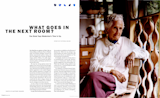
Even in her nineties, Zeisel remained acutely engaged with the future of design. She observed the proliferation of "good design" from the 20th century filling museums worldwide, but posed a critical question: "Now, all over the world, museums are full of this good design. But it is not design itself, it is only what the modern movement said design was in this century! But what happens after that? If one museum says 20th-century design, what does the next one say? What will the curators put in the next gallery? The modernists thought that they had finished design, but now something else must be made. What goes in the next room?"
This question, posed with the wisdom of nearly a century of observation, challenged the very notion of a "finished" design aesthetic. It underscored her belief in design as a continuous, evolving dialogue, rather than a set of rigid principles dictated by a single movement. Zeisel, having filled countless rooms with her own work—from MoMA to the British Museum—felt no personal responsibility to answer this for the next generation. Instead, she offered a timeless guiding principle: "To me, beauty depends on one single person, on the person who looks at something and feels joy in looking at it because it pleases him without second thoughts, irrespective of whether it is useful, whether it is art, or whether it is in good taste. It is the love affair of the eyes with the things they focus on. As its enjoyment is immediate and spontaneous, it is quite impossible to put into words how to make beauty."
Zeisel’s extensive career, which continued well into her later years with collaborations and new designs, stands as a testament to the power of her philosophy. She lived until 2011, reaching the age of 105, leaving behind a vast body of work and an indelible mark on design history. Her tireless advocacy for pleasure, emotion, and human connection in design can be seen as a lifelong battle against the perceived coldness of some modernist tenets. In this context, giving pleasure to others became her most potent weapon, and the joy derived from that giving, her enduring strategy. Her legacy continues to inspire designers to look beyond mere functionality, encouraging them to create objects that not only serve a purpose but also enrich the human experience, making our daily lives a little more beautiful, a little more joyful, and a lot more soulful.