
 admin
admin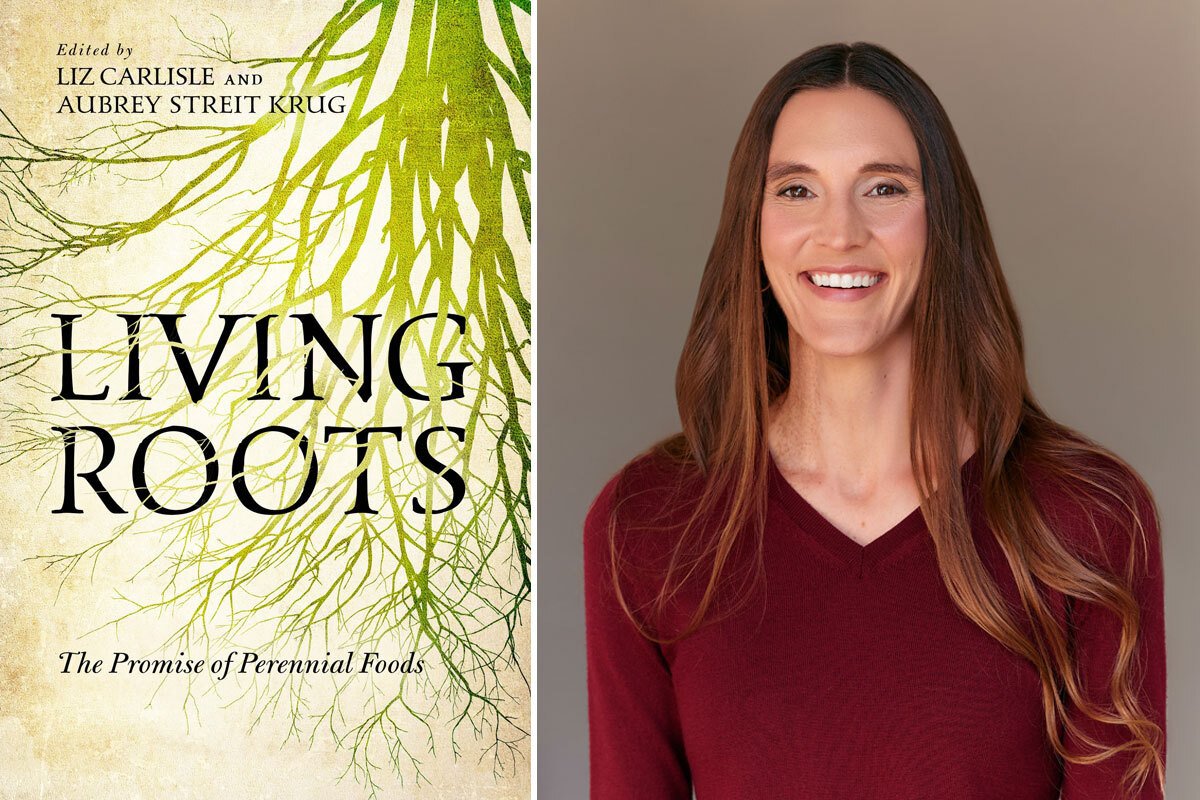
In an era increasingly defined by climate volatility and environmental challenges, a compelling new anthology, Living Roots, edited by agroecologist Liz Carlisle and Aubrey Streit Krug, presents an alternate vision for agriculture and our food systems. The collection of 34 essays, authored by a diverse group of Indigenous leaders, farmers, scientists, and chefs, articulates a powerful case for centering perennial crops—plants that remain in the ground year after year—on our farms and in our diets. This paradigm shift, as argued within the book, offers a long-term strategy for mitigating climate change, enhancing ecological health, and fostering more resilient communities.
The Foundational Promise of Perennials
At the heart of the perennial agriculture movement lies a profound ecological advantage: the extensive and robust root systems characteristic of these plants. Unlike annual crops, which require replanting each season and leave the soil exposed for significant periods, perennials establish deep, intricate networks underground. This architecture allows them to pull substantial amounts of atmospheric carbon and store it deep within the soil, acting as natural carbon sinks. Scientific studies suggest that perennial systems can sequester several tons of carbon per acre annually, contributing significantly to climate change mitigation efforts. For instance, the Rodale Institute’s Farming Systems Trial has demonstrated that regenerative organic systems, which often incorporate perennials, can build soil carbon at rates far exceeding conventional agriculture.
Beyond carbon sequestration, the environmental benefits of perennials are multifaceted. Their established root systems are highly effective at reducing soil erosion, a critical issue that leads to nutrient loss and waterway pollution in conventional annual cropping systems. By maintaining continuous ground cover, perennials also enhance soil organic matter, improving soil structure, water infiltration, and nutrient cycling. This leads to healthier, more fertile soils that are better equipped to withstand droughts and heavy rainfall events. Furthermore, perennial landscapes foster increased biodiversity, providing stable habitats for pollinators, beneficial insects, and wildlife, thus contributing to ecosystem resilience and natural pest control. Crops such as fruit and nut trees (e.g., pawpaw, wild nuts), forage grasses, and grains like Kernza are highlighted as examples of species capable of delivering these benefits. Kernza, a perennial wheatgrass developed by The Land Institute, epitomizes this potential, offering both grain production and ecological services like soil stabilization and groundwater protection.
The advantages extend beyond environmental stewardship to human health and community well-being. By enriching soil health, perennials can lead to more nutrient-dense foods. Moreover, the emphasis on local, perennial food systems can improve food security, reduce reliance on long supply chains, and foster stronger community ties through shared orchards and food forests.
A Collective Vision for a Changing Climate
Living Roots emerges from a critical juncture, as articulated by co-editor Liz Carlisle, an agroecologist and associate professor at the University of California, Santa Barbara. Carlisle, known for her previous works such as Lentil Underground, Grain by Grain, and Healing Grounds, has consistently explored the potential of organic and regenerative agricultural systems. Living Roots represents a natural evolution of her intellectual journey, directly addressing the confluence of crises facing humanity: the urgent need to reduce greenhouse gas emissions, adapt to unavoidable climate change impacts, and confront deep societal divisions and inequities that hinder collective action. Carlisle posits that the perennial movement offers a holistic framework to tackle these interconnected challenges simultaneously.
The book’s genesis reflects a deliberate effort to synthesize diverse perspectives within the burgeoning perennial movement. Carlisle and Streit Krug curated a collection that mirrors an "awesome potluck" of ideas, bringing together individuals who have long championed various facets of perennial agriculture, from agroforestry and regenerative grazing to the breeding of perennial grains. Contributors were selected to represent a wide array of perennial foods, diverse geographies primarily across North America, and the varied roles people play—from Indigenous guardians of ancestral knowledge to cutting-edge scientific researchers.
The narratives within Living Roots vividly illustrate this diversity. Readers encounter Indigenous communities on the Cheyenne River Reservation in South Dakota actively restoring buffalo herds to native grasslands, an initiative that rebuilds ecological harmony and cultural heritage. On Blackfeet land in Montana, the sacred serviceberry is being studied, highlighting the deep spiritual and cultural significance of perennial plants. The book also profiles the creators of an urban food forest in Southeast Atlanta, transforming neglected spaces into sources of food and community connection, and a Minnesota farmer pioneering the practice of raising chickens under protective canopies of hazelnut trees, demonstrating innovative agroforestry models. Further examples include researchers studying the ecological impact of prairie strips—perennial patches integrated into annual crop fields—and those dedicated to developing perennial versions of staple crops like rice, sorghum, and the oilseed silphium, pushing the boundaries of agricultural science.
Carlisle’s personal connection to the perennial movement underscores its broader appeal. She describes the profound joy derived from participating in the culture around perennial foods, whether planting fruit trees in a community orchard or savoring culinary traditions linked to them. This personal engagement fuels her larger work as a researcher and educator, reinforcing the idea that connecting with perennial systems can be a source of hope and motivation. Critically, Carlisle observes that perennials serve as a powerful rallying point across political divides. The act of planting a tree for future generations, she notes, is a concept that resonates broadly, fostering a sense of shared purpose and collective responsibility.
Navigating the Roadblocks: Challenges to Widespread Adoption
Despite the well-documented environmental, social, and economic benefits, perennial agriculture remains a niche practice, with annuals dominating an estimated 60 to 80 percent of global cropland. The transition to perennials faces significant systemic and practical impediments, many of which are explored by the contributors to Living Roots.
One of the most formidable barriers is the current structure of federal farm policy, particularly in the United States. As highlighted by Iowa farmer Wendy Johnson, crop insurance programs in the Midwest are heavily skewed towards supporting annual monocultures like corn and soy. These policies often provide a safety net that discourages diversification and long-term investments in perennial crops, as the financial risks associated with transitioning to unfamiliar systems are not adequately covered. Historically, agricultural policies since the mid-20th century have incentivized high-yield annual crops through subsidies and commodity programs, creating an entrenched system that prioritizes quantity over ecological resilience.
Market infrastructure presents another substantial challenge. Farmers considering perennials often lack clear, established markets for their products. Unlike corn or soy, which have extensive processing facilities and supply chains, many perennial crops face limited commercial pathways. The example of Jesse Smith’s elderberry project in Santa Barbara illustrates this struggle. The project, which aimed to develop native blue elderberry as a viable commercial crop, faced significant setbacks when its crucial Climate-Smart Commodities funding was canceled. This interruption not only stalled farm-level progress but also hampered the development of essential processing facilities needed to establish a stable market. The cancellation of the broader USDA Climate Smart Commodities program in April 2025, which had been a significant boost for perennial initiatives, represents a considerable blow to the movement’s momentum, curtailing what had been unprecedented federal support.
Land tenure issues, particularly in regions like California, also impede perennial adoption. Many farmers operate on short-term leases—one, two, or three years—which makes the long-term investment required for perennial crops economically unfeasible. Planting fruit or nut trees, which may take several years to become productive, is a non-starter for tenants without secure, extended land access.
Furthermore, the transition to perennials is a complex learning experience. Farmers need to acquire new knowledge about suitable varieties, optimal spacing, pest management, and long-term care unique to perennial systems. This knowledge gap is exacerbated by the pullback of USDA staff and extension services, which traditionally provided crucial support and guidance to farmers. Cuts to these essential programs leave farmers without the necessary technical assistance to navigate the shift effectively. The initial investment costs and the longer payback period for perennials, compared to the quicker returns of annual crops, also present a financial hurdle for many farmers operating on thin margins.
Emerging Opportunities and Resilient Hope
Despite these systemic challenges, the perennial movement is experiencing a groundswell of activity and opportunity. Carlisle points to the "extraordinary" growth of community-level initiatives as a major source of hope. Organizations like the Savanna Institute are leading efforts to integrate perennial crops into Midwestern agriculture through research, education, and direct farmer support. Indigenous-led movements, such as the restoration of buffalo herds, exemplify holistic approaches that weave together ecological restoration, cultural revitalization, and resilient food systems. Urban food forests, like the one in Atlanta, demonstrate how communities can transform neglected urban spaces into productive, biodiverse landscapes. These grassroots efforts create vital networks where farmers can find mentors, attend conferences, and access resources tailored to their transition journeys.
Crucially, the increasing chaos wrought by climate change and market volatility is pushing more farmers to seek alternatives. What might have been considered a voluntary "opt-in" choice for regenerative or perennial methods two or three decades ago is now becoming a matter of necessity for many struggling conventional farmers. Extreme weather events, unpredictable growing seasons, and fluctuating commodity prices are forcing a reevaluation of traditional practices. This growing urgency means that robust community efforts are increasingly poised to receive and support farmers looking for more resilient and sustainable pathways.
The personal and spiritual resonance of perennials also continues to be a powerful driver. Many contributors to Living Roots speak to a deep, almost sacred connection to these long-lived plants. This connection often stems from Indigenous knowledge systems, which have revered perennial ecosystems for millennia, recognizing their role in sustaining life and cultural traditions. For others, it’s the simple joy of participating in a system that offers beauty, sustenance, and a tangible link to future generations. This profound connection fosters a sense of stewardship and community, transcending purely economic motivations and providing the emotional fuel to advocate for systemic change. The ability of perennials to unite people across political spectra, focused on the shared goal of planting for the future, further amplifies their potential as a catalyst for positive transformation.
Broader Impact and Future Outlook
The vision articulated in Living Roots is not merely about changing what we grow, but fundamentally reshaping our relationship with the land, our food, and each other. By embracing perennial agriculture, society can move towards a more decentralized, diverse, and resilient food system—one that is inherently more stable in the face of environmental disruptions. This shift also holds the promise of fostering greater social equity by empowering local communities and integrating Indigenous ecological wisdom into mainstream agricultural practices.
The journey towards a perennial-centric food system will undoubtedly be long and arduous, requiring significant policy reform, market innovation, and a collective commitment to long-term thinking. However, as Living Roots compellingly demonstrates, the seeds of this transformation are already being sown. From Indigenous reservations to urban centers, and from scientific laboratories to family farms, a diverse coalition is emerging, united by the profound promise of perennial plants. In a world grappling with multiple crises, the enduring strength and regenerative capacity of living roots offer not just a solution, but a profound source of hope for a more sustainable and equitable future.