
 admin
admin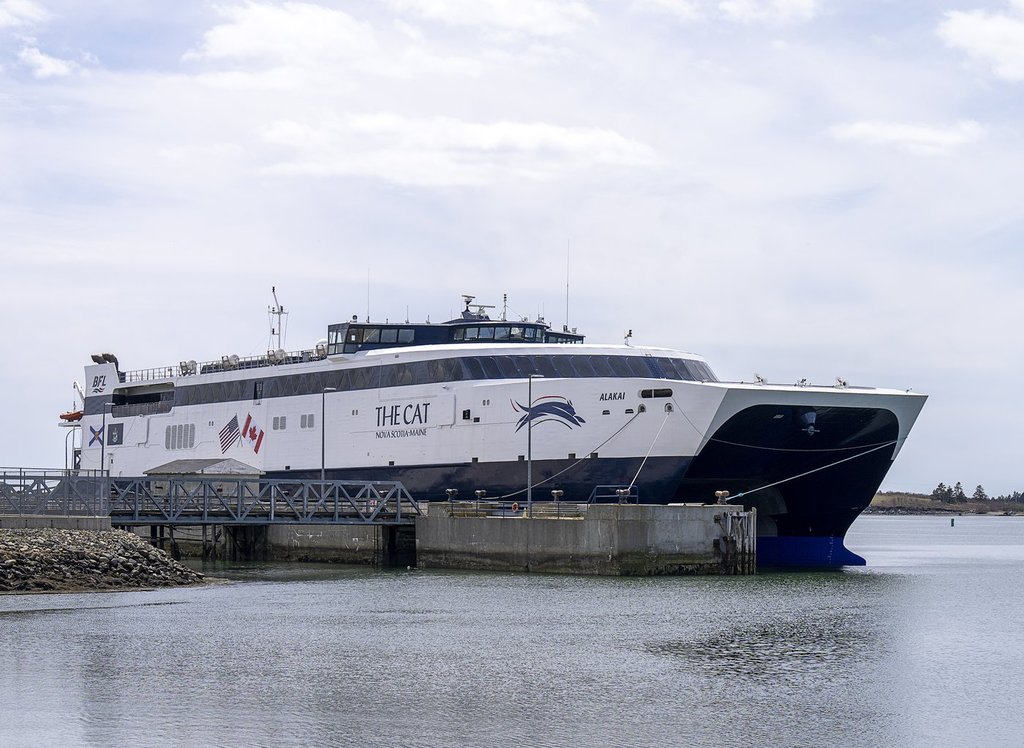
A comprehensive, long-awaited economic study has concluded that Nova Scotia’s annual subsidy, amounting to approximately $20 million, for the vital ferry service connecting Yarmouth, N.S., and Bar Harbor, Maine, is a justified investment. The 70-page report, commissioned from consulting firm 21FSP Advisory, asserts that the service generates substantial economic benefits across the province, extending far beyond the immediate port community of Yarmouth and its surrounding southwestern region. This finding comes after years of public debate and scrutiny over the financial viability of the crucial international link.
The study, which the government first indicated it would undertake in 2022 and subsequently commissioned in 2023, provides the most detailed analysis to date of the ferry’s economic footprint. It highlights that the provincial subsidy, which aims to bridge the gap between the private operator Bay Ferries’ revenue and its operational costs, is comparable to support provided for similar ferry routes globally. Indeed, the report points out that government subsidies are a near-universal feature of ferry operations worldwide, underscoring their role as essential public infrastructure rather than purely commercial ventures.
The Economic Engine: Unpacking the Ferry’s Provincial Impact
The core of the 21FSP Advisory report focuses on the tangible economic contributions of "The Cat," the high-speed catamaran operated by Bay Ferries. The study estimates that the ferry service generates between $31 million and $42 million annually in gross domestic product (GDP) for Nova Scotia, depending on the specific measurement methodologies employed. This significant contribution ripples through various sectors of the provincial economy, from tourism and hospitality to transportation and retail.
Beyond GDP, the ferry service also bolsters provincial coffers directly, contributing between $1.7 million and $2.7 million in annual revenue. This includes various taxes and fees associated with the increased economic activity. Furthermore, the report details a substantial impact on the labour market, with the service generating between $12 million and $18 million in labour income. This encompasses direct employment on the ferry itself, as well as indirect jobs created in supporting industries and the broader tourism sector. Sales tax revenues attributed to the ferry range from $800,000 to $1.5 million, providing another direct financial benefit to the province.
A key finding of the study pertains to the spending habits of passengers utilizing The Cat. These tourists, arriving with their vehicles, are identified as particularly valuable visitors. On average, ferry passengers stay in Nova Scotia for 8.4 nights, a considerably longer duration than visitors arriving by air or road. Critically, each person spends approximately $106 per day, indicating a higher per-capita daily expenditure compared to other visitor segments. This extended stay and higher daily spend translate into a more profound and widespread economic impact across the province.

While 77 per cent of ferry passengers spend time exploring the Yarmouth area, the study emphasizes that the economic benefits are far from localized. Approximately half of all passengers extend their travels to the picturesque Annapolis Valley and the bustling Halifax regions. A notable 29 per cent venture even further, making the nearly 600-kilometre drive to experience the iconic landscapes of Cape Breton Island. This distribution of visitor traffic across various regions demonstrates the ferry’s role in dispersing tourism benefits throughout Nova Scotia, supporting diverse local economies and small businesses.
A Journey Through Time: The Ferry’s Rocky History
The maritime link between Yarmouth, Nova Scotia, and Maine boasts a history stretching back to the 1880s, serving as a vital artery for trade, travel, and cultural exchange. However, its recent decades have been marked by considerable turbulence and uncertainty. Issues ranging from inconsistent funding and changes in operators to port disputes and global pandemics have repeatedly disrupted sailing seasons, fueling public debate and concern among stakeholders.
One of the most significant periods of disruption occurred in 2009 when the then-NDP government, citing cost-saving measures, made the controversial decision to cancel the service. This move sparked widespread outrage, particularly from tourism operators in southwestern Nova Scotia, who saw visitor numbers plummet as the region lost its only direct international link. The economic fallout from this cancellation served as a stark reminder of the ferry’s indispensable role in the regional economy.
The service eventually returned in 2014, albeit with a new vessel and a different American port. The "Nova Star," a cruise-style ferry, began operating between Yarmouth and Portland, Maine. Despite initial optimism, the Nova Star failed to meet its passenger targets and proved financially unsustainable, leading to its termination after just one year. This short-lived venture underscored the challenges inherent in operating such a service and the importance of a sustainable business model.
In 2016, the provincial government inked a 10-year contract with Bay Ferries Ltd. to operate the existing service using "The Cat," a high-speed catamaran, initially between Yarmouth and Portland. A subsequent decision to move the American port of call back to Bar Harbor, Maine – a return to a historic route – led to unforeseen complications, resulting in the loss of the entire 2019 sailing season due to necessary port infrastructure upgrades in Bar Harbor. Following this, the global COVID-19 pandemic further suspended the service in 2020 and 2021, effectively halting operations for two full seasons before it finally resumed in 2022. Throughout these intermittent periods of operation and suspension, critics consistently questioned the escalating cost of the provincial subsidy, with some calculating the cost per visitor at approximately $620 in 2024, a figure that the new economic study now contextualizes against broader benefits.
Ridership Dynamics and the Road Ahead
The study also provides crucial data on recent ridership figures, illustrating the ferry’s recovery post-pandemic and the challenges it faces. The service carried approximately 36,000 passengers in 2022, its first year back in operation after the COVID-19 hiatus. This number saw a modest increase to 38,400 passengers in 2023, followed by a more significant jump to 49,300 passengers in 2024, indicating a strong rebound in travel demand.

However, Bay Ferries, the operator, reported in October of the preceding year (likely 2024, projecting for 2025) that ridership for the upcoming 2025 season was projected to fall to about 39,700. The company attributed this anticipated decline primarily to a significant drop in Canadian travellers venturing to the United States, a trend that could be influenced by various economic factors, exchange rates, or other travel preferences. Notably, American bookings on the service were reported to be largely unchanged, suggesting a stable demand from the U.S. market.
In response to the study’s findings and ongoing operational considerations, Public Works Minister Fred Tilley was unavailable for comment on the day of the report’s release. However, his department issued a statement through spokesperson Gary Andrea, indicating that the government is "looking at all options for the ferry service that will maximize the benefits for Nova Scotia." This suggests that while the study provides a strong economic justification for the subsidy, the government remains open to evaluating how the service is configured and delivered to ensure its continued efficiency and impact. Bay Ferries themselves could not be reached for immediate comment following the report’s publication.
Broader Implications: Tourism, Regional Development, and the Future
The economic study unequivocally underscores the ferry’s role as a cornerstone of Nova Scotia’s tourism strategy, particularly for the often-overlooked southwestern region. For communities like Yarmouth, the ferry is more than just a transportation link; it is described as a "lifeline," providing essential access to the lucrative New England tourist market. This direct connection offers a unique advantage, allowing American visitors to bring their vehicles, facilitating longer, more comprehensive tours of the province.
The multiplier effect of tourism spending generated by ferry passengers is significant. When visitors stay longer and spend more, their dollars recirculate within local economies, supporting a wide array of businesses—from accommodations and restaurants to local attractions, artisans, and fuel stations. This economic injection is particularly vital for rural and coastal communities that may have fewer alternative economic drivers. The report’s demonstration that benefits are felt across the province, even in distant Cape Breton, validates the argument that the subsidy is an investment in statewide economic development.
Furthermore, the study implicitly warns against the consequences of withdrawing the subsidy. The experience of 2009, when the service was cancelled, served as a painful lesson in the immediate and severe economic repercussions for the region. The report’s findings provide a strong evidence base for maintaining the service, framing the subsidy not as a cost, but as a strategic investment in critical infrastructure that underpins regional prosperity and diversification.
Global Context: Why Subsidize Ferries?
The report’s assertion that "almost every ferry in the world receives government subsidies" provides crucial context for understanding Nova Scotia’s approach. Governments globally subsidize ferry services for a variety of compelling reasons, extending beyond pure economic return. These reasons often include:

- Essential Service Provision: Ferries frequently serve as vital transportation links for isolated communities, islands, or regions where alternative transport infrastructure (bridges, tunnels, extensive road networks) is either non-existent, prohibitively expensive, or impractical. They ensure connectivity for residents, goods, and emergency services.
- Regional Development and Equity: Subsidies help foster economic development in peripheral regions by facilitating access for tourists, businesses, and investors. They also ensure equitable access to essential services and opportunities for residents, preventing further marginalization of remote areas.
- Tourism Promotion: As demonstrated by The Cat, ferries can be powerful drivers of tourism, bringing visitors and their spending into regions that might otherwise be harder to access. They offer unique travel experiences that appeal to specific market segments.
- Environmental Considerations: In some contexts, ferry transport can be a more environmentally sustainable option than extensive road construction or short-haul flights, especially for moving large numbers of vehicles and passengers across water bodies.
- Infrastructure Maintenance: Governments often view ferries as an extension of their public infrastructure, similar to roads, bridges, or airports, and thus bear some responsibility for their upkeep and operation.
By comparing Nova Scotia’s subsidy to "similar routes elsewhere in the world," the 21FSP Advisory report suggests that the province’s financial commitment is not an anomaly but rather a standard practice for maintaining an essential and economically beneficial maritime link.
Stakeholder Perspectives and Policy Considerations
The economic study serves as a critical document for various stakeholders. For the Nova Scotia government, it offers robust justification for the ongoing financial commitment, balancing fiscal responsibility with the imperative of regional economic development. The statement from Public Works regarding "maximizing benefits" indicates an ongoing evaluation, but the core message from the study supports the continued existence of the subsidized service.
Bay Ferries, as the private operator, faces the challenge of managing operational costs, marketing the service, and adapting to fluctuating travel demands, such as the projected decline in Canadian outbound travel. The report’s findings bolster the case for sustained governmental partnership to ensure the service’s viability.
For tourism operators in Yarmouth and southwestern Nova Scotia, the study reaffirms their long-held belief that the ferry is indispensable. It provides data to support their advocacy for continued government support, highlighting the direct link between the ferry’s operation and their livelihoods. The memory of the 2009 cancellation remains a powerful reminder of the potential impact should the service be withdrawn again.
Conversely, critics who have consistently questioned the subsidy’s cost, often focusing on the per-passenger figure, now have a more comprehensive economic analysis to consider. While the $620 per visitor figure might appear high in isolation, the study’s detailed breakdown of GDP, revenue, labour income, and widespread provincial benefits aims to present a more holistic picture of the ferry’s true value, arguing that the investment yields returns that extend far beyond the immediate ticket price.
As Nova Scotia looks ahead, the 21FSP Advisory report will undoubtedly shape future policy discussions regarding the ferry service. It provides a strong foundation for continued investment, while also prompting a review of how the service can be optimized to further enhance its economic contributions. The provincial government’s commitment to "looking at all options" suggests a dynamic approach, potentially exploring enhancements to marketing, operational efficiencies, or even future vessel considerations, all aimed at ensuring The Cat remains a vibrant and valuable asset for Nova Scotia’s economy and its connection to the United States. The challenge will be to maintain this vital link while continuously striving for the most efficient and impactful use of public funds, safeguarding a critical piece of the province’s economic infrastructure and heritage.