 admin
admin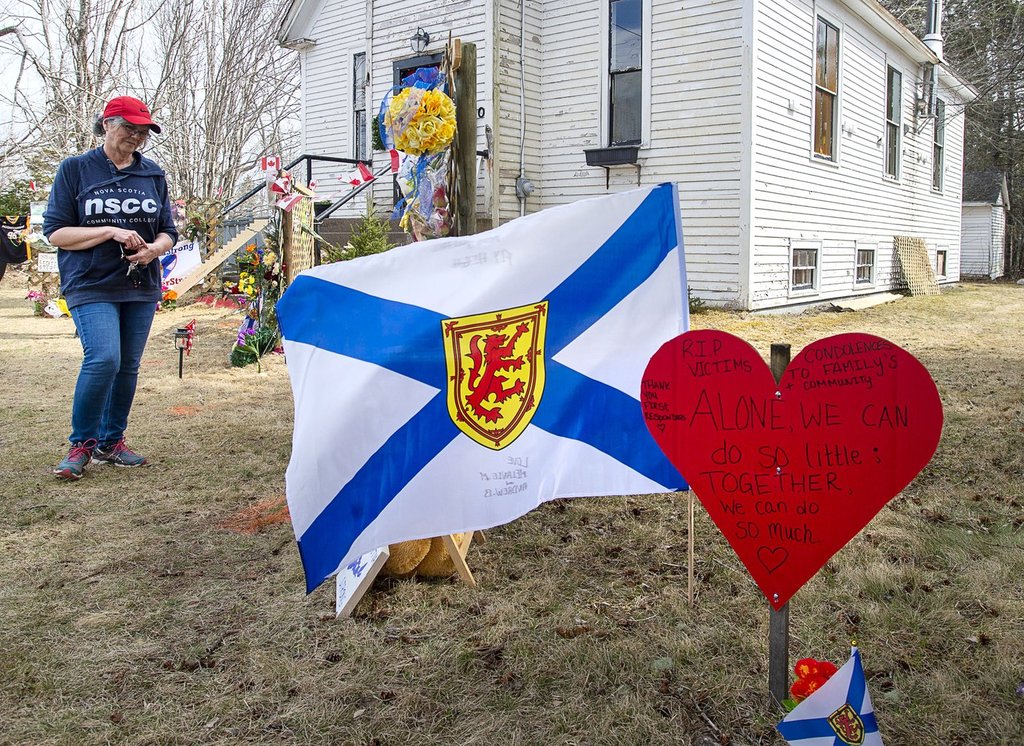
Nearly six years after the unspeakable horror that claimed her sister, brother-in-law, and 17-year-old niece in the deadliest mass shooting in modern Canadian history, Tammy Oliver-McCurdie finds herself reliving an all too familiar agony. The news of Tuesday’s school shooting in Tumbler Ridge, British Columbia, where eight people, primarily children, were tragically killed by an 18-year-old who police say took her own life, has ripped open deeply buried wounds for Oliver-McCurdie and countless others across the nation. Her family was among the 22 victims of the April 2020 Nova Scotia rampage, a 13-hour nightmare perpetrated by a man disguised as a Mountie. From her home in Red Deer, Alberta, Oliver-McCurdie extends a heartfelt message of solidarity and guidance to the grieving community of Tumbler Ridge, drawing on the harrowing lessons learned from her own family’s profound loss.
“This is very difficult for our family as this brings back many emotions,” Oliver-McCurdie stated, her words focusing on offering support to those reeling from the B.C. tragedy. “I cannot describe the amount of pain we are all feeling for you. What I would say to you is, hold your loved ones tight and allow yourself to lean on those healing people who surround you – family, friends, community, church.” Her counsel is not merely sympathetic; it is born of lived experience, a roadmap for navigating the initial shock and the long, arduous journey of grief that lies ahead.
The Tumbler Ridge Tragedy: A Community Shattered

Details emerging from Tumbler Ridge, a small, close-knit community nestled in northeastern British Columbia, paint a grim picture of senseless violence. On Tuesday, the lives of eight individuals, predominantly children, were abruptly ended in a school shooting incident. Law enforcement officials have confirmed that the perpetrator, an 18-year-old, also died by suicide at the scene. While investigations are ongoing, the immediate impact on Tumbler Ridge is profound, shattering the peace of a community where such an event was previously unimaginable. Schools and community centers have become focal points for gathering, mourning, and seeking solace, as residents grapple with the incomprehensible. The names of the victims, many of them young students, are beginning to circulate, adding a heartbreaking personal dimension to the public tragedy. This event marks a stark and devastating moment for British Columbia and Canada, raising urgent questions about safety, mental health, and the prevention of such catastrophes.
Echoes from the East: The Nova Scotia Mass Casualty
The parallels between the recent Tumbler Ridge incident and the 2020 Nova Scotia mass shooting are stark, though distinct in their specific circumstances. The Nova Scotia tragedy, which unfolded over April 18-19, 2020, remains the deadliest mass shooting in modern Canadian history. It began in the quiet seaside community of Portapique, Nova Scotia, when a lone gunman, dressed in a replica RCMP uniform and driving a mock police cruiser, embarked on a rampage that ultimately claimed the lives of 22 innocent people, including his common-law partner, before he was fatally shot by police.
Tammy Oliver-McCurdie’s sister, Jolene Oliver, her brother-in-law, Aaron Tuck, and her niece, Emily Tuck, were among the first victims of this brutal attack. Their lives, along with those of teachers, healthcare workers, and ordinary citizens, were extinguished across multiple rural communities in Colchester and Cumberland counties. The gunman set homes ablaze, ambushed strangers, and sowed terror across a wide geographical area, leaving a trail of devastation and grief that continues to reverberate throughout the province and the nation. The incident exposed critical gaps in emergency communications and police response, prompting a public inquiry that delivered a comprehensive report with recommendations aimed at preventing future tragedies and improving victim support. For families like Oliver-McCurdie’s, the memory of that weekend is a permanent scar, a constant reminder of the fragility of life and the enduring power of community resilience.

Navigating the Aftermath: Expert Insights on Grief and Healing
Oliver-McCurdie’s advice to Tumbler Ridge extends beyond immediate comfort. She urges those affected to “give yourself a quiet space to process, as the noise can be daunting,” and to “seek help early from victim services, counselling and those close to you.” Her words highlight the overwhelming nature of public scrutiny and the importance of creating a sanctuary for personal grief. She also stressed the far-reaching psychological fallout of such tragedies, noting that the pain is not confined to geographic borders. After the Nova Scotia murders, Oliver-McCurdie and other relatives in Alberta struggled to access adequate support due to the distance. “The distance was tough,” she recounted. “It took a long time for us to get supports in place.” This experience underscores the need for robust, accessible support systems that can cater to victims and their families, regardless of their location.
Serena Lewis, a seasoned social worker in Nova Scotia who served as the province’s grief and bereavement coordinator for the northern region where the 2020 shooting began, provides further expert perspective on the immediate and long-term phases of collective trauma. Lewis explains that in the initial aftermath, those directly affected are often in a state of profound shock and disbelief. “Grief is the hard work that’s coming later,” Lewis cautioned. “There’s a lot happening for Tumbler Ridge right now, and we need to be super respectful of that.”
She observes that this early stage is characterized by an outpouring of well-meaning support, often expressed through practical gestures like bringing food – “keeping the casseroles coming,” as she put it. While vital, this initial phase eventually gives way to a quieter, more isolating period. “But it’s after the funerals when the quietness comes,” Lewis explained. “That’s when the grief really settles into loss. Right now, we’re just trying to… make sense of what happened.” Her insights are crucial for understanding the evolving needs of a grieving community, emphasizing the importance of sustained support long after the initial shock subsides and the media attention wanes.

Cross-Country Empathy: Political and Community Responses
The solidarity felt across Canada in the wake of such tragedies is a testament to the nation’s interconnectedness. Lewis herself demonstrated this by sending an email to the mayor of Tumbler Ridge, extending her thoughts from over 4,000 kilometers away on the Atlantic coastline. This gesture mirrors the unexpected kindness she witnessed after the Nova Scotia killings, when letters of condolence and packages arrived from people in British Columbia, which she personally delivered to Portapique. Such acts, Lewis noted, remind her of drivers pulling over to respectfully allow a funeral procession to pass. “So these are the times when our country can start to feel a little smaller and a little more connected,” Lewis reflected. “I think we have to really be willing to pull the car over and say, ‘What is it that you would like? Can I bring a casserole?’”
In Ottawa, Member of Parliament for Cumberland—Colchester, Alana Hirtle, shared her own profound emotional reaction to the Tumbler Ridge news. Hirtle, who was deeply involved in the community rebuilding efforts in Portapique, including the establishment of a new community centre that opened in 2024, spent much of Wednesday in tears as party leaders in the House of Commons paid tribute to the victims. Premier Tim Houston of Nova Scotia, at the opening of the Portapique Community Centre, had remarked that it represented the “community’s journey of healing and harmony,” a sentiment that now resonates with renewed poignancy for Tumbler Ridge.
“I don’t know how the folks in Tumbler Ridge feel, but I can appreciate where they are – the shock, the horror, the overwhelming sorrow,” Hirtle stated in an interview, acknowledging the shared Canadian experience of collective trauma. She recalled a time before the Nova Scotia shooting when she, like many Canadians, harbored a sense of invulnerability. “I remember before Portapique being very smug and saying, ‘Things like that never happen in Nova Scotia. It doesn’t happen in Canada.’” This shattering of national innocence is a recurring theme, and Hirtle stressed the importance of active listening and sustained outreach from Canadians to the people of Tumbler Ridge.

The Path Forward: Lessons in Long-Term Support
Oliver-McCurdie emphasized the enduring strength found in connecting with others who have experienced similar losses. “Our Nova Scotian family has been very important to us… And we support each other to this day,” she shared, highlighting the therapeutic power of shared grief and mutual understanding. This long-term peer support network offers a vital lifeline for survivors and bereaved families, demonstrating that healing is a communal, ongoing process.
Both Oliver-McCurdie and Hirtle underscored the non-linear, unpredictable nature of grief. “Be gentle with yourself. You’re going to feel a lot of emotions. Grief is not linear,” Hirtle advised the Tumbler Ridge community. “Over the next period of time – days, weeks, months – nothing’s going to make sense. And grief will rear its head at every weird and surreal opportunity. And you’ll wake up some days and you’ll forget what has happened.” This candid acknowledgment of the messy reality of grief is crucial for those entering its darkest phases, allowing them to normalize their complex emotional responses.
The tragic events in Tumbler Ridge serve as a painful reminder of the persistent vulnerability of communities to acts of extreme violence. While the immediate focus remains on supporting the victims and their families, the broader implications for national discourse on mental health, school safety, and access to firearms will undoubtedly emerge. For now, the collective voice of Canada, guided by those who have walked this path before, calls for profound empathy, sustained support, and unwavering solidarity for the people of Tumbler Ridge, as they embark on their own difficult journey toward healing and remembrance.

— With files from Sarah Ritchie in Ottawa