 admin
admin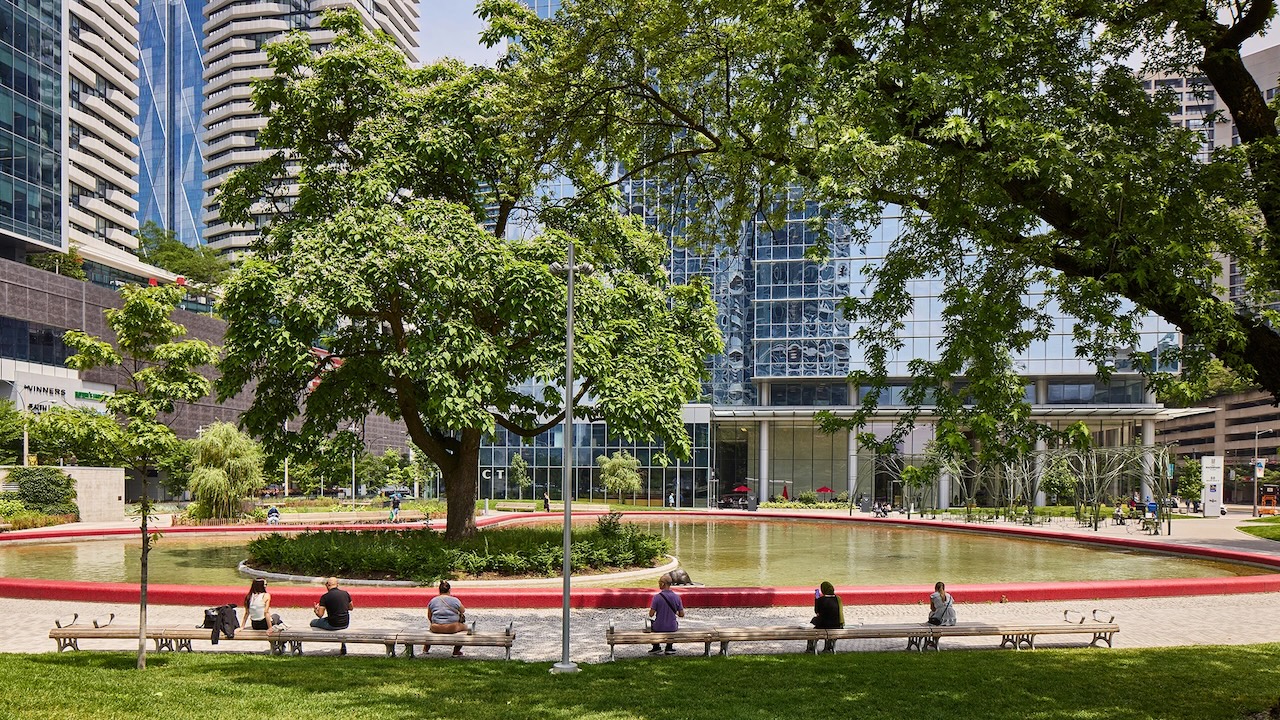
The landscape of contemporary design is currently undergoing a significant shift, characterized by a move toward emotionally resonant public spaces, the re-evaluation of industrial icons, and the preservation of architectural heritage through adaptive reuse. From the heart of Toronto’s revitalized waterfront to the historic corridors of Verona, Italy, a series of high-profile projects and retrospectives are highlighting the intersection of cultural identity and spatial intervention. This movement is exemplified by the work of the late Claude Cormier, the staged photographic narratives of Jeff Wall, and the culturally rooted installations of Nicole Nomsa Moyo, all of which challenge traditional boundaries between art, architecture, and the public realm.
The Legacy of Claude Cormier: Love Park and Urban Playfulness
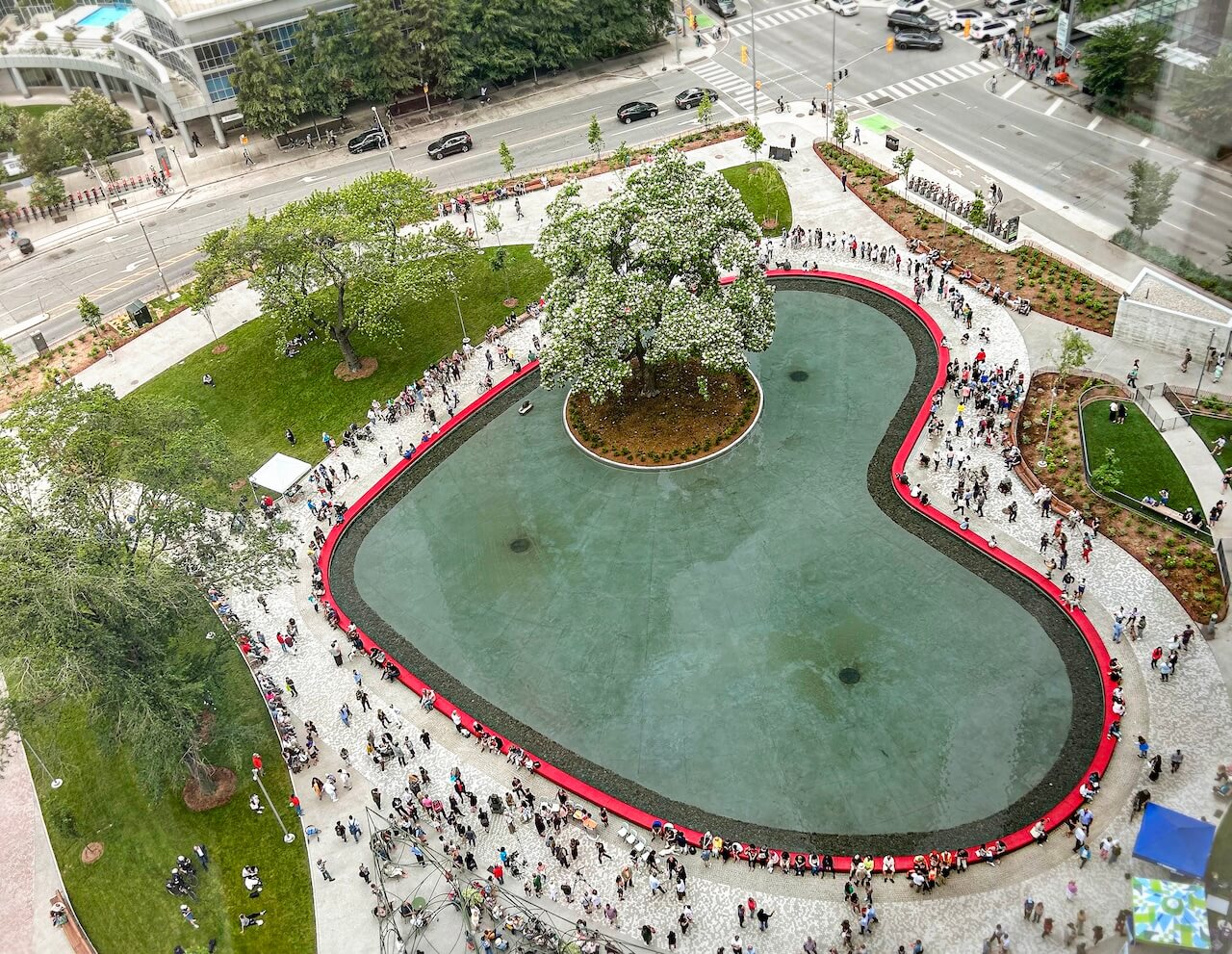
In Toronto, the recent opening of Love Park marks a milestone in the city’s ongoing multi-billion-dollar waterfront revitalization project. Designed by CCxA (formerly Claude Cormier et Associés), the two-hectare park serves as a green refuge amidst the high-density glass towers of the central business district. The centerpiece of the park is a large, heart-shaped pond lined with a vibrant red mosaic—a signature Cormier touch that blends whimsical aesthetics with functional urbanism.
Claude Cormier, a towering figure in Canadian landscape architecture who passed away in 2023, was renowned for his ability to inject "joy" into rigid urban environments. Love Park is part of a broader legacy that includes Toronto’s Berczy Park, famous for its dog-themed fountain, and Sugar Beach, which transformed a desolate industrial site into a popular leisure destination.

In Montreal, Cormier’s influence was perhaps most visibly felt through "18 Shades of Gay," a massive aerial installation in the city’s Gay Village. Spanning nearly four kilometers along Sainte-Catherine Street, the project featured 180,000 multi-colored resin balls suspended over the thoroughfare. While the installation was decommissioned in recent years, urban planners note that it serves as a primary case study for how temporary art can drive tourism and reinforce neighborhood identity. According to Montreal tourism data, the installation contributed significantly to the revitalization of the Village, establishing it as a premier destination for international visitors during the summer festival season.
The Cinematographic Vision of Jeff Wall at MOCA
Simultaneously, the Museum of Contemporary Art (MOCA) in Toronto is hosting a major retrospective titled "Jeff Wall Photographs 1984–2023," running through March 22. Jeff Wall, a Vancouver-based artist, is widely credited with redefining the medium of photography by treating it with the scale and complexity of history painting.

The exhibition spans four decades of work, beginning with his pioneering use of large-scale light-boxes—transparencies mounted on fluorescent light enclosures. This format, originally inspired by bus-stop advertisements, allows Wall to achieve a luminosity and depth that mimics the cinematic screen. The retrospective features seminal works such as "Children," a series of circular light-boxes that capture the raw, unscripted energy of youth.
Wall’s work is characterized by what he terms "near-documentary"—images that appear spontaneous but are actually meticulously staged and choreographed. His process often involves weeks of preparation, casting actors, and constructing elaborate sets. This approach has made him one of Canada’s most commercially successful and critically acclaimed living artists. In 2012, his work "Dead Troops Talk" sold for more than $3.6 million at auction, setting a record for Canadian photography. The MOCA exhibition provides a technical timeline of Wall’s transition from film to digital processing, highlighting his role in the "Pictures Generation" of artists who explored the artifice of imagery.

Nicole Nomsa Moyo and the Architecture of Identity
In the realm of contemporary installation art, Nicole Nomsa Moyo has emerged as a significant voice connecting Southern African heritage with modern design. Her "Pearl Jam" installation, showcased at Design Miami 2024, utilized the Palm Court of the Miami Design District to explore the intersection of womanhood and ancestral craftsmanship.
Moyo, who was born in Zimbabwe and raised in South Africa, draws heavy inspiration from the Ndebele tribe. In Ndebele culture, architectural painting and beadwork are traditionally the domain of women, who use bold geometric patterns to communicate social status and community history. "Pearl Jam" translated these motifs into three-dimensional sculptural furniture, including necklace-shaped benches and oversized suspended "earrings" that functioned as lighting and spatial markers.

Design analysts suggest that Moyo’s work represents a growing trend in the industry where "global south" narratives are being integrated into mainstream luxury design circuits. By scaling up traditional artisanal jewelry into urban furniture, Moyo challenges the Eurocentric standards of public space design, advocating for a more inclusive and culturally diverse architectural language.
Industrial Icons Reimagined: The Seletti Bic Lamp
The transformation of everyday objects into high-design artifacts is a recurring theme in the current market, exemplified by the Italian brand Seletti’s recent collaboration with designer Mario Paroli. The "BIC Lamp" is a 12:1 scale reproduction of the iconic BIC Cristal ballpoint pen, reimagined as a floor lamp, wall fixture, and pendant.

The BIC Cristal, originally designed by Marcel Bich in 1950, is a masterpiece of industrial design, included in the permanent collection of the Museum of Modern Art (MoMA) in New York. Since its inception, over 100 billion BIC pens have been sold worldwide. Paroli’s adaptation for Seletti utilizes the familiar hexagonal barrel and ventilated cap, transforming a disposable plastic tool into a permanent domestic fixture.
This project reflects the "Pop Art" ethos of Seletti, a company that has carved a niche in the global market by blending kitsch with high-end manufacturing. The BIC lamp follows a series of successful "ready-made" designs from the brand, including the "Monkey Lamp" and "Heart Lamp," which have seen significant commercial success in the European and North American interior design sectors. Industry reports indicate that the "novelty luxury" segment, to which Seletti belongs, has grown by approximately 15% annually as consumers seek unique, conversation-starting pieces for their homes.

The Pinnacle of Adaptive Reuse: Carlo Scarpa’s Castelvecchio
While contemporary designers push forward, the architectural community continues to look back at the work of Carlo Scarpa as the gold standard for adaptive reuse. A recent surge in interest regarding Scarpa’s renovation of the Castelvecchio Museum in Verona, Italy, highlights the enduring relevance of his "stratification" philosophy.
The Castelvecchio, originally a medieval fortress built in the 14th century, underwent a radical transformation led by Scarpa between 1958 and 1974. Rather than restoring the building to a single historical period, Scarpa opted to expose the various layers of its history—Roman, medieval, and Napoleonic—while introducing unapologetically modern elements of concrete, steel, and glass.

The most celebrated moment of the renovation is the placement of the Cangrande I della Scala equestrian statue. Scarpa removed the statue from its original tomb and suspended it on an L-shaped concrete beam, visible from multiple vantage points both inside and outside the museum. This intervention creates a dialogue between the heavy, ancient stone and the precise, modern engineering of the mid-20th century. Architectural historians cite Castelvecchio as a critical precursor to modern sustainable practices, demonstrating that the most "green" building is often the one that already exists, provided it can be reimagined for contemporary use.
Broader Impact and Future Implications
The convergence of these diverse projects—ranging from Canadian urban parks to Italian museum renovations—points toward a future where design is increasingly judged by its narrative depth and social impact.

- Economic Vitality through Design: Projects like Love Park and "18 Shades of Gay" demonstrate that strategic investment in public art and landscape architecture can serve as a catalyst for economic growth. By creating "Instagrammable" and emotionally resonant spaces, cities can drive foot traffic to local businesses and increase property values in surrounding areas.
- Cultural Sustainability: The work of Nicole Nomsa Moyo highlights the importance of cultural sustainability. As globalization continues to homogenize urban environments, the integration of indigenous and regional design languages becomes essential for maintaining local identity.
- Technological Integration in Art: The Jeff Wall retrospective illustrates the shifting boundaries of photography. As digital manipulation becomes more sophisticated, the distinction between "taken" and "made" images continues to blur, forcing a re-evaluation of the role of truth in visual media.
- The Evolution of the "Ready-Made": The Seletti Bic Lamp suggests that as consumers become more design-literate, there is an increasing appetite for objects that subvert expectations and elevate the mundane.
In conclusion, the current state of design is defined by a sophisticated blending of the old and the new. Whether through the playful urbanism of CCxA, the cinematic precision of Jeff Wall, or the historical sensitivity of Carlo Scarpa, the industry is moving toward a more nuanced understanding of how spaces and objects shape the human experience. As these projects continue to influence global trends, they provide a roadmap for an era of design that is as intellectually rigorous as it is aesthetically compelling.