
 admin
admin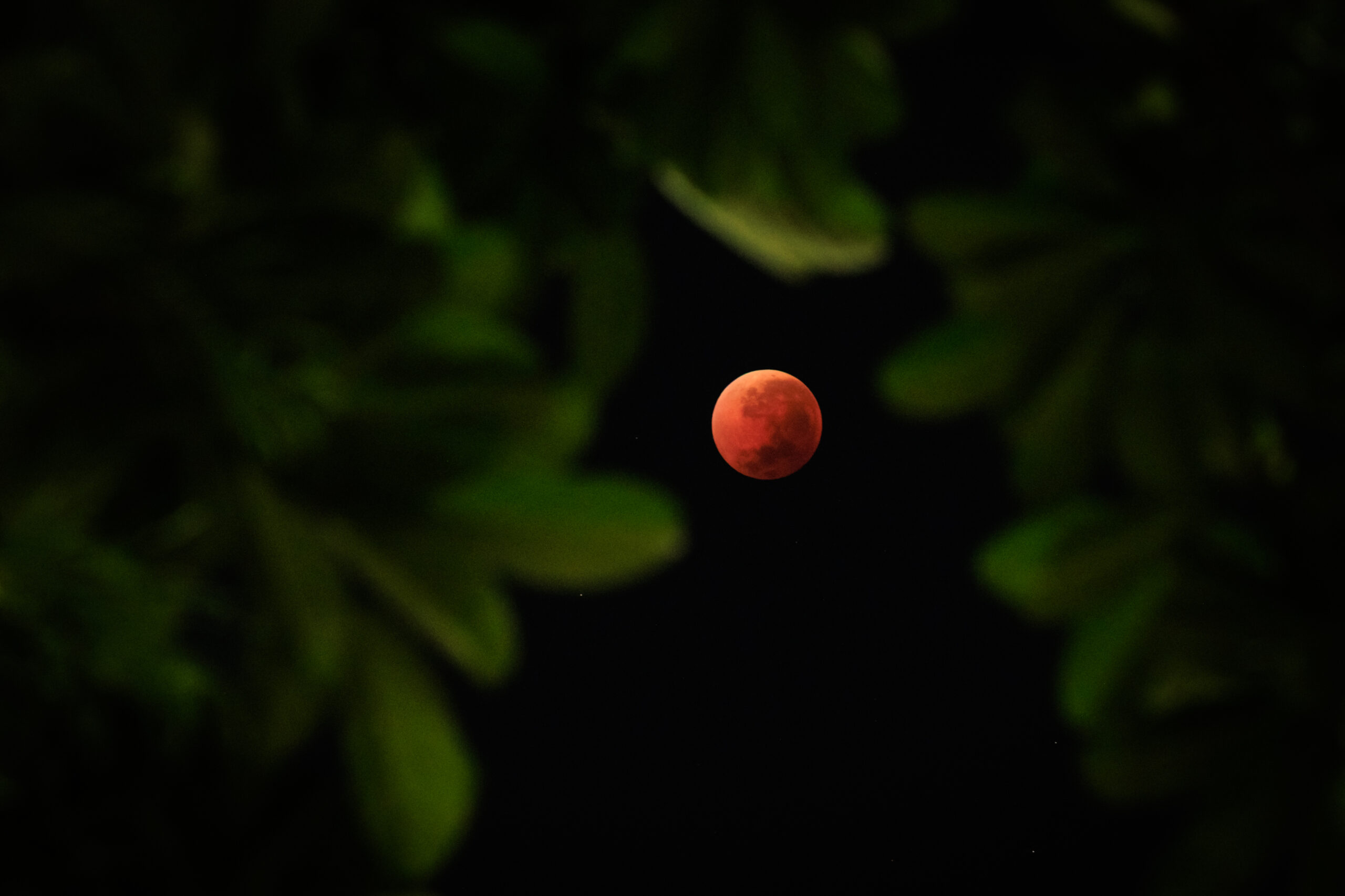
Across Canada, millions of stargazers and casual observers alike are preparing for a profound celestial event as a total lunar eclipse is set to unfold overnight, turning the moon into a striking ‘blood moon’. This rare astronomical phenomenon, confirmed by NASA, promises a mesmerizing display visible from coast to coast, offering a unique opportunity to connect with the cosmos without the need for specialized equipment. The event, which can only occur during a full moon phase, involves the Earth positioning itself directly between the sun and the moon, casting an immense shadow that bathes our lunar companion in a deep reddish-orange hue.
The Mechanics of a ‘Blood Moon’: A Cosmic Alignment
A total lunar eclipse is not merely a visual spectacle; it is a profound demonstration of orbital mechanics and atmospheric physics. The term "blood moon" arises from the dramatic colour shift the moon undergoes during totality. When the Earth passes precisely between the sun and the moon, the sun’s direct light is blocked from reaching the lunar surface. However, some sunlight manages to filter through Earth’s atmosphere. This light is scattered, with shorter wavelengths (blue and violet) dispersed more efficiently by atmospheric particles, a phenomenon known as Rayleigh scattering – the same process that makes our sky appear blue during the day.

The longer wavelengths (red and orange) penetrate the atmosphere more effectively, bending or refracting around the Earth’s edges and illuminating the moon. Essentially, the ‘blood moon’ is a projection of all of Earth’s sunrises and sunsets simultaneously onto the lunar surface. The intensity of the red colour can vary significantly depending on several factors, including the amount of dust, clouds, and aerosols present in Earth’s atmosphere at the time of the eclipse. Volcanic eruptions, for instance, can inject large quantities of particles into the stratosphere, potentially leading to a darker, more muted red or even a brownish hue during an eclipse.
Historical Context and Cultural Significance
Throughout history, lunar eclipses have captivated humanity, inspiring awe, fear, and wonder across diverse cultures. Ancient civilizations often interpreted these dramatic celestial events as omens, divine interventions, or the actions of mythical beasts devouring the moon. For instance, in Mesopotamia, eclipses were seen as attacks on the moon god, Sin, prompting rituals to ward off evil. The Incas believed a jaguar was attacking the moon, leading them to shout and throw spears to scare it away. In many cultures, the ‘blood moon’ carried specific spiritual significance, often associated with prophecies, endings, or new beginnings.
Modern astronomy has demystified these events, transforming them from supernatural portents into predictable and scientifically invaluable occurrences. Yet, the sense of wonder persists, drawing millions to observe the moon’s transformation. These events serve as powerful reminders of our place in the vast cosmic ballet and offer accessible gateways for public engagement with science.

A Detailed Chronology for Canadian Stargazers
For those eager to witness this rare phenomenon, understanding the precise timing of each phase is crucial. The eclipse will unfold over several hours, allowing ample opportunity for observation, weather permitting.
- Penumbral Phase Begins: 3:44 a.m. Eastern Time (ET) / 12:44 a.m. Pacific Time (PT). During this initial phase, the moon enters Earth’s faint outer shadow (the penumbra). The change in brightness is often subtle and difficult to detect with the naked eye.
- Partial Eclipse Begins: Approximately 4:48 a.m. ET / 1:48 a.m. PT. This is when the moon starts to enter the Earth’s darker, central shadow (the umbra). A noticeable "bite" will appear on the moon’s edge, gradually growing larger.
- Totality Begins: 6:04 a.m. ET / 3:04 a.m. PT. This is the moment the entire moon is engulfed by the Earth’s umbra, and the dramatic reddish hue becomes fully apparent. This is the peak viewing window for the ‘blood moon’.
- Maximum Eclipse: Around 6:34 a.m. ET / 3:34 a.m. PT. The moon will be deepest within Earth’s shadow, likely exhibiting its most vivid red or orange colour.
- Totality Ends: 7:04 a.m. ET / 4:04 a.m. PT. The moon begins to emerge from the umbra, and the direct sunlight will start to reappear on one edge.
- Partial Eclipse Ends: Approximately 8:20 a.m. ET / 5:20 a.m. PT. The moon fully exits the umbra, though it will still be within the penumbra.
- Penumbral Phase Ends: 9:23 a.m. ET / 6:23 a.m. PT. The moon completely leaves Earth’s shadow, returning to its usual brightness.
Observers are advised that the most visually striking part of the eclipse, totality, will last for approximately one hour. Unlike solar eclipses, which require specialized eye protection, lunar eclipses are entirely safe to observe directly with the naked eye, binoculars, or a telescope. The only prerequisites are a clear, cloudless sky and an unobstructed view of the moon.
Expert Perspectives and Scientific Insights

Astronomers emphasize the relaxed nature of lunar eclipse observation compared to their solar counterparts. Catherine Miller with Middlebury College’s Mittelman Observatory remarked to The Associated Press that "the lunar eclipse is a little more of a relaxed pace." This sentiment highlights the accessibility of lunar eclipses, allowing for extended viewing and photographic opportunities without the intense time constraints or safety precautions associated with solar events.
NASA scientists continually study lunar eclipses for various research purposes. While the primary scientific insights often come from robotic missions to the Moon, Earth-based observations during eclipses still provide valuable data. For example, by analyzing the precise timing of the moon’s entry and exit from the umbra, scientists can refine models of Earth’s atmosphere and its optical properties. Furthermore, the varying colour of the ‘blood moon’ can offer clues about changes in the Earth’s atmospheric composition, such as the presence of volcanic ash or dust, which can affect the refraction of sunlight.
Beyond scientific data collection, these events serve as powerful tools for public education and outreach. Space agencies and astronomical societies worldwide use eclipses to engage the public, fostering an interest in science, technology, engineering, and mathematics (STEM) fields. Educational institutions often host viewing parties, providing telescopes and expert commentary to enhance the experience for thousands of budding astronomers.
The Frequency of Eclipses: A Cosmic Dance

While a total lunar eclipse is a relatively common occurrence compared to a total solar eclipse (which is visible only along a narrow path on Earth), they are still special events for any given location. NASA states that solar and lunar eclipses happen between four and seven times a year in total. However, not all of these are total eclipses, nor are they all visible from every location on Earth.
A total lunar eclipse occurs roughly twice a year on average, but the visibility from any single point on Earth can be much less frequent due to geographical factors and the Earth’s rotation. For Canadians, this particular eclipse offers prime viewing conditions across all time zones, making it a truly national event.
Looking ahead, a partial lunar eclipse is slated for August, which will be visible across the Americas, Europe, Africa, and West Asia. However, the next total lunar eclipse is not expected until late 2028. This upcoming event, therefore, represents a significant opportunity for widespread public observation and enjoyment of one of nature’s most dramatic celestial displays.
Broader Impact and Implications

The widespread visibility and inherent beauty of a total lunar eclipse foster a sense of shared experience and wonder. In an increasingly fragmented world, events like these momentarily unite people under a common sky, encouraging contemplation of the universe and our place within it. They also provide valuable moments for scientific literacy, as news outlets, educational programs, and social media platforms disseminate information about orbital mechanics, atmospheric science, and the history of astronomy.
For amateur astronomers and astrophotographers, a total lunar eclipse is a prime target. The extended duration of totality allows for careful setup and experimentation with camera settings, capturing the moon’s transformation in stunning detail. The event also often drives sales of binoculars and entry-level telescopes, further fueling interest in astronomy as a hobby.
In essence, the total lunar eclipse is more than just a passing astronomical event; it is a catalyst for public engagement with science, a moment of cultural reflection, and a breathtaking reminder of the intricate and beautiful cosmic machinery that governs our solar system. As the moon begins its dramatic transformation, millions will cast their eyes skyward, partaking in a timeless human tradition of observing the celestial dance above.
With files from The Associated Press.