
 admin
admin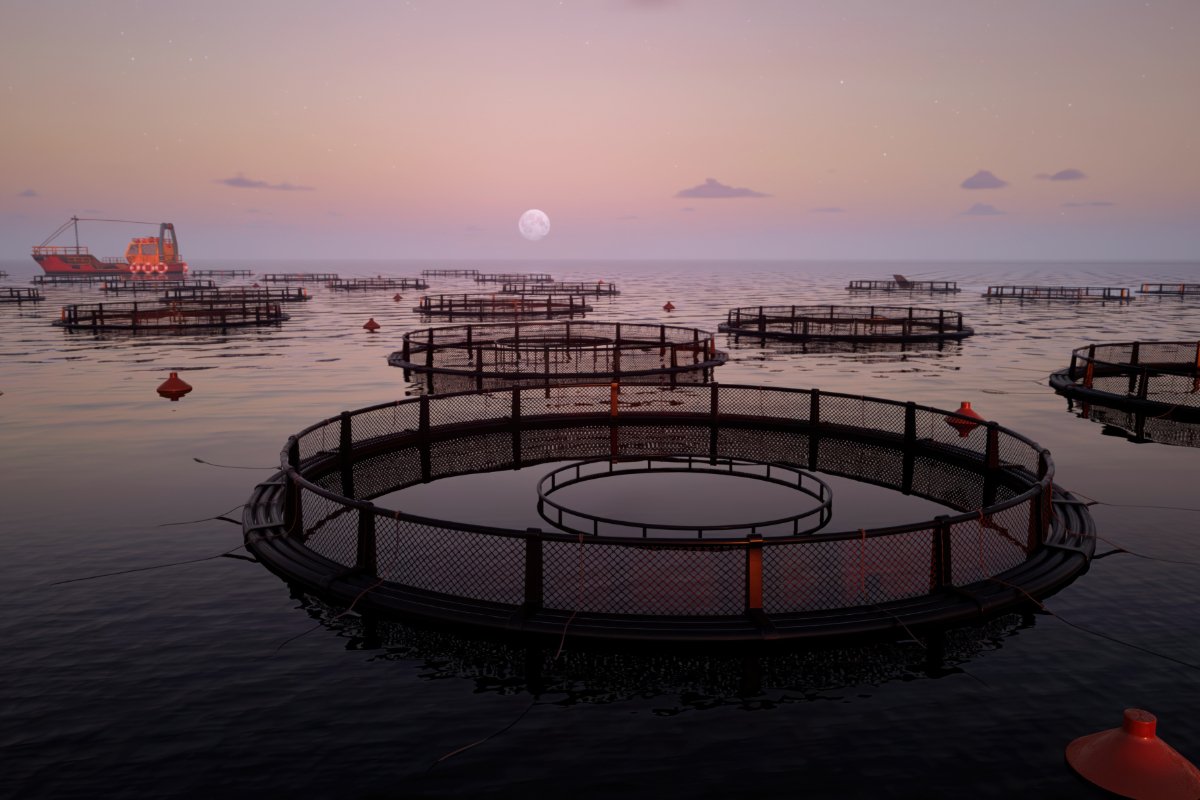
Washington D.C. – The Marine Aquaculture Research for America (MARA) Act, a bipartisan legislative effort aimed at fostering the development of offshore aquaculture in U.S. federal waters, is gaining significant traction and is expected to advance in the Senate as early as March. Proponents argue the bill is crucial for establishing a clear regulatory pathway, reducing the nation’s reliance on imported seafood, and positioning the U.S. as a leader in sustainable ocean farming. However, the legislation faces fierce opposition from environmental groups, tribal communities, and commercial fishing interests who raise long-standing concerns about the potential ecological and economic impacts of industrial-scale finfish operations.
At its core, the MARA Act seeks to enable commercial-scale demonstration projects for various forms of aquaculture—including finfish, seaweed, and shellfish—in federal waters, which extend from 3 to 200 nautical miles offshore. A distinctive feature of this bill, differentiating it from previous failed attempts, is its robust emphasis on rigorous, science-based research. It mandates a ten-year study period under the oversight of external research institutions, including the National Academies of Science, to thoroughly assess the ecological and economic viability of these offshore operations before full authorization. The act also clarifies and streamlines the convoluted regulatory process for permitting aquaculture in federal waters, codifying the National Oceanic and Atmospheric Administration’s (NOAA) authority and strengthening its strategic plan for aquaculture development.
The Genesis of Offshore Aquaculture: A Hawaiian Precedent
As the MARA Act moves through Congress, a real-world example of deep-ocean aquaculture operates half a mile off the Big Island in Hawaii. Blue Ocean Mariculture, the United States’ sole open-ocean, commercial finfish farm, cultivates kanpachi (Seriola rivoliana), a native Hawaiian yellowtail. Operating in swift currents and depths reaching 200 feet, the company employs net pens submerged 30 to 130 feet underwater. Annually, Blue Ocean Mariculture produces approximately 1,100 tons of kanpachi, with roughly half distributed within Hawaii and the remainder reaching mainland U.S. markets.
The company’s operational model and conservation efforts have earned it a "yellow" ranking from Seafood Watch, designating it as a "good alternative" to endangered species, though not yet achieving the "green" standard for highly sustainable seafood like farmed mussels or Arctic char. Blue Ocean kanpachi is a versatile, mild-flavored fish, featured on menus across the country from Hawaii to New York and California, served raw in sashimi or ceviche, or prepared baked, grilled, or steamed. This operation, despite its modest scale compared to global giants like Norwegian salmon farms (which export 1.2 million tons annually), is frequently cited by MARA Act advocates as a successful environmental and economic model for very deep open-water aquaculture, serving as a "poster child" for the proposed legislation.
A Decades-Long Drive for Domestic Seafood
The push for expanding U.S. aquaculture, particularly into federal waters, is not new. It represents a decades-long strategic objective largely championed by industry groups such as the Stronger America Through Seafood Coalition. This coalition comprises major players in the seafood supply chain, including Cooke Aquaculture (known for the 2017 fish escape incident in Puget Sound), feed producers like Cargill and JBS, and food service behemoth Sysco. Their primary arguments center on reducing the nation’s overwhelming dependence on imported seafood and streamlining a complex regulatory environment.
The U.S. currently imports a staggering 90 percent of the seafood it consumes, with half of that being farmed. This dependency is exacerbated by a significant decline in domestic seafood processing infrastructure, leading to a paradoxical situation where much of the U.S. catch is exported for processing and then re-imported. Proponents argue that developing domestic offshore aquaculture could reverse this trend, creating jobs and enhancing food security. Michael Coogan, a research assistant professor at New Hampshire University’s Center for Sustainable Seafood Systems, highlights the disparity: "The U.S. produces 0.2 percent of the world’s aquaculture, which is insane, because we have the largest exclusive economic zone in the world, 200 nautical miles all around our entire coastline that we can work with."
The current regulatory landscape for aquaculture in federal waters is notoriously fragmented and burdensome, involving over 60,000 regulations from multiple agencies. This labyrinthine system, as detailed in forthcoming doctoral research by Margaret Hegwood at the University of Colorado at Boulder, is 3 to 70 times more complex than for any other food production sector, including beef and wild-caught fish. Halley Froehlich, an associate professor of aquaculture and fishery sciences at the University of California Santa Barbara, notes the absence of a consolidated legislative framework akin to the Magnuson-Stevens Act for wild capture fisheries. This regulatory vacuum is precisely why there are currently no commercial aquaculture producers operating in federal waters, although a few pioneering projects, such as Ocean Rainforest’s kelp farm off Santa Barbara and Velella Epsilon’s red drum producer in the Gulf of Mexico, are navigating the extensive permitting process.
Previous legislative attempts, such as the 2020 AQUAA Act and the 2023 SEAfood Act, failed to garner sufficient support or overcome opposition, largely due to concerns over environmental impacts and the rapid scaling of industrial operations. The MARA Act attempts to address these past failures by prioritizing a research-first approach, establishing a controlled environment for pilot projects under strict criteria and stakeholder oversight, rather than immediately authorizing widespread commercialization.
Environmental and Economic Arguments for Offshore Farming
Beyond national food security, advocates for offshore aquaculture point to several environmental benefits. Seafood generally boasts a lower greenhouse gas footprint compared to land-based protein sources like beef. Furthermore, the open ocean offers vast space and a more stable environment for cultivation than crowded coastal waters, which face numerous competing uses and are more vulnerable to storm surges and pollution. Deep-water submersible nets, like those used by Blue Ocean Mariculture, are engineered to withstand severe weather events, potentially reducing the risk of fish escapes—a major concern in finfish farming—as much of the wave energy is dissipated at depths beyond 30 feet.
Blue Ocean Mariculture, for instance, has been meticulously collecting environmental data for nearly two decades, including interactions with sharks and marine mammals. This data, soon to be published in partnership with university researchers, is expected to significantly advance the scientific understanding of these systems. The company’s careful site selection, based on hydrology and nutrient dispersion, aims to minimize environmental impact. They also emphasize their limited use of antibiotics or pesticides, primarily treating skin flukes with hydrogen peroxide.
Mounting Opposition and Lingering Concerns

Despite the scientific and economic arguments put forth by proponents, the MARA Act faces significant and organized opposition. Critics, including organizations like Don’t Cage Our Oceans (a campaign led by the North American Marine Alliance, NAMA), argue that existing science already documents the myriad problems associated with finfish aquaculture, particularly those observed in the salmon industry. These issues include disease outbreaks, reliance on antibiotics, significant waste accumulation, depletion of wild fish stocks for feed, and the potential for farmed fish escapes to introduce disease or compete with wild populations. A special 2024 issue of Science Advances, featuring ten articles on aquaculture, highlighted many of these negative impacts.
James Mitchell, policy director for Don’t Cage Our Oceans, contends that the bill’s research provisions are merely a pretext for industry expansion. "The MARA Act is not ‘Let’s study everything first.’ It’s putting them in the water, letting them get a foothold, and then later saying, ‘What are some best practices we can learn from this?’" NAMA, along with 420 other fishing groups, food advocacy and conservation organizations, farmers, chefs, and tribal groups, sent a letter to Congressional leaders opposing the bill, underscoring the broad base of concern.
Commercial fishing communities also voice strong reservations. Eric Brazer, deputy director of the Gulf of America Reef Fish Shareholders’ Alliance, emphasizes the need to carefully select aquaculture species that do not compete with wild-caught fisheries, citing red snapper in the Gulf as a critical species to protect. Fisher organizations also worry about the strain on NOAA’s already limited resources, fearing that the agency’s focus and funding could be diverted from managing wild fisheries, which already face backlogs in rule implementation. Brazer, however, notes that his organization is open to supporting offshore aquaculture if it is "done right" and involves commercial fishermen as key stakeholders.
Adding another layer of concern, Halley Froehlich, while acknowledging the "chicken and egg" problem of needing in-water research without a clear permitting pathway, expresses apprehension about NOAA’s ability to set and enforce robust criteria for demonstration projects under an administration perceived as weakening regulations. "The MARA Act looks great in normal times, but what we are experiencing is not normal right now," she remarked.
Beyond Finfish: The Diversity of Aquaculture
A significant challenge in the public discourse surrounding the MARA Act is a widespread misunderstanding that all aquaculture is the same, equating it predominantly with large-scale finfish farming. Critics and proponents alike recognize the need to distinguish between different types of aquaculture and scales of operation. The MARA Act, in fact, encompasses seaweed and shellfish farming, which typically have lower environmental footprints than finfish operations. Projects like Ocean Rainforest’s kelp farm off Santa Barbara, or Michael Coogan’s experimental mussel and scallop farm 2.7 miles offshore New Hampshire (a 130-acre site at 150 feet depth), exemplify sustainable, smaller-scale operations that could thrive in federal waters.
Froehlich points out that recent advancements in aquaculture, such as more efficient feed production, are addressing some of the industry’s historical challenges. "Aquaculture in general, people just think it’s bad," she said. "They don’t recognize the diversity. And just like any kind of food system, it will have an impact, but the relative amount is dictated by who is doing it, how it’s being overseen, how it’s monitored, and where that data goes." She emphasizes that dismissing aquaculture entirely ignores ongoing improvements and the potential for responsible development.
Economic Viability and the Scale Question
While Blue Ocean Mariculture is presented as a viable model for the MARA Act, questions remain about the economic viability of small-scale operations versus the industry’s historical tendency towards consolidation. Feini Yin, communications director at NAMA, expresses concern that small farms might need to expand significantly to achieve profitability, potentially increasing their environmental footprint. The history of consolidation in the salmon industry serves as a cautionary tale.
Taylor Korte of Blue Ocean Mariculture confirms the company is "cash positive on different months" and operates with "pretty good" core operational profitability, despite significant capital expenses. He describes their current phase as "slow growth," aiming for 1,650 tons annually by the end of 2028, which he views as a "viable economic solution for growing the seafood industry in the U.S." While Blue Ocean Mariculture has no immediate large-scale expansion plans for its Hawaiian site, it envisions replicating its model in other U.S. locations.
Carole Engle, an aquaculture economist at the Virginia Agriculture and Research Extension Center, confirms that many small-scale producers in various aquaculture segments are indeed profitable, provided they "build an effective business model that takes into account the generally higher costs of small-scale production when they design their overall marketing plan." However, with significant investment and lobbying from large food businesses, there is concern that the MARA Act, which does not set size parameters for demonstration projects (leaving that to NOAA), could ultimately favor large-scale, industrial operations over smaller, sustainably oriented farms. The question of "who is involved in the aquaculture process and who’s benefiting from it matters a lot," as Froehlich concludes.
The Road Ahead: Navigating Division and Opportunity
The MARA Act represents a pivotal moment for the future of U.S. seafood production. With strong bipartisan backing, it has a significant chance of passage, reflecting a shared desire to enhance domestic seafood supply and streamline regulations. However, the deep divisions between industry proponents and environmental/fishing community opponents highlight the complex challenges inherent in developing a new frontier of food production.
The bill’s emphasis on a ten-year research period, with robust oversight, aims to provide the data needed to make informed decisions about the long-term sustainability and economic potential of offshore aquaculture. Yet, critics remain wary, citing historical issues with finfish farming and concerns about regulatory enforcement. The success of the MARA Act, should it pass, will ultimately hinge on the transparency of its research, the rigor of NOAA’s oversight, and the genuine engagement of all stakeholders—from large corporations to small-scale fishermen and conservationists—in shaping a responsible and sustainable path for American ocean farming. The debate over how to balance economic opportunity with ecological stewardship in the vast expanse of federal waters is far from over.